Premium Workwear Manufacturing for Professionals

Ahtisham

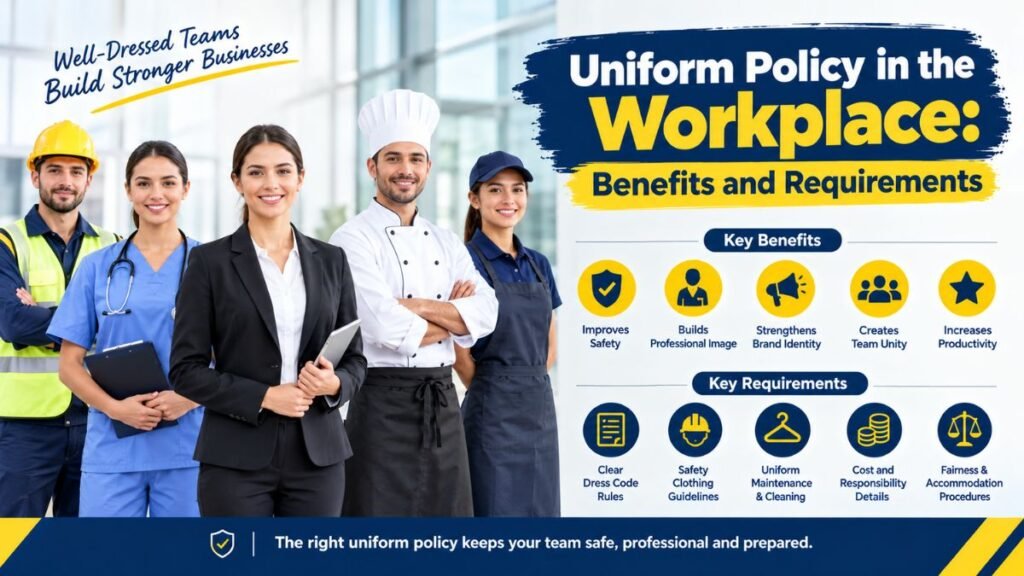
Infographic of professionals in uniform and the benefits of a workplace uniform policy

Uniform Policy in the Workplace: Benefits and Requirements

A clear uniform policy in the workplace helps businesses create a professional and organized environment. It explains what employees should wear, when uniforms are required, and how workers should maintain them. A well-planned policy can also improve safety, support brand identity, and reduce confusion about workplace clothing. However, workplace uniform rules should do more than

Uniform Policy in the Workplace: Benefits and Requirements Read More »

How to find a factory to make your clothes complete guide - from research to production with factory checklist

How to Find a Factory to Make Your Clothes: A Complete Guide

Starting a clothing brand can be an exciting business opportunity, but turning your ideas into finished garments requires the right manufacturing partner. Whether you want to launch a fashion startup, create custom workwear, produce streetwear, or develop a private-label clothing line, finding a reliable clothing factory is one of the most important steps in the

How to Find a Factory to Make Your Clothes: A Complete Guide Read More »

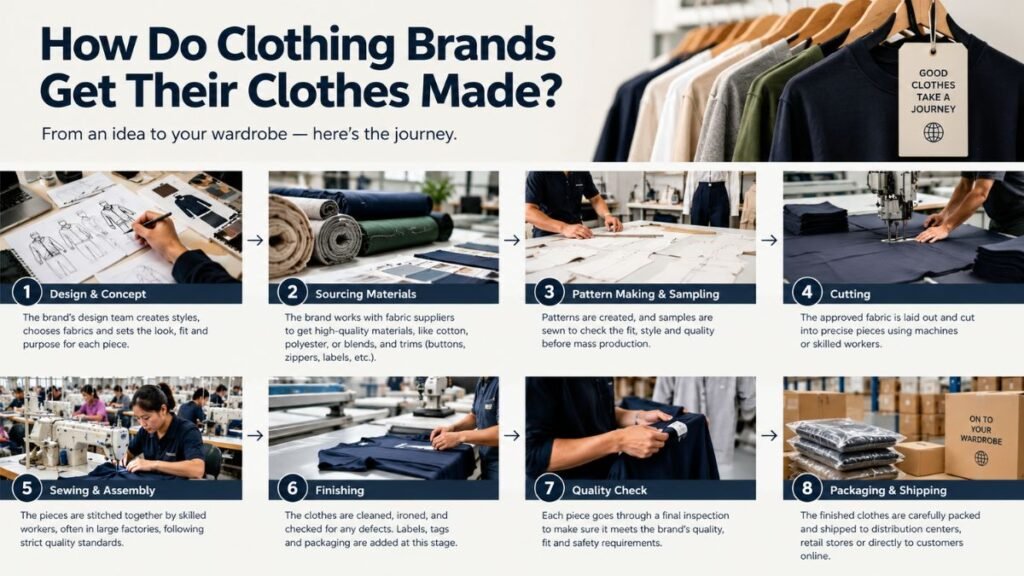
Infographic titled 'How Do Clothing Brands Get Their Clothes Made?' showing the 8-step process from design to packaging, with photos of sketching, fabric rolls, pattern making, cutting, sewing, finishing, quality check, and shipping.

How Do Clothing Brands Get Their Clothes Made?

Have you ever wondered how clothing brands turn a simple design idea into the T-shirts, hoodies, jeans, dresses, and uniforms people buy? Behind every finished garment is a process that involves product development, fabric sourcing, sampling, manufacturing, and quality control. Clothing brands usually get their clothes made by working with clothing manufacturers, garment factories, or

How Do Clothing Brands Get Their Clothes Made? Read More »

a concise, accessible description for screen readers

How Are Clothes Mass Produced? A Complete Guide

Clothes mass production allows brands to manufacture large quantities of garments efficiently. It turns a clothing design into finished products ready for stores and online customers. The process involves fabric sourcing, pattern making, cutting, sewing, finishing, and quality control. Many people wonder how clothing brands produce thousands of shirts, jeans, dresses, and hoodies. The answer

How Are Clothes Mass Produced? A Complete Guide Read More »

A person loading a yellow hi-vis vest into a washing machine beside a basket of hi-vis clothing, with a seven-step guide for washing hi-vis garments.

How to Wash Hi Vis Clothing: A Complete Care Guide

Hi vis clothing helps workers remain visible in busy and hazardous environments. Construction workers, road crews, warehouse staff, and emergency teams often wear these garments daily. However, dirt, sweat, oil, and repeated washing can affect their appearance and performance. Learning how to wash hi vis clothing correctly helps protect its fluorescent fabric and reflective details.

How to Wash Hi Vis Clothing: A Complete Care Guide Read More »

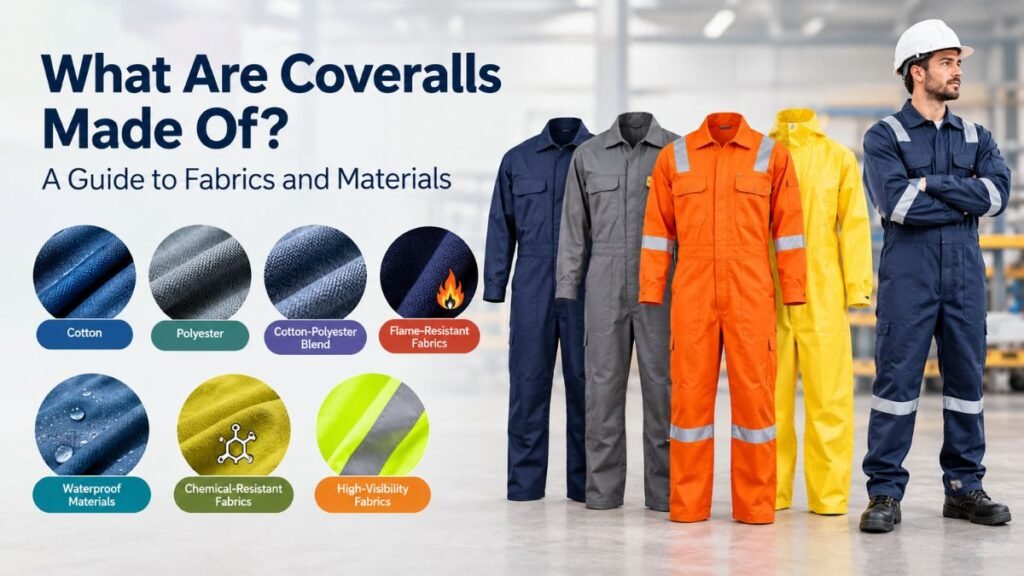
Infographic comparing coverall fabrics and materials, with labeled swatches on the left and assorted coveralls, including one worn by a worker in a hard hat, on the right.

What Are Coveralls Made Of? A Guide to Fabrics and Materials

Coveralls are essential garments for workers in many industries. They protect clothing from dirt, grease, dust, and workplace hazards. However, their performance depends heavily on the materials used during manufacturing. Some coveralls provide comfort and breathability, while others offer resistance to chemicals, flames, or water. Understanding what coveralls are made of helps workers choose suitable

What Are Coveralls Made Of? A Guide to Fabrics and Materials Read More »

Infographic titled "What to Wear Under Work Coveralls: A Complete Guide," showing a bearded male model in a blue work coverall and white hard hat beside folded base-layer clothing (gray T-shirt, black boxer briefs, gray quarter-zip, dark gray sweatpants, gray socks) on a wooden surface, with panels on essential base layers, hot and cold weather choices, suitable fabrics (cotton, polyester, merino wool, blends), and four icons for breathability, moisture control, temperature regulation, and comfort and safety.

What to Wear Under Work Coveralls: A Complete Guide

Choosing the right clothing under work coveralls can make every workday more comfortable. The right base layers help manage sweat, control body temperature, and reduce skin irritation. They can also support safe movement during physically demanding tasks. However, the best clothing depends on your workplace, the weather, and your job duties. Some workers need lightweight

What to Wear Under Work Coveralls: A Complete Guide Read More »

Infographic titled "What to Wear Under PPE Coveralls: A Complete Guide" showing undergarment options and fabric swatches on the left, a worker in a blue coverall and white hard hat on the right, and a benefits list including comfort, breathability, temperature control and freedom of movement.

What to Wear Under PPE Coveralls: A Complete Guide

Choosing what to wear under PPE coveralls is important for comfort and workplace safety. The right clothing can help manage sweat, reduce friction, and support temperature control. However, your clothing choices must match the protective equipment you use. Different workplaces have different clothing requirements. Healthcare workers may need lightweight clothing beneath disposable protective suits. Industrial

What to Wear Under PPE Coveralls: A Complete Guide Read More »

Three construction workers in hard hats, sunglasses, and high-visibility vests and jackets stand in front of blurred construction equipment; bold headline text reads "ANSI Standard for High Visibility Clothing – A Complete Guide."

ANSI Standard for High Visibility Clothing: A Complete Guide

Performance classes indicate the amount and arrangement of high-visibility materials required for a garment. The suitable class depends on workplace hazards, the work environment, and applicable safety requirements. Need garments built for visibility requirements? Explore our custom hi vis workwear manufacturing, see the hi-vis surveyor’s vest, and read the American national standard for high visibility

ANSI Standard for High Visibility Clothing: A Complete Guide Read More »

Infographic titled "Fire Resistant Clothing Made Of: Materials and Safety Guide." It shows two workers in protective gear beside three benefit icons (flame protection, heat resistance, workplace safety). The right side lists six common materials with fabric swatches: Aramid Fibers, Flame-Resistant Cotton, Modacrylic Fibers, Flame-Resistant Polyester Blends, Wool and Wool Blends, and Specialized Fibers. A lower section lists key safety standards—NFPA 2112, NFPA 70E, ATPV/EBT, and ANSI/ISEA 107—above a shield icon with the tagline "Right Material. Safer Tomorrow."

Fire Resistant Clothing Made Of: Materials and Safety Guide

Fire-resistant clothing helps protect workers from heat, flames, and certain workplace hazards. It is commonly used in industries such as oil and gas, electrical maintenance, welding, manufacturing, and firefighting. The materials used in these garments play an important role in their protective performance. Understanding what fire-resistant clothing is made of helps workers and employers choose

Fire Resistant Clothing Made Of: Materials and Safety Guide Read More »