

Fire-resistant clothing helps protect workers from heat, flames, and certain workplace hazards. It is commonly used in industries such as oil and gas, electrical maintenance, welding, manufacturing, and firefighting. The materials used in these garments play an important role in their protective performance.
Understanding what fire-resistant clothing is made of helps workers and employers choose suitable protective apparel. Some garments use fibers that naturally resist burning. Others use treated fabrics designed to slow ignition and reduce flame spread.
The right material depends on the workplace, potential hazards, and required protection level. No single fabric protects against every type of heat or fire exposure. Therefore, buyers should understand the differences between common protective fibers and fabric treatments.
This guide explains what fire-resistant clothing is made of, how protective fabrics work, and which materials are used in industrial workwear. It also covers garment selection, care instructions, safety standards, and common questions about flame-resistant clothing.
What Is Fire-Resistant Clothing Made Of?
Fire-resistant clothing is made from specialized fibers, treated fabrics, or combinations of protective materials. These materials are designed to resist ignition, slow flame spread, or reduce the severity of certain thermal exposures.
Common materials include aramid fibers, flame-resistant cotton, modacrylic blends, and other engineered fibers. Some garments also combine different materials to balance protection, durability, comfort, and flexibility.
The exact composition depends on the garment’s intended use. For example, clothing for welding may require protection from sparks and hot particles. Electrical workers may need flame-resistant clothing designed for potential arc-flash exposure.
It is important to distinguish flame-resistant clothing from ordinary workwear. Regular cotton or polyester clothing may ignite, melt, or continue burning under certain conditions. Protective garments must be selected according to the specific hazards and applicable performance requirements.
Understanding Flame-Resistant and Fire-Resistant Clothing
The terms flame-resistant and fire-resistant are often used interchangeably. However, protective clothing terminology can vary by manufacturer, industry, and applicable standard.
Flame-resistant clothing is designed to resist ignition and limit flame spread when exposed to a suitable flame source. Depending on its construction and certification, it may also help reduce burn injuries by limiting continued burning.
Fire-resistant clothing is a broader everyday term. It may describe garments intended to provide protection against fire-related hazards. The term alone does not establish a garment’s performance or suitability for a particular task.
Neither term means that clothing is fireproof. Protective garments have limits, and their performance depends on exposure conditions, fabric construction, garment design, and maintenance.
Always check the manufacturer’s specifications and relevant safety standards before choosing protective clothing.
Main Materials Used in Fire-Resistant Clothing
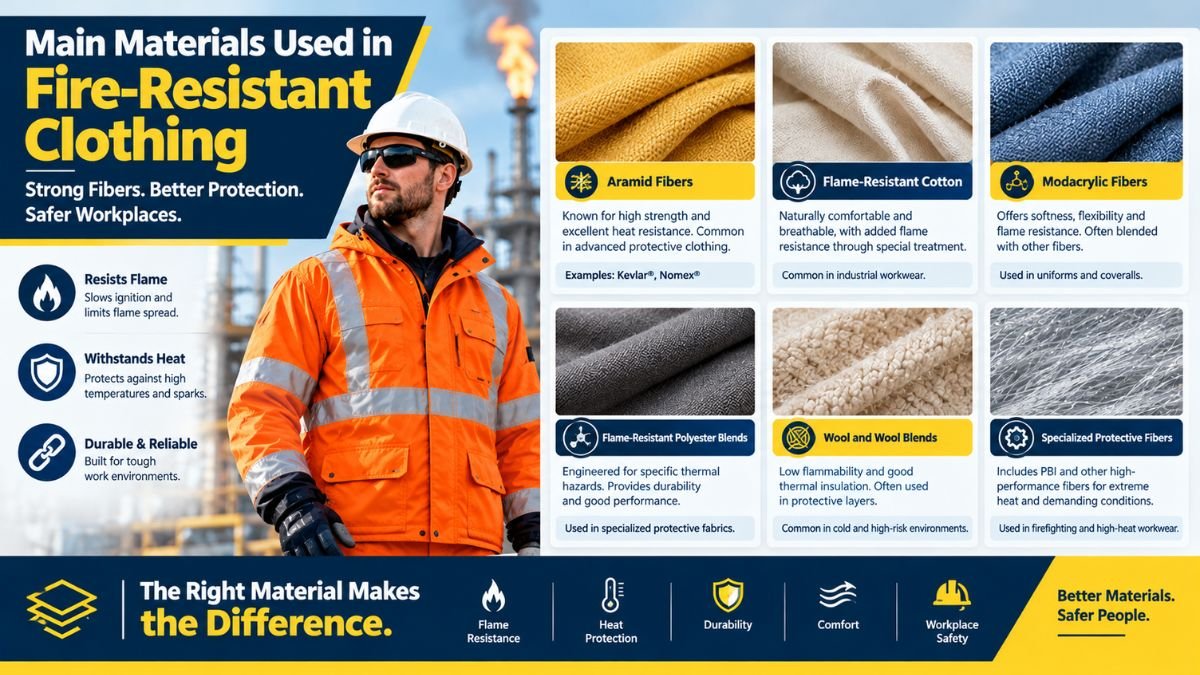
Different fibers offer different levels of heat resistance, durability, and comfort. Understanding these differences can help employers and buyers select suitable protective garments.
1. Aramid Fibers
Aramid fibers are widely used in protective clothing because of their strength and thermal stability. They are engineered fibers that can retain useful properties under demanding conditions.
Two common examples are meta-aramid and para-aramid. They have different characteristics and may be combined in specialized protective fabrics.
Meta-aramid fibers are valued for their heat and flame resistance. They are commonly used in protective clothing for industrial workers and emergency personnel.
Para-aramid fibers are known for high strength and resistance to abrasion. They may be incorporated into protective garment systems where additional mechanical strength is needed.
Aramid clothing is used in applications such as firefighting, industrial maintenance, and certain electrical or thermal protection systems. However, the specific garment must still meet the requirements for its intended hazard.
2. Flame-Resistant Cotton
Cotton is a natural fiber valued for softness, breathability, and comfort. Ordinary cotton, however, can ignite and continue burning under suitable conditions.
Flame-resistant cotton is specially treated or engineered to improve its response to flame exposure. Some fabrics receive a flame-resistant chemical treatment, while others use specially developed fiber or fabric systems.
These materials are common in industrial workwear because they can offer a practical balance of comfort, durability, and protection. They may be suitable for manufacturing, welding, and certain oil and gas operations when designed for the required hazards.
The protective performance depends on the fabric, treatment, construction, and garment specification. Buyers should confirm that the clothing meets the applicable performance requirements.
3. Modacrylic Fibers
Modacrylic is a synthetic fiber used in many protective textile blends. It has flame-resistant characteristics and can be combined with cotton or other fibers to create fabrics with different performance properties.
Modacrylic blends may provide softness, flexibility, and useful resistance to flame spread. Their properties depend on the blend ratio, fabric construction, and finishing process.
Manufacturers use these blends in certain industrial uniforms, protective coveralls, and other workwear. They can be useful where comfort and flame resistance are both important.
However, modacrylic fabric is not automatically suitable for every fire-related hazard. Buyers should review the garment’s testing and certification details.
4. Flame-Resistant Polyester Blends
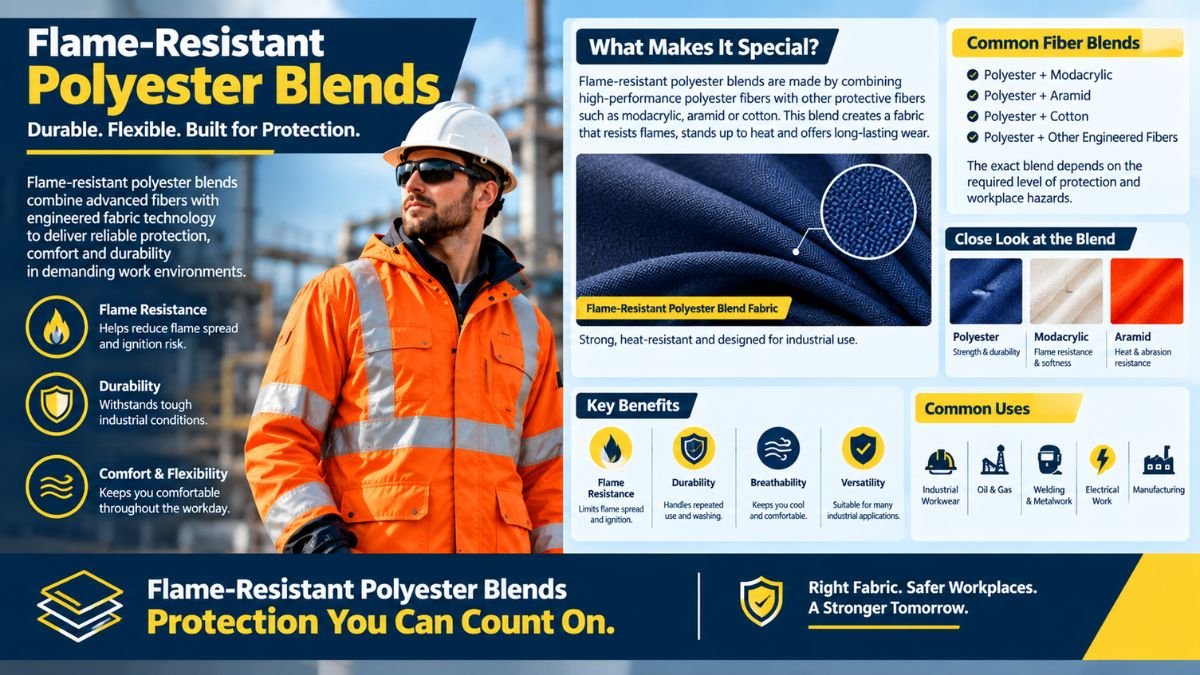
Some specialized protective textiles contain engineered polyester-based fibers or blends designed for particular thermal hazards. Their performance depends on the exact polymer, fiber design, and finished fabric.
Ordinary polyester is not a substitute for certified flame-resistant workwear. Conventional polyester may melt or shrink when exposed to intense heat, creating additional injury risks.
For this reason, workers should never assume that a polyester garment is safe near flames simply because it is thick or durable. Protective clothing must be designed and tested for the intended application.
When evaluating a polyester-containing garment, check the fiber composition and the manufacturer’s documented performance claims.
5. Wool and Wool Blends
Wool has useful natural characteristics, including relatively low flammability compared with some common textile fibers. It may char or self-extinguish under certain conditions, depending on the fabric and exposure.
Some wool fabrics are used in protective clothing systems where their thermal behavior and comfort are beneficial. However, wool alone does not guarantee sufficient protection from intense heat, flames, or electrical hazards.
The fabric weight, weave, blend, and garment design affect its performance. For demanding industrial work, only select wool-containing garments that meet the required protective specifications.
6. Other Specialized Protective Fibers
Some high-performance garments use specialized fibers developed for extreme heat or demanding industrial environments. Examples include certain polybenzimidazole (PBI) and other engineered thermal-protection fibers.
Firefighters and industrial teams use these materials in firefighting clothing, emergency response equipment, and specialized industrial protective systems. They provide valuable performance characteristics, but the complete garment design determines their suitability.Specialized fibers also increase production costs. Employers should consider the hazard assessment and required protection level rather than choosing a material solely because manufacturers describe it as high performance.
How Are Fire-Resistant Fabrics Manufactured?
Fire-resistant clothing begins with selecting suitable fibers and designing a fabric for the intended workplace. Manufacturers then use appropriate textile processes to create material with the required protective properties.
Fiber Selection
Manufacturers first select fibers based on the required thermal performance, durability, comfort, and intended use. The choices may include aramids, treated cotton, modacrylic blends, or other specialized materials.
The selection also considers the garment’s expected service conditions. Workers may need protection from sparks, short flame exposure, radiant heat, or electrical arc hazards.
Yarn Spinning and Blending
First of all, manufacturers may spin fibers into yarn individually or blend them with other compatible fibers. In addition, blending can help manufacturers balance strength, softness, flexibility, and cost.
Moreover, the proportions of each fiber affect the finished textile’s characteristics. Therefore, manufacturers must use a suitable blend for the garment’s intended protective purpose.
Fabric Formation
First of all, manufacturers convert yarns into fabric through weaving, knitting, or another suitable textile process. For example, woven fabrics are common in many industrial garments because they can offer strength and durability.In addition, knitted fabrics may provide more stretch and flexibility for certain applications. Therefore, the choice depends on the garment design and required performance.Some manufacturers apply specialized treatments to cotton and other fabrics to improve flame resistance. As a result, these treatments change how the fabric responds when exposed to a flame. In contrast, other fabrics rely on the inherent properties of their fibers rather than an added flame-resistant treatment. In fact, manufacturers often call these inherently flame-resistant materials. For this reason, manufacturers must follow the appropriate process controls and test the resulting fabric or garment against relevant requirements.
Flame-Resistant Treatment
Some manufacturers apply specialized treatments to cotton and other fabrics to improve flame resistance. These treatments change how the fabric responds when exposed to a flame.In contrast, other fabrics rely on the inherent properties of their fibers rather than an added flame-resistant treatment. In fact, manufacturers often call these inherently flame-resistant materials.For this reason, manufacturers must follow the appropriate process controls and test the resulting fabric or garment against relevant requirements.
Testing and Quality Control
Protective fabrics and finished garments may undergo testing for flame spread, thermal performance, durability, and other relevant properties.
The required tests depend on the product and its intended use. Some garments may need additional evaluation for arc-flash exposure, radiant heat, molten metal, or other specific hazards.
Quality control helps ensure that finished garments meet their specified requirements. Buyers should request documentation when they need to verify compliance.
Inherently Flame-Resistant vs. Treated Flame-Resistant Fabrics
For example, one important difference in protective workwear is whether the fiber itself provides flame resistance or manufacturers apply a treatment during manufacturing.
Inherently Flame-Resistant Fabrics
Inherently flame-resistant fabrics use fibers whose protective characteristics are built into their chemical structure. Aramids and certain other engineered fibers are common examples.
Their flame-resistant properties are not dependent on a surface treatment alone. This can help maintain performance throughout the garment’s useful life when the clothing is properly cared for.
However, inherently flame-resistant garments can still wear out or become damaged. Their actual protection depends on the fabric, construction, condition, and applicable certification.
Treated Flame-Resistant Fabrics
Treated fabrics use materials that receive a specialized process to improve flame resistance. Flame-resistant cotton is a common example.
The treatment can help reduce flame spread and support the garment’s required performance. Its durability depends on the treatment process, fabric, laundering conditions, and manufacturer’s specifications.
Some treatments are designed to withstand repeated industrial laundering. Others may have different care requirements.
Which Fabric Is Better?
Neither type is universally better for every workplace. Inherently flame-resistant materials may suit demanding applications that require long-term flame-resistant performance. Treated cotton can offer a comfortable and practical option for other industrial settings.
Therefore the correct choice depends on the hazard assessment, required performance, comfort needs, maintenance procedures, and budget.
For this reason, always compare documented performance rather than relying only on the terms inherent or treated.
What Industries Use Fire-Resistant Clothing?
Fire-resistant clothing is used across industries where workers may encounter flames, heat, sparks, or other thermal hazards.
Oil and Gas
Oil and gas workers may face flash-fire hazards, hot surfaces, and flammable materials. Suitable flame-resistant coveralls and workwear can form part of a broader safety program.
The garment must meet the applicable requirements for the specific operation. Employers should consider the risk of flash fires, chemical exposure, and other workplace hazards.
Electrical Work
Electrical workers may face arc-flash hazards when working on or near energized electrical equipment. Arc-rated clothing is designed and tested for specific thermal hazards associated with electrical arcs.
Flame-resistant clothing and arc-rated clothing are related but not identical. A garment labeled flame-resistant is not automatically suitable for arc-flash protection.
Workers should follow the electrical risk assessment and applicable standards when selecting clothing.
Welding and Metalworking
Welders may encounter sparks, hot metal particles, radiant heat, and occasional contact with hot surfaces. Protective clothing can help reduce exposure to these hazards.
Suitable garments may include flame-resistant jackets, trousers, aprons, sleeves, and other protective accessories. The appropriate combination depends on the welding process and workplace conditions.
Manufacturing and Industrial Facilities
Some manufacturing environments involve furnaces, heated equipment, flammable materials, or hot production processes. Flame-resistant garments may be required for workers exposed to these hazards.
Employers should assess each task individually. General industrial workwear may not provide the protection required near flames or extreme heat.
Firefighting and Emergency Response
Firefighters require specialized protective clothing designed for the hazards of their duties. Their equipment may use multiple layers, thermal barriers, and moisture barriers.
Ordinary flame-resistant workwear is not a substitute for certified structural firefighting gear. Emergency responders should use equipment that meets the requirements for their specific role.
How to Choose the Right Fire-Resistant Clothing
Selecting protective clothing involves understanding the hazard, checking the garment’s performance, and ensuring it fits the worker’s tasks.
Identify the Workplace Hazard
Start by identifying the type of exposure workers may encounter. Potential hazards include flash fires, welding sparks, radiant heat, electrical arcs, and hot surfaces.
Different hazards require different forms of protection. A garment designed for brief flame exposure may not provide adequate protection from molten metal or an electrical arc.
A qualified safety professional can help evaluate the workplace and determine the required protection.
Check the Fabric Composition
Review the garment label and technical specifications. Look for the listed fibers, fabric construction, and documented protective properties.
Common materials include aramids, treated cotton, and specialized flame-resistant blends. However, fiber names alone do not establish whether a garment meets the required safety standard.
Verify Applicable Standards
Different protective garments are designed for different hazards. In the United States, relevant standards may include NFPA 2112 for certain flash-fire protective garments and NFPA 70E for electrical safety practices related to arc-flash risk.
Other standards may apply to welding, firefighting, or industrial heat protection. The correct requirements depend on the work and jurisdiction.
Always verify the current edition and the exact product certification or test documentation.
Consider Comfort and Fit
Protective clothing should fit correctly and allow workers to move safely. Poorly fitting garments can restrict movement or interfere with other personal protective equipment.
Consider breathability, garment weight, seam construction, and layering. Workers may need different designs for hot climates, cold weather, or physically demanding tasks.
Comfort should never replace required protection, but it can support consistent use.
Review Care and Maintenance Needs
Follow the manufacturer’s laundering instructions. Improper washing can damage fabric, seams, closures, or other protective components.
Establish a clear inspection and replacement process. Garments with significant damage, contamination, or uncertain protective performance should be assessed before reuse.
How to Wash and Maintain Fire-Resistant Clothing
Proper maintenance helps preserve the performance and service life of protective workwear. Cleaning requirements vary by fabric, treatment, workplace contamination, and garment design.
Follow the Manufacturer’s Instructions
Check the care label before washing. Use the recommended temperature, detergent, and drying method.
Avoid unauthorized bleach, fabric softeners, or other chemicals if the manufacturer prohibits them. Some products can affect fabric properties or leave residues that change how the garment behaves during exposure.
Prevent Cross-Contamination
Industrial clothing can collect oils, grease, chemicals, and flammable residues. These contaminants may increase risk even when the fabric itself is flame-resistant.
Follow workplace procedures for removing, cleaning, and storing contaminated garments. Certain substances may require specialized laundering or disposal.
Inspect Garments Regularly
Check for holes, tears, damaged seams, missing closures, and excessive wear. Also look for unauthorized alterations that may affect protective coverage.
Replace or professionally assess garments that no longer meet the manufacturer’s criteria. Do not continue using clothing simply because it still looks wearable.
Store Clothing Properly
Store clean protective garments in a suitable location. Keep them away from unnecessary heat, damaging chemicals, and contamination.
Follow any specific storage requirements supplied by the manufacturer. Proper storage can help reduce avoidable damage between uses.
Common Myths About Fire-Resistant Clothing
Misunderstandings about protective fabrics can lead to poor clothing choices. Understanding the facts helps workers use appropriate protection.
Myth 1: Fire-Resistant Clothing Is Fireproof
Fire-resistant clothing is not fireproof. It is designed to provide a defined level of performance under specified conditions.
Extreme heat or prolonged flame exposure can still cause serious injury. Workers must follow safe operating procedures and exposure limits.
Myth 2: All Cotton Clothing Is Flame-Resistant
Ordinary cotton can ignite and continue burning. Only fabrics specifically designed and verified for the required flame-resistant performance should be used when protection is necessary.
Myth 3: All Flame-Resistant Clothing Protects Against Electrical Arcs
Flame resistance alone does not establish arc-flash protection. Electrical workers need clothing suitable for the assessed arc-flash hazard and applicable electrical safety requirements.
Myth 4: Flame-Resistant Clothing Never Needs Replacement
Protective garments can wear out through repeated use, laundering, contamination, and physical damage. Regular inspection and appropriate replacement remain essential.
Myth 5: One Fabric Works for Every Industry
Different jobs involve different hazards. A material suitable for welding may not be appropriate for structural firefighting or electrical work.
Always match the garment’s verified performance to the task.
Benefits of Choosing Suitable Fire-Resistant Clothing
Appropriate protective clothing can support workplace safety when used as part of a complete hazard-control program.
Reduced Flame-Spread Risk
Suitable flame-resistant fabrics are designed to resist ignition or limit continued burning under specified test conditions. This can help reduce some thermal injury risks.
Protection Matched to the Job
Selecting clothing for the actual hazard helps ensure workers receive the intended type of protection. This is especially important in electrical, welding, and oil and gas environments.
Durable Workwear Options
Many protective fabrics are designed for repeated use in demanding workplaces. Their durability depends on the material, garment construction, care, and service conditions.
Improved Worker Confidence
Suitable clothing can help workers perform tasks with greater confidence when they understand its purpose and limitations. Training and correct use remain essential.
Conclusion
Fire-resistant clothing is made from specialized fibers, treated fabrics, and carefully designed textile combinations. Common materials include aramid fibers, flame-resistant cotton, modacrylic blends, and other engineered protective fibers.
Each material has different characteristics. Some offer inherent flame resistance, while others rely on specialized treatments. The best choice depends on the workplace hazard, required protection, comfort, and maintenance needs.
Employers and workers should check garment specifications, verify relevant safety standards, and follow proper care instructions. They should also remember that flame-resistant clothing is not fireproof and cannot replace safe work practices.
By choosing suitable materials and maintaining protective garments correctly, workplaces can improve their approach to thermal hazard protection.
Frequently Asked Questions
1. What is fire-resistant clothing made of?
Fire-resistant clothing may be made from aramid fibers, treated cotton, modacrylic blends, and other specialized protective materials. The exact fabric depends on the intended hazard and required performance.
2. What is the best material for flame-resistant clothing?
There is no single best material for every job. Aramids, treated cotton, and specialized blends serve different purposes. Choose clothing based on the hazard assessment and documented garment performance.
3. Is 100% cotton fire-resistant?
No. Ordinary 100% cotton can ignite and continue burning. Cotton garments must be specifically designed and verified for the required flame-resistant performance before being used as protective clothing.
4. What is the difference between inherently flame-resistant and treated fabric?
Inherently flame-resistant fabrics use fibers with flame-resistant properties built into their structure. Treated fabrics receive a specialized process to improve flame resistance.
5. Is polyester suitable for fire-resistant clothing?
Ordinary polyester is not a substitute for certified flame-resistant clothing. Some specialized engineered materials may be used in protective textiles, but suitability depends on their composition, design, and testing.
6. Does flame-resistant clothing protect against arc flashes?
Only clothing designed and rated for the relevant electrical hazard should be used for arc-flash protection. Flame resistance alone does not establish an adequate arc rating.
7. Can fire-resistant clothing be washed?
Yes, provided it is washed according to the manufacturer’s care instructions. Incorrect washing, contamination, or physical damage may affect its suitability for continued use.
8. How long does flame-resistant clothing last?
Service life varies with the fabric, frequency of use, laundering, contamination, and damage. Follow the manufacturer’s guidance and replace garments when they no longer meet the required condition or performance criteria.
9. What industries require flame-resistant clothing?
Flame-resistant clothing may be required in oil and gas, electrical work, welding, metalworking, manufacturing, and other environments with thermal hazards. Requirements depend on the specific job and applicable regulations.
10. Is fire-resistant clothing the same as heat-resistant clothing?
Not necessarily. Flame-resistant clothing is designed to resist ignition or flame spread, while heat-resistant clothing may address other forms of thermal exposure. Some garments provide multiple types of protection, but their specifications must be checked carefully.