

Performance classes indicate the amount and arrangement of high-visibility materials required for a garment. The suitable class depends on workplace hazards, the work environment, and applicable safety requirements.
Class 1 High Visibility Clothing
Class 1 provides a basic level of visibility for certain lower-risk work environments. It is generally intended for situations where workers are separated from higher-speed traffic and visibility hazards are less demanding.
Examples may include some warehouse operations, parking facilities, and off-road industrial work. However, employers must assess the actual hazards before deciding whether Class 1 apparel is appropriate.
Class 1 is associated with Type O garments under ANSI/ISEA 107. It should not be selected for roadway work simply because a bright vest appears sufficient.
Class 2 High Visibility Clothing
Class 2 provides greater visibility through additional high-visibility material and a suitable garment design. It is commonly used for work near roads, transportation areas, and other environments with moving vehicles.
Potential users include utility workers, delivery personnel, survey crews, and some road maintenance teams. The correct choice depends on traffic exposure, lighting, weather, and the distance at which drivers need to recognize workers.
Class 2 garments are available for relevant Type R and Type P applications. Always confirm the garment’s actual designation and workplace suitability.
Class 3 High Visibility Clothing
Class 3 is intended for situations that require a higher level of conspicuity. These garments provide more extensive visibility features and use designs that help make the wearer noticeable through a wider range of body movements.
They are often considered for high-risk roadway work, highway construction, and other demanding environments. Depending on the design, garments may include long sleeves and additional reflective material.
A sleeveless safety vest alone cannot qualify as Class 3 under the ANSI/ISEA 107 framework described in the 2020 edition. Workers may need a suitable jacket or another compliant garment configuration.
supplemental Class E Clothing
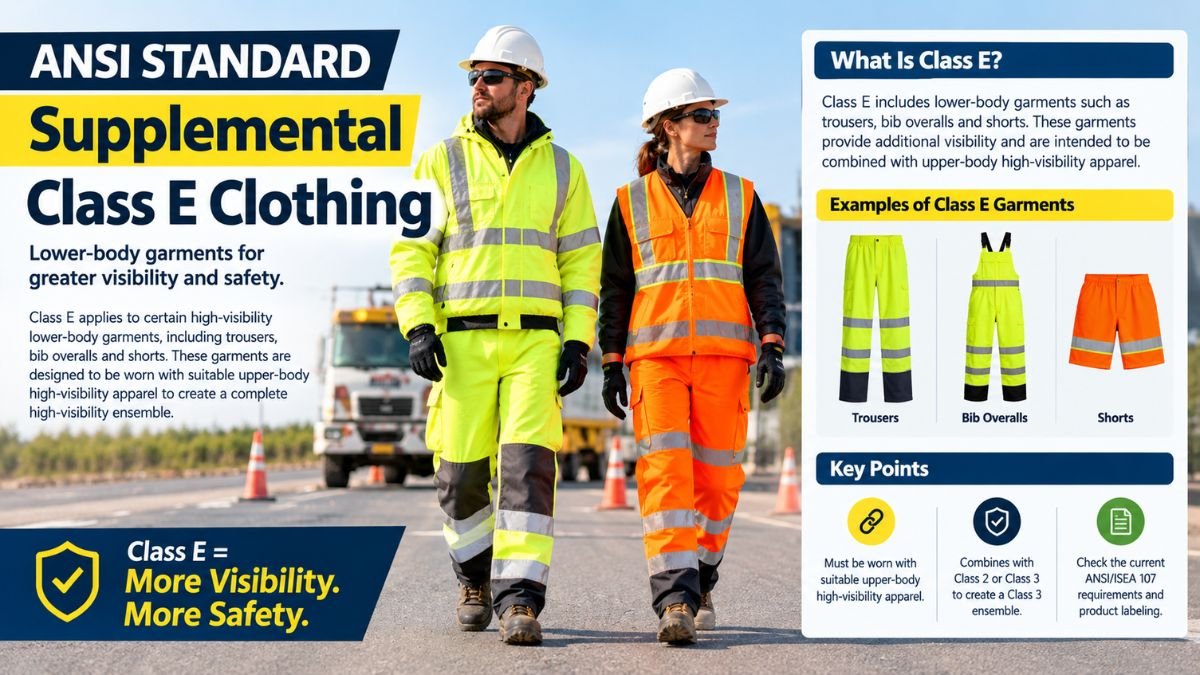
Class E applies to certain high-visibility lower-body garments, including trousers, bib overalls, and shorts. These garments are intended to be combined with suitable upper-body high-visibility apparel.
Under the established classification framework, a Class E garment worn with an appropriate Class 2 or Class 3 garment can create a Class 3 ensemble. Class E trousers alone do not provide a complete compliant high-visibility ensemble.
Check the current ANSI/ISEA 107-2026 requirements and product documentation before selecting or combining garments.
What Types of Clothing Must Meet ANSI High Visibility Requirements?
The ANSI standard can apply to different kinds of occupational high-visibility apparel. The exact garment design depends on the work environment and intended protection.
High Visibility Safety Vests
High-visibility safety vests are widely used in construction, transportation, warehousing, and road maintenance. They are lightweight and can be worn over uniforms or everyday work clothing.
A compliant vest must meet the requirements for its intended type and class. Bright fabric, reflective strips, and a suitable fit all contribute to practical use, but only the required design and performance evidence establish conformity.
Workers should ensure the vest remains visible over other clothing and does not become covered by equipment, bags, or outer layers.
High Visibility Shirts
High-visibility shirts offer a practical option for workers who need visibility throughout the day. They may be useful in logistics, road maintenance, industrial facilities, and outdoor operations.
Some designs use fluorescent fabric with reflective bands, while others incorporate combined-performance materials. Buyers should verify the shirt’s labeling and documented performance rather than assuming that every fluorescent work shirt meets ANSI requirements.
Comfort and breathability are also important. Workers are more likely to wear safety clothing correctly when it fits well and suits the temperature and work activity.
High Visibility Jackets and Rainwear
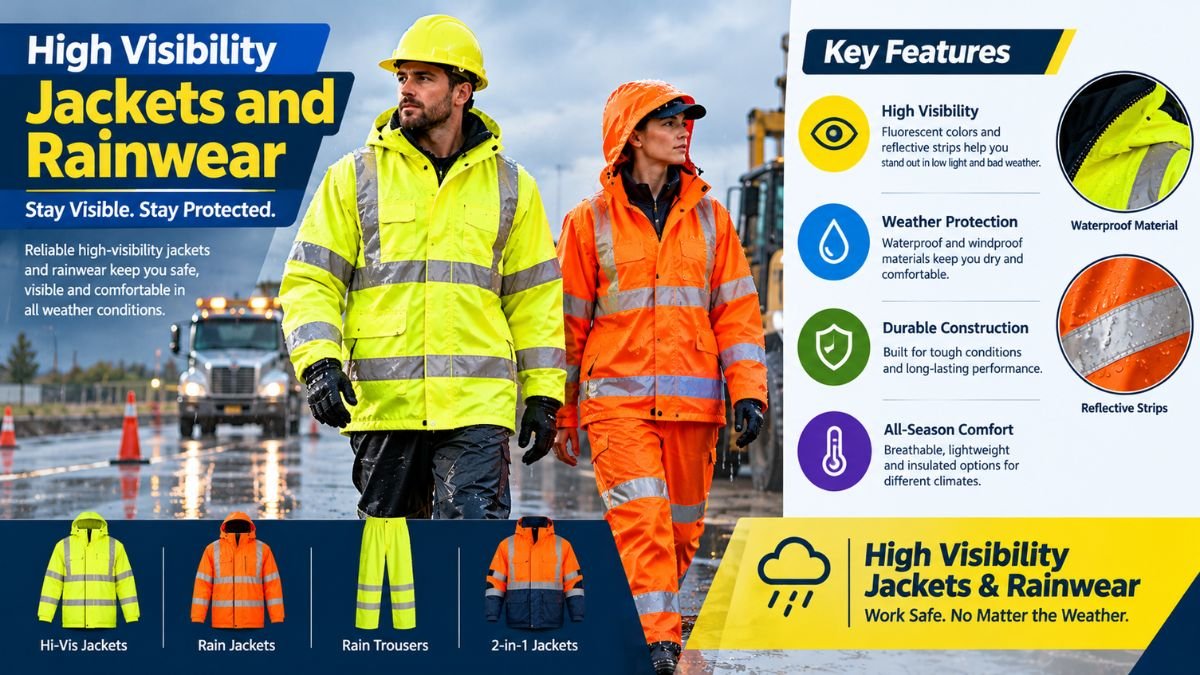
High-visibility jackets help workers remain visible in cold, windy, or wet conditions. Rainwear can provide visibility while helping protect workers from rain and other weather exposure.
The garment should be suitable for the required performance class and the environmental conditions. Reflective materials must remain visible, and the jacket should fit over any required layers without compromising its design.
For wet or cold environments, employers should also consider waterproofing, insulation, seam construction, and compatibility with other personal protective equipment.
High Visibility Trousers and Coveralls
High-visibility trousers and coveralls can provide additional visible material across the lower body. This may be useful where workers need visibility from multiple directions or where their tasks involve frequent movement.
Some lower-body garments use the supplemental Class E designation. Coveralls and other full-body designs must meet the requirements applicable to their specific type and class.
Where workers face chemical, electrical, heat, or flame hazards, visibility is only one consideration. The garment may need additional protective properties, which should be verified separately.
How to Choose ANSI-Compliant High Visibility Clothing
Selecting high-visibility workwear involves more than choosing a fluorescent vest. Employers should evaluate the job, identify the hazards, and confirm that the selected garment meets the required standard.
1. Assess the Workplace Hazards
Start by identifying the hazards workers may encounter. Consider moving vehicles, equipment, poor lighting, weather conditions, complex backgrounds, and the distance at which workers need to be seen.
A worker in a controlled warehouse may face different risks from a person repairing a busy highway. Their clothing requirements should reflect those differences.
A documented workplace risk assessment can help determine the appropriate garment type and performance class.
2. Select the Correct Garment Type
Choose clothing designed for the intended work setting. The established Type O, Type R, and Type P categories distinguish off-road, roadway, and public safety applications.
Do not choose a garment solely because it is marketed as industrial or professional workwear. Confirm that its documented designation matches the intended use.
Where a worker performs several tasks, consider the highest relevant visibility risks and applicable employer requirements.
3. Confirm the Required Performance Class
Determine whether the work requires Class 1, Class 2, Class 3, or a suitable combination involving Class E garments. The choice should follow the workplace hazard assessment and applicable rules.
More reflective material does not automatically make a garment suitable for every hazard. Garment design, coverage, material performance, and the work setting all matter.
When requirements are unclear, consult a qualified safety professional or the relevant workplace authority.
4. Check Product Labels and Documentation
Review the garment label, manufacturer specifications, and supporting documents. Look for the applicable ANSI/ISEA 107 edition, garment type, performance class, and care instructions.
For products offered under the 2026 edition, ISEA identifies a Declaration of Conformity for each style or model, available upon request. Buyers should request and review appropriate documentation when verifying conformity.
Do not rely only on a seller’s claim that a vest is ANSI approved. Confirm the claim against the product’s documentation.
5. Consider Comfort, Fit, and Movement
Safety clothing should fit correctly without restricting movement. Workers may need to bend, lift, climb, operate machinery, or wear additional protective equipment.
A garment that is too large may snag on equipment. A garment that is too tight may restrict movement or make layering difficult.
Choose the correct size and ensure the garment remains properly positioned during work. For smaller sizes, check whether the applicable standard’s specific sizing provisions affect the required material amounts.
6. Check Compatibility With Other PPE
High-visibility clothing may need to be worn with hard hats, safety harnesses, hearing protection, gloves, respiratory protection, or flame-resistant clothing.
Ensure that other equipment does not cover the required visible material or interfere with garment fit. If a task involves flame or electrical hazards, check whether additional protective clothing is necessary.
A high-visibility garment does not automatically provide flame resistance, arc-flash protection, chemical resistance, or impact protection.
ANSI High Visibility Clothing Requirements for Employers
Employers have an important role in choosing and maintaining suitable safety apparel. Their responsibilities depend on the workplace, applicable regulations, and the hazards workers face.
Conduct a Workplace Risk Assessment
Identify where workers may be struck by vehicles or equipment. Consider traffic speed, lighting, weather, background contrast, and how close workers are to moving hazards.
Use the assessment to determine suitable high-visibility apparel and other safety controls. Do not assume the same garment is appropriate for every job.
Establish a Clear Clothing Policy
Provide workers with clear instructions about which garments they must wear and when they must wear them. Explain the required type or class and any rules about combining upper- and lower-body apparel.
Make sure replacement garments meet the same required specifications. Workers should know how to report damaged or missing reflective material.
Train Workers on Proper Use
Training should explain how to wear, inspect, clean, and store high-visibility clothing. Workers should also understand why garments must remain visible during their tasks.
Show workers how to identify worn reflective strips, damaged fabric, and other signs that a garment may no longer perform as intended.
Inspect and Replace Damaged Clothing
Regularly inspect garments for fading, tears, contamination, missing reflective material, and damaged closures. Replace clothing when it no longer meets the required performance or is no longer suitable for safe use.
Follow the manufacturer’s care instructions. Some contaminants, harsh chemicals, or unsuitable washing methods can damage fluorescent and retroreflective materials.
How to Wash and Maintain ANSI High Visibility Clothing
Proper care helps preserve the appearance and performance of high-visibility garments. Cleaning needs vary according to the fabric, reflective components, and workplace contaminants.
Follow the Care Label
Always read the manufacturer’s washing instructions before cleaning a garment. Use the recommended water temperature, detergent, drying method, and washing cycle.
Avoid bleach, fabric softeners, or other products when the care label prohibits them. Improper washing can affect fabric color or reflective performance.
Inspect Reflective Strips After Washing
Check the reflective bands for peeling, cracking, discoloration, or other damage. Also look for loose seams, holes, and areas where contamination remains.
A garment may look clean but still have damaged reflective material. If its condition creates doubt about its performance, remove it from service until it has been assessed or replaced.
Store Clothing Correctly
Store high-visibility clothing in a clean, dry place. Avoid unnecessary exposure to harsh chemicals, excessive heat, and direct sunlight when the manufacturer’s instructions warn against them.
Do not store garments while they are wet or heavily contaminated. Follow workplace procedures for clothing exposed to hazardous substances.
Know When to Replace a Garment
There is no single replacement schedule suitable for every garment and work environment. Service life depends on use, exposure, cleaning, material quality, and the manufacturer’s guidance.
Replace clothing when reflective material is damaged, fluorescent fabric is significantly faded, or the garment no longer fits or performs as intended. Employers should keep replacement procedures clear and practical.
ANSI High Visibility Clothing vs. Reflective Clothing
The terms high-visibility clothing and reflective clothing are often used interchangeably, but they do not always mean the same thing.
High-visibility apparel generally combines conspicuous background material with retroreflective or combined-performance materials as required by the applicable standard. The fluorescent background helps workers stand out in daylight and some low-light conditions.
Reflective clothing emphasizes material that returns light toward its source. This can help make workers more visible at night when illuminated by headlights or other light sources.
A garment with reflective strips may still fail to meet the ANSI standard if it lacks the required background material, material quantity, design, or performance. Likewise, a bright shirt without the required reflective features may not be suitable for a job that needs nighttime visibility.
When purchasing safety apparel, check the garment’s complete designation and documentation instead of relying on the words “reflective” or “high visibility” alone.
ANSI High Visibility Clothing and OSHA Requirements
ANSI/ISEA 107 is a consensus standard that specifies performance requirements for high-visibility safety apparel. OSHA regulations address workplace safety obligations and the protective equipment employers must provide where required.
These are related but distinct. A garment’s conformity with ANSI/ISEA 107 does not, by itself, prove compliance with every OSHA requirement that may apply to a workplace.
Employers should identify the relevant OSHA rules for their industry and tasks. Roadway construction, highway maintenance, and other work near moving traffic may have specific requirements concerning high-visibility apparel.
For example, OSHA construction rules address high-visibility warning garments for workers exposed to public vehicular traffic in specified circumstances. Employers should consult the applicable regulation and current agency guidance rather than assuming that one ANSI class is universally required.
For reliable decisions, review the official OSHA requirements alongside the current ANSI/ISEA standard and your workplace hazard assessment.
Common Mistakes to Avoid When Buying High Visibility Clothing
Choosing unsuitable safety clothing can create problems even when a garment looks bright and well made. Avoid these common mistakes when purchasing high-visibility apparel.
Choosing Clothing by Color Alone
Fluorescent yellow-green or orange fabric does not automatically make a garment compliant. Check the required material properties, reflective components, design, and documentation.
Selecting the Wrong Performance Class
A basic vest may be insufficient for a worker exposed to demanding roadway conditions. Match the garment to the actual risks and applicable workplace requirements.
Ignoring Product Labels
Missing or unclear labeling makes it harder to verify a garment’s designation and care requirements. Ask the manufacturer or supplier for the appropriate documentation before purchasing.
Overlooking Garment Condition
Dirty, faded, or damaged clothing may provide less visibility than intended. Inspect garments regularly and replace them when they no longer meet workplace requirements.
Assuming High-Visibility Apparel Protects Against Every Hazard
Visibility clothing is designed to improve conspicuity, not to protect against all workplace risks. Workers may need separate protection from flame, heat, chemicals, electrical hazards, or physical impacts.
Ignoring Fit and Layering
An oversized jacket or poorly fitted vest may snag, shift, or become covered during work. Choose a size that allows safe movement and works with other required protective equipment.
Benefits of Choosing the Right ANSI High Visibility Clothing
Appropriate high-visibility clothing can support safer working conditions by making workers easier to notice. Its benefits depend on correct selection, proper use, and suitable maintenance.
Improved Worker Visibility
Fluorescent materials can help workers stand out in daylight, while retroreflective materials improve visibility under suitable artificial lighting. Together, these features help address different visibility conditions.
Better Suitability for Specific Jobs
Selecting apparel based on the work environment helps ensure that the garment’s design matches the hazards. Road crews, warehouse workers, and emergency personnel may need different clothing configurations.
More Consistent Purchasing Decisions
Using a recognized standard gives employers and buyers a clearer basis for comparing garments. Product documentation can help purchasing teams check that clothing meets their specified requirements.
Support for Workplace Safety Programs
High-visibility apparel can form part of a broader workplace safety program. Its value is greatest when combined with hazard assessments, training, safe operating procedures, and other necessary controls.
Conclusion
The ANSI standard for high visibility clothing helps employers and buyers evaluate safety apparel for different work environments. ANSI/ISEA 107 addresses visibility-related performance, including fluorescent materials, retroreflective components, garment design, testing, and labeling.
Choosing the right garment requires more than selecting a bright color. Employers should assess workplace hazards, confirm the appropriate garment type and performance class, review product documentation, and maintain clothing according to the manufacturer’s instructions.
As of October 2026, ISEA lists ANSI/ISEA 107-2026 as the current high-visibility safety apparel standard. Reviewing the latest edition helps buyers and manufacturers work with current requirements.
By choosing suitable, properly maintained high-visibility clothing, organizations can support worker visibility and strengthen their overall safety practices.
Frequently Asked Questions
1. What is the ANSI standard for high visibility clothing?
ANSI/ISEA 107 is the American National Standard for High-Visibility Safety Apparel. It specifies performance requirements for materials, garment design, testing, and labeling. ISEA lists the 2026 edition as the current version.
2. What does ANSI Class 2 mean for high-visibility clothing?
Class 2 refers to a performance class for garments intended to provide a defined level of visibility. It is commonly used for certain roadway and public safety applications. The correct garment depends on the work environment and applicable requirements.
3. What is the difference between ANSI Class 2 and Class 3?
Class 3 is designed for situations requiring greater conspicuity than Class 2. It uses more extensive visibility features and requires an appropriate garment configuration. Employers should select the class based on hazards and current applicable rules.
4. What colors are used in ANSI high-visibility clothing?
Common compliant fluorescent background colors include fluorescent yellow-green, fluorescent orange-red, and fluorescent red. The garment must meet the applicable color-performance requirements; choosing one of these colors alone does not establish compliance.
5. Does every reflective vest meet ANSI standards?
No. A reflective vest must meet the applicable requirements for materials, visible area, design, and labeling. Buyers should review the manufacturer’s documentation rather than relying only on appearance or advertising claims.
6. Is ANSI high-visibility clothing required by OSHA?
OSHA requirements depend on the work activity and applicable regulation. Certain workers exposed to public vehicular traffic must wear high-visibility warning garments under specific OSHA construction rules. Employers should consult the relevant regulation for their tasks.
7. Can ANSI high-visibility clothing be washed?
Yes, when it is cleaned according to the manufacturer’s care instructions. Use the recommended washing and drying methods, then inspect the garment for fading, damage, or reduced reflective performance.
8. How often should high-visibility clothing be replaced?
Replacement depends on garment condition, frequency of use, contamination, washing, and manufacturer guidance. Replace apparel when it is damaged, significantly faded, or no longer suitable for its intended protective purpose.
9. Can Class E trousers be worn alone?
Class E trousers are supplemental garments under the established ANSI/ISEA 107 classification framework. They are intended to be combined with suitable upper-body apparel when a complete high-visibility ensemble is required.
10. Where can I check the latest ANSI high-visibility clothing requirements?
Check the International Safety Equipment Association’s official high-visibility standard page and the ANSI standards store. Review the current edition, product documentation, and relevant workplace regulations before specifying garments.