
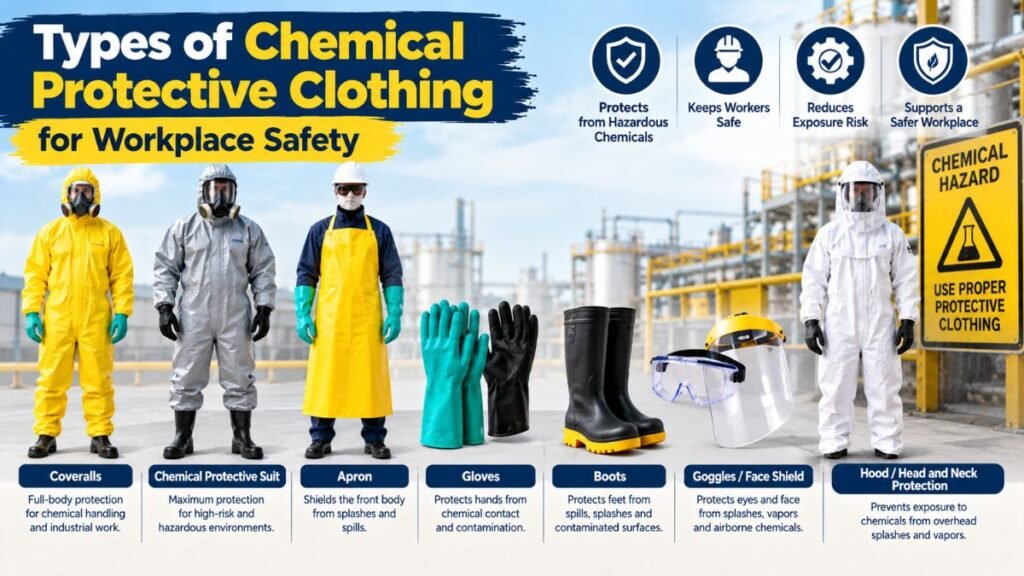
Chemical exposure can cause serious injuries in many workplaces. Workers may face harmful liquids, chemical splashes, vapors, dust, and corrosive substances. The right protective clothing helps reduce these risks.
However, not every protective garment works against every chemical. Some materials resist liquid splashes, while others provide stronger barriers. Choosing the wrong clothing can expose workers to dangerous substances.
Understanding the types of chemical protective clothing for workplace safety helps employers make informed decisions. It also helps workers understand their protective equipment and its limitations.
This guide explains common protective clothing types, their uses, materials, and selection factors. You will also learn how to inspect, maintain, and safely remove chemical protective garments.
What Is Chemical Protective Clothing?
Chemical protective clothing is personal protective equipment (PPE) designed to reduce contact with hazardous substances. It covers parts of the body that could face chemical exposure. Depending on the task, it may protect the torso, arms, legs, hands, feet, and head.
These garments include chemical-resistant coveralls, protective suits, aprons, gloves, sleeves, and specialized footwear. Some designs protect against liquid splashes. Others provide barriers against specific chemicals or hazardous particles.
Chemical protective clothing does not provide universal protection. A garment suitable for one substance may fail against another. Its performance depends on the material, chemical concentration, temperature, exposure time, and garment construction.
Employers should assess workplace hazards before selecting PPE. They should also review product specifications and chemical safety data sheets. These steps help identify suitable equipment for each task.
Why Are Types of Chemical Protective Clothing Important?
Different workplaces face different chemical hazards. A laboratory worker may handle small amounts of corrosive liquid. An industrial cleaner may work with concentrated chemicals. A hazardous waste team may encounter unknown substances.
Each situation requires a suitable level of protection. Selecting the correct garment helps reduce skin exposure and contamination. It can also support safer working practices.
The main benefits include:
- Reducing direct contact with hazardous chemicals.
- Limiting skin contamination during handling and cleaning.
- Protecting workers from certain chemical splashes and spills.
- Supporting workplace PPE programs and safety procedures.
- Reducing the spread of contamination outside controlled work areas.
- Helping workers perform tasks with appropriate protective equipment.
Chemical protective clothing works best alongside other safety controls. These include ventilation, enclosed processes, safe handling procedures, and suitable emergency plans. PPE should not replace effective hazard controls when those controls are feasible.
Main Types of Chemical Protective Clothing for Workplace Safety
Several protective clothing types are available for different tasks. Each type offers specific benefits and limitations. The best choice depends on the chemical hazard and exposure conditions.
1. Chemical-Resistant Coveralls
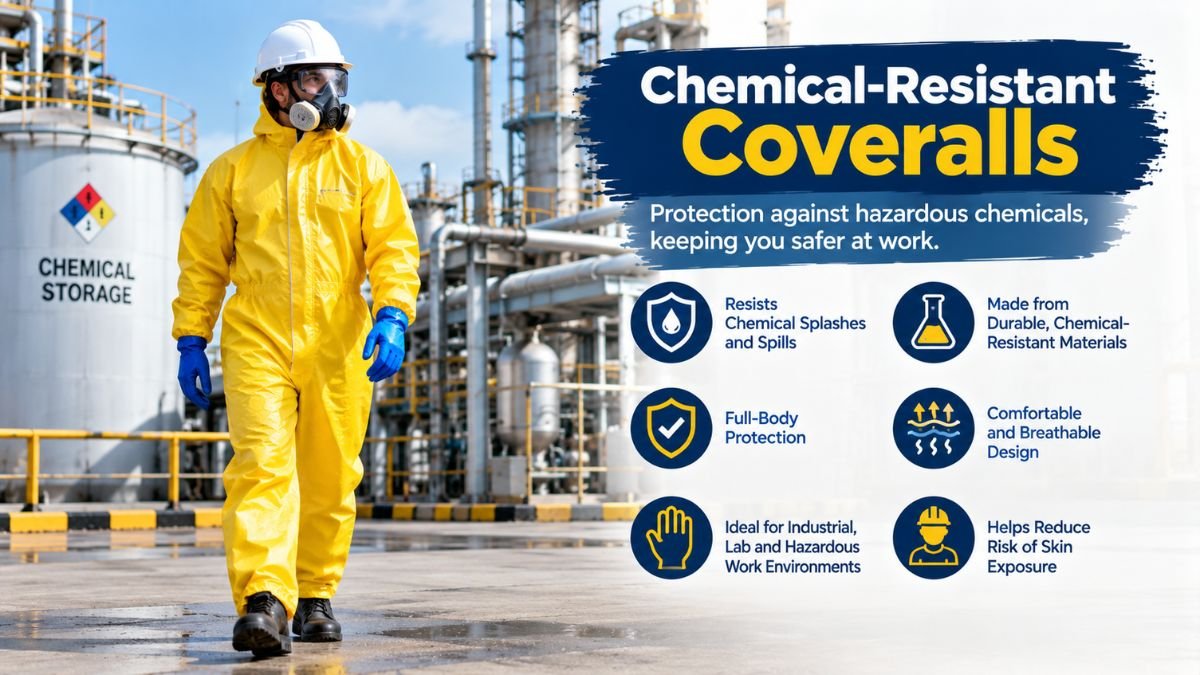
Chemical-resistant coveralls protect the torso, arms, and legs. They are commonly used in manufacturing, laboratories, agriculture, and industrial cleaning. Their design helps reduce contamination of ordinary work clothing.
Coveralls may be reusable or disposable. Some resist light splashes, while others provide barriers against selected hazardous liquids. Material choice determines their suitability for particular chemicals.
Disposable coveralls can be useful for tasks involving limited contamination. Reusable garments may suit repeated operations when proper cleaning is possible. Always check the manufacturer’s chemical resistance data before use.
Coveralls must fit correctly and allow safe movement. Closures, cuffs, seams, and zippers also affect protection. A poorly fitted garment may leave gaps where chemicals can enter.
2. Chemical Protective Suits
Chemical protective suits provide broader body coverage than ordinary coveralls. Some designs protect the entire body, including the head and neck. Others work with separate gloves, boots, and respiratory equipment.
These suits are used in chemical processing, hazardous material response, and certain cleanup operations. Their protection level depends on the suit’s design and tested performance.
Some suits resist specific liquid chemicals. Others provide protection against selected vapors or gases when used as part of a suitable ensemble. No suit protects against every chemical under all conditions.
Workers must receive training before using specialized suits. They should understand entry procedures, exposure limits, communication methods, and emergency escape plans. Suit selection should follow a documented hazard assessment.
3. Chemical-Resistant Aprons
Chemical-resistant aprons protect the front of the body. They are useful when tasks create a risk of splashes or spills. Workers may use them in laboratories, food processing, cleaning, and chemical handling.
Common apron materials include PVC, rubber, polyethylene, and specialized barrier materials. Each material has different chemical resistance properties. The correct choice depends on the substance being handled.
Aprons generally provide less coverage than full coveralls. They may leave the arms, back, and legs exposed. Therefore, workers may need additional PPE for splash protection.
Inspect aprons before every use. Replace garments with cracks, holes, damaged seams, or signs of deterioration. Follow the manufacturer’s instructions for cleaning and storage.
4. Chemical-Resistant Gloves
Chemical-resistant gloves protect the hands during chemical handling. They are among the most frequently used protective clothing types. However, glove material must match the chemical and task.
Common materials include nitrile, neoprene, butyl rubber, and other specialized polymers. Each offers different resistance to chemicals. No single glove material is suitable for every substance.
Consider the chemical’s concentration and expected contact time. Also review glove thickness, flexibility, cuff length, and breakthrough data. These factors affect both protection and dexterity.
Replace gloves when they become damaged or contaminated beyond safe reuse. Do not assume that thicker gloves always provide better protection. Follow the manufacturer’s chemical compatibility guidance.
5. Chemical-Resistant Sleeves
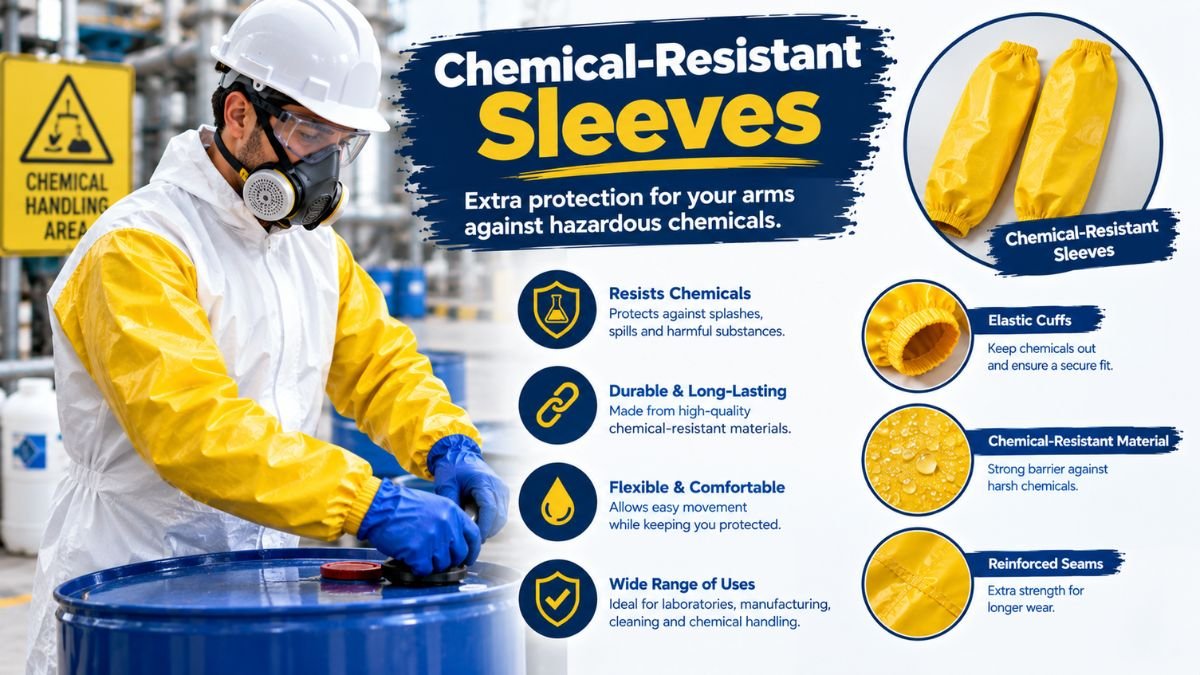
Protective sleeves cover the arms when ordinary clothing does not provide enough protection. They can be useful during mixing, pouring, cleaning, and laboratory procedures.
Sleeves are often made from coated fabrics, rubber, or specialized chemical-resistant materials. Their performance varies according to the substance and exposure conditions.
Some sleeves work with protective coveralls and gloves. Others provide limited protection against brief splashes. Ensure that the overlap between gloves, sleeves, and clothing prevents exposure gaps.
Inspect sleeves for holes, tears, loose closures, and chemical damage. Remove damaged items from service. Replace them according to the manufacturer’s guidance.
6. Chemical-Resistant Boots and Footwear
Protective boots help shield feet from spills, splashes, and contaminated surfaces. They are useful in chemical plants, industrial cleaning, agriculture, and waste management.
Boots may use rubber, PVC, or other resistant materials. Their suitability depends on the chemical involved. Ordinary work boots may not provide enough protection against corrosive substances.
Choose boots with appropriate chemical resistance and suitable sole grip. Consider the risk of punctures, slipping, and falling objects. The footwear must also fit properly.
Check the boot material, seams, and sole before each use. Chemical exposure can weaken some materials over time. Clean, inspect, and replace footwear according to the approved procedure.
7. Chemical Splash Goggles and Face Protection
Chemical exposure can damage the eyes and face. Splash goggles provide a protective barrier around the eyes. Face shields can add protection against splashes reaching the face.
These items are usually used with other protective clothing. A face shield alone may not provide adequate eye protection. Suitable goggles may still be necessary, depending on the hazard.
Select eye and face protection according to the chemical and task. Check compatibility with respirators, helmets, and other equipment. Ensure that the equipment fits securely without creating gaps.
Inspect lenses, seals, straps, and fasteners before use. Replace damaged equipment that cannot provide reliable protection. Follow the workplace’s cleaning and storage procedures.
8. Chemical-Resistant Head and Neck Protection
Some tasks require protection for the head, neck, or hair. This equipment may include chemical-resistant hoods, head covers, and integrated suit hoods.
These items are useful when overhead splashes or airborne contamination are possible. They may also form part of specialized protective ensembles.
Head and neck protection must match the chemical hazard. A fabric hood that blocks dust may not resist liquid chemicals. Integrated hoods must also work with the selected respirator and suit.
Check that closures and interfaces remain secure during movement. Follow the manufacturer’s instructions for fitting and removal. Replace damaged or contaminated equipment when required.
Types of Chemical Protective Clothing by Protection Level
Chemical protective clothing can also be grouped by the level of protection required. The terms used depend on the applicable safety program and industry.
For certain hazardous waste operations, OSHA describes four PPE ensemble levels. These are known as Levels A, B, C, and D. They are not universal ratings for every chemical garment.
Level A Protection
Level A provides the highest overall skin, eye, and respiratory protection within the OSHA hazardous waste framework. It may be selected when the hazard assessment identifies a need for maximum protection.
A typical ensemble includes a compatible, totally encapsulating chemical protective suit. It also includes appropriate respiratory protection, gloves, and chemical-resistant footwear.
Level A equipment is used for specific high-risk situations. It requires detailed planning, specialized training, and suitable emergency procedures. Only trained personnel should use it.
Level B Protection
Level B provides a high level of respiratory protection with less skin protection than Level A. It may be appropriate when respiratory hazards are severe but the required skin protection is lower.
A typical ensemble may include a chemical-resistant suit, gloves, boots, and positive-pressure respiratory equipment. The exact combination depends on the identified hazards.
Level B is not automatically suitable for every liquid or vapor. Employers must evaluate the chemical’s properties and exposure conditions before choosing it.
Level C Protection
Level C may be suitable when the contaminants and their concentrations are known. The selected air-purifying respirator must be appropriate for those hazards.
Protective clothing, gloves, and footwear must also match the chemical exposure risk. Air-purifying respirators cannot be used in oxygen-deficient atmospheres or every immediately dangerous environment.
The team must confirm that the respirator’s filters or cartridges are suitable. They must also follow the applicable respiratory protection requirements.
Level D Protection
Level D provides basic work clothing with limited protective features. It may be appropriate for tasks without significant respiratory or skin exposure hazards.
It does not provide specialized chemical protection by itself. Workers must not choose Level D when the hazard assessment identifies a need for greater protection.
The correct ensemble depends on the workplace and task. Employers should never select a level based only on convenience or cost.
Common Materials Used in Chemical Protective Clothing
The material is a major factor in chemical protection. Different materials resist different substances. A garment’s appearance alone cannot confirm its chemical resistance.
Nitrile
Nitrile is commonly used for chemical-resistant gloves. It can resist many oils and selected chemicals. However, its performance varies by chemical and formulation.
Check the glove manufacturer’s compatibility information before use. Do not assume that all nitrile gloves offer identical protection.
Neoprene
Neoprene is used in some gloves, boots, and protective garments. It provides resistance to certain acids, bases, and other substances. Its suitability depends on the specific chemical.
Review the product’s technical information before choosing neoprene equipment. Also consider the temperature and duration of exposure.
Butyl Rubber
Butyl rubber is used in specialized protective gloves and equipment. It offers resistance to selected gases and chemicals. It is often considered for applications where other materials may perform poorly.
Its protection is chemical-specific. Confirm that the exact product is tested for the intended substance.
PVC
Polyvinyl chloride, or PVC, is used in aprons, boots, gloves, and coated garments. It can provide resistance to selected acids, bases, and other liquids.
PVC is not suitable for every solvent or chemical. Review the manufacturer’s data before using it in hazardous environments.
Polyethylene
Polyethylene is used in some disposable protective garments. It can help protect against selected splashes and particles. Different garment designs provide different levels of barrier protection.
Do not treat every polyethylene garment as chemical-proof. Verify its tested performance for the intended task.
Laminated Barrier Materials
Some protective garments use multiple layers of specialized barrier materials. These layers are designed to resist particular chemicals and reduce permeation.
Laminated suits are often used for demanding applications. Their effectiveness depends on the chemical, temperature, exposure duration, and garment construction.
Always review the garment’s technical data. Select equipment based on the actual hazard rather than the material name alone.
How to Choose the Right Types of Chemical Protective Clothing
Choosing suitable PPE requires more than selecting a durable garment. Employers must understand the chemicals, tasks, and exposure conditions.
1. Identify the Chemical Hazard
Start by identifying every chemical involved in the task. Review the product label and safety data sheet. Pay attention to the substance’s hazards, concentration, and physical form.
Determine whether workers could face splashes, spills, sprays, or prolonged contact. Consider the possibility of unexpected releases. Unknown hazards require a cautious, professionally managed approach.
2. Review Chemical Compatibility
Check the garment manufacturer’s chemical resistance data. Look for information about permeation, degradation, and penetration.
Permeation occurs when a chemical passes through a material at the molecular level. Degradation occurs when a chemical changes the material’s properties. Penetration occurs when a substance passes through openings, seams, or defects.
These are different failure mechanisms. A garment may resist visible damage but still allow chemical permeation. Choose equipment with suitable test data for the intended exposure.
3. Consider Exposure Time and Temperature
The duration of exposure can affect protective performance. Higher temperatures may increase chemical permeation or accelerate material damage.
A garment suitable for brief contact may not be appropriate for prolonged exposure. Review the manufacturer’s limitations and replacement guidance.
4. Choose the Correct Coverage
Consider which body areas may become exposed. A splash apron may protect the torso but leave the arms uncovered. Coveralls may provide broader coverage but still require gloves and boots.
Choose compatible components that work together. Pay close attention to cuffs, closures, seams, and connection points.
5. Check Fit and Comfort
Protective clothing should fit the wearer correctly. Oversized garments may snag on equipment. Tight garments can restrict movement and cause discomfort.
Consider the worker’s movements, task duration, and working conditions. Heat stress may become a concern when garments limit cooling. Provide suitable breaks and other controls when needed.
6. Verify Applicable Standards
Review the safety requirements that apply to the workplace and task. In the United States, OSHA’s general PPE rule requires employers to assess workplace hazards and select suitable equipment.
Certain operations may have additional requirements. Hazardous waste response and cleanup activities, for example, can fall under OSHA’s HAZWOPER standard.
Do not assume that one certification covers every chemical hazard. Verify the specific standard and performance claims relevant to the garment.
7. Consider Reuse and Disposal
Some garments are designed for one-time use. Others can be cleaned and reused under specified conditions.
Confirm that reusable equipment can be decontaminated without losing its protective performance. Establish safe handling procedures for contaminated garments.
Dispose of contaminated PPE according to the chemical’s hazards and applicable rules. Never send contaminated clothing for ordinary laundering without proper evaluation and instructions.
Protective Clothing Types for Different Industries
Chemical protective clothing needs vary across industries. The following examples show how task requirements influence selection.
Chemical Manufacturing
Chemical manufacturing workers may handle corrosive liquids, solvents, and reactive substances. Depending on the task, they may need chemical-resistant coveralls, gloves, aprons, goggles, and boots.
Some processes require specialized suits and respiratory protection. Employers should assess each operation rather than use one PPE combination everywhere.
Laboratories
Laboratory workers may handle small quantities of hazardous chemicals. Common equipment includes laboratory coats, compatible gloves, and splash goggles.
A laboratory coat does not automatically provide chemical protection. The correct garment depends on the substance and the risk of splashing or contamination.
Agriculture
Agricultural workers may handle pesticides, fertilizers, and cleaning chemicals. They may require chemical-resistant gloves, coveralls, boots, and eye protection.
The pesticide label and applicable instructions are important when selecting PPE. Some products require specific materials or additional protective equipment.
Healthcare and Cleaning
Healthcare and cleaning staff may encounter disinfectants, cleaning agents, and other hazardous substances. Appropriate gloves, gowns, aprons, or coveralls may be needed.
The required protection depends on the product and task. Ordinary fluid-resistant garments should not be assumed to resist every chemical.
Oil, Gas, and Industrial Maintenance
Oil, gas, and maintenance workers may encounter solvents, oils, cleaning agents, and corrosive products. Suitable PPE can include chemical-resistant gloves, coveralls, aprons, and boots.
Some locations also present fire or flash-fire hazards. Chemical resistance and flame resistance are different properties. Employers should assess both hazards when they may occur together.
Hazardous Waste Operations
Hazardous waste workers may encounter mixed or uncertain contaminants. Their protective equipment must follow the site assessment and applicable emergency procedures.
Specialized operations may require encapsulating suits, respiratory equipment, and carefully planned decontamination. Trained safety personnel should determine the appropriate ensemble.
How to Inspect Chemical Protective Clothing
Inspection helps identify damage before workers enter hazardous areas. Even small defects can reduce protection.
Check the garment before each use. Look for holes, cuts, tears, discoloration, swelling, and unusual stiffness. Inspect seams, closures, zippers, cuffs, and attachment points.
Review the manufacturer’s instructions for additional inspection methods. Some damage may not be visible. Certain materials can degrade after contact with specific chemicals.
Remove damaged or suspect equipment from service. Do not repair a garment unless the manufacturer permits an approved repair method. Record inspections when the workplace procedure requires documentation.
How to Wear and Remove Chemical Protective Clothing Safely
Correct use is as important as selecting the right garment. Poor donning or removal can transfer chemicals to the skin.
Before Wearing PPE
Confirm that the selected equipment matches the task. Inspect each component and check its compatibility with the other items.
Follow the required dressing sequence. Ensure that gloves, sleeves, boots, and suit closures connect correctly. Use a trained partner when the procedure requires assistance.
During Chemical Work
Follow the approved work procedure. Avoid touching clean surfaces with contaminated gloves. Do not adjust equipment with contaminated hands unless the procedure allows it.
Leave the work area if the garment becomes damaged or exposure occurs. Follow the site’s emergency instructions and report the incident promptly.
After Completing the Task
Follow the established doffing procedure. Remove contaminated equipment in a way that limits contact with skin and ordinary clothing.
Use a designated removal area when required. Avoid shaking contaminated garments or taking them into clean areas. Wash exposed skin according to the workplace’s decontamination procedure.
Clean, store, or dispose of equipment as instructed. Workers should not take contaminated clothing home for washing.
Cleaning, Storage, and Maintenance of Chemical Protective Clothing
Proper maintenance helps preserve protective performance. However, cleaning methods must match the garment material and contaminant.
Follow the manufacturer’s instructions for washing and decontamination. Some garments cannot be safely reused after chemical exposure. Others require specialized cleaning procedures.
Store clean equipment in a suitable area. Keep it away from direct sunlight, excessive heat, sharp objects, and incompatible chemicals. Prevent clean PPE from contacting contaminated equipment.
Label contaminated garments clearly. Keep them separate from clean items until they are decontaminated or disposed of properly. Train workers who handle used protective clothing.
Replace equipment when it reaches its service limit. Also replace items that show damage or have uncertain contamination status. Never rely on appearance alone to determine whether a garment remains safe.
Common Mistakes When Choosing Chemical Protective Clothing
Selecting unsuitable PPE can create a false sense of security. Avoid these common mistakes.
Assuming One Material Protects Against Every Chemical
No single material resists all chemicals. Always check compatibility data for the specific substance and task.
Choosing PPE Based Only on Price
Low-cost equipment may not provide the required protection. Compare technical performance, service life, fit, and replacement needs before making a decision.
Ignoring Seams and Closures
Chemicals can enter through gaps, damaged seams, or poorly secured closures. Inspect these areas carefully and ensure that all components fit together.
Reusing Disposable Clothing
Disposable garments may lose their protective properties after exposure. Follow the manufacturer’s reuse restrictions and the workplace’s disposal procedures.
Overlooking Training
Workers need to know how to wear, remove, inspect, and maintain PPE. Provide practical training before assigning hazardous tasks.
Ignoring Heat Stress
Protective suits can reduce heat loss and increase physical strain. Consider temperature, workload, rest breaks, hydration, and other controls when planning work.
Chemical Protective Clothing and OSHA Requirements
In the United States, OSHA’s general PPE standard is 29 CFR 1910.132. It requires employers to assess workplace hazards and select suitable protective equipment when hazards make PPE necessary.
Employers must communicate selection decisions and ensure proper fit. They must also provide required training on PPE use, limitations, care, maintenance, and disposal. Defective or damaged equipment must not be used.
Certain hazardous waste operations are covered by OSHA’s HAZWOPER standard, 29 CFR 1910.120. This standard includes additional provisions for selecting, using, maintaining, and decontaminating protective equipment.
The exact requirements depend on the workplace and activity. Employers should review the applicable regulations and seek qualified safety advice when needed. This guide provides general information, not a substitute for a site-specific hazard assessment.
Conclusion
Understanding the types of chemical protective clothing for workplace safety helps workers and employers reduce chemical exposure risks. Common options include coveralls, protective suits, aprons, gloves, sleeves, boots, goggles, and hoods.
Each garment offers different coverage and chemical resistance. The correct choice depends on the substance, concentration, exposure route, temperature, and task duration.
Review chemical compatibility data before selecting PPE. Train workers in safe use, removal, cleaning, and disposal. With proper assessment and maintenance, protective clothing can support a safer workplace.
Frequently Asked Questions
1. What are the main types of chemical protective clothing?
Common types include chemical-resistant coveralls, protective suits, aprons, gloves, sleeves, boots, goggles, face shields, and hoods. The right combination depends on the hazard and task.
2. What is the best material for chemical protective clothing?
There is no single best material for every chemical. Nitrile, neoprene, butyl rubber, PVC, polyethylene, and laminated barriers offer different properties. Always check compatibility data for the specific chemical.
3. What are the four levels of chemical protection?
OSHA describes Levels A, B, C, and D in its hazardous waste operations guidance. These levels represent different combinations of skin and respiratory protection. They are not universal ratings for all protective garments.
4. Can ordinary work clothes protect against chemicals?
Ordinary clothing usually cannot provide reliable protection against hazardous chemicals. Some substances can pass through or damage everyday fabrics. Use PPE selected for the identified hazard.
5. Are disposable chemical coveralls reusable?
Some disposable coveralls are designed for single use only. Others may have specific reuse instructions. Follow the manufacturer’s guidance and workplace procedures.
6. How do I choose chemical-resistant gloves?
Identify the chemical, concentration, temperature, and expected contact time. Then check the glove manufacturer’s compatibility and breakthrough data. Make sure the gloves also fit the task.
7. Does chemical protective clothing protect against every chemical?
No. Protection depends on the material, garment design, chemical, and exposure conditions. No single ensemble provides universal protection.
8. When should chemical protective clothing be replaced?
Replace clothing when it is damaged, contaminated beyond safe reuse, or past its service limit. Follow manufacturer instructions and workplace procedures.
9. What is the difference between chemical-resistant and waterproof clothing?
Waterproof clothing mainly prevents water from passing through under specified conditions. Chemical-resistant clothing is designed and tested against particular chemicals. Waterproofing alone does not prove chemical resistance.
10. Does OSHA require chemical protective clothing?
OSHA requires employers to assess workplace hazards and provide suitable PPE when necessary. Specific requirements depend on the workplace and applicable standards. Employers must select equipment that protects workers from the identified hazards.