
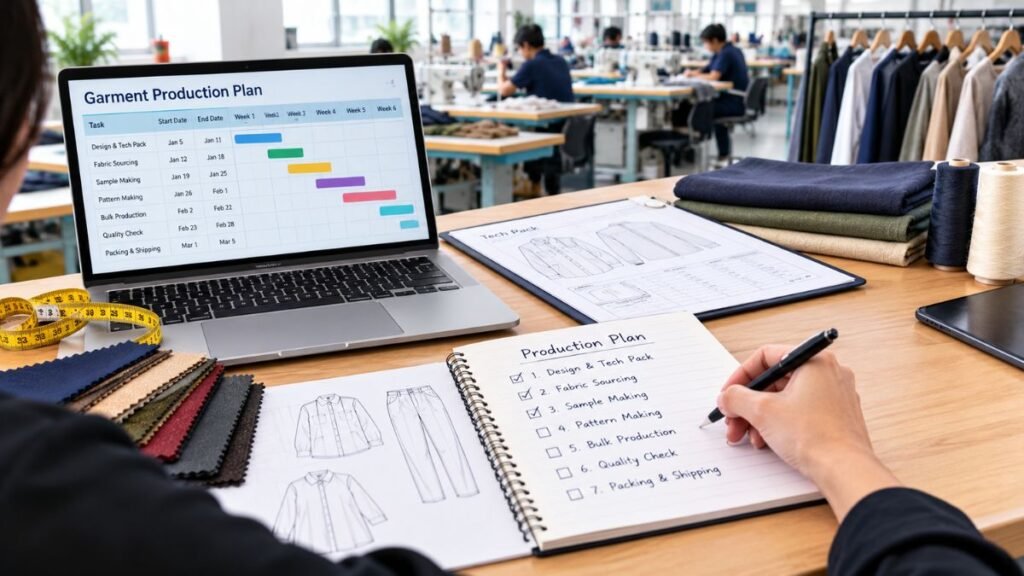
Garment production requires careful planning at every stage. Clothing factories manage orders, fabrics, workers, machines, and delivery dates. Without a clear plan, production can become slow and expensive.
A garment production plan helps factories organize these activities. It explains what to produce, how much to produce, and when to complete each task. It also helps production teams use available resources efficiently.
Whether you manage a small workshop or a large factory, planning matters. A proper schedule reduces delays and improves product quality. It also helps businesses meet customer expectations.
This guide explains how to make garment production plan step by step. You will learn about production scheduling, material planning, capacity management, and quality control. These steps can help create a smoother manufacturing process.
What Is a Garment Production Plan?
A garment production plan is a document that organizes manufacturing activities. It outlines the steps needed to complete clothing orders. It also assigns timelines, resources, and responsibilities.
The plan usually starts after receiving a confirmed customer order. Production managers review the order details and calculate requirements. They then prepare a schedule for each manufacturing stage.
A typical garment production plan includes several important details:
- Customer order quantity
- Garment styles and specifications
- Fabric and trim requirements
- Material purchasing schedules
- Production start and completion dates
- Cutting and sewing schedules
- Workforce and machine requirements
- Quality inspection points
- Packaging and shipping deadlines
These details help teams understand their responsibilities. They also make production progress easier to monitor.
Why Is a Garment Production Plan Important?
A production plan supports better control across the factory. It connects different departments and keeps activities organized. Without planning, one department may wait for another.
For example, sewing cannot begin without prepared fabric pieces. Similarly, finishing cannot start before garments leave sewing. A production schedule helps coordinate these activities.
1. Helps Meet Delivery Deadlines
Customers expect orders to arrive on time. Production delays can damage business relationships. They may also lead to penalties or lost customers.
A clear schedule gives every department a target date. Managers can monitor progress and identify delays early. This makes delivery management more reliable.
2. Reduces Manufacturing Costs
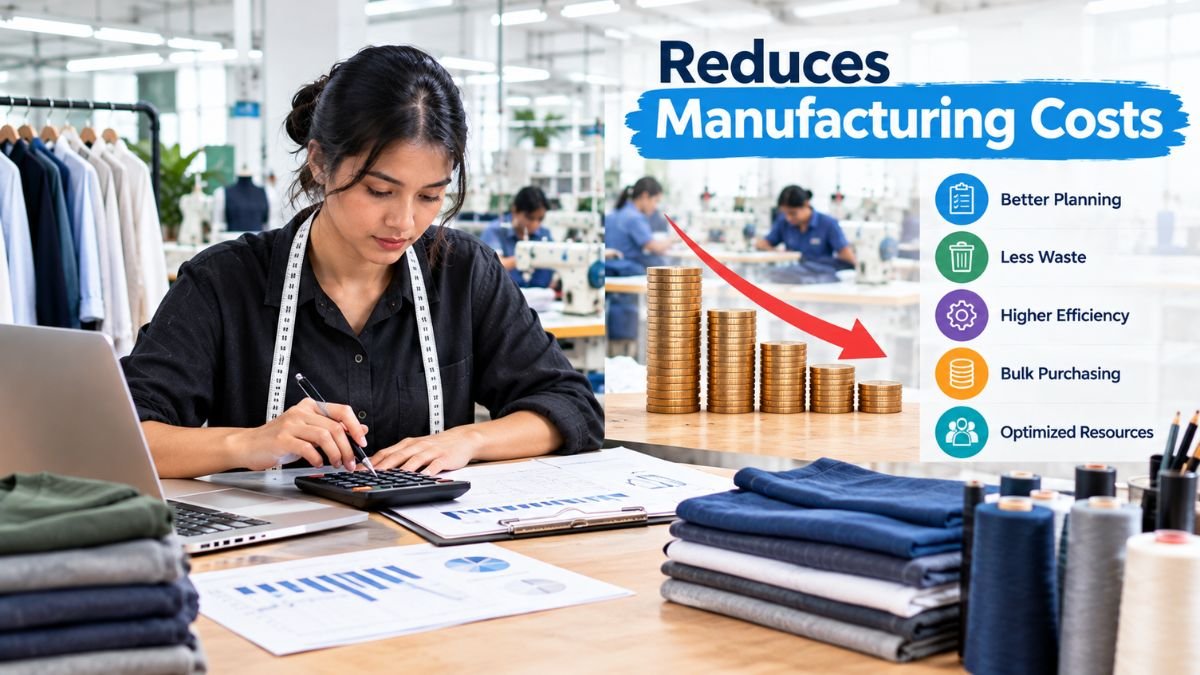
Poor planning can increase production expenses. Factories may purchase unnecessary materials or keep workers waiting. Machine downtime can also increase operating costs.
A production plan helps control these problems. It improves resource allocation and reduces avoidable waste.
3. Improves Production Efficiency
Every manufacturing stage depends on the previous stage. A delay in cutting can affect the sewing department. A sewing delay can also affect finishing.
Production planning keeps these activities connected. It helps workers complete tasks in the correct order.
4. Supports Better Inventory Management
Factories need enough materials before production begins. However, excessive inventory can increase storage costs. It can also tie up working capital.
A material plan helps calculate purchasing requirements. It reduces shortages and unnecessary stock.
5. Improves Product Quality
Production planning also includes quality checkpoints. Workers can inspect materials, cut panels, and finished garments. Early inspections help identify problems before bulk production continues.
How to Make Garment Production Plan Step by Step
Creating a useful production plan requires accurate information. Start with the customer order and review every requirement. Then organize materials, workers, machines, and production dates.
The following steps explain the complete process.
1. Review the Customer Order
The first step is understanding the order. Collect all details before preparing the production schedule.
Review the customer’s purchase order carefully. Confirm the garment style, sizes, colors, and quantities. Check the required delivery date and packaging instructions.
You should also review the approved product specifications. These may include measurements, fabric types, stitching details, and labels.
Important order details include:
- Product name and style number
- Total order quantity
- Size breakdown
- Color breakdown
- Fabric and trim specifications
- Required quality standards
- Sample approval status
- Delivery date
- Special customer instructions
For example, a customer may order 5,000 cotton T-shirts. The order may include three colors and five sizes. Your production plan must reflect this breakdown.
Never prepare a schedule using incomplete order information. Missing details can create problems during manufacturing.
2. Calculate the Total Production Quantity
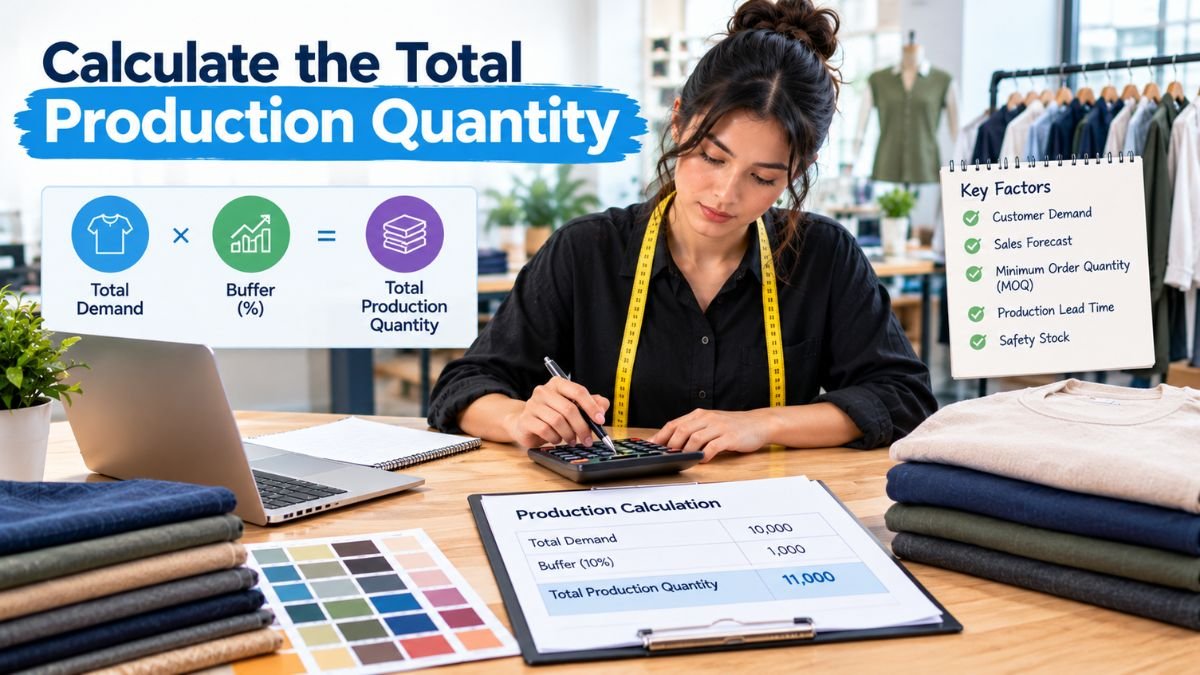
After reviewing the order, calculate the required quantity. Consider the size and color breakdown separately.
Suppose a customer orders 5,000 shirts. The factory may need to produce 2,000 black shirts, 1,500 white shirts, and 1,500 blue shirts.
Each color may also have different size quantities. These details affect cutting, sewing, and packing.
Factories may also consider an approved allowance for defects or production loss. However, the allowance should follow customer requirements and company policy.
Do not automatically produce extra garments without approval. Confirm acceptable overproduction and underproduction limits first.
3. Prepare a Garment Production Timeline
A production timeline shows when each activity should begin and finish. It connects the order deadline with factory operations.
Start with the final delivery date. Then work backward through the manufacturing stages.
A typical garment production timeline includes:
- Order confirmation
- Design and specification approval
- Fabric and trim sourcing
- Sample development
- Material inspection
- Fabric relaxation and spreading
- Cutting
- Sewing
- Washing or special treatment
- Finishing and pressing
- Final quality inspection
- Packing and shipment
Assign realistic dates to each stage. Consider supplier lead times and factory capacity.
Also include some time for unexpected problems. Material delays and machine breakdowns can affect the schedule.
4. Calculate Fabric and Trim Requirements
Material planning is an important part of garment manufacturing. Every product requires specific fabrics and accessories.
First, review the approved bill of materials. This document lists the materials needed for each garment.
Common garment materials include:
- Main fabric
- Lining fabric
- Sewing thread
- Buttons
- Zippers
- Labels
- Elastic
- Interlining
- Hang tags
- Packaging materials
Next, calculate material consumption per garment.
For example, assume one shirt requires 1.5 meters of fabric. An order contains 2,000 shirts.
The basic fabric requirement is:
2,000 × 1.5 = 3,000 meters
The factory must then consider the approved allowance for cutting waste. Actual consumption should come from the garment’s marker and fabric specifications.
Prepare a separate material requirement for each style and color. This helps purchasing teams place accurate orders.
5. Check Fabric and Material Availability
Calculating requirements is not enough. You must also check available stock.
Compare the required quantities with current inventory. Identify shortages before production starts.
For example, a factory may need 3,000 meters of fabric. Its warehouse may contain only 2,200 meters. The purchasing team must arrange the remaining quantity.
Check material quality as well. Confirm that the fabric matches approved specifications.
Inspect important details such as:
- Fabric weight
- Width
- Color consistency
- Shrinkage
- Colorfastness
- Surface defects
- Supplier specifications
Do not release unsuitable materials into bulk production. Material problems can affect the entire order.
6. Calculate Garment Production Capacity
Production capacity determines how much a factory can manufacture. It depends on workers, machines, working hours, and product complexity.
Start by calculating available working time. Then estimate the production output for each operation.
A common planning formula is:
Daily production capacity = Available production minutes × Number of operators × Efficiency ÷ Standard allowed minutes per garment
For example, assume a line has 20 operators. Each operator works 480 minutes daily. Planned efficiency is 60%.
The garment’s standard allowed minute value is 12 minutes.
The estimated daily output is:
20 × 480 × 0.60 ÷ 12 = 480 garments.
This is a planning estimate, not a guaranteed output. Actual performance depends on line balance, skill levels, and downtime.
Use realistic efficiency figures from previous production records. Avoid setting targets beyond the factory’s actual capacity.
7. Allocate Workers and Machines
Once capacity is understood, assign workers and machines. Each production operation needs suitable equipment and trained employees.
For example, T-shirt manufacturing may require:
- Overlock machines
- Flatlock machines
- Single-needle machines
- Coverstitch machines
- Cutting machines
- Pressing equipment
The exact requirements depend on garment construction.
Assign workers according to their skills. Some operations require more experience than others.
Also check machine availability before scheduling production. A machine shortage can slow down the entire line.
8. Prepare the Cutting Production Schedule
Cutting is one of the first major factory operations. It converts fabric rolls into garment panels.
The cutting schedule should follow the approved production quantity. It must also consider fabric availability and marker planning.
Before cutting begins, check fabric quality and shade consistency. Relax the fabric when required by its specifications.
Then prepare markers and spreading instructions. Confirm the correct size and color quantities.
Important cutting activities include:
- Fabric inspection
- Fabric relaxation
- Marker preparation
- Fabric spreading
- Cutting
- Panel numbering
- Bundle preparation
- Cutting quality inspection
Proper cutting control reduces fabric waste. It also helps prevent panel shortages and size-mixing problems.
9. Prepare the Sewing Production Schedule
Sewing usually requires careful coordination. Different operations must follow the correct sequence.
Start by reviewing the garment’s operation breakdown. This document explains the sewing steps and their standard times.
Then calculate the required line capacity. Assign workers according to operation difficulty and production targets.
For example, a basic T-shirt may require shoulder joining, sleeve attachment, side joining, and hemming.
The sewing plan should include:
- Style number
- Order quantity
- Line assignment
- Operation sequence
- Operator allocation
- Daily target
- Planned start date
- Planned completion date
Monitor sewing output throughout the day. Compare actual production with planned targets.
If output falls behind, investigate the cause. It may involve machine problems, poor line balance, or material shortages.
10. Plan Finishing and Quality Inspection
After sewing, garments move into finishing. This stage prepares products for final delivery.
Finishing activities depend on the garment type. They may include thread trimming, pressing, folding, and labeling.
Quality inspection should happen throughout production. Do not wait until the final stage to identify defects.
Common inspection points include:
- Measurement accuracy
- Stitch quality
- Seam strength
- Fabric defects
- Color consistency
- Label placement
- Button and zipper function
- Overall appearance
Record defects and communicate problems to the responsible department. Corrective action should happen before affected garments move forward.
11. Prepare the Packing and Shipping Schedule
Packing is the final production stage before shipment. It must follow customer instructions.
Check the approved packing method. Confirm carton sizes, labels, polybags, and folding requirements.
Prepare a packing schedule based on finished quantities. Ensure that packed garments match the order’s size and color breakdown.
Before shipment, verify:
- Total packed quantity
- Carton quantity
- Size assortment
- Color assortment
- Shipping marks
- Carton labels
- Required documents
- Final inspection approval
Coordinate with the shipping team early. This helps avoid last-minute delays.
How to Prepare a Garment Production Planning Sheet
A garment production planning sheet organizes important order information. It allows managers to track each stage in one place.
You can prepare it using Excel or production management software.
A useful planning sheet should contain the following information:
| Planning detail | Information required |
|---|---|
| Order number | Customer purchase order |
| Style number | Garment identification |
| Product description | Shirt, trousers, jacket, etc. |
| Order quantity | Total units |
| Fabric details | Type, color, and consumption |
| Material status | Available or pending |
| Cutting schedule | Start and finish dates |
| Sewing schedule | Line and production dates |
| Finishing schedule | Planned completion |
| Inspection status | Approved or pending |
| Packing status | Packed quantity |
| Shipment date | Required dispatch date |
Keep the sheet updated throughout production. Old information can lead to incorrect decisions.
Example of a Garment Production Plan
Consider a factory receiving an order for 5,000 cotton T-shirts. The customer requires delivery within 30 working days.
The factory prepares a schedule for each manufacturing stage.
| Production activity | Planned time |
|---|---|
| Order review and confirmation | 2 days |
| Fabric and trim sourcing | 7 days |
| Sample approval | 3 days |
| Fabric inspection and preparation | 2 days |
| Cutting | 3 days |
| Sewing | 8 days |
| Finishing and inspection | 3 days |
| Packing and shipment preparation | 2 days |
These activities total 30 working days. Some stages may overlap when materials and approvals are ready.
For example, the factory may prepare labels while fabric is being sourced. However, overlapping tasks require careful coordination.
This example is only a planning model. Actual timelines depend on supplier lead times, order complexity, and factory capacity.
Common Types of Garment Production Planning
Different factories use different planning methods. The best method depends on order size and manufacturing operations.
1. Order-Based Production Planning
Order-based planning focuses on individual customer orders. Each order receives its own schedule and production targets.
This approach works well for custom clothing and private-label manufacturing. It helps factories manage different styles and delivery dates.
2. Capacity-Based Production Planning
Capacity-based planning focuses on available factory resources. Managers calculate how much each production line can manufacture.
They then assign orders according to available capacity. This approach helps prevent overloading.
3. Material-Based Production Planning
Material-based planning focuses on fabric and accessory availability. Production starts according to material readiness.
This method is useful when suppliers have long lead times. It helps reduce interruptions caused by missing materials.
4. Line-Based Production Planning
Line-based planning organizes work across sewing lines. Each line receives specific styles and production targets.
Managers monitor line output and worker performance. This method supports daily factory control.
How to Monitor Garment Production Progress
Creating a production plan is only the beginning. Managers must monitor progress throughout manufacturing.
Compare actual output with planned output every day. Identify differences and investigate their causes.
Useful production monitoring methods include:
Daily Production Reports
Daily reports show how much each department completes. They help managers compare actual performance with targets.
A report may include cutting quantity, sewing output, rejected garments, and finished quantity.
Production Tracking Charts
Tracking charts show whether production follows the schedule. They make delays easier to identify.
Managers can use spreadsheets or factory management systems. Update the information regularly.
Work-in-Progress Monitoring
Work in progress refers to garments currently moving through production. Monitoring this quantity helps identify bottlenecks.
Too much unfinished stock can indicate poor workflow. It may also create handling and storage problems.
Regular Production Meetings
Short production meetings help departments share updates. Managers can discuss material shortages and output problems.
These meetings should focus on practical solutions. Every department should understand its next responsibilities.
Common Mistakes to Avoid in Garment Production Planning
Even experienced factories can make planning mistakes. These problems often cause delays and extra expenses.
1. Starting Production Without Approved Samples
Bulk production should follow approved samples and specifications. Starting too early can create expensive quality problems.
Confirm sample approval before releasing the order. Keep approved references available for production teams.
2. Underestimating Material Requirements
Incorrect fabric calculations can stop production. Always use accurate consumption data and approved allowances.
Also check actual inventory before purchasing materials.
3. Setting Unrealistic Production Targets
Targets must reflect real factory capacity. Unrealistic schedules can create pressure and quality problems.
Use historical output and standard times when preparing targets.
4. Ignoring Machine Maintenance
Machine breakdowns can interrupt production. Schedule regular maintenance and inspect equipment before starting orders.
Keep essential spare parts available when practical.
5. Poor Communication Between Departments
Production depends on coordination. Purchasing, cutting, sewing, finishing, and shipping must share accurate information.
Use regular updates to prevent misunderstandings.
6. Ignoring Quality Checks
Late inspections can increase repair costs. Inspect garments at important production stages.
Fix problems before they affect larger quantities.
7. Not Updating the Production Schedule
A production plan can change during manufacturing. Suppliers may delay materials, or customers may revise orders.
Update the schedule whenever important changes occur. Inform every affected department.
Tips for Improving Garment Production Planning
Factories can improve planning through consistent monitoring and better communication.
Consider these practical tips:
- Use accurate order information.
- Confirm samples before bulk production.
- Maintain updated material records.
- Calculate capacity using realistic efficiency.
- Balance sewing lines properly.
- Set achievable daily targets.
- Monitor production every day.
- Inspect materials before cutting.
- Maintain machines regularly.
- Track work in progress.
- Keep communication open between departments.
- Review completed orders for future improvements.
Small improvements can create better production results. Review performance after each order and identify opportunities.
How Technology Helps With Garment Production Planning
Technology can make production planning easier. Digital tools help factories organize orders and track progress.
Many small factories begin with spreadsheets. Excel can manage schedules, material requirements, and daily output.
Larger factories may use production planning software. These systems can connect different departments and improve reporting.
Useful digital tools may support:
- Order tracking
- Material inventory
- Production scheduling
- Capacity planning
- Worker performance records
- Quality inspection reports
- Shipment tracking
Choose software based on your factory’s actual needs. A complicated system may not help a small workshop.
The most important factor is accurate information. Technology cannot fix poor planning data.
Frequently Asked Questions About Garment Production Planning
1. What Is Garment Production Planning?
Garment production planning is the process of organizing clothing manufacturing activities. It covers materials, workers, machines, production schedules, and delivery deadlines.
2. How Do You Make a Garment Production Plan?
Start by reviewing the customer order. Calculate material requirements and check factory capacity. Then prepare cutting, sewing, finishing, and shipping schedules.
Monitor progress and update the plan when necessary.
3. What Is Included in a Garment Production Plan?
A production plan includes order details, material requirements, production targets, and timelines. It also covers worker allocation, machine availability, quality checks, and shipment dates.
4. Why Is Production Planning Important in Garment Manufacturing?
Production planning helps factories control costs and meet deadlines. It also improves resource use and reduces production interruptions.
5. Which Software Is Used for Garment Production Planning?
Small factories often use Microsoft Excel or Google Sheets. Larger manufacturers may use ERP systems or specialized production management software.
The right option depends on factory size and operational requirements.
6. What Is a Production Schedule in Garment Manufacturing?
A production schedule lists manufacturing activities and their planned dates. It shows when cutting, sewing, finishing, and packing should happen.
7. How Can Garment Factories Reduce Production Delays?
Factories can reduce delays through accurate planning and regular monitoring. They should confirm materials early and maintain machines properly.
Good communication also helps prevent department-level delays.
8. What Is the Difference Between Production Planning and Production Scheduling?
Production planning determines what resources and activities an order needs. Production scheduling assigns specific tasks and dates.
Both processes work together to support timely manufacturing.
9. How Do You Calculate Garment Production Capacity?
Capacity depends on available working minutes, operator numbers, efficiency, and garment standard time.
A common estimate divides total available labor minutes by the standard minutes required per garment. Planned efficiency must also be considered.
10. Can Small Clothing Businesses Use Garment Production Planning?
Yes. Small clothing businesses can use simple spreadsheets and production calendars. They should track orders, materials, suppliers, and delivery dates.
A basic plan can prevent many avoidable problems.
Conclusion
A garment production plan helps factories manage every manufacturing stage. It connects customer orders with materials, workers, machines, and delivery schedules.
Start by reviewing order details and calculating production requirements. Then prepare material plans and check factory capacity. Organize cutting, sewing, finishing, and packing activities.
Monitor progress and update the schedule regularly. Inspect quality throughout the manufacturing process. These practices help reduce delays and improve factory efficiency.
Learning how to make garment production plan takes practice. However, a clear process makes clothing manufacturing easier to manage. It also helps businesses deliver consistent products on time.