
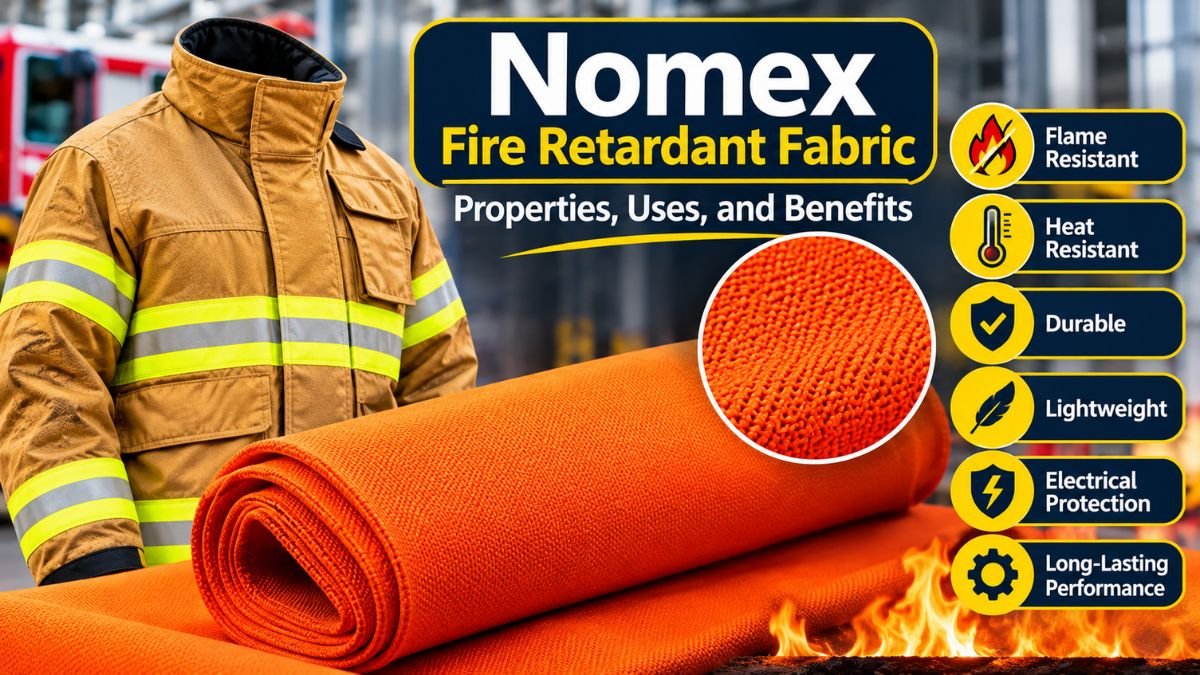
Workplace safety is extremely important in industries where employees face heat, flames, electrical hazards, and other dangerous working conditions. Choosing the right protective fabric can help reduce the risk of serious injuries and improve worker protection. One of the most recognized materials used in protective clothing is Nomex fire retardant fabric.
Nomex is a high-performance aramid fiber known for its excellent heat resistance, flame resistance, durability, and thermal stability. It is commonly used to manufacture protective clothing for firefighters, industrial workers, electrical technicians, military personnel, and motorsport professionals.
Unlike conventional fabrics that may melt, drip, or continue burning when exposed to flames, Nomex fibers are inherently flame resistant. Their protective properties come from their chemical structure rather than a surface treatment, so flame resistance does not wash away during normal laundering. DuPont+1
Understanding Nomex fire retardant fabric properties, uses, and benefits helps businesses select suitable protective materials for demanding work environments.
In this complete guide, we will explore what Nomex fabric is, how it works, its important properties, common applications, advantages, and how to choose and maintain Nomex protective clothing.
Choosing between protective fabrics? Explore our protective workwear manufacturing services, see the FR collared shirt, and compare Nomex with other options in what fire resistant clothing is made of.
What Is Nomex Fire Retardant Fabric?
Nomex fire retardant fabric is a protective textile made using Nomex meta-aramid fibers. It is designed to provide resistance to heat and flames in environments where ordinary clothing may not offer sufficient protection.
Nomex is a registered trademark associated with a family of high-performance materials originally developed by DuPont. The Nomex brand is now part of Arclin’s aramid business. Arclin+1
One of the most important characteristics of Nomex is its inherent flame resistance. This means its flame-resistant properties are built into the fiber itself rather than added through a chemical treatment.
When exposed to intense heat, Nomex fibers thicken and carbonize instead of melting and dripping. This behavior helps create a protective barrier that can reduce heat transfer to the wearer.
Nomex fabric is commonly used in:
- Firefighter protective suits.
- Industrial flame-resistant coveralls.
- Electrical arc flash protective clothing.
- Military uniforms.
- Racing suits.
- Aerospace protective textiles.
- Heat-resistant industrial garments.
It is important to understand that Nomex fabric is not completely fireproof. The protection provided by a garment depends on fabric construction, weight, layers, garment design, testing, and the specific hazards involved.
How Does Nomex Fire Retardant Fabric Work?
Nomex provides flame resistance through its unique chemical structure.
Unlike treated fabrics that rely on chemical coatings or finishes, Nomex meta-aramid fibers have inherent resistance to heat and flames.
When the material encounters high temperatures, several protective processes take place.
1. Resists Ignition
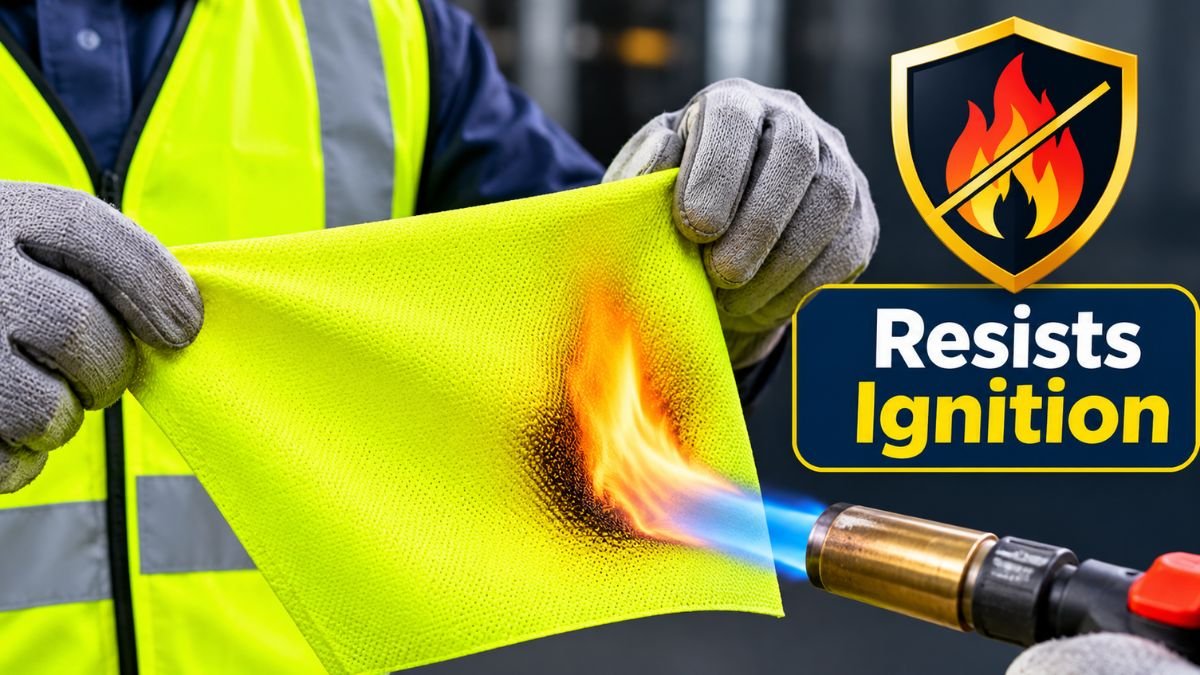
Nomex fibers are difficult to ignite under normal exposure conditions. Their chemical structure helps prevent the material from supporting sustained combustion.
2. Does Not Melt or Drip
One important advantage of Nomex is that it does not melt and drip like many conventional synthetic fibers when exposed to intense heat.
This helps reduce the risk of additional injuries caused by hot, melting fabric.
3. Forms a Protective Char Layer
When exposed to extreme temperatures, Nomex fibers thicken and carbonize.
This process creates a charred layer that helps slow heat transfer and provides an additional thermal barrier.
4. Maintains Inherent Flame Resistance
Because the flame resistance is built into the polymer, it cannot simply be washed away or worn off like a surface-applied flame-retardant treatment. dupont.com.sg+1
However, damage, contamination, excessive wear, or incorrect garment maintenance can still compromise protective performance.
Key Properties of Nomex Fire Retardant Fabric
Nomex is widely used in protective clothing because it offers a combination of thermal performance, durability, and textile comfort.
Here are its most important properties.
1. Excellent Flame Resistance
Flame resistance is one of the main reasons manufacturers use Nomex for protective workwear.
The fiber is inherently flame resistant, meaning it does not depend on a temporary chemical treatment to provide this characteristic.
This makes it suitable for garments designed for workers exposed to potential fire and heat hazards.
2. High Heat Resistance
Nomex can withstand high-temperature exposure without melting and dripping like many conventional synthetic materials.
Its thermal behavior makes it valuable in protective garments used in firefighting, industrial operations, and electrical environments.
3. Thermal Stability
Thermal stability refers to a material’s ability to maintain important properties when exposed to elevated temperatures.
Nomex offers good thermal stability, helping protective fabrics retain their useful structure under demanding conditions.
4. Durability and Strength
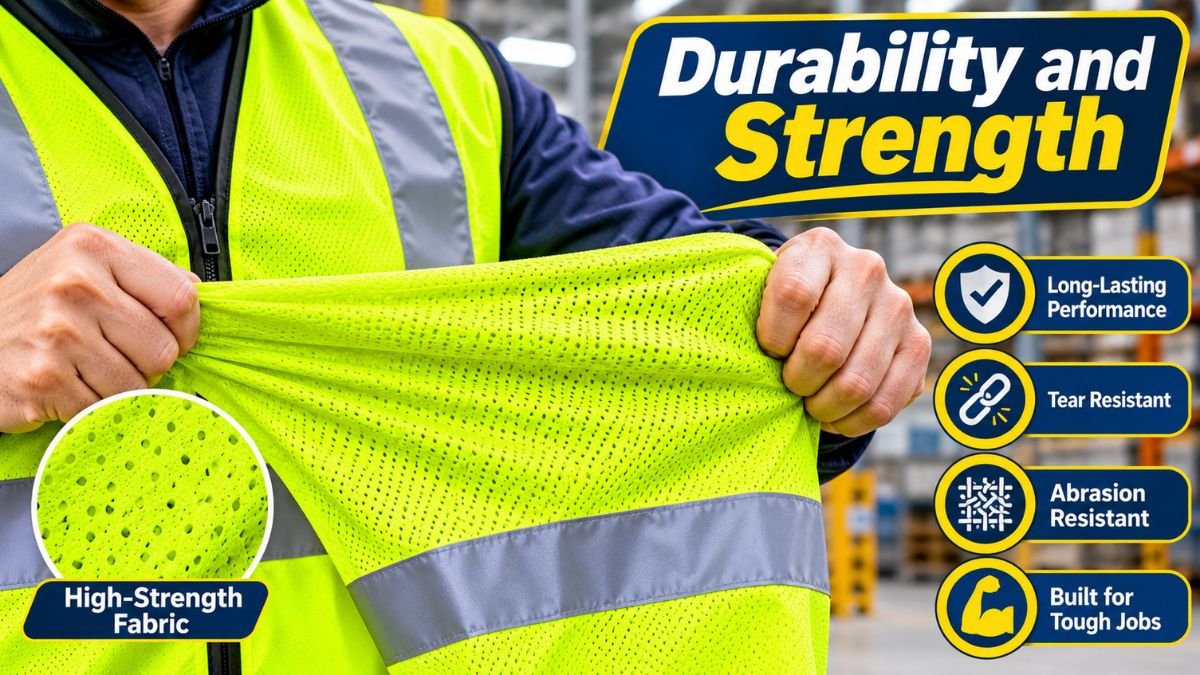
Nomex fabrics are designed for demanding working environments.
They can provide good resistance to everyday wear, abrasion, and repeated use, depending on the fabric construction and blend.
This makes them useful for industrial uniforms and protective garments that experience frequent movement and demanding working conditions.
5. Dimensional Stability
Dimensional stability is another useful property of Nomex fabrics.
It helps the material maintain its shape and size during normal use and appropriate laundering.
Proper garment care is still necessary to maintain the overall quality and performance of protective clothing.
6. Chemical Resistance
Nomex fibers offer resistance to many common chemicals and industrial substances.
This property can be beneficial in certain industrial environments. However, Nomex should not automatically be considered chemical protective clothing. Specialized chemical protection requires separate testing and appropriate garment selection. dupont.co.in+1
7. Lightweight Construction
Protective clothing needs to provide suitable protection without making workers unnecessarily uncomfortable.
Nomex fabrics are available in different weights and constructions, allowing manufacturers to develop garments for different working conditions.
8. Electrical Insulation Properties
Nomex materials are also used in electrical insulation applications.
Nomex insulation papers and boards are used in electrical equipment such as transformers, motors, and generators.
However, electrical insulation material and arc-rated protective clothing are different applications with different testing requirements. dupont.co.uk+1
Nomex is only one option for protective garments. Compare it with treated cotton in our guide to arc flash clothing materials, and see how to wash flame resistant clothing without reducing its performance.
Common Uses of Nomex Fire Retardant Fabric
Nomex fabric is used in several industries where workers and equipment require protection against heat and flames.
1. Firefighter Protective Clothing
Firefighters regularly face extreme heat, flames, and unpredictable fire conditions.
Nomex is used in protective garments such as firefighter jackets, trousers, hoods, and other specialized clothing.
Its inherent flame resistance and thermal performance make it a valuable material for firefighter protective equipment.
2. Industrial Workwear
Industrial workers in manufacturing plants, oil and gas facilities, and other hazardous workplaces may face heat and flame exposure.
Nomex is used to manufacture protective coveralls, shirts, trousers, and jackets designed for these working environments.
These garments help provide an additional protective barrier while allowing workers to perform their daily tasks.
3. Electrical Arc Flash Clothing
Electrical technicians and maintenance workers may face arc flash hazards when working with energized electrical equipment.
Manufacturers use Nomex-based fabrics in certain arc-rated protective garments to reduce thermal injury risks.
Therefore, you must test and rate the finished garment for the specific electrical hazards involved. However, a Nomex label alone does not establish an arc rating.
4. Military and Defense Clothing
Military personnel may operate in environments where exposure to heat, flames, and other hazards is possible.
In addition, specialized military clothing, including flight suits and protective uniforms, uses Nomex fibers.
Their lightweight construction and inherent flame resistance make them suitable for certain demanding applications.
5. Motorsport Racing Suits
Professional racing drivers require specialized protective clothing because vehicle fires and high-temperature incidents can occur during motorsport activities.
In fact, racing teams widely use Nomex in racing suits, gloves, and other protective garments.
Moreover, these garments provide thermal protection while allowing drivers to move comfortably inside racing vehicles.
6. Aerospace Applications
The aerospace industry uses Nomex materials in several specialized applications.
In addition, aircraft protective textiles use Nomex fibers and related materials, while Nomex paper and honeycomb structures serve different aerospace and insulation purposes.
These applications benefit from the material’s thermal properties, lightweight construction, and performance characteristics.
7. Oil and Gas Industry
Oil and gas workers may encounter flash fires, hot surfaces, and other industrial hazards.
For example, workers can use Nomex-based flame-resistant clothing in suitable applications to help protect themselves from thermal exposure.
Common garments include:
- Flame-resistant coveralls.
- Protective work shirts.
- Industrial trousers.
- Flame-resistant jackets.
- Specialized protective uniforms.
8. Emergency Response Clothing
Emergency response professionals often work in environments where fire and heat exposure are possible.
Similarly, selected protective garments for emergency responders use Nomex, depending on the required protection level and applicable standards.
Benefits of Using Nomex Fire Retardant Fabric
Nomex offers several advantages that make it a popular material for specialized protective clothing.
1. Long-Lasting Flame Resistance
One of the biggest benefits of Nomex is its inherent flame resistance.
Unlike chemically treated fabrics, its flame-resistant properties are built into the fiber itself.
Normal washing does not remove this inherent characteristic.
2. Improved Worker Protection
Nomex-based protective clothing helps reduce thermal exposure risks in suitable applications.
It is particularly useful for workers who operate around heat, flames, and certain electrical hazards.
However, no fabric eliminates all workplace risks, and protection depends on the complete garment system.
3. Reduced Risk of Melting and Dripping
Many ordinary synthetic fabrics can melt and drip when exposed to intense heat.
Nomex does not melt and drip in the same way. This characteristic helps reduce the possibility of additional injuries caused by hot, molten fabric.
4. Excellent Durability
Nomex fabrics are designed for demanding applications.
Their durability helps protective garments withstand regular workplace use, movement, and repeated laundering when properly maintained.
5. Comfortable Protective Clothing
Comfort is important for employees who wear protective uniforms throughout long shifts.
Nomex fabrics are available in different weights, constructions, and blends.
Manufacturers can select suitable fabric designs to balance thermal protection, breathability, flexibility, and comfort.
6. Suitable for Multiple Industries
Nomex is used across several industries, including:
- Firefighting.
- Oil and gas.
- Electrical utilities.
- Manufacturing.
- Aerospace.
- Automotive racing.
- Military and defense.
This versatility makes it an important material in specialized protective textile manufacturing.
7. Good Resistance to Everyday Wear
Depending on its construction, Nomex fabric can provide good resistance to abrasion and everyday garment wear.
This can help businesses maintain protective uniforms for demanding working environments.
Nomex vs. Traditional Flame-Retardant Fabrics
Understanding the difference between Nomex and traditional flame-retardant fabrics helps businesses choose suitable materials for protective clothing.
In fact, the main difference is how they achieve flame-resistant properties.
Nomex Fabric
Nomex is inherently flame resistant because of its chemical structure.
Instead, the fiber itself contains protective characteristics built in, rather than as a surface treatment.
Flame-Retardant Treated Cotton
Flame-retardant treated cotton uses chemical treatments to improve the fabric’s resistance to ignition and flame spread.
Its performance depends on the treatment, fabric construction, laundering conditions, and applicable product specifications.
Main Differences
| Feature | Nomex Fabric | FR-Treated Cotton |
|---|---|---|
| Fiber type | Meta-aramid | Cotton |
| Flame resistance | Inherent | Chemical treatment |
| Heat resistance | Excellent | Depends on treatment and construction |
| Melting behavior | Does not melt or drip | Cotton does not melt |
| Comfort | Depends on fabric construction | Often comfortable and breathable |
| Durability | Good | Depends on treatment and fabric quality |
| Common applications | Specialized protective clothing | Industrial protective workwear |
Both materials can be suitable for different protective applications. The best choice depends on the workplace hazards, required garment performance, budget, and comfort requirements.
Different Types of Nomex Fabric
Nomex is available in different fiber forms, fabric constructions, and blends.
Therefore, each type serves particular applications.
1. 100% Nomex Fabric
In fact, manufacturers make 100% Nomex fabric primarily from Nomex meta-aramid fibers.
Moreover, it offers inherent flame resistance, and various industrial and protective textile applications use it.
2. Nomex IIIA Fabric
Nomex IIIA is a recognized flame-resistant fabric blend.
A commonly specified Nomex IIIA composition includes:
- 93% Nomex meta-aramid.
- 5% Kevlar para-aramid.
- 2% P-140 antistatic fiber.
The blend combines the flame resistance of Nomex with additional strength from Kevlar and antistatic properties from the specialized fiber. Exact fabric specifications should always be confirmed with the supplier.
3. Nomex Blended Fabric
Nomex fibers can be blended with other fibers to develop fabrics with specific performance and comfort characteristics.
Depending on the application, blends may be designed to improve strength, moisture management, durability, or other textile properties.
4. Nomex Knitted Fabric
Knitted Nomex materials are used in selected protective clothing applications.
They can provide flexibility and comfort, making them suitable for specialized garments and underlayers.
5. Nomex Woven Fabric
Woven Nomex fabrics are commonly used in protective workwear.
Their construction can provide durability and stability for garments such as jackets, trousers, and coveralls.
How to Choose the Right Nomex Fire Retardant Fabric
Selecting the right Nomex fabric is important for ensuring that protective garments meet workplace requirements.
Here are some important factors to consider.
1. Identify Workplace Hazards
Start by evaluating the specific hazards employees may encounter.
These may include:
- Direct flame exposure.
- Flash fire risks.
- Electrical arc flash hazards.
- Radiant heat.
- Hot surfaces.
- Industrial heat exposure.
Different hazards require different levels and types of protection.
2. Check Fabric Specifications
Before purchasing Nomex fabric, review its technical specifications.
Important details include fiber composition, fabric weight, construction, thermal performance, and manufacturer documentation.
3. Select the Appropriate Fabric Weight
Fabric weight can influence garment comfort, flexibility, and thermal performance.
Lightweight fabrics may be suitable for certain work environments, while heavier constructions may be selected for applications requiring additional thermal protection.
However, heavier fabric does not automatically mean a garment meets a particular safety standard.
4. Consider Comfort and Breathability
Workers need protective clothing that allows them to move comfortably during long shifts.
Consider fabric construction, ventilation, moisture management, and garment design before making a purchasing decision.
5. Verify Applicable Safety Standards
Protective clothing must be tested according to the requirements relevant to its intended application.
Examples include:
- NFPA 2112 for certain industrial flash-fire protective garments.
- NFPA 1970 for applicable firefighter protective clothing.
- NFPA 70E for workplace electrical safety practices.
- ASTM F1506 for certain arc-rated textile materials.
- EN ISO 11612 for clothing designed to protect against heat and flame.
The applicable standard depends on the garment, workplace, and jurisdiction. Always verify the current edition and the certification of the finished garment.
6. Choose a Reliable Fabric Manufacturer
Work with a supplier or manufacturer that understands specialized protective textiles.
Request fabric specifications, test reports, certifications, and product information before placing large orders.
How to Care for and Maintain Nomex Protective Clothing
Proper maintenance helps preserve the quality and performance of Nomex protective garments.
Although the fiber’s inherent flame resistance does not wash away, incorrect cleaning, contamination, and physical damage can compromise the protection provided by the finished garment.
1. Follow Manufacturer Washing Instructions
Always check the garment care label before washing.
Different Nomex fabric constructions and garment designs may have different cleaning requirements.
2. Use Suitable Detergents
Use appropriate detergents recommended by the manufacturer.
Avoid cleaning chemicals that could damage the fabric, reflective materials, fasteners, or other garment components.
3. Avoid Improper Heat Exposure
Follow the recommended drying and ironing instructions.
Excessive heat can damage garment components even when the Nomex fiber itself has excellent thermal resistance.
4. Inspect Garments Regularly
Check protective clothing for:
- Tears and holes.
- Damaged seams.
- Worn fabric.
- Missing closures.
- Damaged reflective materials.
- Signs of contamination.
Damaged garments should be repaired or replaced according to manufacturer instructions and workplace safety procedures.
5. Store Protective Clothing Properly
Keep Nomex garments in a clean, dry storage area.
Avoid prolonged exposure to direct sunlight, excessive moisture, and contaminants that may affect garment performance.
6. Replace Worn-Out Clothing
Protective garments should be replaced when they no longer meet the required safety and performance conditions.
Follow the manufacturer’s inspection and replacement recommendations.
Common Mistakes to Avoid When Buying Nomex Fire Retardant Fabric
Choosing the wrong protective fabric can affect workplace safety and garment performance.
Avoid these common mistakes when purchasing Nomex materials.
- Ignoring fabric composition: Always verify whether the material is 100% Nomex or a specialized blend.
- Choosing fabric based only on price: Low-cost materials may not provide the required performance.
- Ignoring safety certifications: Check relevant testing documentation before purchasing protective garments.
- Selecting unsuitable fabric weight: Consider the specific application and thermal protection requirements.
- Overlooking worker comfort: Choose suitable fabric construction and garment designs for everyday use.
- Ignoring maintenance instructions: Incorrect cleaning and storage can affect garment performance.
- Assuming Nomex is completely fireproof: Nomex is flame resistant, not invulnerable to unlimited heat or fire exposure.
Frequently Asked Questions (FAQs)
1. What Is Nomex Fire Retardant Fabric?
Nomex fire retardant fabric is a protective textile made from inherently flame-resistant meta-aramid fibers. It is commonly used in firefighter clothing, industrial uniforms, racing suits, and specialized protective garments.
2. Is Nomex Fabric Fireproof?
No. Nomex is not completely fireproof. It is inherently flame resistant and does not melt or drip like many conventional synthetic fibers. Its protective performance depends on fabric construction, garment design, and exposure conditions.
3. What Is Nomex Fabric Made Of?
Nomex is a meta-aramid fiber made from aromatic polyamide chemistry. It is available in different fiber forms, fabric constructions, and blends for specialized applications.
4. Does Nomex Fabric Lose Its Flame Resistance After Washing?
No. Nomex’s inherent flame resistance is built into its polymer structure and does not wash away during normal laundering. However, contamination, damage, and excessive wear can affect the performance of protective garments.
5. What Industries Use Nomex Fabric?
Nomex fabric is used in firefighting, oil and gas, electrical utilities, manufacturing, aerospace, motorsports, military applications, and other industries requiring specialized thermal protection.
6. Is Nomex Fabric Heat Resistant?
Yes. Nomex offers excellent resistance to heat and flames. When exposed to intense heat, the fibers thicken and carbonize rather than melting and dripping.
7. What Is the Difference Between Nomex and Kevlar?
Nomex and Kevlar are both aramid fibers, but they have different structures and performance characteristics.
Nomex is a meta-aramid commonly used for heat and flame protection, while Kevlar is a para-aramid known for its high tensile strength and resistance to cutting and abrasion.
Some protective fabrics combine both fibers to achieve specific performance characteristics.
8. Is Nomex Fabric Suitable for Industrial Workwear?
Yes. Nomex is used in industrial protective garments for workers who may encounter heat and flame hazards. The specific fabric and finished garment must be selected according to the workplace risks and applicable safety requirements.
9. Is Nomex Fabric Expensive?
Nomex is generally more expensive than many conventional textile materials because it is a specialized high-performance fiber. However, its durability and inherent flame resistance can make it a valuable investment for suitable protective clothing applications.
10. How Long Does Nomex Protective Clothing Last?
There is no universal lifespan for all Nomex garments. Service life depends on fabric quality, garment construction, frequency of use, exposure conditions, laundering, and maintenance. Regular inspection is essential.
Conclusion
Nomex fire retardant fabric is an important material in the protective clothing industry because of its excellent heat resistance, inherent flame resistance, durability, and thermal stability.
From firefighter protective suits and industrial coveralls to electrical protective clothing and motorsport racing suits, Nomex provides valuable performance in environments where heat and flame hazards are present.
Understanding Nomex fire retardant fabric properties, uses, and benefits helps businesses, manufacturers, and safety professionals select suitable materials for their applications.
However, choosing the right fabric is only one part of workplace protection. Proper garment construction, testing, certification, maintenance, and hazard assessment are equally important.
Whether you are manufacturing industrial workwear or purchasing protective clothing for employees, selecting suitable Nomex fabric can help support safer working conditions and reliable garment performance.