Premium Workwear Manufacturing for Professionals

Ahtisham

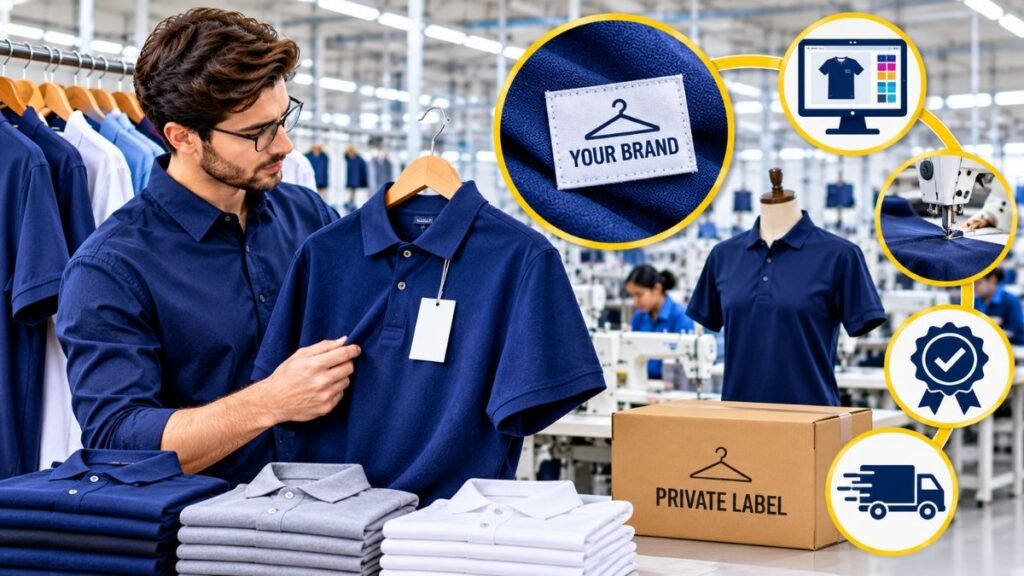
A factory inspector holding a navy polo shirt on a wooden hanger, surrounded by folded shirts, a sewing machine, a design screen, and a "YOUR BRAND" label inset.

Best Private Label Clothing Manufacturers: A Complete Guide

Choosing the right clothing manufacturer is one of the most important steps when building a fashion brand. Your manufacturer affects product quality, pricing, delivery times, and customer satisfaction. Private label manufacturing allows businesses to sell clothing under their own brand names. You do not need to own a factory or manage production equipment. Instead, you

Best Private Label Clothing Manufacturers: A Complete Guide Read More »
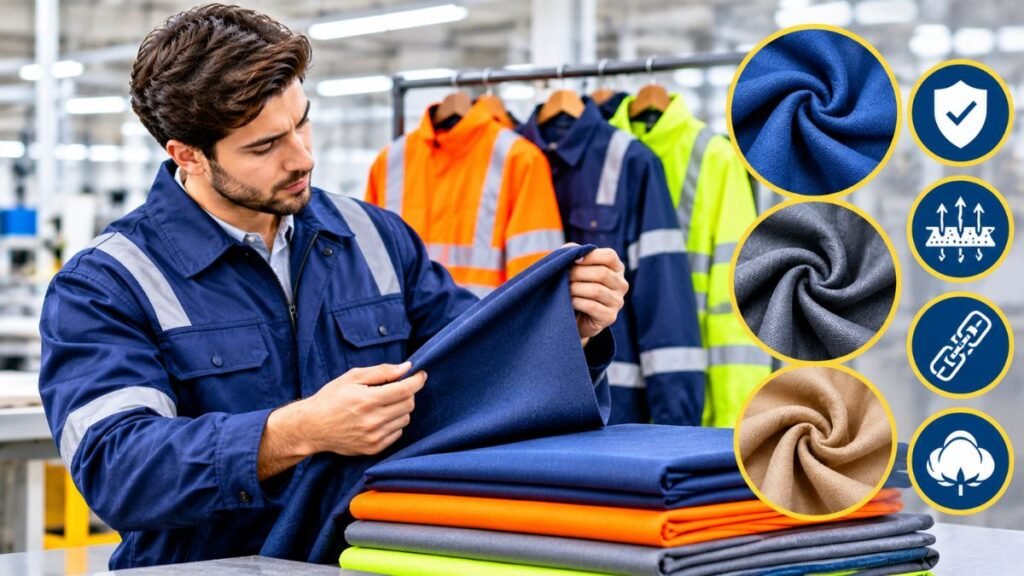
A man in a blue high-visibility work jacket with reflective stripes examines a swatch of blue fabric, standing behind a stack of folded fabrics in blue, orange, gray, and yellow, with more work jackets hanging behind him; three circular insets at right show close-ups of blue, gray, and tan fabric textures, each paired with a blue icon indicating durability, breathability, strength, and cotton content.

Best Fabric for Workwear: Types, Benefits, and How to Choose

Choosing the right fabric is important when buying workwear. Workers need clothing that supports their daily tasks. It should also provide comfort and durability. Different industries have different clothing requirements. Construction workers need strong and durable materials. Healthcare workers often need lightweight and washable fabrics. Industrial workers may require specialized protective materials. The best fabric

Best Fabric for Workwear: Types, Benefits, and How to Choose Read More »

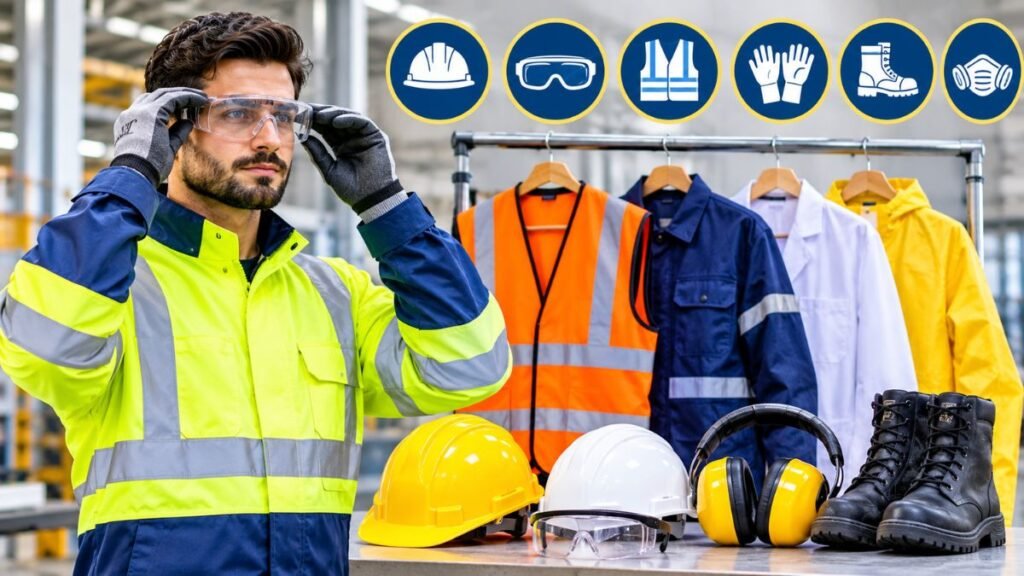
Worker in a reflective blue and neon-yellow jacket and clear safety glasses, with a row of workwear (orange vest, blue jacket, lab coat, yellow rain jacket) behind him, PPE items like hard hats, earmuffs, and boots in the foreground, and six blue PPE category icons above.

Types of PPE Clothing: A Complete Guide to Workplace Safety

Workplace safety is important in every industry. Workers face different hazards during their daily activities. These hazards can cause serious injuries and health problems. Personal protective equipment helps reduce these workplace risks. Protective clothing is an important part of workplace safety. It creates a barrier between workers and harmful conditions. Different garments protect against different

Types of PPE Clothing: A Complete Guide to Workplace Safety Read More »

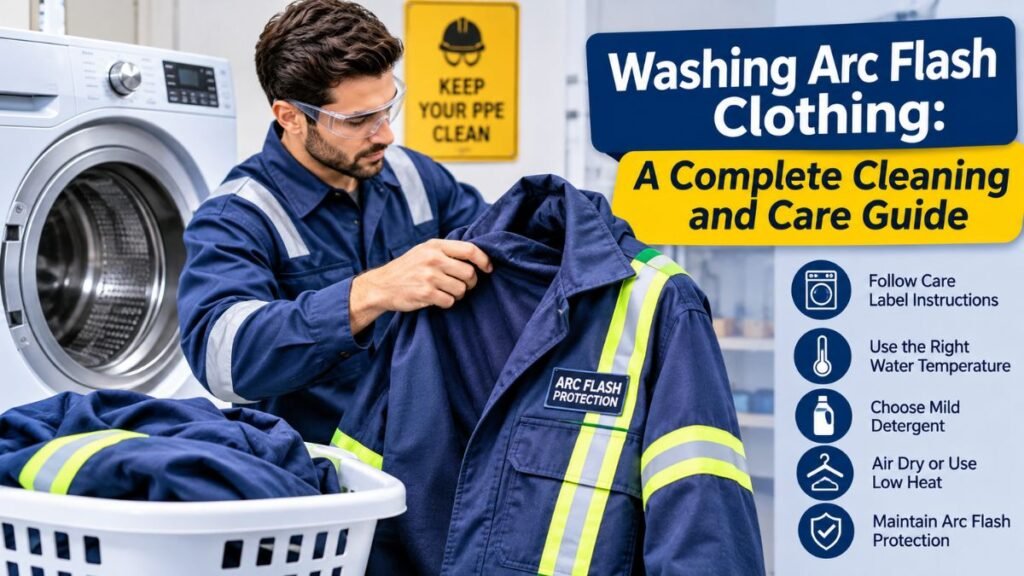
A worker wearing safety glasses and a blue work uniform stands next to a white washing machine, holding up a blue work jacket with yellow and grey reflective stripes and an "ARC FLASH PROTECTION" chest patch. A white basket of similar clothing sits in front. A yellow background sign reads "KEEP YOUR PPE CLEAN." To the right, a blue and yellow banner titled "Washing Arc Flash Clothing: A Complete Cleaning and Care Guide" lists five icon-labeled steps: Follow Care Label Instructions, Use the Right Water Temperature, Choose Mild Detergent, Air Dry or Use Low Heat, and Maintain Arc Flash Protection.

Washing Arc Flash Clothing: A Complete Cleaning and Care Guide

Arc flash clothing plays an important role in electrical workplace safety. It protects workers from thermal hazards during electrical incidents. However, protective clothing needs proper cleaning and regular maintenance. Dirt, grease, oil, and chemical residues can affect garment safety. Incorrect washing methods can also damage protective clothing. Some laundry products may leave unwanted residues on

Washing Arc Flash Clothing: A Complete Cleaning and Care Guide Read More »

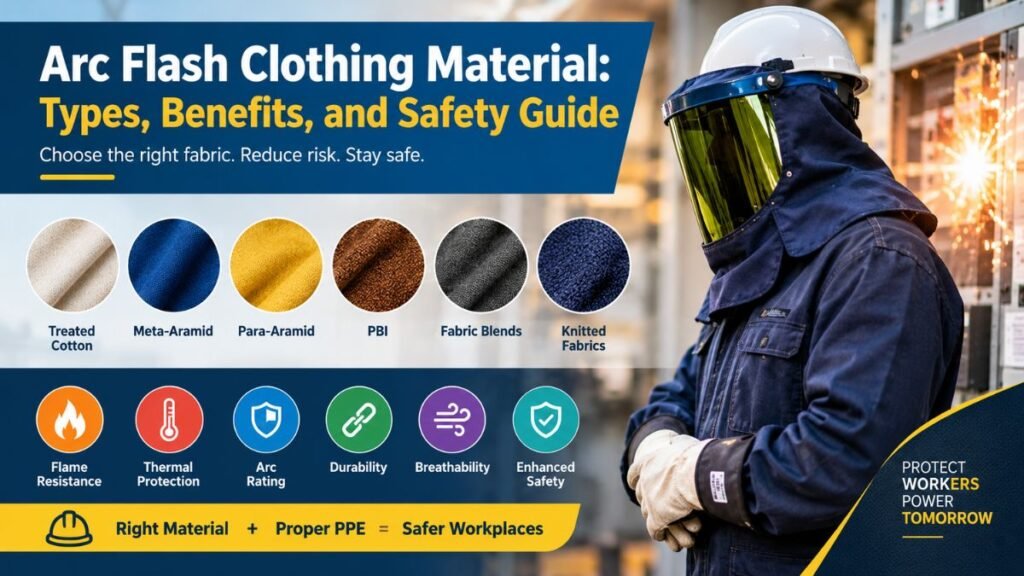
Infographic titled "Arc Flash Clothing Material Types, Benefits, and Safety Guide," showing six labeled fabric swatches (Treated Cotton, Meta-Aramid, Para-Aramid, PBI, Fabric Blends, Knitted Fabrics), six benefit icons (Flame Resistance, Thermal Protection, Arc Rating, Durability, Breathability, Enhanced Safety), and a worker in arc-rated PPE with a hard hat and face shield against a backdrop of bright electrical sparks, captioned "Right Material + Proper PPE = Safer Workplaces" and "Protect Workers, Power Tomorrow."

Arc Flash Clothing Material: Types, Benefits, and Safety Guide

Arc flash incidents are among the most dangerous electrical hazards faced by electricians, electrical engineers, maintenance technicians, and industrial workers. These incidents can release intense heat, light, pressure, and molten metal within a fraction of a second. Wearing the right protective clothing is essential for reducing the risk of serious burn injuries. Choosing the correct

Arc Flash Clothing Material: Types, Benefits, and Safety Guide Read More »

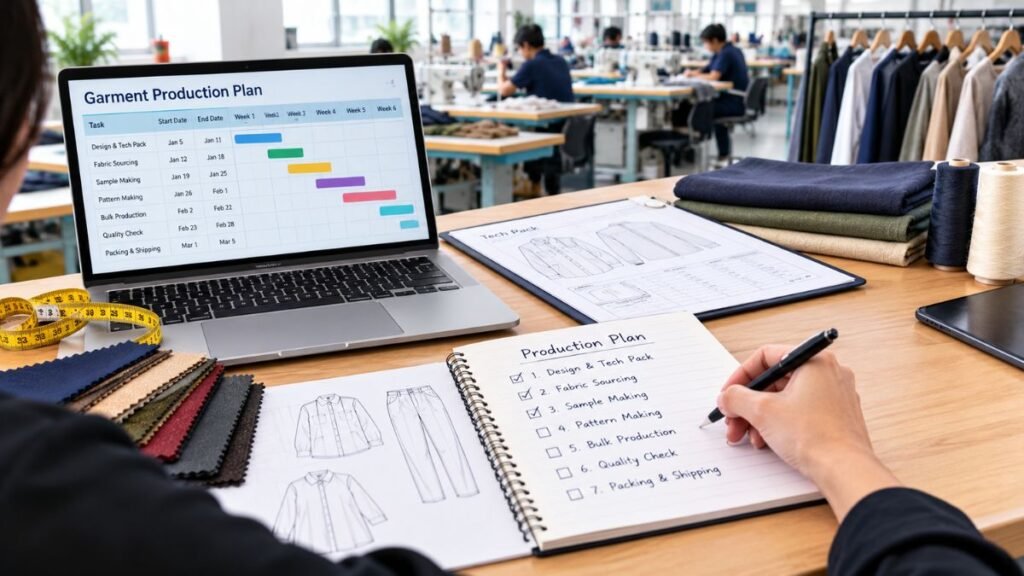
Overhead view of a wooden desk with a laptop showing a "Garment Production Plan" Gantt chart, a person's hands writing a production checklist in a spiral notebook, fabric swatches, a yellow measuring tape, a clipboard with garment sketches, folded fabrics and thread spools — with blurred sewing machines and a clothing rack in a garment factory behind.

How to Make Garment Production Plan: Step-by-Step Guide

Garment production requires careful planning at every stage. Clothing factories manage orders, fabrics, workers, machines, and delivery dates. Without a clear plan, production can become slow and expensive. A garment production plan helps factories organize these activities. It explains what to produce, how much to produce, and when to complete each task. It also helps

How to Make Garment Production Plan: Step-by-Step Guide Read More »

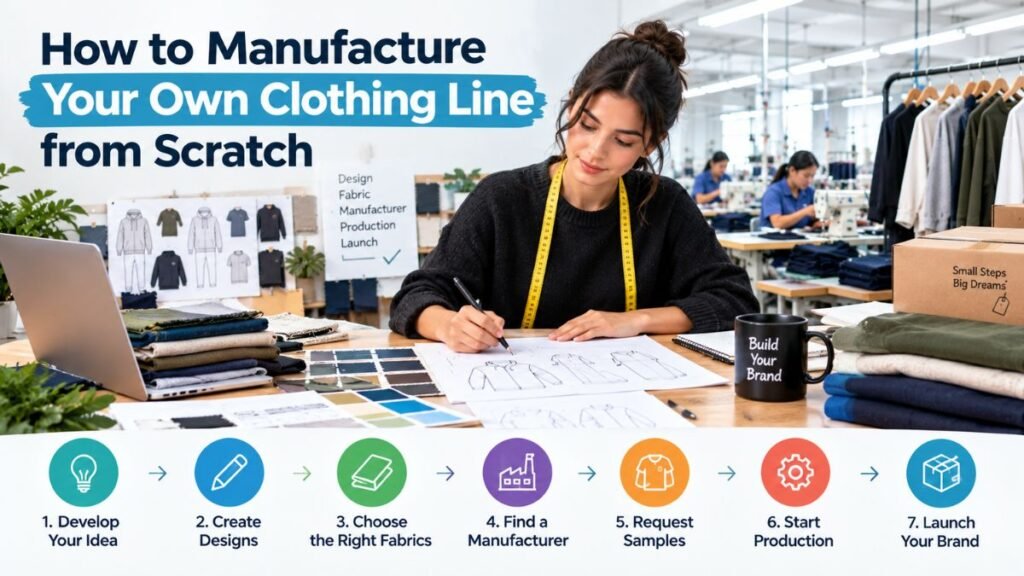
A fashion designer in a black sweater and yellow measuring tape sketches clothing designs at a desk with fabric swatches, a laptop, and a mug reading "Build Your Brand," while sewing machine workers and a garment rack fill the background; a seven-step infographic below reads "How to Manufacture Your Own Clothing Line from Scratch," from Develop Your Idea to Launch Your Brand.

How to Manufacture Your Own Clothing Line from Scratch

Starting a clothing brand can be an exciting business opportunity. However, turning your ideas into finished garments requires careful planning. You need to develop designs, select fabrics, find a reliable manufacturer, and manage production costs. Many beginners struggle with the manufacturing process. They may have creative ideas but lack experience working with garment factories. Understanding

How to Manufacture Your Own Clothing Line from Scratch Read More »

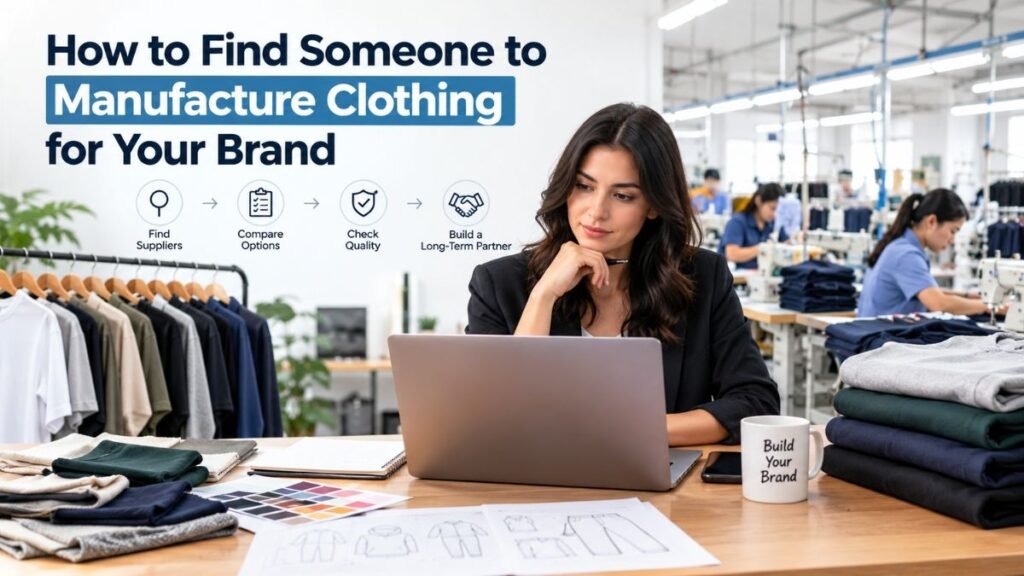
A designer in a black blazer reviews fabric swatches, color palettes, and clothing sketches beside a laptop and a "Build Your Brand" mug, with folded t-shirts in the foreground and workers at sewing machines in a factory behind her; a headline reads "How to Find Someone to Manufacture Clothing for Your Brand," with a four-step diagram: Find Suppliers, Compare Options, Check Quality, Build a Long-Term Partner.

How to Find Someone to Manufacture Clothing for Your Brand

Finding the right clothing manufacturer is an important step in building a successful fashion brand. A reliable partner can help turn your designs into high-quality products. They can also support your growth as your business expands. However, choosing a manufacturer takes careful research. You need to compare production costs, fabric quality, minimum order quantities, and

How to Find Someone to Manufacture Clothing for Your Brand Read More »

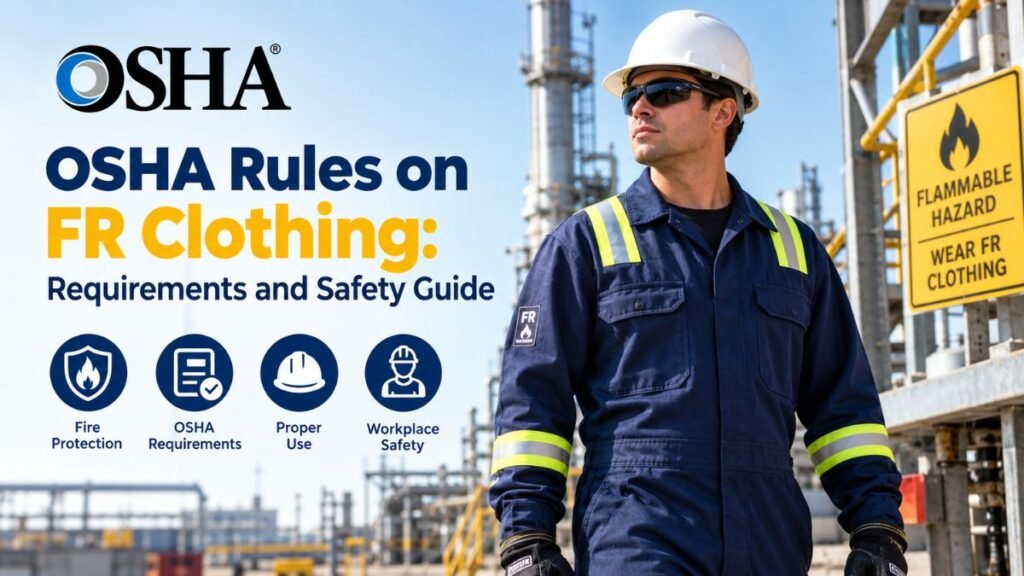
Worker in a navy FR jumpsuit with reflective stripes beside a flammable hazard sign, showing FR workwear for oil and gas

OSHA Rules on FR Clothing: Requirements and Safety Guide

Flame-resistant clothing plays an important role in workplace safety. It helps protect workers from flash fires, electrical arcs, and other thermal hazards. Industries such as oil and gas, electrical utilities, manufacturing, and construction may require this protective clothing. Understanding OSHA rules on FR clothing helps employers choose suitable garments and protect their employees. It also

OSHA Rules on FR Clothing: Requirements and Safety Guide Read More »

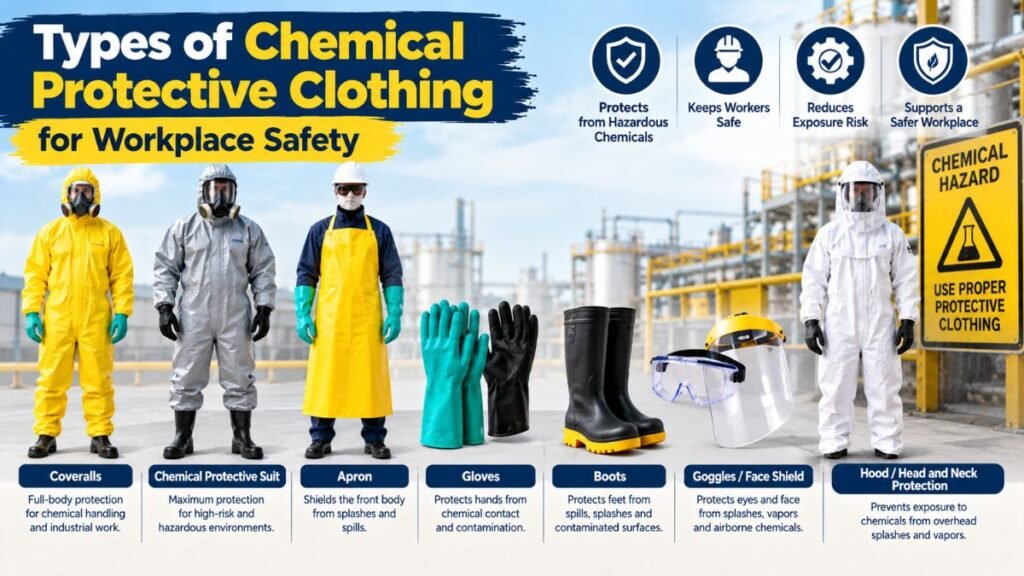
Infographic titled "Types of Chemical Protective Clothing for Workplace Safety," showing three workers in a yellow coverall, a gray chemical suit, and an apron with hard hat, alongside gloves, boots, goggles, a face shield, and a chemical hazard sign, set against an industrial chemical plant.

Types of Chemical Protective Clothing for Workplace Safety

Chemical exposure can cause serious injuries in many workplaces. Workers may face harmful liquids, chemical splashes, vapors, dust, and corrosive substances. The right protective clothing helps reduce these risks. However, not every protective garment works against every chemical. Some materials resist liquid splashes, while others provide stronger barriers. Choosing the wrong clothing can expose workers

Types of Chemical Protective Clothing for Workplace Safety Read More »