
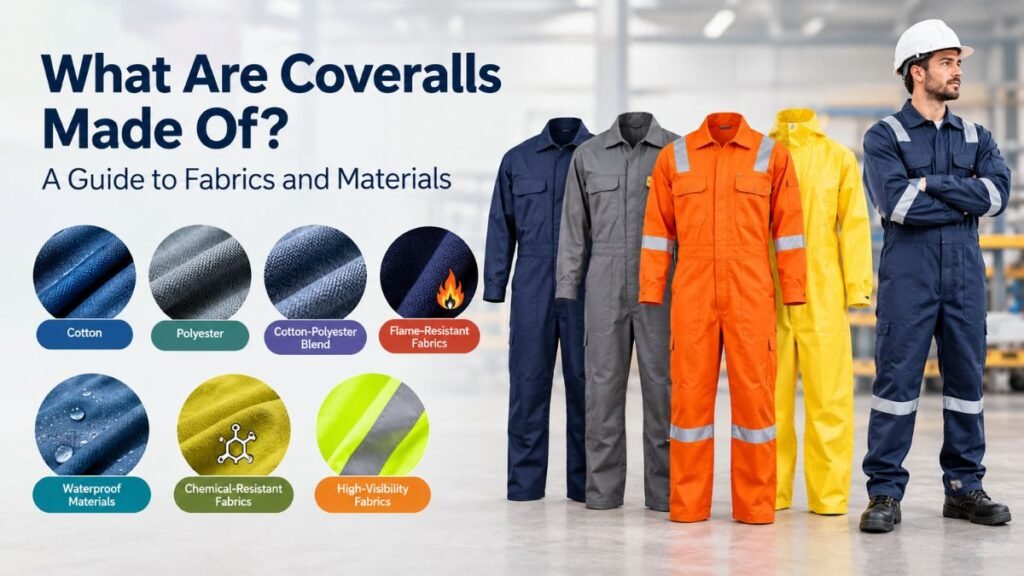
Coveralls are essential garments for workers in many industries. They protect clothing from dirt, grease, dust, and workplace hazards. However, their performance depends heavily on the materials used during manufacturing. Some coveralls provide comfort and breathability, while others offer resistance to chemicals, flames, or water.
Understanding what coveralls are made of helps workers choose suitable protective clothing. It also helps businesses select garments that meet their workplace requirements. Common materials include cotton, polyester, cotton-polyester blends, flame-resistant fabrics, and specialized protective materials.
Each fabric has different strengths, limitations, and care requirements. Therefore, the best choice depends on the working environment and required protection.
This guide explains coverall materials, their benefits, and their common uses. It also explores what overalls are made of and how these garments differ.
What Are Coveralls Made Of?
Coveralls are made from different fabrics, depending on their intended purpose. Manufacturers commonly use cotton, polyester, cotton-polyester blends, and specialized protective textiles. Each material offers different levels of comfort, durability, and protection.
Cotton coveralls are popular because they feel comfortable and absorb moisture. Polyester coveralls are valued for their durability and resistance to wrinkles. Blended fabrics combine several useful properties in one garment.
Industrial coveralls may also use flame-resistant treatments or specialized fibers. These materials help address specific workplace hazards when properly designed and certified.
The fabric alone does not determine a garment’s protection level. Construction, fabric weight, seams, closures, and safety certifications also matter. Workers should always select coveralls according to their job’s risks.
Why Does Coverall Material Matter?
The material affects how coveralls perform during everyday work. It influences comfort, durability, maintenance, and protection against workplace hazards.
For example, mechanics often need garments that resist grease and frequent washing. Construction workers may prefer durable fabrics that withstand abrasion. Workers in hot environments may prioritize lightweight, breathable materials.
Some workplaces require specialized protective clothing instead of ordinary workwear. Electrical, chemical, and fire-related hazards demand careful material selection.
Choosing unsuitable fabric can reduce comfort and compromise required protection. Therefore, understanding the available materials is an important first step.
What Are Coveralls Made Of? Common Fabric Types
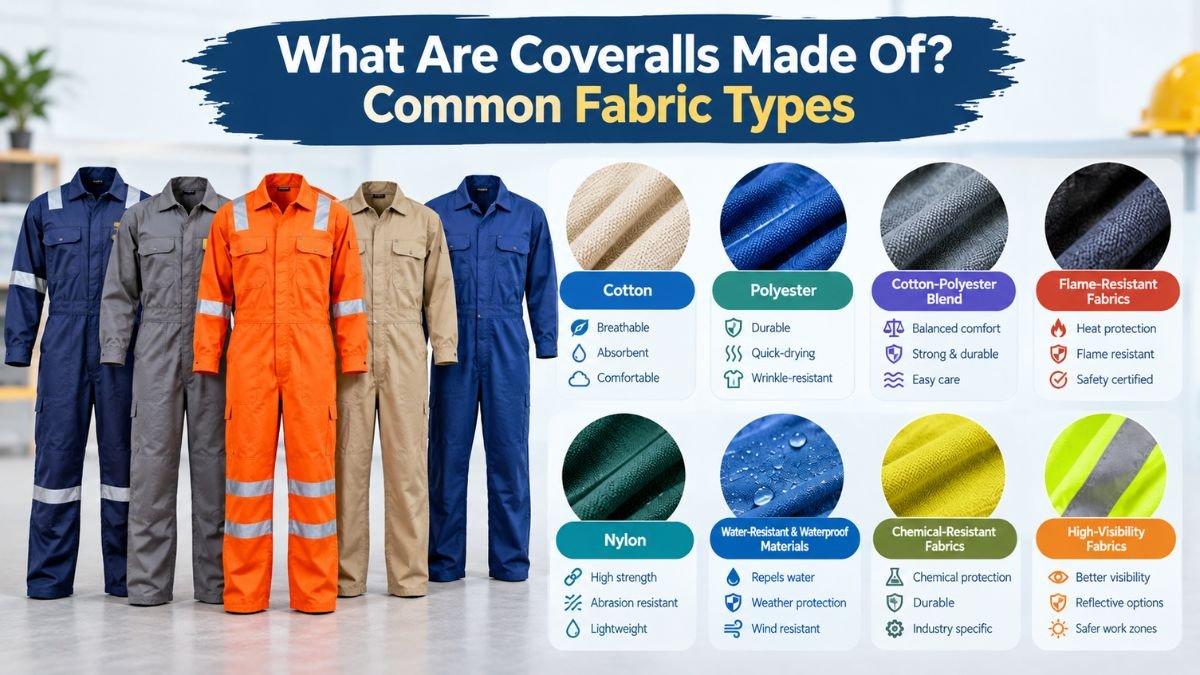
Different coverall materials serve different workplace needs. The following fabrics are among the most common options.
1. Cotton Coveralls
Cotton is a natural fiber widely used in workwear manufacturing. Manufacturers use it to produce comfortable and breathable coveralls.
Cotton allows air to circulate through the fabric. It also absorbs moisture, which can improve comfort during physical work. These properties make cotton suitable for many everyday tasks.
Cotton coveralls are commonly used in workshops, warehouses, maintenance departments, and general industrial environments. They are also available in different fabric weights.
However, cotton has some limitations. It can wrinkle, shrink, and take longer to dry than synthetic fabrics. Ordinary cotton also burns readily and does not provide flame resistance by itself.
Best for: General maintenance, light industrial work, and everyday tasks without specialized hazards.
2. Polyester Coveralls
Polyester is a synthetic fiber commonly used in durable workwear. It is known for its strength, quick-drying properties, and resistance to wrinkles.
Polyester fabrics usually maintain their shape after repeated wear. They also tend to shrink less than untreated cotton when properly cared for.
These properties make polyester useful for workers who need easy-care garments. It can also help manufacturers create lightweight coveralls for regular use.
However, polyester may feel less breathable than some cotton fabrics. It can also retain odors under certain conditions. Standard polyester is not suitable for every heat-related workplace hazard.
Best for: General workwear, warehouse tasks, and environments requiring easy-care garments.
3. Cotton-Polyester Blend Coveralls
Cotton-polyester blends combine natural and synthetic fibers. Manufacturers use these blends to balance comfort, durability, and maintenance.
Cotton contributes softness and moisture absorption. Polyester improves shape retention and resistance to wrinkling. The final performance depends on the blend ratio and fabric construction.
For example, a 65% polyester and 35% cotton blend contains more polyester. A 50/50 blend offers a different balance of fiber properties.
Blended coveralls are popular across manufacturing, maintenance, logistics, and other industries. They are often practical for workers who need durable uniforms.
However, blends are not automatically flame-resistant or chemical-resistant. Specialized hazards require fabrics designed and tested for those conditions.
Best for: Everyday industrial work, factory uniforms, and general maintenance.
4. Flame-Resistant Coverall Materials
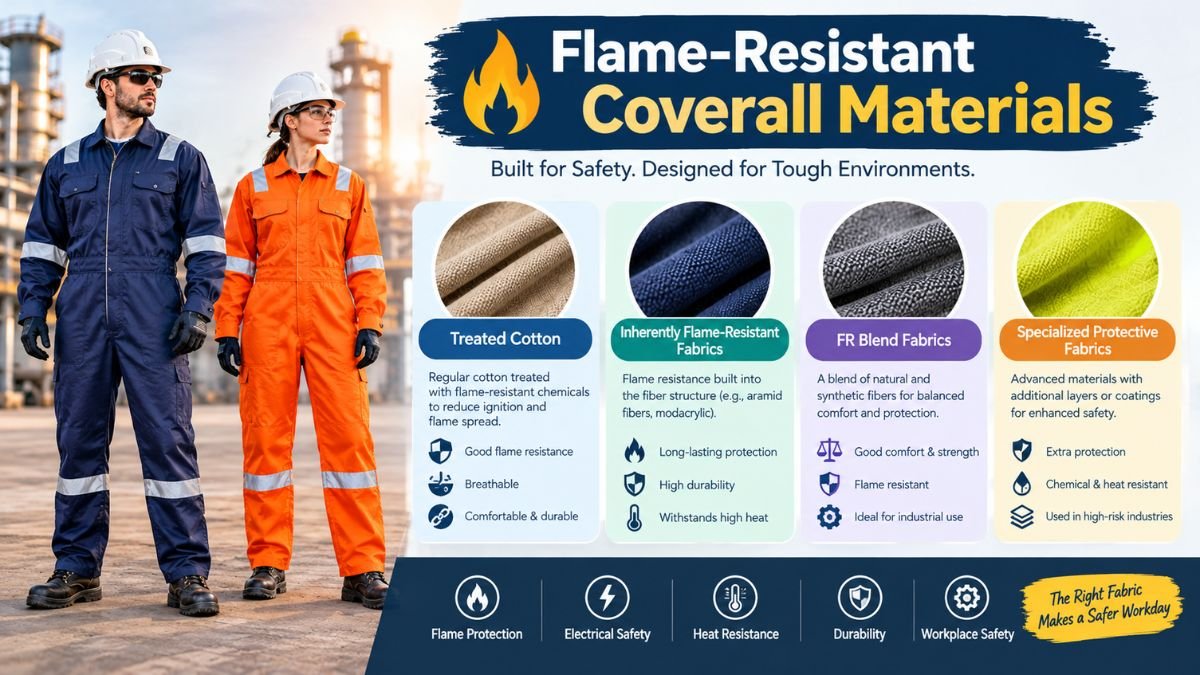
Flame-resistant coveralls are designed for specific heat and flame hazards. Their materials may include treated cotton, specialized blends, or inherently flame-resistant fibers.
Treated cotton receives a chemical treatment that helps reduce ignition and flame spread. The treatment’s effectiveness depends on the product and its care requirements.
Inherently flame-resistant fibers have flame-resistant properties built into their fiber structure. Examples include aramid fibers and certain specialized protective fibers.
These garments are used in industries such as electrical utilities, oil and gas, and metalworking. However, different jobs require different levels of protection.
Flame-resistant does not mean fireproof. Workers must select garments that meet applicable standards and workplace hazard assessments.
Best for: Workplaces with identified flash-fire, flame, or heat hazards requiring suitable protective clothing.
5. Nylon Coveralls
Nylon is a synthetic fiber known for its strength and abrasion resistance. It is often used in specialized workwear and protective garment designs.
Nylon fabrics can be lightweight while offering useful resistance to wear. Some constructions also provide wind resistance or water resistance through coatings.
These properties make nylon suitable for certain outdoor tasks and demanding environments. However, nylon may not offer the same breathability as lightweight cotton.
Standard nylon also melts when exposed to high heat. It should not be treated as flame-resistant unless the specific garment is designed and tested for that purpose.
Best for: Selected outdoor jobs, lightweight workwear, and applications requiring abrasion resistance.
6. Water-Resistant and Waterproof Materials
Some coveralls use coated fabrics or laminated materials to reduce water penetration. Common base fabrics include polyester and nylon.
Manufacturers may apply polyurethane coatings or other specialized finishes. These treatments help garments resist rain, splashes, or moisture.
Water-resistant coveralls are useful for outdoor maintenance and wet working conditions. Waterproof designs may offer greater protection against sustained exposure to water.
However, water resistance and waterproofing are not identical. Breathability also varies between garment designs.
Workers handling hazardous liquids need more than ordinary waterproof fabric. They should select protective clothing specifically tested for the chemicals involved.
Best for: Outdoor maintenance, wet environments, and tasks requiring suitable moisture protection.
7. Chemical-Resistant Coverall Materials
Chemical-resistant coveralls use materials selected for particular chemical hazards. Depending on the application, these may include specialized films, coated fabrics, laminates, or other barrier materials.
No single fabric protects against every chemical. Resistance depends on the chemical type, concentration, temperature, exposure time, and garment construction.
Some garments protect against light splashes. Others are designed for more demanding chemical exposure. These categories are not interchangeable.
Workers should consult safety data sheets and workplace risk assessments. They should also verify the garment’s chemical compatibility before use.
Best for: Laboratory work, chemical handling, and industrial processes requiring task-specific chemical protection.
8. High-Visibility Coverall Materials
High-visibility coveralls help workers remain visible in hazardous environments. They commonly use fluorescent polyester or polyester-cotton fabrics.
Bright fluorescent colors improve visibility during daylight conditions. Reflective strips help make workers more visible when illuminated in low-light environments.
These garments are frequently used in road construction, transportation, utilities, and industrial sites.
However, visibility depends on more than fabric color. Garment design, reflective material placement, and applicable safety standards also matter.
Best for: Roadwork, traffic control, construction, and other tasks requiring enhanced visibility.
What Are Overalls Made Of?
Overalls are commonly made from cotton, denim, polyester, or cotton-polyester blends. The exact material depends on their design and intended use.
Traditional denim overalls usually contain cotton. Denim provides a sturdy structure suitable for gardening, farming, repairs, and everyday wear.
Work overalls may use heavier cotton or blended fabrics. These materials help withstand regular movement and repeated washing.
Some lightweight overalls use polyester blends for easier maintenance. Specialized versions may include water-resistant coatings or reinforced panels.
Coveralls and overalls are sometimes confused because both are workwear garments. However, their designs are different.
Coveralls generally cover the torso, arms, and legs in one connected garment. Overalls often feature trousers with a bib, shoulder straps, and a separate shirt underneath.
Both garments can provide useful protection. The right option depends on the task, coverage requirements, and workplace hazards.
How Does Fabric Weight Affect Coveralls?
Fabric weight influences how coveralls feel and perform. Manufacturers often describe fabric weight in grams per square meter (GSM) or ounces per square yard.
Lightweight fabrics are usually more comfortable in warm conditions. They can also support greater freedom of movement.
Medium-weight fabrics provide a balance between comfort and durability. They are commonly used for everyday industrial work.
Heavyweight fabrics often provide greater resistance to wear. However, they may feel warmer and restrict movement in some designs.
A heavier fabric does not automatically provide better safety protection. Protective performance depends on the material, construction, and relevant testing.
Workers should choose fabric weight according to their tasks and working conditions.
Which Coverall Material Is Best for Different Industries?
The best material depends on the workplace environment and its specific hazards. Consider these common applications when comparing coverall fabrics.
Manufacturing and Factory Work
Cotton-polyester blends are often practical for general factory duties. They balance comfort, durability, and straightforward maintenance.
Heavy-duty cotton may also suit tasks involving frequent movement. The correct option depends on exposure to machinery, heat, chemicals, and other hazards.
Automotive and Mechanical Work
Mechanics often need durable coveralls that tolerate grease and routine cleaning. Cotton and cotton-polyester blends are common options.
Fabric color can also matter because oil and dirt may show differently. Some garments include reinforced knees, multiple pockets, and stronger seams.
Workers should still consider any risks from fuels, solvents, and hot equipment. Ordinary workwear does not replace specialized protection.
Construction and Roadwork
Construction workers often need abrasion resistance and practical storage. Cotton-polyester blends can be suitable for many general tasks.
Road crews may require high-visibility coveralls. Their garments should meet the relevant visibility requirements for the work environment.
Additional protection may be necessary when workers face rain, electrical hazards, or extreme temperatures.
Electrical and Utility Work
Electrical workers may need arc-rated or flame-resistant coveralls. The correct garment depends on the electrical hazards identified by a qualified assessment.
Ordinary cotton and polyester coveralls should not be assumed to provide arc-flash protection. Workers should check the required rating and applicable standards.
Farming and Outdoor Work
Cotton and blended fabrics are common choices for routine outdoor tasks. They can provide useful coverage against dirt and everyday wear.
Water-resistant garments may be preferable in wet conditions. Specialized chemical-resistant clothing may be needed for certain agricultural chemicals.
Always follow the product label and relevant safety instructions.
How to Choose the Right Coverall Fabric
Choosing suitable coveralls requires more than comparing fabric names. Consider the following factors before purchasing workwear.
1. Identify Workplace Hazards
Start by identifying the hazards workers may encounter. These could include abrasion, sparks, flames, chemicals, moisture, or low visibility.
Choose garments designed for those specific risks. When necessary, consult a qualified safety professional.
2. Consider Comfort and Breathability
Workers may wear coveralls for several hours each day. Breathable fabrics can help improve comfort during physical activity.
Cotton often feels comfortable in warm conditions. Polyester blends may offer easier maintenance and better shape retention.
However, comfort also depends on fit, fabric weight, ventilation, and the work environment.
3. Check Durability
Durable coveralls can withstand repeated wear and washing. Look for strong seams, suitable fabric weight, and reinforced areas where needed.
The best construction depends on how workers use their garments. Jobs involving crawling or heavy abrasion may require additional reinforcement.
4. Review Care Requirements
Some fabrics require special washing instructions. Flame-resistant garments, in particular, may need specific care to maintain their protective properties.
Always follow the manufacturer’s care label. Avoid cleaning products that may damage protective treatments.
5. Verify Safety Standards
Check whether the garment meets the standards required for your workplace. Look for clear product specifications and relevant certifications.
Do not rely only on labels such as heavy-duty, industrial, or protective. These descriptions do not prove suitability for a particular hazard.
6. Choose the Correct Fit
Coveralls should allow workers to bend, reach, walk, and perform their tasks comfortably. A poor fit can restrict movement or create snagging risks.
Consider the clothing worn underneath the garment. Ensure closures, cuffs, and hems fit appropriately for the intended task.
Are Coveralls Made From Natural or Synthetic Fabrics?
Coveralls can be made from natural fibers, synthetic fibers, or a combination of both.
Cotton is a natural fiber derived from cotton plants. It is commonly used because of its softness and breathability.
Polyester and nylon are synthetic fibers. They offer properties such as durability, quick drying, and resistance to certain types of wear.
Cotton-polyester blends combine natural and synthetic fibers. These fabrics can provide a practical balance for everyday workwear.
Specialized protective coveralls may use advanced fibers or engineered fabric layers. Their performance depends on the specific design and testing.
Neither natural nor synthetic fabrics are always the better option. The right material depends on the intended use, required protection, and maintenance needs.
How Are Coveralls Manufactured?
Coverall manufacturing involves several stages. Each stage affects the garment’s fit, durability, and overall performance.
First, manufacturers develop the garment design and select suitable fabrics. They consider the intended industry, required coverage, and functional features.
Next, they create patterns and cut the fabric into individual pieces. Automated cutting systems may help improve accuracy and reduce material waste.
The cut pieces then move to the sewing department. Workers or machines assemble the body, sleeves, legs, pockets, and closures.
Manufacturers may add zippers, snaps, elastic sections, reflective tape, or reinforcement panels. Protective garments may require additional specialized construction.
Finally, the finished coveralls undergo inspection. Quality checks may examine measurements, stitching, closures, labels, and other specifications.
Protective garments may also require testing or certification for their intended hazards. Ordinary quality inspection alone does not establish protective performance.
How to Care for Different Coverall Materials
Proper care helps extend the useful life of workwear. It also helps maintain comfort and appearance.
Washing Cotton Coveralls
Follow the garment’s care label and use the recommended water temperature. Avoid excessive heat if the fabric may shrink.
Separate heavily soiled garments when appropriate. Remove grease and stains using products suitable for the fabric.
Washing Polyester Coveralls
Use the recommended washing temperature and detergent. Avoid unnecessary high heat during drying.
Polyester often dries quickly and resists wrinkles. However, excessive heat can damage some fabrics and garment components.
Caring for Blended Coveralls
Follow the care instructions for the finished garment. Blended fabrics may behave differently depending on their fiber ratio and treatments.
Inspect seams, pockets, closures, and cuffs regularly. Replace garments when damage affects their required performance.
Caring for Protective Coveralls
Flame-resistant and chemical-protective garments may have specific cleaning requirements. Follow the manufacturer’s instructions carefully.
Do not use unapproved treatments that could affect protective properties. Remove damaged protective clothing from service when required.
Common Mistakes When Choosing Coverall Materials
Selecting the wrong fabric can lead to discomfort or inadequate protection. Avoid these common mistakes when purchasing workwear.
Choosing based on price alone: Low-cost garments may not withstand demanding work conditions. Compare quality, construction, and required protection before buying.
Assuming cotton is always protective: Cotton can provide comfort, but ordinary cotton is not automatically flame-resistant.
Treating polyester as suitable for every job: Polyester works well for many applications. However, standard polyester is unsuitable for certain high-heat hazards.
Ignoring chemical compatibility: No universal fabric protects against all chemicals. Confirm compatibility with the specific substances involved.
Overlooking fit and movement: Poorly fitted coveralls can interfere with work. Choose a size and design that supports safe movement.
Ignoring care instructions: Incorrect washing can damage fabric or specialized treatments. Follow the garment’s care label to maintain performance.
Frequently Asked Questions
1. What Are Coveralls Made Of Most Commonly?
Coveralls are most commonly made from cotton, polyester, and cotton-polyester blends. Specialized versions may use flame-resistant fibers, coated fabrics, or chemical-resistant materials.
2. What Are Overalls Made Of?
Overalls are commonly made from cotton, denim, polyester, or blended fabrics. Traditional denim overalls often use cotton, while industrial versions may use heavier or reinforced materials.
3. Are Cotton Coveralls Better Than Polyester Coveralls?
Neither material is best for every situation. Cotton is often breathable and comfortable, while polyester generally dries quickly and resists wrinkles. The best choice depends on working conditions and required protection.
4. Are Polyester Coveralls Suitable for Hot Weather?
Lightweight polyester coveralls may suit some warm-weather tasks. However, breathability depends on fabric construction, fit, and ventilation. Standard polyester should not be used as a substitute for suitable heat-protective clothing.
5. Are Coveralls Flame-Resistant?
Some coveralls are flame-resistant, but many ordinary workwear garments are not. Look for garments specifically designed and certified for the relevant hazards.
6. What Fabric Is Best for Industrial Coveralls?
Cotton-polyester blends are often suitable for general industrial work. Jobs involving flames, chemicals, or electrical hazards may require specialized protective materials.
7. Are Coveralls Waterproof?
Some coveralls are waterproof, while others provide only limited water resistance. Check the product specifications to understand the level of moisture protection offered.
8. Do Coveralls Shrink After Washing?
Cotton coveralls may shrink if washed or dried at high temperatures. Polyester generally resists shrinking better, although care instructions still matter.
9. How Long Do Coveralls Last?
Their lifespan depends on fabric quality, work intensity, washing frequency, and exposure to hazards. Inspect garments regularly and replace them when damage affects fit or protection.
10. How Can I Choose the Best Coverall Material?
Identify workplace hazards first. Then compare comfort, durability, fabric weight, fit, care requirements, and relevant safety certifications. Choose a garment designed for your actual working conditions.
Conclusion
Understanding what coveralls are made of helps you select suitable workwear. Common materials include cotton, polyester, and cotton-polyester blends. Each offers different benefits for comfort, durability, and maintenance.
Specialized coveralls may use flame-resistant fibers, waterproof coatings, or chemical-resistant materials. These garments address specific hazards when properly designed and selected.
The best coverall fabric depends on the job, working environment, and required protection. Consider fabric performance, construction, fit, and care instructions before making a decision.
Whether you need everyday factory clothing or specialized protective workwear, choose materials that meet your workplace requirements. The right coveralls can support comfort, durability, and safer working conditions.