

Hi vis clothing helps workers remain visible in busy and hazardous environments. Construction workers, road crews, warehouse staff, and emergency teams often wear these garments daily. However, dirt, sweat, oil, and repeated washing can affect their appearance and performance.
Learning how to wash hi vis clothing correctly helps protect its fluorescent fabric and reflective details. Proper care can also extend garment life and maintain its intended visibility. This is especially important for workers who depend on high visibility clothing during their shifts.
The good news is that cleaning hi vis clothing does not need to be complicated. You only need the right washing method, suitable detergent, and careful drying practices. Always check the garment’s care label before choosing a cleaning method.
This guide explains how to wash hi vis clothing, remove common stains, clean hi vis shirts, and protect reflective strips. It also covers common washing mistakes and practical maintenance tips.
Why Is It Important to Wash Hi Vis Clothing Correctly?
Hi vis clothing is designed to help workers stand out against their surroundings. It usually combines fluorescent fabric with reflective materials. These features serve different purposes and need proper care.
Fluorescent materials improve visibility during daylight and other suitable lighting conditions. Reflective strips help return light toward its source, such as vehicle headlights. Both features can lose effectiveness when garments become damaged, faded, or excessively worn.
Dirt and grease can cover fluorescent fabric and reflective strips. This buildup may reduce their visibility and make clothing look neglected. Incorrect washing can also damage fabric fibers, reflective materials, and garment construction.
Regular cleaning helps remove contaminants and maintain the garment’s appearance. It also improves comfort by removing sweat and everyday dirt. However, washing cannot restore materials that have permanently faded or deteriorated.
For workplace safety, follow the garment manufacturer’s care instructions. Replace clothing when its visibility features no longer meet your workplace requirements.
How to Wash Hi Vis Clothing Step by Step
The best way to wash hi vis clothing depends on its fabric, reflective details, and care label. Many garments can be machine washed, but some require special treatment.
Follow these steps to clean your clothing while reducing unnecessary wear.
1. Check the Care Label Before Washing
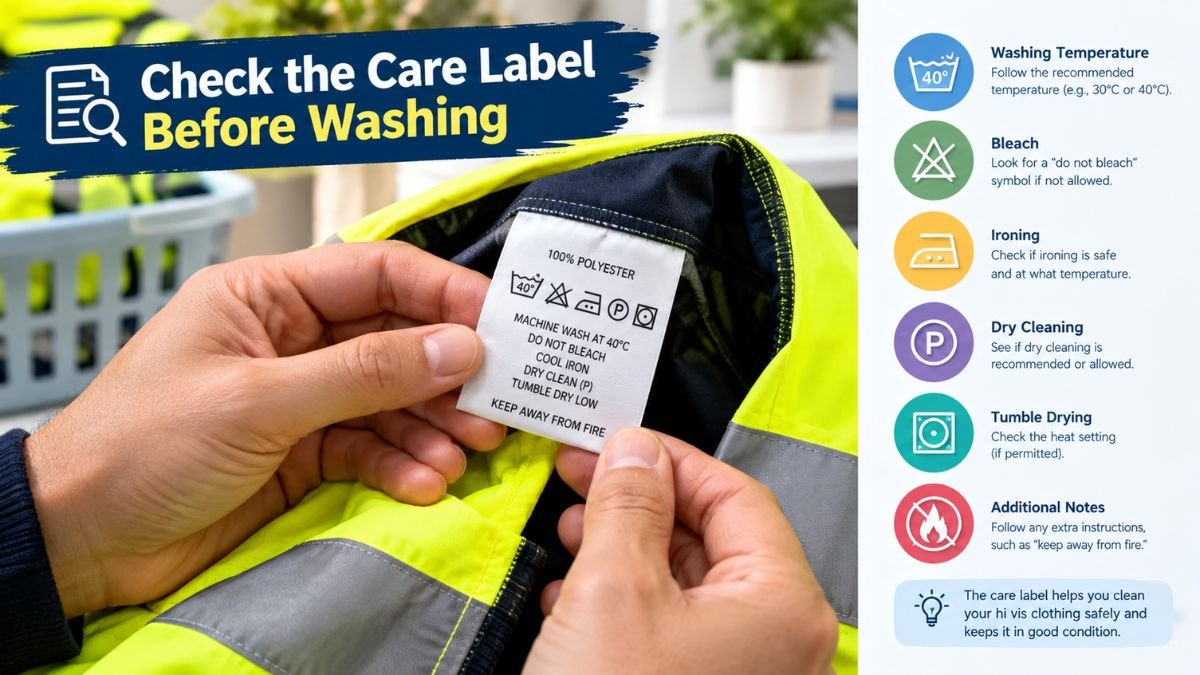
Start by reading the care label inside your hi vis garment. The label provides instructions for washing temperature, detergent use, drying, and ironing.
Some garments tolerate normal machine washing. Others require lower temperatures or specific cleaning methods. Protective workwear may also have special requirements based on its materials and intended use.
Check the label for instructions about bleach, fabric softener, tumble drying, and dry cleaning. Do not assume that every hi vis garment can be washed in the same way.
If the label is missing, contact the manufacturer for guidance. This is especially important for garments used in high-risk workplaces.
2. Separate Hi Vis Clothing From Other Laundry
Separate hi vis clothing from heavily soiled workwear and unsuitable fabrics. Dirt, oil, and grease can transfer between garments during washing.
Washing fluorescent clothing with dark or strongly colored items may also cause unwanted color transfer. Separate garments according to their care instructions and color requirements.
If your clothing has heavy industrial contamination, do not wash it with ordinary household laundry. Follow workplace procedures for handling contaminated garments.
Separate loads can help protect the fabric and improve cleaning results. They also make it easier to choose the correct washing settings.
3. Prepare the Garment for Washing
Before washing, remove loose dirt using a soft brush or cloth. Avoid aggressive scrubbing because it may damage the fabric or reflective strips.
Empty every pocket and remove loose items. Close zippers, fasten buttons, and secure hook-and-loop closures where appropriate.
Turn the garment inside out if the care label permits it. This can reduce friction on the outer surface during washing.
Check reflective strips for peeling, cracking, or other visible damage. Also inspect seams, pockets, and fasteners for problems.
Preparing the garment helps prevent avoidable damage during the washing cycle.
4. Choose a Suitable Detergent
Use a mild laundry detergent that is suitable for the garment’s care instructions. A normal detergent is often sufficient for everyday dirt and sweat.
Avoid adding bleach or fabric softener unless the manufacturer specifically permits it. These products may damage certain fluorescent fabrics, reflective materials, or specialized finishes.
Do not use excessive detergent. Too much product can leave residue on the fabric and may require additional rinsing.
Choose a detergent that matches the type of dirt you need to remove. For example, ordinary detergent usually works well for sweat and light soil.
For industrial grease or difficult stains, check the garment manufacturer’s cleaning guidance before using stronger products.
5. Select the Correct Washing Temperature

Choose the washing temperature stated on the care label. Many hi vis garments can be washed at moderate or low temperatures.
Hot water may cause shrinkage, fading, or damage to certain reflective components. However, the correct temperature depends on the garment’s specific materials and construction.
Do not automatically choose the hottest setting to remove difficult stains. Instead, use an approved detergent and follow the recommended washing process.
A suitable temperature helps clean the garment without exposing it to unnecessary heat. This can support longer garment life and better appearance.
6. Use a Gentle or Recommended Wash Cycle
Select the washing cycle recommended by the manufacturer. A normal or gentle cycle may be suitable, depending on the garment’s construction and level of dirt.
Avoid overloading the washing machine. Clothes need enough space to move freely and rinse properly.
Excessive friction can wear down fabric surfaces and reflective details. Heavy items with sharp fasteners may also cause unnecessary abrasion.
For very dirty garments, follow the manufacturer’s instructions for additional cleaning. Do not assume that a longer or more aggressive cycle will produce better results.
7. Rinse the Garment Properly
Proper rinsing removes detergent and loosened dirt from the fabric. Detergent residue can affect the garment’s feel and appearance.
Follow the washing machine’s recommended rinse settings. If the garment still feels soapy or contains visible residue, use an additional rinse when permitted.
Avoid adding unapproved cleaning products during the rinse cycle. Fabric softeners and similar additives may be unsuitable for some high visibility garments.
Good rinsing helps leave the clothing clean and ready for drying.
8. Dry Hi Vis Clothing Carefully
After washing, remove the garment promptly. Shake it gently to reduce wrinkles and help it return to its normal shape.
Air drying is often a suitable option when the care label permits it. Hang the garment in a well-ventilated area away from excessive heat.
Avoid leaving fluorescent clothing in strong sunlight for extended periods. Prolonged exposure may contribute to fading over time.
If tumble drying is permitted, use the temperature recommended by the manufacturer. High heat may damage certain fabrics, reflective strips, and other components.
Never iron directly over reflective details unless the manufacturer explicitly permits it. Allow the garment to cool and dry completely before storing it.
How to Clean High Visibility Clothing Without Damaging It
Knowing how to clean high visibility clothing helps maintain its appearance and supports regular workplace care. The main goal is to remove dirt without damaging fluorescent fabric or reflective materials.
Start by identifying the type of dirt on the garment. Ordinary dust and sweat usually need a different approach from oil, paint, or chemical contamination.
For everyday dirt, follow the care label and use a suitable detergent. For localized stains, gently treat the affected area before washing.
Avoid abrasive brushes, harsh chemicals, and unapproved stain removers. These may cause fading, surface damage, or deterioration of specialized materials.
Do not mix cleaning chemicals. Never combine bleach with ammonia or acidic cleaning products, as dangerous gases may form.
For garments exposed to hazardous substances, follow the relevant workplace cleaning procedures. Some contaminants require specialist handling or disposal rather than normal household washing.
After cleaning, inspect the garment under good lighting. Look for remaining stains, fading, damaged seams, and peeling reflective strips.
Remember that clean clothing is not necessarily safe clothing. A garment can look clean while its reflective or fluorescent properties have deteriorated.
How to Clean Hi Vis Shirts Properly
Hi vis shirts are common in construction, transport, road maintenance, and warehouse work. They can collect sweat, dust, and body oils during long shifts.
Learning how to clean hi vis shirts properly helps keep them comfortable and presentable.
Treat Sweat and Body Odor
Sweat can accumulate around the collar, underarms, and back. Wash shirts regularly according to their care instructions.
For noticeable odor, avoid using excessive detergent or strong fragrances to cover the smell. Instead, use a suitable detergent and ensure the shirt receives a complete rinse.
Allow the shirt to dry fully before storing it. Damp clothing can develop unpleasant odors during storage.
Clean Collars and Cuffs
Collars and cuffs often collect body oils and surface dirt. Apply a small amount of suitable liquid detergent to these areas when permitted.
Gently work the detergent into the fabric using your fingers or a soft cloth. Avoid harsh scrubbing around reflective strips or printed details.
Let the product sit only as directed by its instructions. Then wash the shirt according to its care label.
Wash Printed Logos and Reflective Details Carefully
Hi vis shirts may include printed logos, heat transfers, or reflective strips. These features can be sensitive to friction and heat.
Turn the shirt inside out if permitted by the care label. Use the recommended washing temperature and avoid unapproved bleach or fabric softener.
Do not scrub directly over logos or reflective details. Avoid ironing these areas unless the manufacturer provides specific instructions.
After washing, inspect the details for cracking, peeling, or other damage.
Dry Shirts Before Storing Them
Hang shirts in a ventilated space or use an approved dryer setting. Make sure the garment is completely dry before placing it in a cupboard or work bag.
Avoid storing damp shirts in closed bags. Trapped moisture can cause unpleasant odors and may encourage mildew growth.
Rotate between several shirts when possible. This gives each garment time to dry and reduces excessive wear on a single item.
How to Remove Common Stains From Hi Vis Clothing
Different stains require different cleaning approaches. Always test a cleaning product on a suitable inconspicuous area when permitted, and follow the manufacturer’s instructions.
Removing Dirt and Mud
Allow thick mud to dry if appropriate. Brush away loose material gently before washing.
Apply a suitable detergent to remaining marks if the care label allows it. Then wash the garment using the recommended settings.
Avoid rubbing wet mud deeply into the fabric. This can spread the dirt and make removal more difficult.
Removing Sweat Stains
Sweat stains often appear around collars, underarms, and other areas with frequent contact. Regular washing can help prevent buildup.
Use a suitable laundry detergent and follow the care label. Avoid chlorine bleach or aggressive stain removers unless the manufacturer explicitly approves them.
If stains remain, consult the garment manufacturer before trying a stronger treatment.
Removing Oil and Grease
Oil and grease can be difficult to remove from workwear. First, check whether the contamination is safe to handle using normal laundry procedures.
For ordinary household grease, use a fabric-compatible stain treatment if the manufacturer permits it. Follow the product directions before washing.
Do not use gasoline, paint thinner, or other flammable solvents on clothing. These substances can create serious health and fire hazards.
If the garment has heavy industrial oil contamination, follow workplace procedures. The item may require specialist cleaning or replacement.
Removing Food and Drink Stains
Remove excess food carefully without spreading it. Blot liquid stains with a clean cloth rather than rubbing aggressively.
Use a suitable detergent or approved stain treatment. Wash the garment according to the care label.
Avoid hot water unless the manufacturer permits it and the stain treatment is suitable. Heat can make some stains harder to remove.
Removing Paint and Chemical Stains
Paint and chemical stains require special care because their ingredients vary widely. Some substances can damage fabric or create hazards during washing.
Do not apply random solvents or mix cleaning products. Check the product’s safety information and the garment manufacturer’s instructions.
If the substance is hazardous or unknown, follow workplace contamination procedures. Do not put the garment into a household washing machine until it is confirmed safe.
Common Mistakes to Avoid When Washing Hi Vis Clothing
Incorrect cleaning habits can shorten the life of high visibility workwear. Avoid these common mistakes to help protect your garments.
Using Too Much Detergent
Excess detergent may leave residue and make rinsing more difficult. Follow the detergent’s dosing instructions and adjust for the load size.
Using Unapproved Bleach
Bleach may damage fluorescent colors and some garment components. Use it only when the care label explicitly allows it.
Adding Fabric Softener Without Checking
Fabric softener may affect certain specialized fabrics or finishes. Avoid it unless the garment manufacturer confirms it is suitable.
Washing at Excessively High Temperatures
High temperatures may cause shrinkage, fading, or damage to reflective materials. Always follow the recommended washing temperature.
Scrubbing Reflective Strips Aggressively
Rough scrubbing may damage reflective surfaces or cause edges to lift. Clean these areas gently using approved methods.
Drying With Excessive Heat
High dryer temperatures can damage some fabrics and reflective details. Use air drying or an approved dryer setting.
Ignoring Damaged Reflective Materials
Peeling, cracking, or missing reflective strips may reduce garment performance. Inspect these details regularly and replace the garment when required.
Continuing to Wear Faded Clothing
Fluorescent fabric can lose its brightness through use, washing, and exposure to sunlight. A garment may become unsuitable even when it looks clean.
Follow workplace replacement rules and any applicable visibility requirements.
How Often Should You Wash Hi Vis Clothing?
The correct washing frequency depends on working conditions, garment use, and workplace rules.
Workers exposed to dust, sweat, mud, or road grime may need to wash their clothing after each shift. Lightly used garments may require less frequent cleaning, provided they remain clean and suitable for their intended use.
Always wash clothing when contamination or odor makes cleaning necessary. Do not delay washing heavily soiled garments.
Some workplaces specify cleaning schedules for high visibility clothing. Follow these requirements when they apply.
Regular washing should also include inspections. Check the fluorescent fabric, reflective strips, seams, and fasteners for signs of deterioration.
A consistent cleaning routine helps you identify damage before it becomes more serious.
How to Maintain Hi Vis Clothing Between Washes
Good maintenance can reduce unnecessary wear and keep workwear ready for use.
Remove loose dirt: Use a soft brush or cloth to remove surface dust when appropriate.
Store garments correctly: Keep clothing in a clean, dry, well-ventilated place away from excessive sunlight.
Avoid rough storage: Do not leave garments crushed under heavy equipment or sharp tools.
Inspect reflective strips: Check for peeling, cracking, missing sections, or other visible damage.
Rotate your clothing: Use more than one garment when possible to reduce wear on individual items.
Follow workplace rules: Replace clothing that no longer meets the required visibility or protective performance standards.
These habits support garment care but do not replace proper washing or scheduled inspections.
How Long Does Hi Vis Clothing Last?
There is no universal lifespan for hi vis clothing. Its durability depends on the garment’s quality, working environment, washing frequency, and exposure to sunlight.
Some garments may remain suitable for a long time with careful maintenance. Others may deteriorate more quickly under demanding conditions.
Repeated washing can gradually affect fluorescent fabric and reflective details. Abrasion, harsh chemicals, excessive heat, and heavy contamination may also shorten garment life.
Check the manufacturer’s stated service life and care recommendations. Some products provide specific guidance about the number of washing cycles they can withstand.
However, a stated wash-cycle rating does not guarantee that every garment will remain suitable for that entire period. Actual condition and workplace requirements still matter.
Inspect clothing regularly and remove damaged garments from service when necessary. Do not rely on appearance alone to judge visibility performance.
How to Know When Hi Vis Clothing Needs Replacing
Cleaning can remove dirt, but it cannot reverse all forms of material damage. Knowing when to replace a garment is an important part of workwear maintenance.
Look for these warning signs:
- Fluorescent fabric has become noticeably faded.
- Reflective strips are cracked, peeling, or missing.
- Seams are torn or garment construction is damaged.
- Fabric has holes, heavy abrasion, or permanent stains.
- The garment no longer fits properly or closes securely.
- The garment has reached its specified service life or wash-cycle limit.
Some damage may be difficult to assess by sight alone. If you are unsure, consult the manufacturer or your workplace safety representative.
Follow the relevant workplace requirements for removing and replacing unsuitable garments. Do not continue using damaged high visibility clothing in safety-critical situations.
Frequently Asked Questions About Washing Hi Vis Clothing
Can you put hi vis clothing in the washing machine?
Yes, many hi vis garments can be machine washed. However, you must follow the care label for temperature, detergent, and cycle settings. Some specialized garments require different cleaning methods.
What detergent should I use for hi vis clothing?
A mild detergent suitable for the garment is often appropriate for everyday dirt. Avoid bleach, fabric softener, and strong stain treatments unless the manufacturer permits them.
Can you wash hi vis clothing with normal clothes?
It is usually better to separate hi vis garments from heavily soiled laundry and unsuitable fabrics. Follow color-care instructions and workplace procedures, especially when garments may contain hazardous contamination.
Can you use fabric softener on hi vis shirts?
Do not use fabric softener unless the manufacturer specifically allows it. Some products may affect specialized fabrics or finishes, so checking the care label is essential.
Can you tumble dry hi vis clothing?
Some hi vis garments can be tumble dried, while others require air drying. Check the care label and use only the approved temperature setting.
How do you clean high visibility clothing with oil stains?
First, determine whether the oil is safe to handle through normal laundry procedures. Use an approved stain treatment only when permitted. Heavy industrial contamination may require specialist cleaning or garment replacement.
How do you clean hi vis shirts without fading them?
Use the recommended water temperature, a suitable detergent, and the correct washing cycle. Avoid unapproved bleach and prolonged exposure to strong sunlight. Inspect the fluorescent fabric regularly for fading.
Can you iron hi vis clothing?
Only iron the garment when its care label permits it. Avoid direct heat on reflective strips, printed logos, and heat transfers unless the manufacturer provides specific instructions.
Does washing hi vis clothing damage reflective strips?
Repeated washing can contribute to wear, especially when the wrong temperature or cleaning products are used. Following the manufacturer’s instructions helps reduce unnecessary damage.
How often should high visibility clothing be washed?
Wash garments as often as needed to remove dirt, sweat, and contamination. Workers in dirty environments may need daily washing. Always follow workplace cleaning requirements.
Can faded hi vis clothing still be used?
Fading may reduce the garment’s visibility and indicate deterioration. Follow workplace standards and the manufacturer’s guidance. Replace clothing when it no longer meets the required performance criteria.
Can you use bleach to clean hi vis clothing?
Avoid bleach unless the manufacturer explicitly permits it. Bleach may damage fluorescent colors or other garment components. Use a suitable detergent for routine cleaning.
Conclusion
Learning how to wash hi vis clothing helps protect your workwear and maintain its appearance. The right cleaning routine removes everyday dirt while reducing unnecessary wear on fluorescent fabric and reflective strips.
Always check the care label before washing. Separate unsuitable laundry, use an approved detergent, choose the recommended temperature, and dry garments carefully.
Understanding how to clean high visibility clothing also means recognizing when normal washing is not enough. Heavy contamination may require specialist handling, while faded fabric or damaged reflective strips may require replacement.
For hi vis shirts and other workwear, regular inspections are just as important as cleaning. Follow workplace requirements and the manufacturer’s recommendations to help ensure your garments remain suitable for their intended use.
With proper care and timely replacement, you can get better service from your high visibility clothing while supporting safe workplace practices.