
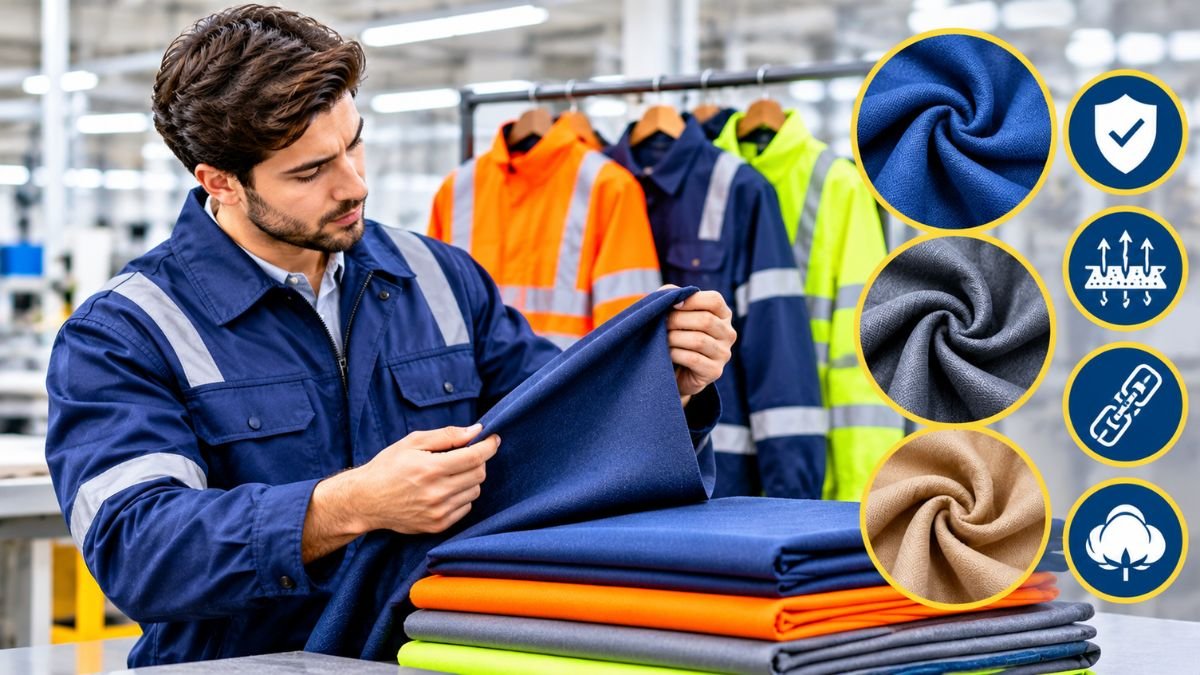
Choosing the right fabric is important when buying workwear. Workers need clothing that supports their daily tasks. It should also provide comfort and durability.
Different industries have different clothing requirements. Construction workers need strong and durable materials. Healthcare workers often need lightweight and washable fabrics. Industrial workers may require specialized protective materials.
The best fabric for workwear depends on several factors. These include comfort, strength, breathability, and workplace hazards. Some fabrics perform better in hot environments. Others offer better resistance to abrasion and repeated washing.
Understanding fabric types helps businesses make better purchasing decisions. It also helps manufacturers create suitable work clothing. The right material can improve garment performance and service life.
This guide explores common workwear fabrics, their benefits, and their applications. It also explains how to select the right material for different industries.
Choosing fabric for a production run? See our workwear manufacturing range, the ripstop pants, and read what workwear is.
Why Is Fabric Selection Important for Workwear?
Workwear faces more demanding conditions than ordinary clothing. Workers may experience heat, dust, moisture, friction, and frequent movement. Their clothing must handle these conditions throughout the working day.
Fabric selection affects how a garment performs. It influences comfort, durability, appearance, and maintenance.
Improves Daily Comfort
Workers often wear uniforms for several hours. Uncomfortable fabrics can make daily tasks difficult.
Breathable materials help manage heat and moisture. Soft fabrics can also reduce skin irritation.
Comfortable workwear supports easier movement. This is especially important for physically demanding jobs.
Increases Garment Durability
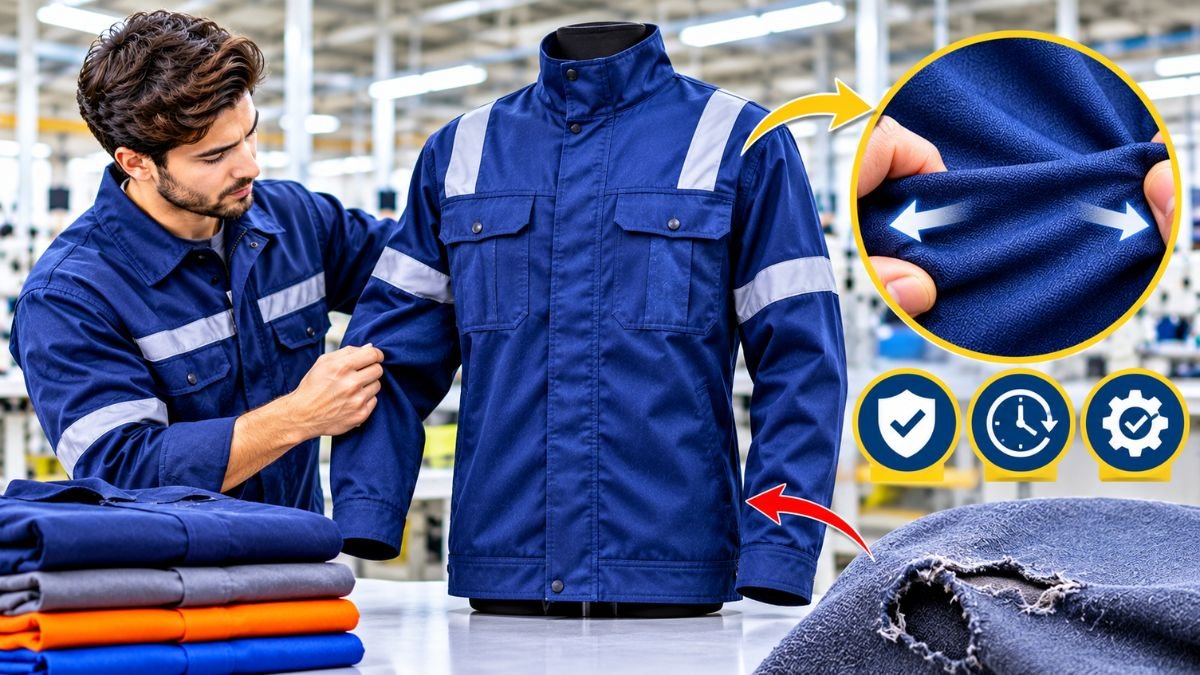
Work clothing often experiences regular wear and tear. Workers may bend, stretch, kneel, and handle equipment.
Strong fabrics can withstand repeated use. They may also resist abrasion and tearing.
Durable materials help extend garment service life. This can reduce frequent replacement costs.
Supports Workplace Protection
Some work environments contain serious hazards. These may include chemicals, flames, sparks, and electrical risks.
Specialized fabrics can provide protection against specific hazards. However, ordinary workwear materials do not automatically offer protective properties.
Employers should select certified protective garments when required. Fabric choice must match the workplace risk assessment.
Makes Maintenance Easier
Workwear often requires frequent washing. Some fabrics handle repeated laundering better than others.
Easy-care materials save time during garment maintenance. They can also help preserve the appearance of uniforms.
Always follow the manufacturer’s washing instructions. Incorrect care can damage certain fabric properties.
10 Best Fabric Types for Workwear
Different materials offer different performance benefits. Some provide comfort, while others offer greater strength.
The following fabrics are commonly used in workwear manufacturing.
1. Cotton Fabric
Cotton is one of the most popular materials for work clothing. It comes from natural cotton fibers.
Many workers prefer cotton because it feels soft against the skin. It also allows air to move through the fabric.
Cotton is suitable for several everyday workwear applications. Manufacturers use it for shirts, trousers, uniforms, and lightweight jackets.
Benefits of cotton workwear:
- Soft and comfortable against the skin.
- Good breathability for everyday use.
- Absorbs moisture effectively.
- Suitable for warm working conditions.
- Easy to dye and customize.
- Available in different fabric weights.
Cotton also has some limitations. It can wrinkle and shrink if handled incorrectly. It may take longer to dry than synthetic fabrics.
Standard cotton is also combustible. It should not be treated as flame-resistant clothing unless it has been properly tested and certified for that purpose.
Best applications: Office uniforms, general work shirts, hospitality clothing, and everyday uniforms.
2. Polyester Fabric
Polyester is a synthetic fiber widely used in workwear manufacturing. It is known for its durability and easy-care properties.
It resists wrinkles and generally dries faster than cotton. This makes it useful for uniforms that require frequent washing.
Polyester also helps garments maintain their shape. It is often blended with other fibers.
Benefits of polyester workwear:
- Good resistance to wrinkles.
- Lightweight fabric options.
- Quick-drying performance.
- Good shape retention.
- Suitable for frequent washing.
- Available in different textures and weights.
However, polyester has limitations. Some fabrics can trap heat and moisture. Standard polyester can also melt when exposed to high heat.
Workers in high-temperature environments need suitable specialized garments.
Best applications: Sports uniforms, warehouse clothing, service uniforms, and general-purpose workwear.
3. Cotton Polyester Blend
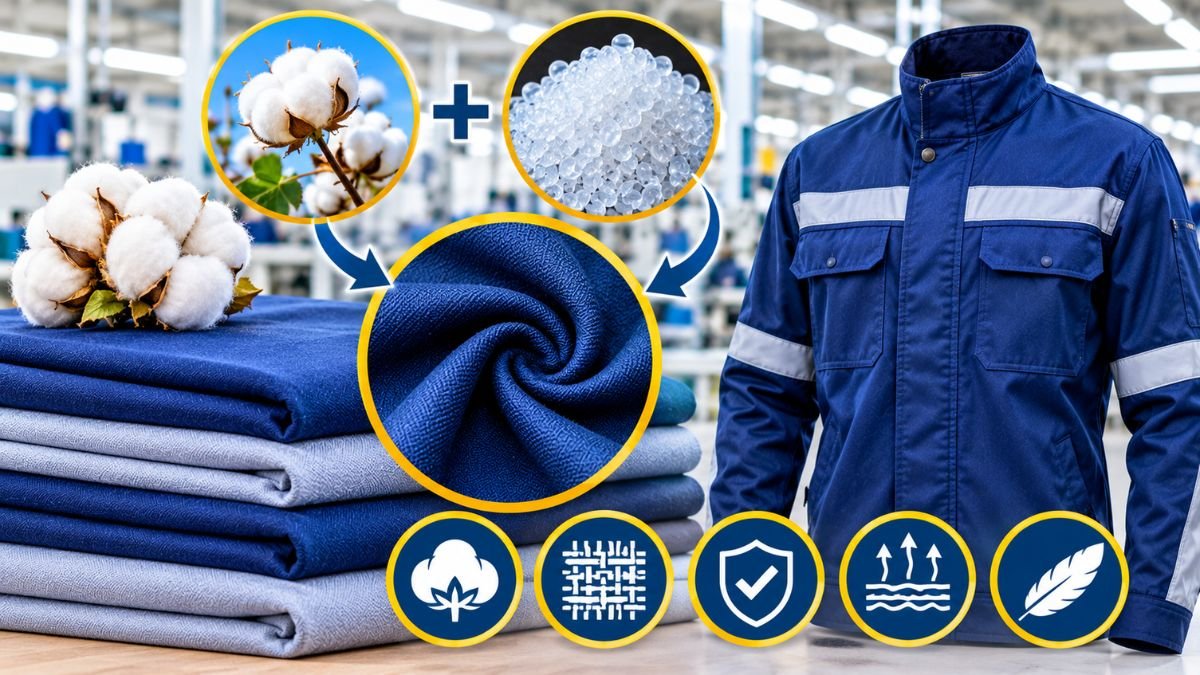
Cotton polyester blend fabric combines natural and synthetic fibers. It is one of the most common choices for work clothing.
The cotton provides softness and breathability. Polyester improves durability and wrinkle resistance.
The exact performance depends on the blend ratio. A 50/50 blend offers a different feel than a 65/35 blend.
Benefits of cotton polyester workwear:
- Combines comfort and durability.
- Generally easier to maintain than pure cotton.
- Provides good shape retention.
- Suitable for repeated washing.
- Offers different weight and texture options.
- Works well for everyday uniforms.
The blend ratio should match the working environment. Higher cotton content may provide a softer feel. Higher polyester content may improve drying and wrinkle resistance.
Neither blend is automatically suitable for flame or arc protection.
Best applications: Factory uniforms, maintenance clothing, retail uniforms, and general industrial workwear.
4. Nylon Fabric
Nylon is a synthetic material known for strength and abrasion resistance. It is commonly used in demanding clothing applications.
The fabric can handle repeated movement and friction. It is also available in lightweight constructions.
Nylon is often used in jackets, outerwear, and reinforced workwear components.
Benefits of nylon workwear:
- Good strength for its weight.
- Strong abrasion resistance.
- Lightweight fabric options.
- Flexible construction.
- Generally quick drying.
- Suitable for outdoor clothing.
However, nylon can be sensitive to high temperatures. It may also feel less breathable in certain fabric constructions.
Best applications: Outdoor workwear, protective jackets, utility clothing, and reinforced garments.
5. Canvas Fabric
Canvas is a heavy-duty fabric commonly made from cotton or cotton blends. It has a strong and durable construction.
Its thick structure makes it suitable for demanding work conditions. It can withstand regular friction and rough handling.
Canvas is popular in work trousers, jackets, aprons, and tool-related garments.
Benefits of canvas workwear:
- Strong and durable construction.
- Good abrasion resistance.
- Suitable for heavy-duty garments.
- Holds its shape well.
- Works well for reinforced clothing.
- Available in different fabric weights.
Heavy canvas can feel stiff at first. It may also be less comfortable in hot weather.
Manufacturers can improve flexibility through fabric finishing and garment design.
Best applications: Construction trousers, carpenter clothing, utility jackets, and workshop aprons.
6. Denim Fabric
Denim is a durable woven fabric traditionally made from cotton. Its twill construction gives it a recognizable appearance.
It is commonly used in work trousers and jackets. Heavyweight denim can provide good durability for general tasks.
Benefits of denim workwear:
- Durable woven construction.
- Good everyday abrasion resistance.
- Comfortable after regular use.
- Available in different weights.
- Easy to style and customize.
- Suitable for casual work uniforms.
Denim can be heavy and less breathable than lightweight fabrics. Its suitability depends on garment weight and construction.
Regular denim is not automatically protective against flames, chemicals, or electrical hazards.
Best applications: Workshop clothing, general maintenance uniforms, and casual workwear.
7. Twill Fabric
Twill is a type of weave rather than a specific fiber. It has diagonal lines on the fabric surface.
Manufacturers can produce twill using cotton, polyester, or blended fibers.
Its construction creates a strong and practical fabric. It is widely used in work trousers, uniforms, and jackets.
Benefits of twill workwear:
- Durable woven structure.
- Good resistance to everyday wear.
- Suitable for repeated washing.
- Available in different weights.
- Holds its shape well.
- Offers a professional appearance.
The final performance depends on the fibers and fabric construction.
Best applications: Industrial uniforms, work trousers, maintenance clothing, and service uniforms.
8. Ripstop Fabric
Ripstop fabric uses a special weaving technique. Reinforcing threads create a grid-like pattern.
This construction helps limit the spread of small tears. It is commonly used in outdoor and utility clothing.
Ripstop can be made from cotton, polyester, nylon, or blends.
Benefits of ripstop workwear:
- Helps prevent small tears from spreading.
- Lightweight options are available.
- Suitable for outdoor activities.
- Good strength-to-weight performance.
- Useful for utility garments.
- Available in different fabric constructions.
Ripstop does not make clothing tear-proof. Its actual strength depends on the material, yarn, and weave.
Best applications: Outdoor uniforms, utility trousers, field clothing, and lightweight work jackets.
9. Fleece Fabric
Fleece is a soft textile commonly made from polyester fibers. It provides insulation and warmth.
It is often used as an additional layer during cold weather. Fleece jackets and sweatshirts are common workwear options.
Benefits of fleece workwear:
- Lightweight insulation.
- Soft and comfortable texture.
- Quick-drying properties.
- Easy layering.
- Suitable for cold conditions.
- Available in different thicknesses.
Fleece may not provide sufficient wind or rain protection by itself. Some garments need an additional outer layer.
Standard fleece is also not suitable for flame-exposed environments.
Best applications: Outdoor work jackets, cold-weather uniforms, and insulated mid-layers.
10. Aramid Fabric
Aramid is a family of high-performance synthetic fibers. Certain aramid materials are used in specialized protective garments.
They can provide heat and flame resistance. Some types also offer good strength and abrasion resistance.
Aramid fibers are used in selected electrical, industrial, and emergency-response clothing.
Benefits of aramid workwear:
- Specialized heat resistance.
- Flame-resistant properties.
- Good strength and durability.
- Useful in demanding environments.
- Suitable for certain protective garment designs.
- Available in different fiber constructions.
Aramid fabrics can be more expensive than ordinary workwear materials. Their performance also depends on the garment design and testing.
Best applications: Flame-resistant clothing, arc-rated garments, and specialized industrial protective wear.
Best Fabric for Workwear in Different Industries
Every industry has different clothing requirements. Selecting suitable materials helps improve garment performance.
Construction Industry
Construction workers need clothing that handles rough conditions. Their garments may experience dust, friction, and frequent movement.
Canvas, denim, twill, and ripstop are common choices for general workwear.
Heavy-duty trousers can provide durability. Lightweight shirts can improve comfort during warm weather.
High-visibility garments may also be required around traffic and machinery. The required protection depends on workplace conditions.
Manufacturing Industry
Manufacturing environments involve different activities. Workers may need uniforms that withstand regular washing and everyday wear.
Cotton polyester blends are common choices. Twill is also suitable for durable industrial uniforms.
Specialized garments may be required near heat, chemicals, or electrical equipment.
Healthcare Industry
Healthcare clothing needs comfort and easy maintenance. Staff often wear uniforms throughout long shifts.
Cotton blends and polyester fabrics are common choices. They can offer a balance of comfort and durability.
Fluid-resistant gowns and specialized barrier garments may be necessary for certain tasks.
Hospitality Industry
Hospitality uniforms should look professional. They should also remain comfortable during long working hours.
Cotton polyester blends are popular for shirts and trousers. Polyester can also help reduce wrinkles.
The fabric should maintain its appearance after regular washing.
Agriculture Industry
Agricultural workers may experience moisture, dust, and outdoor conditions. Their clothing should support movement and durability.
Cotton blends and ripstop fabrics are useful options. Waterproof outerwear may also be needed.
Specialized protection may be necessary when workers handle pesticides or other hazardous substances.
Electrical Industry
Electrical workers require clothing based on their specific electrical hazards.
Arc-rated garments may be necessary where an arc flash risk exists. These garments must meet the required arc-rating specifications.
Specialized flame-resistant materials are used in suitable protective clothing. Ordinary cotton and polyester uniforms should not replace required arc-rated PPE.
To see these fabrics in finished garments, read what coveralls are made of and Nomex fire retardant fabric.
How to Choose the Best Fabric for Workwear
Choosing the right material requires more than comparing prices. You should consider the job, working environment, and garment requirements.
1. Identify the Working Environment
Start by understanding where workers will use the clothing.
Consider temperature, moisture, dust, and physical activity. Also identify chemical, electrical, and thermal hazards.
This information helps narrow down suitable fabric options.
2. Consider Fabric Durability
Workwear should handle regular use. Workers may move against rough surfaces and equipment.
Look for suitable fabric strength and abrasion resistance. Check the fabric weight and construction.
Heavy fabrics can provide durability but may reduce comfort.
3. Check Breathability
Breathability is important during physically demanding work. It allows heat and moisture to move away from the body.
Cotton and some lightweight blends offer good comfort. Specialized synthetic fabrics can also manage moisture.
Choose fabrics according to the climate and activity level.
4. Evaluate Fabric Weight
Fabric weight affects garment feel and performance.
Lightweight materials are suitable for warm conditions. Medium-weight fabrics offer versatility for everyday uniforms.
Heavyweight materials are useful for demanding applications. However, weight alone does not determine durability.
5. Review Washing Requirements
Workwear often requires regular cleaning. Some materials are easier to maintain than others.
Polyester blends generally resist wrinkles. Cotton may require more attention to shrinking and ironing.
Check care labels before choosing a fabric.
6. Consider Worker Comfort
Workers need clothing that supports natural movement. The fabric should not feel too stiff or heavy.
Consider softness, stretch, ventilation, and fit. Garment design also affects comfort.
7. Match Fabric to Protection Requirements
Some jobs require specialized protective clothing. Ordinary fabrics may not provide enough protection.
Check relevant product certifications and technical documentation. Select garments that meet the required safety specifications.
8. Compare Cost and Service Life
Low-cost fabrics may require frequent replacement. Higher-quality materials may provide better long-term value.
Compare the purchase price with expected garment life. Also consider washing, repair, and replacement costs.
Fabric Comparison: Which Material Is Best for Workwear?
The following table provides a general comparison of common workwear materials.
| Fabric | Main benefit | Common application |
|---|---|---|
| Cotton | Softness and breathability | Work shirts |
| Polyester | Easy care and durability | Uniforms |
| Cotton blend | Comfort and durability balance | Factory clothing |
| Nylon | Strength and abrasion resistance | Outdoor jackets |
| Canvas | Heavy-duty construction | Work trousers |
| Denim | Durable woven structure | General workwear |
| Twill | Practical woven construction | Industrial uniforms |
| Ripstop | Limits tear propagation | Utility clothing |
| Fleece | Lightweight insulation | Cold-weather layers |
| Aramid | Specialized heat resistance | Protective clothing |
No single fabric is best for every job. The right choice depends on the working environment and protection requirements.
Common Mistakes to Avoid When Selecting Workwear Fabric
Selecting unsuitable materials can affect comfort and garment performance.
Avoid these common mistakes when purchasing or manufacturing workwear.
Choosing Fabric Only by Price
Low-cost materials may not provide suitable durability. Compare quality and expected service life before purchasing.
Ignoring the Working Environment
A lightweight fabric may not suit heavy industrial work. Similarly, thick fabrics may feel uncomfortable in hot environments.
Match the material to the actual working conditions.
Overlooking Breathability
Poor ventilation can increase discomfort. Consider airflow and moisture management when selecting fabric.
Ignoring Fabric Care Instructions
Some materials need special washing methods. Incorrect cleaning can cause shrinkage or damage.
Always follow manufacturer recommendations.
Assuming Ordinary Fabric Provides Safety Protection
Standard workwear fabrics do not automatically provide flame, chemical, or electrical protection.
Select specialized and appropriately tested garments for hazardous tasks.
Forgetting Worker Feedback
Workers understand their daily clothing challenges. Ask them about comfort, movement, and garment durability.
Their feedback can help improve future uniform choices.
Tips for Maintaining Workwear Fabrics
Proper maintenance helps extend garment life. It also helps preserve the fabric’s appearance and performance.
Wash According to Fabric Type
Different fabrics have different cleaning requirements. Check the care label before washing.
Separate heavily soiled garments when necessary. Use suitable washing products and temperatures.
Avoid Excessive Heat
High drying temperatures can affect some fabrics. They may cause shrinkage or damage.
Follow the recommended drying instructions.
Inspect Garments Regularly
Check clothing for holes, loose seams, and damaged closures. Replace garments that are no longer suitable.
Protective garments need additional inspection according to their manufacturer instructions.
Store Workwear Properly
Keep clean garments in a dry and suitable storage area. Avoid unnecessary exposure to moisture and direct sunlight.
Store contaminated protective clothing separately.
Repair Garments When Appropriate
Minor damage may be repairable in ordinary workwear. However, repairs must not compromise required protective properties.
Follow manufacturer instructions for specialized PPE.
Frequently Asked Questions About the Best Fabric for Workwear
1. What Is the Best Fabric for Workwear?
Cotton polyester blends are popular for general workwear. They offer a balance of comfort, durability, and easy maintenance.
However, specialized jobs may require different materials. The best choice depends on workplace conditions.
2. Is Cotton or Polyester Better for Workwear?
Cotton offers softness and breathability. Polyester provides good durability and wrinkle resistance.
A cotton polyester blend combines benefits from both fibers. The right option depends on the intended application.
3. What Is the Most Durable Fabric for Work Clothes?
Canvas, denim, nylon, and certain ripstop fabrics are common durable options.
Their actual performance depends on fabric weight and construction. Garment quality also matters.
4. Which Fabric Is Best for Hot Weather Workwear?
Lightweight cotton and breathable fabric blends are popular options. They can improve comfort in warm environments.
The best choice also depends on physical activity and humidity.
5. Which Fabric Is Best for Industrial Uniforms?
Cotton polyester blends and twill are common choices. They offer practical combinations of comfort and durability.
Industrial hazards may require specialized protective fabrics.
6. Is Polyester Good for Workwear?
Yes, polyester is widely used in workwear. It resists wrinkles and dries relatively quickly.
However, standard polyester is unsuitable for certain high-heat hazards. Always consider the working environment.
7. What Is the Best Fabric for Heavy-Duty Workwear?
Canvas and heavy-duty twill are popular options. Denim and reinforced ripstop can also work well.
Choose the fabric according to the type of physical activity.
8. What Fabric Is Used for Flame-Resistant Workwear?
Flame-resistant workwear may use treated cotton, aramid fibers, or specialized blends.
The garment must meet the required performance standards. Ordinary cotton is not automatically flame-resistant.
9. Does Fabric Weight Affect Workwear Quality?
Fabric weight can influence durability and comfort. Heavier fabrics may offer greater resistance to everyday wear.
However, weight alone does not determine quality. Fiber type and construction also matter.
10. How Often Should Workwear Be Replaced?
Replacement depends on garment condition and usage. Check clothing regularly for damage and excessive wear.
Specialized protective garments must follow manufacturer service-life guidance.
Conclusion
Choosing the best fabric for workwear is important for comfort, durability, and workplace performance.
Cotton, polyester, and blended fabrics are popular choices for everyday uniforms. Canvas, denim, and ripstop offer options for demanding tasks. Specialized aramid materials are used in certain protective garments.
Every workplace has different requirements. Consider fabric strength, breathability, weight, and maintenance before making a decision.
Most importantly, match protective clothing to the actual workplace hazards. Standard workwear fabrics should never replace certified protective garments.
The right fabric helps workers stay comfortable throughout the day. It also supports longer-lasting uniforms and better clothing performance.
1 thought on “Best Fabric for Workwear: Types, Benefits, and How to Choose”
Pingback: What Are Coveralls Made Of? A Guide to Fabrics and Materials - negorafist.com