
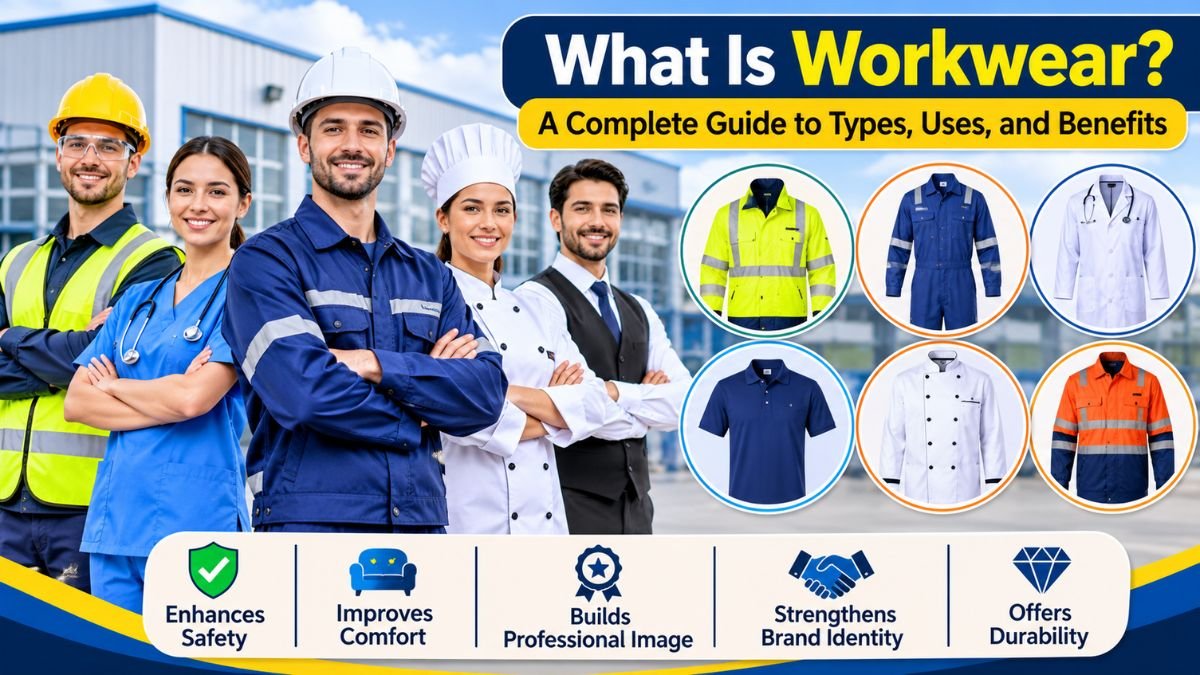
Workwear plays an important role in many industries, including construction, manufacturing, healthcare, hospitality, transportation, and engineering. It is designed to help employees perform their jobs comfortably while meeting workplace requirements for appearance, durability, and, where necessary, protection.
From industrial coveralls and high-visibility jackets to professional uniforms and healthcare scrubs, workwear comes in many different styles. Each type serves a specific purpose depending on the working environment, job responsibilities, and potential hazards.
Choosing suitable workwear can help businesses create a professional image, improve employee comfort, support workplace safety, and maintain consistent company branding.
But what exactly is workwear, and how do you choose the right clothing for your employees?
In this complete guide, we will explain what workwear is, explore its different types, discuss its uses and benefits, and share practical tips for selecting suitable work clothing for different industries.
Whether you are a business owner, purchasing manager, clothing manufacturer, or employer, understanding workwear can help you make informed decisions about workplace clothing.
Building a workwear line for your business? Explore our workwear manufacturing range, see the ripstop pants, and read the best fabric for workwear.
What Is Workwear?
Workwear refers to clothing specifically designed or selected for use in a professional or occupational environment. It includes garments that help employees perform their duties while meeting the practical requirements of their jobs.
Depending on the industry, workwear may prioritize durability, comfort, cleanliness, visibility, professional appearance, or protection against specific workplace hazards.
Examples include:
- Work shirts and trousers
- Industrial coveralls
- High-visibility vests and jackets
- Protective work jackets
- Healthcare scrubs
- Hospitality uniforms
- Corporate uniforms
- Flame-resistant clothing
- Waterproof workwear
- Safety clothing for construction workers
Not all workwear is protective equipment. Some garments are primarily designed to establish a professional appearance or identify employees, while others are engineered to provide specific protection.
For example, a company polo shirt may serve as a branded uniform, whereas certified flame-resistant clothing is intended for particular thermal or fire-related hazards.
The right workwear depends on the job, working conditions, required performance, and any applicable safety standards.
Why Is Workwear Important?
Workwear is important because it helps businesses address the practical clothing needs of their employees.
Depending on the workplace, suitable garments can improve comfort, support safety procedures, make workers easier to identify, and strengthen a company’s professional image.
Here are some of the main reasons workwear matters.
1. Supports Workplace Safety
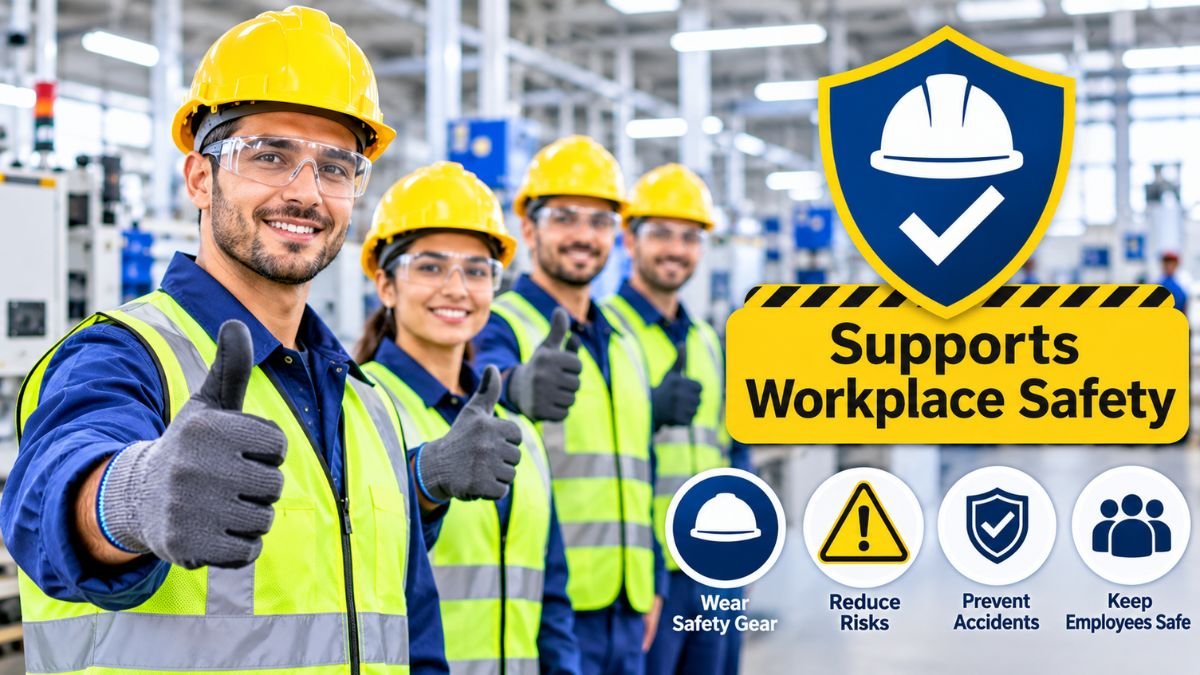
In environments with specific hazards, appropriate protective workwear can help reduce certain risks.
For example, high-visibility garments can help workers remain noticeable in areas with moving vehicles or machinery when selected and used according to the applicable requirements.
Specialized flame-resistant clothing can provide protection against particular thermal hazards when it is correctly specified for the task.
However, workwear alone does not eliminate workplace hazards. Employers must assess risks and use appropriate protective equipment and safety procedures.
2. Improves Employee Comfort
Employees may wear work clothing for long hours, so comfort is an important consideration.
Breathable fabrics, suitable sizing, ergonomic designs, and practical garment construction can help workers move comfortably throughout the day.
For physically demanding jobs, clothing should allow bending, stretching, lifting, and other movements without unnecessary restriction.
3. Creates a Professional Appearance
Uniform workwear helps businesses maintain a consistent and organized appearance.
Employees wearing coordinated clothing can create a more professional impression when interacting with customers, clients, suppliers, and visitors.
This is particularly useful in retail, hospitality, healthcare, transportation, and customer-facing services.
4. Strengthens Brand Identity
Custom workwear allows businesses to display their company logo, colors, and other identifying details.
Branded shirts, jackets, uniforms, and polo shirts can make employees easier to recognize while reinforcing the company’s visual identity.
When designed well, branded workwear also helps maintain a consistent appearance across different departments or locations.
5. Provides Practical Durability
Work clothing often experiences frequent washing, repeated movement, and contact with equipment or working surfaces.
Garments made from suitable materials and constructed with appropriate seams can withstand the demands of their intended environment.
Durable workwear can reduce the need for frequent replacement, although its actual lifespan depends on fabric quality, usage, maintenance, and exposure conditions.
What Are the Different Types of Workwear?
Workwear is available in several categories, each designed for different occupational needs.
Understanding these categories helps businesses choose garments that meet their employees’ practical requirements.
Workwear also includes protective categories. See types of PPE clothing and what FR rated clothing is for more detail.
1. Industrial Workwear
Industrial workwear is designed for employees working in factories, warehouses, workshops, production facilities, and other industrial environments.
These garments often prioritize durability, comfort, and practical functionality.
Common industrial workwear includes:
- Work trousers
- Heavy-duty work shirts
- Industrial jackets
- Coveralls
- Utility vests
- Work overalls
- Protective clothing for specific industrial tasks
Industrial garments may include reinforced seams, multiple pockets, durable closures, and fabrics selected for repeated use.
For example, a factory employee may need sturdy trousers and a work shirt that allow comfortable movement throughout a shift.
Workers exposed to additional hazards may also require specialized protective garments selected through a workplace risk assessment.
Benefits of Industrial Workwear
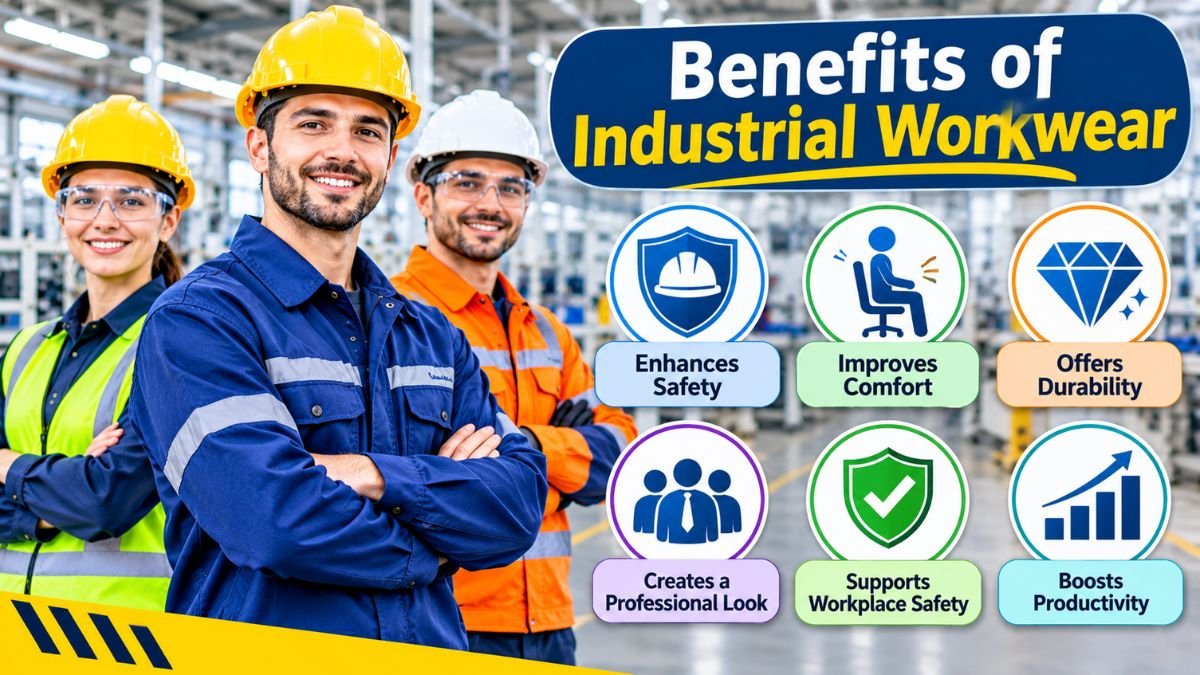
Industrial workwear can help employees perform physical tasks comfortably while supporting garment durability and workplace uniformity.
However, the clothing must be appropriate for the actual working conditions. Standard industrial clothing should not be assumed to protect against chemicals, electrical hazards, flames, or other specialized risks unless it has the necessary properties and approvals.
2. High-Visibility Workwear
High-visibility workwear is designed to help make workers more noticeable in environments where visibility is important.
It is commonly used in construction, road maintenance, transportation, logistics, and certain industrial operations.
Typical high-visibility garments include:
- High-visibility vests
- Reflective work jackets
- Visibility-enhanced polo shirts
- Reflective trousers
- High-visibility coveralls
- Weather-resistant visibility clothing
These garments often use fluorescent background materials and retroreflective elements.
Fluorescent materials can improve visibility in certain daylight conditions, while retroreflective materials help return light toward its source, making workers more visible when illuminated.
Where Is High-Visibility Workwear Used?
High-visibility clothing may be required in areas involving:
- Moving vehicles
- Road construction
- Warehousing operations
- Railway maintenance
- Outdoor infrastructure work
- Low-light working conditions
The required garment design and performance depend on the workplace risk assessment and applicable regulations or standards.
Important: A bright-colored garment is not automatically certified high-visibility protective clothing. When formal compliance is required, check the relevant standard, garment classification, labeling, and certification documentation.
3. Flame-Resistant Workwear
Flame-resistant workwear is designed to provide protection against particular flame or heat hazards.
It may be used in selected manufacturing operations, electrical utility work, metal processing, oil and gas operations, and other environments where a suitable risk assessment identifies thermal hazards.
Common garments include:
- Flame-resistant coveralls
- Protective work shirts
- Flame-resistant trousers
- Specialized protective jackets
- Arc-rated clothing for certain electrical hazards
The materials and garment construction depend on the type of hazard.
Some fabrics are inherently flame-resistant, while others receive treatments intended to provide specified flame-resistant performance.
Benefits of Flame-Resistant Workwear
Properly selected flame-resistant clothing can help reduce the severity of certain burn injuries under the conditions for which it was designed and tested.
However, flame resistance does not mean that a garment is fireproof.
Employers must select clothing according to the specific hazard and relevant requirements. Electrical arc hazards, flash-fire hazards, and other thermal risks require different assessments, and a garment suitable for one hazard may not be appropriate for another.
4. Corporate Workwear
Corporate workwear includes clothing worn by employees in offices, retail businesses, customer service departments, and other professional environments.
Its primary purpose is usually to create a consistent and professional appearance rather than provide specialized physical protection.
Common examples include:
- Formal shirts
- Blouses
- Corporate polo shirts
- Trousers
- Skirts
- Blazers
- Branded jackets
- Company uniforms
Businesses may choose colors, garment styles, and logos that match their brand identity.
Why Do Businesses Use Corporate Workwear?
Corporate workwear can help employees look coordinated, improve brand recognition, and create a consistent customer-facing appearance.
It can also simplify clothing expectations for employees who work in environments with established dress requirements.
When selecting corporate workwear, businesses should consider comfort, fit, fabric breathability, maintenance requirements, and the nature of employees’ daily tasks.
5. Healthcare Workwear
Healthcare workwear is designed for professionals working in hospitals, clinics, laboratories, dental practices, and other medical environments.
Common examples include:
- Medical scrubs
- Healthcare tunics
- Laboratory coats
- Clinical trousers
- Specialized protective gowns
- Uniforms for selected medical support roles
Healthcare clothing should be selected according to the work being performed and the facility’s infection prevention policies.
For example, ordinary scrubs provide a practical uniform, but they should not be treated as a substitute for protective gowns or other personal protective equipment when those items are required.
Important Features of Healthcare Workwear
Healthcare garments may need to offer:
- Comfortable movement
- Suitable breathability
- Easy laundering
- Practical pocket placement
- Appropriate fit
- Compatibility with hygiene procedures
Some medical environments also require specialized clothing or protective equipment to address biological, chemical, or other hazards.
The appropriate requirements depend on the employee’s role and the healthcare setting.
6. Hospitality Workwear
Hospitality workwear is used in hotels, restaurants, catering businesses, cafés, and other service environments.
These garments combine professional appearance with practical comfort.
Examples include:
- Chef jackets
- Kitchen trousers
- Aprons
- Restaurant uniforms
- Hotel uniforms
- Housekeeping clothing
- Front-desk uniforms
- Branded polo shirts
Different roles require different garment features.
For example, kitchen uniforms may need to tolerate frequent washing and withstand the demands of food preparation environments. Front-desk clothing may place greater emphasis on professional appearance and comfort.
Benefits of Hospitality Workwear
Suitable hospitality uniforms help employees present a consistent appearance and make staff easier for customers to identify.
Practical fabrics and garment designs can also support comfort during long shifts.
Where workers face heat, hot liquids, sharp equipment, or other hazards, additional protection may be necessary.
7. Waterproof Workwear
Waterproof workwear is designed to help keep workers dry in wet conditions.
It is commonly used in outdoor construction, agriculture, maintenance, transport, and selected industrial operations.
Common examples include:
- Waterproof jackets
- Rain trousers
- Waterproof coveralls
- Weather-resistant work coats
- Specialized wet-weather clothing
The level of protection depends on the fabric, garment construction, seams, closures, and design.
Some garments are waterproof, while others are only water-resistant. These terms should not be used interchangeably when choosing clothing for demanding wet conditions.
Benefits of Waterproof Workwear
Appropriate waterproof clothing can improve comfort during rainy or wet working conditions.
Breathability is also important because employees may become uncomfortable if perspiration accumulates inside the garment.
Businesses should choose clothing that suits the expected rainfall, working duration, activity level, and temperature.
8. Custom Workwear
Custom workwear is manufactured or decorated according to a business’s specific requirements.
Companies may request custom fabrics, colors, garment designs, measurements, logos, embroidery, printing, or other features.
Common custom workwear products include:
- Branded polo shirts
- Custom work shirts
- Company jackets
- Industrial uniforms
- Printed high-visibility garments
- Work trousers
- Branded coveralls
- Specialized garments for particular occupations
Why Choose Custom Workwear?
Custom workwear allows businesses to coordinate employee clothing with their branding and operational needs.
Companies can select garment styles, branding placement, sizes, colors, and other specifications.
For specialized protective workwear, custom designs must also maintain the required protective performance and comply with applicable standards. Adding embroidery, printing, pockets, or other modifications may affect compliance, so changes should be approved by the relevant manufacturer or certification body where necessary.
What Materials Are Used to Make Workwear?
The materials used in workwear influence its durability, comfort, appearance, maintenance requirements, and performance.
Different industries require different fabric properties, so choosing the right material is essential.
Here are some common materials used in work clothing.
1. Cotton
Cotton is a natural fiber widely used in shirts, uniforms, trousers, and everyday work clothing.
It is generally comfortable and breathable, making it suitable for many indoor and moderate-activity environments.
However, untreated cotton can absorb moisture and may shrink if it is not properly processed or laundered.
It is also important to recognize that ordinary cotton clothing does not automatically provide protection against flame or other workplace hazards.
2. Polyester
Polyester is a synthetic fiber commonly used in work shirts, polo shirts, uniforms, and selected performance garments.
It is valued for its durability, dimensional stability, and relatively quick drying.
Polyester can also be blended with other fibers to achieve particular fabric properties.
However, its suitability depends on the garment’s intended use, especially in environments involving heat or flame.
3. Cotton-Polyester Blends
Cotton-polyester blends combine two widely used textile fibers.
Depending on the blend ratio and fabric construction, these materials can offer a balance of comfort, durability, wrinkle resistance, and ease of care.
They are commonly used for corporate uniforms, work shirts, polo shirts, and general-purpose workwear.
The exact performance depends on fabric weight, yarn construction, finishing, and garment design.
4. Twill Fabric
Twill is a fabric construction characterized by a diagonal surface pattern.
Cotton twill and polyester-cotton twill are frequently used for work trousers, utility clothing, jackets, and uniforms.
Twill fabrics can offer useful durability and structure, although their performance depends on fiber content, fabric weight, and construction.
5. Denim
Denim is a durable woven fabric commonly used for work trousers, jackets, and selected occupational garments.
Its suitability depends on the weight, construction, finishing, and working conditions.
Standard denim should not be assumed to provide protection against specialized workplace hazards.
6. Specialized Protective Fabrics
Some work environments require fabrics engineered to meet particular safety or performance requirements.
Examples include flame-resistant materials, certain chemical-resistant fabrics, and fabrics used in certified high-visibility garments.
These materials must be selected according to the specific hazard and relevant performance requirements.
Tip: When sourcing workwear, choose fabric based on the garment’s purpose rather than price alone. Comfort, durability, care requirements, and necessary protective performance should all be considered.
What Are the Main Benefits of Workwear?
Workwear provides several benefits for employees and businesses when it is selected appropriately.
1. Enhances Workplace Safety
Suitable workwear can support workplace safety by providing visibility, coverage, or specific protective properties.
For example, properly selected high-visibility clothing can improve worker conspicuity, while specialized protective garments may help reduce exposure to identified hazards.
The actual protection depends on the garment’s design, condition, correct use, and suitability for the task.
2. Improves Employee Comfort
Comfortable workwear allows employees to focus on their tasks rather than constantly adjusting clothing that fits poorly or restricts movement.
Breathable materials, appropriate sizing, suitable stretch, and ergonomic construction can improve comfort throughout a working day.
3. Builds a Professional Image
Coordinated workwear helps businesses present a consistent appearance.
This is especially useful for customer-facing employees, field service teams, delivery personnel, and hospitality workers.
4. Promotes Brand Recognition
Branded workwear can display company logos, colors, and other identifying features.
This helps customers identify employees and reinforces the company’s visual identity.
5. Supports Employee Identification
In workplaces with multiple teams, departments, or contractors, workwear can help distinguish different roles.
For example, a company may use different uniform colors for maintenance staff, warehouse employees, and supervisors.
Any identification system should remain clear and should not interfere with required protective features.
6. Offers Long-Term Value
Durable workwear may reduce the frequency of garment replacement.
Although high-quality clothing can involve a higher initial purchase price, the overall value depends on garment lifespan, maintenance costs, comfort, and performance.
7. Helps Maintain Workplace Consistency
Standardized clothing can help businesses establish consistent appearance requirements across departments and locations.
This is particularly valuable for organizations with large workforces or multiple facilities.
How to Choose the Right Workwear for Your Business
Choosing the right workwear requires an understanding of employees’ responsibilities, working conditions, comfort needs, and company requirements.
The best garment is not necessarily the most expensive option. It is the one that meets the actual needs of the workplace.
Here are seven important factors to consider.
1. Understand the Working Environment
Start by evaluating where employees will wear the clothing.
Consider whether the work takes place indoors or outdoors, in hot or cold conditions, or around machinery, vehicles, moisture, chemicals, or other hazards.
The working environment helps determine the required fabric, garment design, and level of protection.
2. Identify Safety Requirements
If the job involves hazards, conduct or review an appropriate workplace risk assessment.
Determine whether employees need ordinary uniforms, specialized protective clothing, or other personal protective equipment.
Check the relevant regulations and performance standards before purchasing protective garments.
3. Select Suitable Fabrics
Choose materials that match the working conditions and expected garment lifespan.
For example, breathable fabrics may be suitable for many indoor roles, while outdoor workers may need clothing designed for rain, wind, or temperature changes.
Protective applications require materials that meet the necessary performance requirements.
4. Focus on Fit and Comfort
Workwear should fit properly and allow employees to move comfortably.
Poorly fitting garments can interfere with work tasks and may create additional risks around machinery or moving equipment.
Consider the size range, garment cut, sleeve length, trouser fit, and any layering requirements.
5. Consider Durability and Maintenance
Work clothing often needs frequent laundering and repeated use.
Review care instructions, colorfastness, shrinkage, seam construction, and the suitability of the fabric for the intended washing process.
Protective garments may require specific laundering and inspection procedures to maintain their intended performance.
6. Choose Appropriate Branding
If the garments will display a company logo, decide how branding should be applied.
Common options include embroidery, screen printing, heat transfer, and other suitable decoration methods.
The chosen method should match the fabric, appearance requirements, expected garment lifespan, and any applicable protective-clothing restrictions.
7. Work With a Reliable Manufacturer
A suitable workwear manufacturer should understand your product specifications and be able to explain its production capabilities.
Before placing a bulk order, consider requesting samples and confirming:
- Fabric composition and weight
- Garment measurements
- Stitching and construction details
- Color and branding requirements
- Minimum order quantities
- Production lead times
- Quality-control procedures
- Packaging and delivery arrangements
- Required testing or compliance documentation
Clear specifications help reduce misunderstandings and support consistent production.
Workwear vs. Uniforms: What Is the Difference?
Workwear and uniforms are closely related, but they are not exactly the same.
In general workwear is a broad term for clothing selected or designed for occupational use. For example, it may include everyday workplace clothing, specialized garments, and protective clothing.
In contrast, uniforms are coordinated garments that members of an organization wear to create a consistent appearance or identify their role or affiliation.
For example, a branded polo shirt worn by retail employees is both workwear and a uniform.
A flame-resistant coverall worn by a technician may be workwear without being part of a visually standardized company uniform.
Similarly, a hotel uniform is usually intended to establish a professional appearance, while protective workwear may be designed primarily to address specific workplace hazards.
Some garments serve both purposes.
A company can use coordinated uniforms that also meet relevant performance requirements, provided the garments are appropriately designed and verified.
What Is the Difference Between Workwear and PPE?
Personal protective equipment, commonly called PPE, is equipment designed to protect a person against particular health or safety risks.
Workwear is a broader category that includes clothing used for occupational purposes, whether or not it provides specialized protection.
Some workwear qualifies as protective equipment, while other workwear is primarily intended for comfort, appearance, or identification.
Examples include:
- Ordinary work shirt: Usually provides coverage and a consistent workplace appearance.
- High-visibility protective garment: Designed to improve conspicuity and may need to meet specific standards.
- Flame-resistant protective clothing: Designed to provide defined protection against particular thermal hazards.
- Chemical-protective clothing: Selected according to the chemicals, exposure conditions, and required protection level.
A garment should not be treated as PPE simply because it looks durable or protective.
Employers should identify workplace hazards, determine the required protective measures, and verify that selected garments meet the relevant requirements.
Common Industries That Use Workwear
Workwear is used across a wide range of industries. Each sector has different requirements based on working conditions, employee duties, and customer expectations.
Construction
Construction workers may need durable work trousers, jackets, safety footwear, and high-visibility garments depending on their tasks and site requirements.
Additional protection may be required for particular hazards.
Manufacturing
Factory employees commonly wear work shirts, trousers, coveralls, or other garments suited to their operations.
Specialized protective clothing may be necessary in areas involving heat, chemicals, electrical hazards, or moving machinery.
Healthcare
Healthcare professionals use scrubs, clinical uniforms, and specialized protective clothing according to their responsibilities and facility procedures.
Hospitality
Hotels, restaurants, and catering businesses use uniforms that support a professional appearance and suit the practical demands of their employees’ roles.
Transportation and Logistics
Drivers, delivery personnel, and warehouse workers may use branded uniforms, durable trousers, jackets, and high-visibility garments where appropriate.
Agriculture
Agricultural workers may require durable clothing suited to outdoor conditions, moisture, dirt, and the particular hazards associated with their tasks.
Oil and Gas
Some oil and gas operations require specialized protective garments selected according to identified hazards and applicable industry requirements.
These may include flame-resistant or antistatic clothing where the risk assessment and relevant standards require them.
Corporate and Retail Businesses
Office employees, sales teams, and customer service staff may wear coordinated shirts, polo shirts, blazers, or other branded clothing.
In these environments, appearance, comfort, and consistent branding are often key considerations.
Custom Workwear Manufacturing: What Businesses Should Know
Custom workwear manufacturing allows businesses to obtain garments tailored to their operational and branding requirements.
Instead of relying entirely on standard clothing products, companies can specify garment designs, fabrics, colors, measurements, logos, and other details.
This approach is useful for organizations that need coordinated uniforms or clothing suited to particular tasks.
The Custom Workwear Manufacturing Process
The process generally involves several stages.
1. Requirement planning: The business identifies employee roles, working conditions, garment quantities, and design preferences.
2. Design development: The manufacturer develops garment specifications, including colors, construction details, measurements, and branding placement.
3. Fabric selection: Suitable materials are selected according to comfort, durability, maintenance, and required performance.
4. Sampling: A sample garment is produced so the customer can review fit, construction, appearance, and other requirements.
5. Sample approval: Necessary changes are completed before bulk manufacturing begins.
6. Bulk production: The factory cuts, sews, finishes, and inspects the agreed quantity of garments.
7. Quality inspection: Finished products are checked against the approved specifications.
8. Packaging and delivery: Garments are packed and prepared for shipment.
Specialized protective workwear may require additional testing, certification, or documentation.
Any customization must preserve the required protective performance.
Why Businesses Choose Custom Workwear Manufacturers
Working with a suitable manufacturer can help businesses obtain garments that match their branding and practical requirements.
Potential advantages include:
- Consistent company colors
- Customized garment designs
- Brand logos and labels
- Specific fabric selections
- Suitable size ranges
- Practical pockets and garment features
- Coordinated clothing across departments
- Production quantities suited to business needs
Before selecting a manufacturer, businesses should compare samples, product specifications, quality procedures, pricing, and delivery terms.
How to Maintain and Care for Workwear
Proper workwear care helps preserve garment appearance and may extend its useful life.
However, maintenance requirements vary depending on the fabric and garment type.
1. Follow the Care Label
Always check the manufacturer’s washing and care instructions.
Different fabrics may require different washing temperatures, drying methods, and ironing settings.
2. Separate Garments When Necessary
Separating heavily soiled garments from ordinary clothing can help manage contamination and protect other laundry.
Where hazardous substances may be present, follow workplace procedures rather than treating the garments as ordinary laundry.
3. Use Appropriate Washing Methods
Choose washing methods suitable for the material and type of soil.
Avoid cleaning processes that could damage the fabric or reduce the garment’s intended performance.
4. Inspect Garments Regularly
Check for holes, damaged seams, worn closures, fading, and other signs of deterioration.
Protective clothing should be inspected according to the manufacturer’s instructions and the applicable workplace requirements.
5. Replace Damaged Clothing When Necessary
Garments that no longer meet the required specifications should be repaired or replaced as appropriate.
Protective clothing may need to be removed from service if its protective performance has been compromised.
Important: Specialized protective workwear may require specific cleaning, inspection, and replacement procedures. Always follow the manufacturer’s instructions and applicable safety requirements.
Frequently Asked Questions About Workwear
1. What is workwear used for?
Workwear is used to meet the clothing needs of employees in professional and occupational environments. Depending on the garment, it may provide comfort, durability, workplace identification, a professional appearance, visibility, or protection against particular hazards.
2. What are the main types of workwear?
Common types include industrial workwear, high-visibility clothing, flame-resistant clothing, corporate uniforms, healthcare workwear, hospitality uniforms, waterproof workwear, and custom workwear.
Each category serves different needs.
3. What is the difference between workwear and regular clothing?
Workwear is selected or designed for the demands of a job. It may feature more durable construction, practical pockets, specific fabrics, company branding, or protective properties.
Regular clothing is generally designed for everyday personal use and may not meet workplace requirements.
4. Which fabrics are best for workwear?
The best fabric depends on the intended application.
Cotton and cotton-polyester blends are common for general workwear, while twill is frequently used for trousers and utility clothing. Specialized protective workwear may require fabrics tested for particular hazards.
5. Is workwear the same as PPE?
No. Workwear is a broad category of occupational clothing, while PPE refers to equipment designed to protect against specific health or safety risks.
Some workwear qualifies as PPE, but ordinary uniforms do not automatically provide specialized protection.
6. Why do companies provide workwear?
Companies may provide workwear to establish a consistent appearance, support employee comfort, strengthen branding, improve identification, and meet workplace clothing or protective-equipment requirements.
7. What is custom workwear?
Custom workwear is clothing made or decorated according to a business’s requirements. It may include customized designs, company logos, selected fabrics, specific colors, and practical garment features.
8. How often should workwear be replaced?
Replacement frequency depends on garment quality, usage, laundering, and working conditions.
Ordinary garments should be replaced when they become excessively worn or no longer meet the company’s requirements. Protective clothing must be replaced according to its condition, manufacturer’s instructions, and applicable safety requirements.
9. Can workwear improve workplace safety?
Appropriate workwear can support workplace safety when it is selected for the identified hazards and used correctly.
Examples include high-visibility garments and specialized protective clothing. However, workwear is only one part of an effective workplace safety program.
10. How do I choose a reliable workwear manufacturer?
Evaluate the manufacturer’s experience, product quality, fabric options, customization capabilities, sample process, production capacity, quality-control procedures, pricing, and delivery terms.
For protective garments, also verify relevant testing, certification, and compliance documentation.
Conclusion
Workwear is an important part of many professional environments, providing clothing suited to the practical needs of different jobs.
From industrial uniforms and high-visibility jackets to corporate shirts, healthcare scrubs, and specialized protective garments, each type of workwear serves a particular purpose.
The right workwear can help businesses improve employee comfort, maintain a professional image, strengthen brand identity, and support workplace safety when appropriate protective clothing is selected.
When choosing workwear, businesses should consider the working environment, fabric quality, garment fit, durability, maintenance requirements, and any applicable safety standards.
Companies interested in custom clothing should also work with reliable manufacturers who understand their specifications and can maintain consistent quality throughout production.
Ultimately, the best workwear combines comfort, functionality, durability, and suitability for the job.
By investing in appropriate work clothing, businesses can better support their employees while creating a consistent and professional workplace environment.