
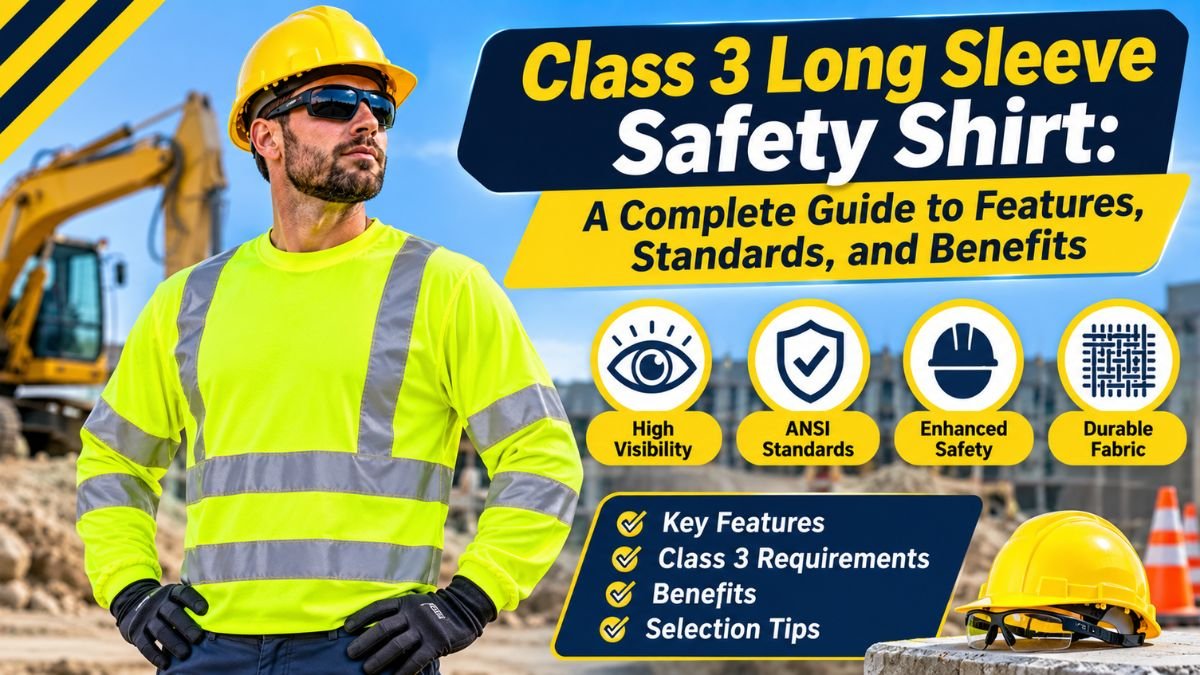
Workplace safety is essential in industries where employees work near moving vehicles, heavy machinery, road traffic, and other potential hazards. Workers need clothing that helps them remain visible in different lighting conditions while providing comfort and freedom of movement. A Class 3 long sleeve safety shirt is designed for work environments where a high level of visibility is required.
These shirts are commonly used in road construction, highway maintenance, utility services, transportation, and other industries where workers need to be easily seen by vehicle operators and equipment operators.
Class 3 high-visibility shirts typically combine fluorescent background fabric with reflective materials in a design intended to improve visibility from different directions. Long sleeves also provide additional coverage for the arms, making these shirts useful for outdoor work and changing weather conditions.
In this guide, we will explain what a Class 3 long sleeve safety shirt is, its main features, applicable safety standards, benefits, materials, and how to choose the right shirt for your workplace.
Need long sleeve hi vis shirts for your crew? Explore our custom hi vis workwear manufacturing, see the hi-vis short sleeved t-shirt, and read the ANSI standard for high visibility clothing.
What Is a Class 3 Long Sleeve Safety Shirt?
A Class 3 long sleeve safety shirt is a high-visibility work garment designed to meet the applicable requirements for Class 3 high-visibility apparel under ANSI/ISEA 107.
It generally features fluorescent fabric and strategically positioned retroreflective material to help workers remain conspicuous during the day, in low-light conditions, and at night when illuminated by a light source such as vehicle headlights.
The long-sleeve design covers the arms and can be suitable for workers who need additional coverage while performing outdoor or industrial tasks.
These shirts are available in different styles, including crew-neck shirts, collared shirts, moisture-wicking shirts, and work shirts with pockets.
However, a long-sleeve shirt is not automatically Class 3 compliant simply because it has bright fabric and reflective stripes. The finished garment must meet the applicable performance requirements, including the required material areas and configuration.
Key Characteristics of a Class 3 Safety Shirt
Common characteristics include:
- Fluorescent high-visibility background fabric
- Retroreflective material for nighttime visibility
- Long sleeves for additional arm coverage
- A design intended to provide high conspicuity
- Comfortable fabric suitable for work activities
- Durable construction for repeated wear
- Available sizes to accommodate different workers
- Product labeling and documentation identifying its applicable performance
The exact features vary by manufacturer, garment design, and intended application.
Understanding ANSI/ISEA 107 Class 3 Requirements
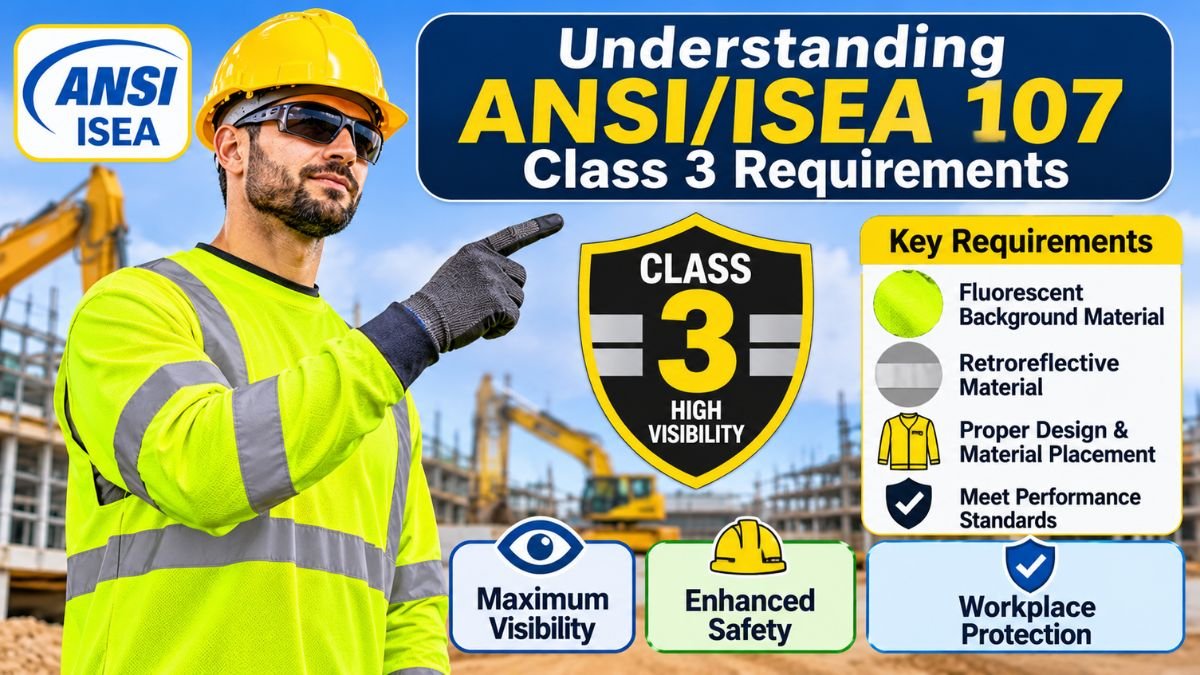
ANSI/ISEA 107 is the American National Standard for high-visibility safety apparel. It establishes requirements for materials, garment design, performance, and related product documentation.
The current edition is ANSI/ISEA 107-2026. Employers and buyers should consult the current standard and applicable workplace rules when selecting high-visibility garments.
A Class 3 garment is designed for situations requiring a high level of worker conspicuity. Its construction generally provides extensive visibility coverage across the torso and limbs.
The required configuration may involve a single garment or a compliant combination of garments, depending on the product design and applicable requirements. Buyers should verify that the specific shirt or complete clothing configuration meets the required Class 3 criteria.
Why Class 3 Matters
Class 3 apparel is often considered for environments where workers need to be conspicuous from multiple directions and under challenging visibility conditions.
Examples include certain roadway operations, highway maintenance, emergency-response activities, and other work near moving traffic.
The appropriate class must be determined by evaluating the hazards, work conditions, and applicable safety requirements. Class 3 should not be selected solely because it offers more visible material than lower classes.
Important: ANSI/ISEA 107 is a technical standard for high-visibility apparel. It does not automatically establish compliance with every workplace safety regulation or provide protection against hazards such as flames, electrical arcs, or chemicals.
Main Features of a Class 3 Long Sleeve Safety Shirt
Class 3 long sleeve safety shirts combine visibility-related features with practical workwear characteristics.
1. High-Visibility Fluorescent Fabric
Fluorescent fabric is one of the most recognizable features of high-visibility safety shirts.
Common colors include fluorescent yellow-green and fluorescent orange-red, subject to the requirements of the applicable standard.
These colors help workers stand out against many common workplace backgrounds during daylight and certain low-light conditions.
Fluorescent material works differently from reflective material. It improves conspicuity under suitable ambient lighting but does not replace retroreflective material for nighttime visibility.
2. Reflective Strips
Retroreflective strips help return light toward its source. When headlights illuminate the material, the reflected light can make the worker more noticeable to approaching drivers.
Reflective material is commonly positioned around the torso and may extend over the shoulders, arms, or other parts of the garment.
For Class 3 apparel, the placement and configuration of visibility materials are particularly important.
Not every shirt with reflective tape qualifies as Class 3. The finished garment must satisfy the relevant performance requirements.
3. Long-Sleeve Design
Long sleeves provide additional coverage for the arms and may help protect workers from direct sunlight, light abrasion, dust, and ordinary environmental exposure.
They are useful for workers who spend extended periods outdoors or who prefer additional coverage while working.
However, ordinary long sleeves do not automatically provide specialized protection against flames, chemicals, electrical hazards, or severe abrasion. Those properties require separate evaluation.
4. Breathable Fabric
Breathable fabric helps improve comfort during physically demanding work.
Many safety shirts use polyester or polyester blends because they can provide relatively low weight, durability, and moisture-management properties.
Breathability is particularly important for construction workers, road crews, utility technicians, and other employees who work outdoors in warm conditions.
The best fabric depends on the climate, level of physical activity, and other clothing worn by the worker.
5. Moisture-Wicking Properties
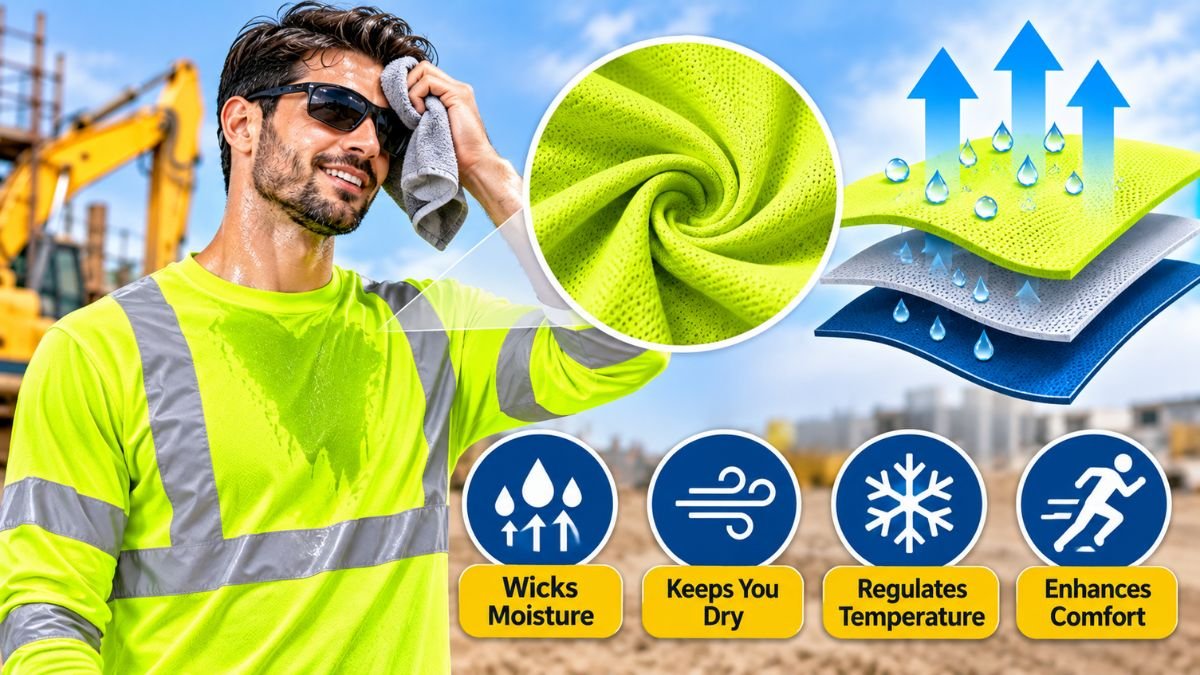
Moisture-wicking fabrics help move perspiration away from the skin toward the fabric surface, where it can evaporate under suitable conditions.
This feature may improve comfort during long shifts, especially in hot weather.
Moisture-wicking performance varies by fabric construction and finishing treatment, so buyers should review the manufacturer’s specifications.
6. Durable Construction
Work shirts need to withstand repeated wear, movement, and laundering.
Quality construction may include reinforced seams, durable stitching, and materials selected for the intended work environment.
Durability is important because damage, excessive wear, or deterioration of visibility materials can affect a garment’s suitability for use.
7. Comfortable Fit
A suitable fit allows workers to move freely while completing tasks such as lifting, climbing, bending, and reaching.
Shirts that are too tight may restrict movement, while excessively loose garments may become caught in machinery or equipment.
Employers should provide a suitable range of sizes and check that the garment remains comfortable when worn with other required PPE.
8. Practical Workwear Design
Depending on the model, Class 3 long sleeve safety shirts may include:
- Chest pockets
- Collared designs
- Button or zipper closures
- Reinforced seams
- Lightweight construction
- Moisture-management features
- Contrasting panels
- Different sleeve and body lengths
These features can improve usability, but any design changes must preserve the garment’s required visibility performance.
For a lighter-duty option, see Class 1 safety vests. To keep reflective material performing, follow our guide on how to wash hi vis clothing.
Benefits of Wearing a Class 3 Long Sleeve Safety Shirt
A suitable Class 3 long sleeve safety shirt can support workplace safety while providing practical benefits for workers.
1. Improves Worker Visibility
The combination of fluorescent background material and retroreflective elements helps make workers more conspicuous in appropriate lighting conditions.
This is particularly useful when workers share space with vehicles, trucks, or heavy equipment.
2. Supports Roadside Safety
Road construction and highway maintenance workers may face traffic moving at different speeds and from different directions.
High-visibility apparel can help vehicle operators recognize workers more easily. It should be used alongside traffic controls, barriers, training, and other required safety measures.
3. Provides Additional Arm Coverage
Long sleeves cover more of the arms than short-sleeve designs.
This may be helpful for outdoor work, sun exposure, and certain ordinary workplace conditions.
The shirt should not be treated as specialized protective clothing unless its additional protective properties are specifically documented.
4. Helps Improve Comfort During Long Shifts
Lightweight fabrics, breathable construction, and moisture-wicking features can make safety shirts more comfortable during extended work periods.
Comfort matters because workers need clothing that allows them to perform their tasks without unnecessary restriction.
5. Supports Workplace Identification
High-visibility shirts help distinguish workers from their surroundings. Some models can also incorporate company identification or approved logos.
Customization must not obscure or reduce the required visibility materials or interfere with compliance.
6. Suitable for Different Industries
Class 3 long sleeve safety shirts may be used in a range of environments where Class 3 apparel is appropriate.
These can include certain roadwork, utility, construction, transportation, and emergency-response applications.
The employer must still confirm that the shirt meets the requirements for the specific job.
7. Supports a Consistent Safety Apparel Program
Standardized safety shirts can help organizations establish consistent clothing requirements across teams and work sites.
Businesses can define approved garments, sizing procedures, inspection practices, and replacement policies to support their broader safety program.
Class 3 vs. Class 2 Safety Shirts: What Is the Difference?
In the class 2 and Class 3 safety shirts are both types of high-visibility apparel, but they serve different visibility needs.
| Feature | Class 2 Safety Apparel | Class 3 Safety Apparel |
|---|---|---|
| Intended visibility level | For applications requiring Class 2 performance | For applications requiring Class 3 performance |
| Visible-material configuration | Meets applicable Class 2 requirements | Meets applicable Class 3 requirements |
| Garment coverage | Depends on the design and standard requirements | Generally provides more extensive visibility coverage |
| Common applications | Certain roadway, utility, and transportation tasks | Certain higher-risk roadway and other demanding visibility applications |
| Selection criteria | Workplace hazards and applicable rules | Workplace hazards and applicable rules |
| Compliance verification | Check product documentation | Check product documentation |
Class 3 is not automatically necessary for every workplace. The required class depends on the hazard assessment and applicable regulations.
Likewise, a long-sleeve design alone does not determine the garment’s class. Buyers must verify the actual product specification.
Common Materials Used in Class 3 Long Sleeve Safety Shirts
The material affects visibility, comfort, durability, and suitability for different working conditions.
1. Polyester
Polyester is commonly used in high-visibility work shirts because it is lightweight, durable, and suitable for many moisture-management fabric constructions.
It is often selected for workers who need shirts that can withstand repeated use and laundering.
2. Polyester-Cotton Blends
Polyester-cotton blends combine characteristics of both fibers.
Depending on the blend and fabric construction, these shirts may provide a balance of comfort, breathability, durability, and ease of care.
However, the fabric and finished garment must meet the relevant requirements for the intended high-visibility application.
3. Moisture-Wicking Knit Fabric
Knit fabrics are often used to create lightweight, flexible safety shirts.
Moisture-wicking finishes or fiber constructions can help improve comfort during active work.
Buyers should check the product specifications to understand the fabric’s actual performance.
4. Specialized Protective Fabrics
Some work environments require clothing that offers more than visibility, such as flame resistance or protection against other occupational hazards.
In these cases, the complete garment must be selected and evaluated for the relevant additional protective properties.
A standard high-visibility shirt should not be assumed to provide those protections without appropriate documentation.
Where Are Class 3 Long Sleeve Safety Shirts Used?
Class 3 long sleeve safety shirts may be suitable for different industries when the workplace requires Class 3 high-visibility apparel.
Road Construction
Road construction workers may operate close to traffic, paving equipment, trucks, and other moving machinery.
High-visibility clothing helps workers stand out against changing road and construction backgrounds.
Highway Maintenance
Highway maintenance teams often work near vehicles and in environments where visibility can be affected by weather, lighting, and road conditions.
Employers should select apparel that satisfies the requirements applicable to the specific task.
Utility Services
Utility workers may perform maintenance or repairs near roads, vehicles, and industrial equipment.
Their apparel requirements depend on the hazards associated with their work and whether other protective clothing is needed.
Transportation and Logistics
Some transportation workers operate in areas shared with trucks, loading equipment, or other vehicles.
High-visibility clothing can help improve conspicuity in these settings.
Emergency Response
Certain emergency-response activities require high-visibility apparel so that workers can be recognized at incident scenes.
Emergency personnel may also need specialized garments that meet additional operational and protective requirements.
Industrial Maintenance
Industrial workers may need high-visibility clothing in facilities where vehicles and mobile equipment operate near personnel.
Employers should evaluate the specific risks before deciding which garment type and class to use.
How to Choose the Right Class 3 Long Sleeve Safety Shirt
Choosing the right shirt involves evaluating visibility requirements, fabric performance, comfort, and product documentation.
1. Identify Workplace Hazards
Determine whether workers are exposed to moving traffic, mobile machinery, low-light conditions, or other visibility hazards.
Consider the task, location, traffic speed, distance, and environmental conditions.
2. Confirm the Required Class
Check the applicable workplace rules, contract requirements, and safety assessment to determine whether Class 3 apparel is necessary.
Do not assume that every worker needs the same garment class.
3. Check the Applicable Standard
Review the product documentation to confirm that the garment meets the applicable ANSI/ISEA 107 requirements.
If the purchase specification requires a particular edition, verify that the product documentation matches that requirement.
4. Examine Reflective Material Placement
Check the garment’s design and documentation rather than relying on the presence of reflective tape alone.
Reflective material must be suitable for the intended application and positioned according to the applicable requirements.
5. Choose Suitable Fabric
Consider the working climate, level of activity, and required durability.
Lightweight, breathable, and moisture-wicking fabrics may be useful in warm environments, while other fabric constructions may be preferable for different conditions.
6. Select the Correct Size
The shirt should allow comfortable movement without being excessively tight or loose.
For businesses purchasing in bulk, confirm the size range and establish a process for checking fit before placing a large order.
7. Consider Additional Protective Requirements
If workers face flame, electrical, chemical, or other specialized hazards, determine which additional protective properties are required.
Do not assume a Class 3 shirt automatically provides those protections.
8. Review Care Instructions
Check how the shirt should be washed, dried, inspected, and stored.
Garments that are difficult to maintain correctly may be less suitable for some workplaces.
9. Buy From a Reliable Supplier
Choose a supplier that can provide clear product specifications and documentation for the exact garment being purchased.
For customized orders, review the sample and confirm that the final design preserves the required visibility features.
How to Maintain a Class 3 Long Sleeve Safety Shirt
Regular care helps keep high-visibility shirts clean, comfortable, and suitable for their intended use.
Follow Washing Instructions
Read the garment’s care label and follow the manufacturer’s washing and drying recommendations.
Incorrect cleaning methods may damage the fabric, reflective material, or garment construction.
Inspect Reflective Strips
Look for peeling, cracking, missing sections, and other signs of deterioration.
If reflective material is damaged, assess whether the garment remains suitable for use and replace it when necessary.
Check for Fading
Fluorescent fabric can lose its effectiveness through wear, exposure, contamination, or repeated laundering.
Replace garments when their condition no longer meets workplace requirements or manufacturer guidance.
Remove Dirt and Contamination
Dirt, grease, paint, and other contaminants may affect visibility.
Clean garments according to the manufacturer’s instructions and inspect them before returning them to service.
Avoid Unapproved Modifications
Do not remove or cover reflective material or add decorations that interfere with required visibility areas.
Review logos, embroidery, and other custom features before production.
Establish a Replacement Policy
Employers should define how garments are inspected and when worn or damaged shirts must be replaced.
Replacement decisions should consider the garment’s condition, usage, manufacturer instructions, and applicable workplace requirements.
Common Mistakes to Avoid When Buying Class 3 Safety Shirts
Avoid these common purchasing mistakes:
- Choosing by color alone: Bright fabric does not prove that a garment meets Class 3 requirements.
- Assuming reflective tape guarantees compliance: The finished garment must satisfy the applicable standard.
- Ignoring product documentation: Verify the exact garment’s type, class, and relevant standard edition.
- Overlooking workplace hazards: Select clothing according to the actual task and environment.
- Choosing an unsuitable fabric: Consider breathability, durability, climate, and work activity.
- Ignoring fit: Poorly fitting clothing can restrict movement or create other practical problems.
- Making unapproved design changes: Logos and alterations must not compromise visibility performance.
- Neglecting inspection: Damaged reflective material and faded fabric may affect suitability.
- Assuming visibility equals all-around protection: High-visibility clothing does not automatically provide flame, chemical, electrical, or impact protection.
Avoiding these mistakes can help businesses make informed decisions when purchasing safety apparel.
Frequently Asked Questions About Class 3 Long Sleeve Safety Shirts
1. What is a Class 3 long sleeve safety shirt?
A Class 3 long sleeve safety shirt is a high-visibility garment designed to meet the applicable Class 3 requirements of ANSI/ISEA 107. It generally combines fluorescent background fabric with retroreflective material to improve worker conspicuity.
2. What is ANSI/ISEA 107?
ANSI/ISEA 107 is the American National Standard for high-visibility safety apparel. It establishes requirements for materials, garment design, performance, and related documentation.
3. What is the difference between Class 2 and Class 3 safety shirts?
Class 3 apparel is designed for applications requiring a higher level of visibility coverage than Class 2 apparel. The appropriate class depends on the working conditions, garment design, and applicable safety requirements.
4. Are Class 3 long sleeve safety shirts suitable for road construction?
They may be suitable for road construction when the garment meets the applicable requirements and is appropriate for the task. Employers should review workplace hazards and relevant regulations before selecting apparel.
5. Which colors are commonly used for Class 3 safety shirts?
Common fluorescent colors include yellow-green and orange-red, where permitted by the applicable standard. The selected garment must meet the relevant material and performance requirements.
6. Why do Class 3 safety shirts have reflective strips?
Retroreflective material helps return light toward its source. Under vehicle headlights, this can make a worker more noticeable in nighttime conditions.
7. Are all long sleeve reflective shirts Class 3 compliant?
No. Long sleeves and reflective strips alone do not establish Class 3 compliance. The finished garment must meet the applicable requirements, and buyers should verify the product documentation.
8. Can Class 3 safety shirts be customized with a company logo?
Customization may be possible, but logo placement and other design changes must not compromise required visibility materials or garment performance. Confirm the proposed design with the manufacturer before production.
9. Do Class 3 safety shirts provide flame resistance?
Not necessarily. High visibility and flame resistance are different performance characteristics. Workers who face thermal hazards need garments documented as meeting the applicable requirements for those hazards.
10. How should a Class 3 long sleeve safety shirt be washed?
Follow the manufacturer’s care instructions. Inspect the shirt regularly for fading, damaged reflective material, and other deterioration that could affect its suitability.
11. Who should wear Class 3 high-visibility apparel?
Class 3 apparel may be appropriate for certain roadway, highway maintenance, emergency-response, and other work environments requiring a high level of visibility. The employer should determine the appropriate garment through a hazard assessment and review of applicable requirements.
12. How can I verify that a Class 3 safety shirt meets the standard?
Request the manufacturer’s product specifications and conformity or testing documentation. Confirm that the documentation applies to the exact garment design and the standard edition required for your application.
Conclusion
A Class 3 long sleeve safety shirt can be an important part of a workplace safety program for employees who need a high level of visibility around moving vehicles, heavy equipment, and other hazards.
Its main features may include fluorescent background fabric, retroreflective material, long sleeves, breathable construction, and a comfortable fit. However, the garment’s actual performance depends on its design, materials, and conformity with the applicable requirements.
Before purchasing, assess workplace hazards, confirm the required performance class, review product documentation, and select a shirt that suits the working environment. Regular cleaning, inspection, and timely replacement also help keep safety apparel in suitable condition.
By choosing appropriate high-visibility workwear and combining it with effective workplace safety measures, businesses can help workers remain more conspicuous and support safer working conditions.