
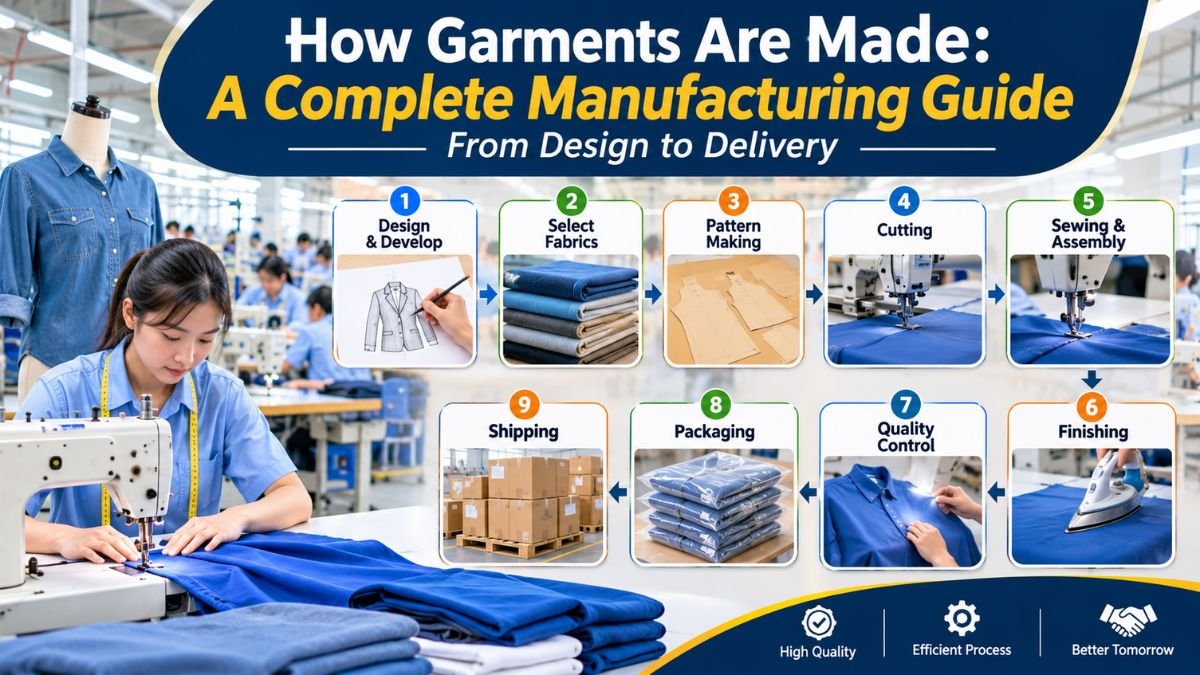
Garments are an essential part of everyday life, but have you ever wondered how clothes are made? From the first design idea to the finished product, garment manufacturing involves several important steps that require careful planning, skilled workers, specialized machinery, and quality materials.
The garment manufacturing process transforms raw materials, such as cotton, polyester, and other fabrics, into finished clothing products. These products include T-shirts, jeans, jackets, uniforms, dresses, workwear, sportswear, and many other types of apparel.
Understanding how garments are made helps clothing brands, fashion designers, retailers, and entrepreneurs make better decisions about product development and production.
In this complete guide, we will explain the entire clothing production process, including garment design, fabric selection, pattern making, cutting, sewing, finishing, quality inspection, and packaging.
Whether you are starting a clothing brand or simply want to understand how a clothing factory operates, this guide will help you learn the essential stages of garment manufacturing.
Ready to move from design to production? Meet the Negora Fist workwear manufacturer, see the ripstop pants, and read how clothes are made in factories.
What Is Garment Manufacturing?
Garment manufacturing is the process of producing clothing from fabric and other materials. It involves multiple stages, including designing, developing patterns, cutting fabric, stitching garment components, finishing, and inspecting the final products.
Manufacturers use different production methods depending on the type of clothing, order quantity, fabric requirements, and customer specifications.
For example, producing a basic cotton T-shirt requires different techniques and materials than manufacturing protective workwear or a tailored jacket.
A typical garment manufacturing facility may include design teams, pattern makers, fabric cutters, sewing operators, quality inspectors, and packaging workers. Each team plays an important role in ensuring that the finished clothing meets the required standards.
Garment manufacturing is also closely connected to the textile industry, which produces the fabrics and other materials used to make clothes.
Why Is the Garment Manufacturing Process Important?
Understanding the clothing production process is important for businesses that want to manufacture high-quality products efficiently.
A well-organized manufacturing process helps companies maintain product consistency, control production costs, reduce material waste, and deliver orders on time.
Here are some major benefits of an effective garment manufacturing process.
1. Improves Product Quality
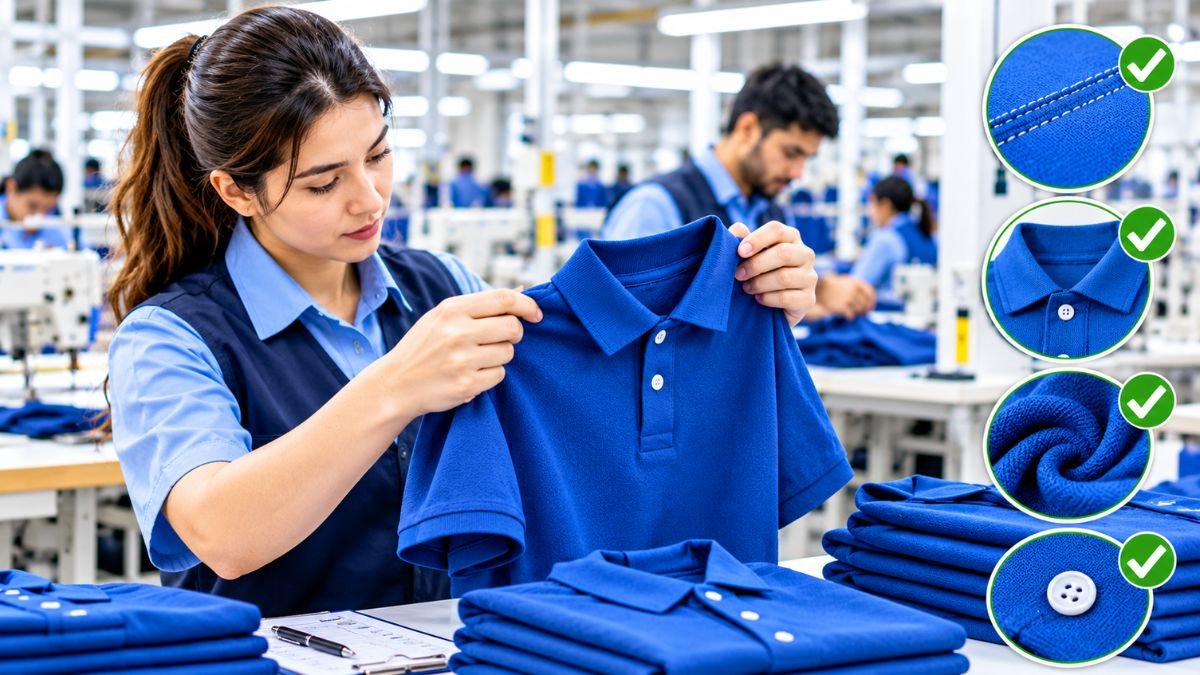
Following a structured production process helps manufacturers maintain consistent quality across all garments.
Fabric inspection, accurate cutting, proper stitching, and final quality checks help identify problems before products reach customers.
2. Reduces Manufacturing Costs
Efficient production planning helps clothing factories use fabric, thread, labor, and other resources more effectively.
Careful pattern placement can reduce fabric waste, while organized production lines help minimize delays and unnecessary expenses.
3. Increases Production Efficiency
When each manufacturing stage is properly planned, workers can complete their tasks more efficiently.
Clear production instructions, suitable machinery, and effective communication help factories meet production targets.
4. Ensures Consistency Across Products
Clothing brands often need hundreds or thousands of garments in the same style.
Standardized patterns, measurements, stitching methods, and quality requirements help ensure that products remain consistent across different sizes and production batches.
5. Supports Customer Satisfaction
Well-made garments are more likely to meet customer expectations for comfort, durability, appearance, and fit.
Consistent quality also helps clothing brands build trust and establish long-term relationships with their customers.
10 Essential Steps in the Garment Manufacturing Process
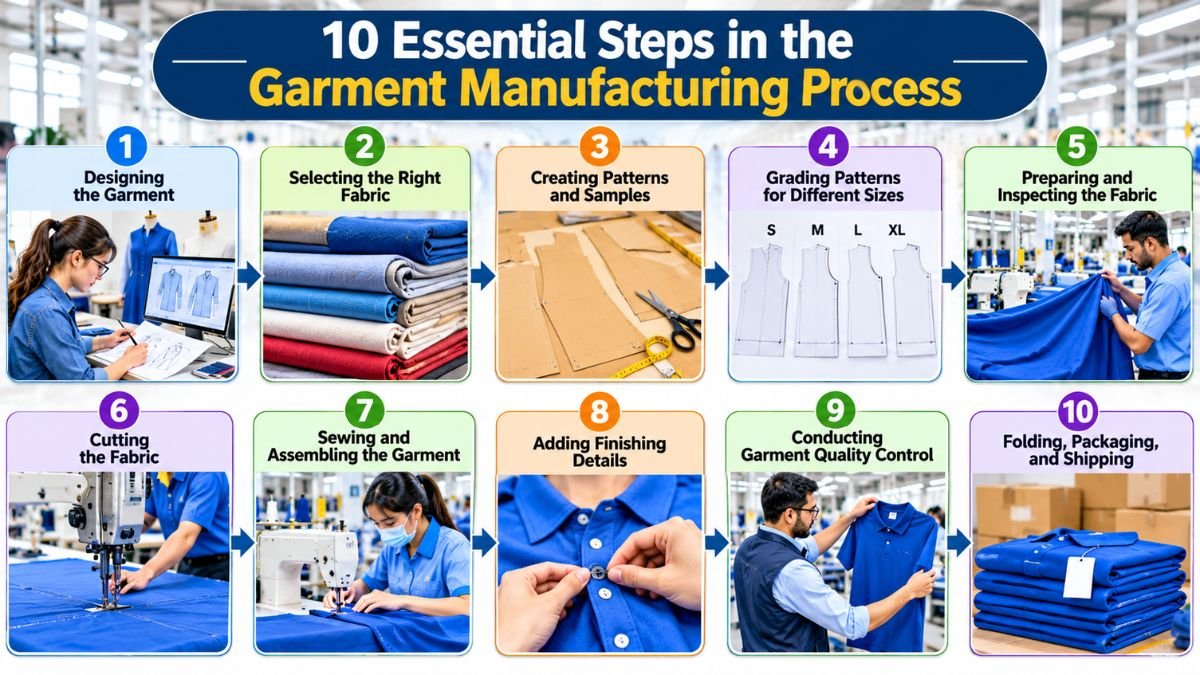
The garment manufacturing process involves several stages, from initial product development to final delivery.
Although the exact process varies depending on the garment type and factory, most clothing manufacturers follow these ten essential steps.
To see these stages at factory scale, read how clothes are made in factories and how clothes are mass produced.
1. Designing the Garment
The first step in garment manufacturing is designing the clothing product.
During this stage, designers develop the initial concept and determine how the finished garment should look, fit, and function.
They consider factors such as the target audience, clothing style, fabric type, colors, measurements, and intended use.
For example, a manufacturer producing workwear may prioritize durability, comfort, practical pockets, and visibility. A fashion brand creating casual clothing may focus more on appearance, fit, and current trends.
Designers often create sketches, digital illustrations, or technical drawings to communicate their ideas.
A technical drawing shows important garment details, including seams, collars, sleeves, pockets, fasteners, and other construction features.
Important Activities During Garment Design
- Creating garment sketches and technical drawings
- Selecting suitable clothing styles
- Determining colors and design details
- Identifying functional requirements
- Planning garment measurements
- Preparing product specifications
A clear design helps the manufacturing team understand exactly what needs to be produced.
Why this step matters: Proper garment design provides a clear direction for the remaining production stages and helps reduce misunderstandings during manufacturing.
2. Selecting the Right Fabric and Materials
Fabric selection is one of the most important stages in clothing production because the material affects the garment’s comfort, durability, appearance, and cost.
Different garments require different fabrics depending on their intended purpose.
For example, cotton is commonly used for everyday clothing because of its softness and breathability. Polyester is often selected for sportswear because of its durability and moisture-management possibilities. Cotton-polyester blends combine characteristics of both fibers.
Protective workwear may require specialized fabrics designed to meet particular performance or safety requirements.
Manufacturers also need to consider additional materials, such as zippers, buttons, elastic, thread, labels, and lining fabrics.
Common Fabrics Used in Garment Manufacturing
Cotton: A popular choice for T-shirts, shirts, dresses, and casual clothing.
Polyester: Frequently used in sportswear, uniforms, jackets, and blended fabrics.
Cotton-polyester blends: Common in everyday clothing, uniforms, and workwear.
Denim: A durable woven fabric widely used for jeans, jackets, and other casual garments.
Wool: Used for sweaters, coats, suits, and other garments requiring warmth.
Nylon: Often used for lightweight outerwear, activewear, and selected performance garments.
How Manufacturers Choose Fabric
Before production begins, manufacturers evaluate several factors:
- Fabric weight and thickness
- Fiber composition
- Color and texture
- Shrinkage and colorfastness
- Durability and comfort
- Intended garment use
- Material availability and cost
Fabric testing may be necessary to check whether the material meets the product’s specifications.
Why this step matters: Choosing the correct fabric helps ensure that the finished garment performs as expected and meets customer requirements.
3. Creating Patterns and Garment Samples
Once the design and fabric requirements are established, the next step is pattern making.
A garment pattern is a template used to cut individual fabric pieces into the shapes needed to construct a garment.
Pattern makers develop these templates using garment measurements, design specifications, and construction requirements.
Patterns may be created manually on paper or digitally using computer-aided design software.
What Is Pattern Making?
Pattern making translates a clothing design into precise components that can be cut and assembled.
For example, a basic T-shirt pattern may include front and back body panels, sleeves, and a neckline component.
Each piece must be shaped and measured correctly to ensure that the garment fits properly after sewing.
Sample Development
Before starting bulk production, manufacturers commonly produce a sample garment.
The sample allows the clothing brand or product developer to evaluate the design, fit, stitching, fabric, and overall appearance.
Adjustments can be made before manufacturing a larger quantity.
Benefits of Garment Sampling
- Identifies design problems early
- Helps confirm garment measurements
- Allows fit and comfort evaluation
- Checks fabric suitability
- Supports accurate production planning
- Reduces the risk of expensive bulk-production mistakes
Why this step matters: Accurate patterns and approved samples help manufacturers produce garments that match the intended design.
4. Grading Patterns for Different Sizes
After the base pattern has been developed and approved, manufacturers may create additional sizes through a process called pattern grading.
Pattern grading adjusts the dimensions of a base pattern to create different garment sizes while maintaining the intended shape and proportions.
For example, a clothing brand may need a T-shirt in sizes XS, S, M, L, XL, and XXL.
The pattern must be adjusted according to the brand’s sizing specifications rather than simply enlarged or reduced uniformly.
How Pattern Grading Works
Pattern makers use established grading rules to adjust dimensions such as:
- Chest and waist measurements
- Shoulder width
- Sleeve length
- Body length
- Neckline dimensions
- Hip measurements
The exact adjustments depend on the garment type, target market, and sizing system.
After grading, manufacturers may produce samples in multiple sizes to confirm fit and consistency.
Why this step matters: Proper pattern grading helps ensure that garments fit appropriately across the full size range.
5. Preparing and Inspecting the Fabric
Before fabric is cut, the manufacturing team prepares the material for production.
Fabric inspection helps identify defects that could affect the appearance or quality of the finished garments.
Depending on the material, preparation may also include relaxing the fabric, checking shrinkage, and allowing the material to settle before cutting.
Some fabrics can change dimensions after being unrolled or subjected to moisture or heat. Appropriate preparation helps reduce unexpected changes during later stages.
Common Fabric Defects
Manufacturers may inspect fabric for:
- Holes and tears
- Stains or discoloration
- Uneven dyeing
- Weaving defects
- Incorrect fabric width
- Surface imperfections
- Damage caused during transportation or storage
Factories may use manual inspection tables or specialized inspection equipment.
When defects are identified, the production team determines whether the affected material can be used, needs special handling, or should be rejected.
Why Fabric Inspection Is Important
Using defective fabric can lead to wasted materials, inconsistent products, production delays, and customer complaints.
Inspecting materials before cutting helps reduce these risks.
Why this step matters: Fabric preparation and inspection help manufacturers identify potential problems before they become more expensive to correct.
6. Cutting the Fabric
Fabric cutting is the stage where prepared materials are cut into the individual pieces needed to assemble the garment.
Accuracy is essential because incorrectly cut pieces can cause fitting problems, uneven seams, and material waste.
Manufacturers use approved patterns and cutting plans to determine the shape and placement of each piece.
The Fabric Cutting Process
Spreading the fabric: Fabric is arranged in layers on a cutting table according to the production requirements.
Preparing the marker: A marker is a layout showing where pattern pieces should be positioned to make efficient use of the fabric.
Positioning the patterns: Pattern pieces are arranged according to the design, fabric direction, print alignment, and other requirements.
Cutting the material: Workers or automated cutting equipment cut through the fabric layers following the approved outlines.
Bundling the pieces: Cut components are grouped and identified by garment style, size, color, or production order.
Common Fabric Cutting Methods
- Manual cutting using suitable cutting tools
- Straight-knife cutting
- Band-knife cutting
- Die cutting for suitable materials and production requirements
- Computer-controlled automated cutting
The appropriate method depends on the fabric, order size, pattern complexity, and factory equipment.
Why this step matters: Accurate fabric cutting ensures that garment components fit together correctly and helps reduce material waste.
7. Sewing and Assembling the Garment
Sewing is one of the most important stages of garment manufacturing.
During this process, individual fabric pieces are stitched together to create the finished garment structure.
The sewing method depends on the garment design, fabric type, seam requirements, and intended use.
For example, assembling a basic T-shirt generally involves joining the shoulder seams, attaching the sleeves, closing the side seams, and finishing the neckline and hems.
A tailored jacket requires a more complex construction process involving additional components and specialized techniques.
Common Sewing Operations
- Joining front and back panels
- Attaching sleeves
- Constructing collars and cuffs
- Installing zippers and buttons
- Attaching pockets
- Closing side seams
- Stitching hems
- Applying labels and other garment details
Common Sewing Machines Used in Clothing Factories
Single-needle lockstitch machines: Commonly used for joining fabric pieces and performing general sewing operations.
Overlock machines: Used to join and finish fabric edges, depending on the construction requirements.
Coverstitch machines: Frequently used for hems and selected stretch-garment applications.
Buttonhole machines: Create buttonholes in garments.
Button-attaching machines: Attach buttons efficiently during production.
Specialized machines: Used for particular operations, such as attaching elastic, producing decorative stitching, or constructing specific garment components.
How Production Lines Improve Sewing Efficiency
Many garment factories divide sewing into separate operations.
Instead of one worker completing an entire garment, multiple operators may perform specific tasks in sequence.
For example, one operator may attach sleeves, another may close side seams, and another may finish hems.
This approach can improve efficiency when the production line is properly balanced and workers receive clear instructions.
Why this step matters: Proper sewing techniques and efficient assembly help create durable garments with consistent construction and appearance.
8. Adding Finishing Details
After the main sewing operations are completed, garments move to the finishing stage.
Finishing improves the garment’s appearance and ensures that the required design details are complete.
Depending on the product, this stage may include trimming loose threads, pressing, attaching labels, adding decorative elements, and checking garment measurements.
Common Garment Finishing Activities
Thread trimming: Removing excess thread from seams and garment edges.
Pressing and ironing: Improving the garment’s appearance and shaping selected areas.
Label attachment: Adding brand labels, size labels, care instructions, or other required information.
Button and zipper checks: Confirming that closures are attached correctly and function properly.
Decorative finishing: Applying embroidery, printing, patches, or other design elements when required.
Measurement checks: Verifying that the garment meets the approved size specifications.
The exact finishing process depends on the garment type. For example, a formal shirt may require careful collar and cuff pressing, while a knitted T-shirt may need simpler finishing operations.
Why this step matters: Proper finishing gives garments a professional appearance and helps ensure that all required details are complete.
9. Conducting Garment Quality Control
Quality control is essential throughout garment manufacturing.
Although final inspection takes place near the end of production, effective factories also check materials and workmanship during earlier stages.
The purpose of garment quality control is to identify defects, confirm compliance with product specifications, and reduce the likelihood of defective items reaching customers.
What Do Quality Inspectors Check?
Quality inspectors may examine:
- Fabric defects and color consistency
- Stitching quality
- Seam strength and construction
- Garment measurements
- Symmetry and alignment
- Buttons, zippers, and other accessories
- Label placement
- Appearance and finishing
- Product-specific performance requirements
For specialized clothing, additional testing may be required.
For example, protective clothing may need to meet applicable safety standards, while children’s garments may require particular attention to product safety and labeling requirements.
Common Garment Defects
Some common manufacturing defects include:
- Broken or skipped stitches
- Uneven seams
- Loose threads
- Incorrect garment measurements
- Misaligned pockets
- Damaged zippers
- Stains or holes
- Incorrect labels
- Color variations
When a defect is identified, the garment may be repaired, reworked, rejected, or subjected to further evaluation according to the factory’s quality procedures.
Why Quality Control Matters
A consistent quality-control system helps reduce returns, maintain product standards, and protect a clothing brand’s reputation.
Why this step matters: Quality inspection helps ensure that finished garments meet the agreed requirements before they are packed and shipped.
10. Folding, Packaging, and Shipping
The final stage of garment manufacturing is preparing the finished products for storage, distribution, or delivery.
After garments pass the required inspections, they are folded or arranged according to the product specifications.
Packaging methods vary depending on the type of clothing, customer requirements, shipping conditions, and retail presentation.
Common Garment Packaging Activities
- Folding garments into the required shape
- Attaching hangtags
- Adding size stickers or product labels
- Placing garments in individual bags when required
- Packing garments into cartons
- Sorting cartons by style, color, and size
- Preparing shipping documents
- Arranging transportation and delivery
Some clothing brands require special packaging for retail display, e-commerce fulfillment, or international shipping.
Manufacturers must also follow applicable labeling and packaging requirements for the destination market.
Before shipment, the factory may conduct a final carton inspection to verify quantities, product identification, and packaging condition.
Why this step matters: Proper packaging protects garments during transportation and helps ensure that customers receive the correct products in good condition.
What Machines Are Used in Garment Manufacturing?
Modern clothing factories use different machines and equipment to perform production tasks accurately and efficiently.
The machines required depend on the type of garments being produced and the factory’s production capacity.
Here are some common examples.
| Machine or Equipment | Main Purpose |
|---|---|
| Fabric inspection machine | Helps identify fabric defects |
| Fabric spreading machine | Spreads fabric layers for cutting |
| Straight-knife cutting machine | Cuts fabric according to pattern outlines |
| Automated cutting machine | Cuts fabric using computer-controlled instructions |
| Single-needle sewing machine | Performs general sewing operations |
| Overlock machine | Joins and finishes fabric edges |
| Coverstitch machine | Produces suitable hems and stretch-garment seams |
| Buttonhole machine | Creates buttonholes |
| Button-attaching machine | Attaches buttons |
| Steam iron or pressing equipment | Improves garment appearance |
| Embroidery machine | Adds embroidered designs and logos |
| Garment inspection equipment | Supports quality checks and measurement verification |
Not every factory needs all these machines. Smaller manufacturers may use a limited selection of equipment, while large facilities may have specialized production lines and automated systems.
Different Types of Garment Manufacturing Methods
Clothing manufacturers use different production methods depending on order size, garment complexity, delivery schedules, and available resources.
Understanding these methods can help clothing brands select a suitable manufacturing partner.
1. Make-to-Order Manufacturing
In make-to-order manufacturing, production begins after a customer places an order.
The factory produces garments according to the requested specifications, quantities, and delivery requirements.
This approach can be suitable for customized clothing, uniforms, promotional apparel, and brands that want to avoid holding large amounts of finished inventory.
However, production and delivery may take longer than purchasing ready-made products from existing stock.
2. Mass Production
Mass production involves manufacturing large quantities of garments, often using standardized designs and organized production lines.
This method is common for basic T-shirts, uniforms, jeans, and other products with consistent specifications.
Large production runs can improve efficiency, although the actual cost per garment depends on fabric, labor, machinery, complexity, and other factors.
3. Batch Production
Batch production involves manufacturing garments in separate groups or batches.
A factory might produce one batch in black, another in navy, and another in white.
Alternatively, batches may be organized by style, size range, or customer order.
This method provides flexibility while allowing factories to organize production efficiently.
4. Custom Garment Manufacturing
Custom garment manufacturing focuses on products developed according to a customer’s particular design and specifications.
It may involve custom patterns, specialized fabrics, unique measurements, branding, embroidery, or printing.
This approach is useful for clothing brands that want products tailored to their identity and target market.
Custom production may require additional development time and sample approval before bulk manufacturing begins.
How Long Does It Take to Manufacture Garments?
The time required to manufacture garments varies depending on the product, order quantity, fabric availability, design complexity, sample approval process, and factory capacity.
A simple garment made from readily available materials may require less production time than a complex jacket or a specialized protective garment.
The following table provides an illustrative overview of common production stages.
| Manufacturing Stage | What Happens |
|---|---|
| Design and product development | Designs and specifications are prepared |
| Material sourcing | Fabric, thread, and accessories are arranged |
| Pattern making and sampling | Patterns and sample garments are developed |
| Sample approval | The customer reviews and approves the sample |
| Bulk production planning | Production quantities, materials, and schedules are confirmed |
| Cutting and sewing | Fabric is cut and garment components are assembled |
| Finishing and quality control | Garments are finished, inspected, and corrected if necessary |
| Packaging and shipping | Finished products are packed and dispatched |
These stages may overlap, so the table should not be interpreted as a fixed timeline.
The total manufacturing lead time should be confirmed with the factory after reviewing the garment design, order quantity, materials, sample requirements, and delivery destination.
What Factors Affect Garment Manufacturing Costs?
Garment manufacturing costs depend on several factors. Understanding them helps clothing brands prepare realistic budgets and compare supplier quotations.
1. Fabric Type and Quality
Fabric is often a significant component of garment cost.
Premium materials, specialized performance fabrics, and custom-dyed textiles may cost more than standard fabrics.
Fabric width, weight, availability, and consumption per garment can also affect the final price.
2. Garment Design Complexity
Simple garments generally require fewer construction operations than complicated designs.
Multiple panels, linings, pockets, decorative stitching, and specialized closures can increase production time and cost.
3. Order Quantity
Order quantity affects production planning, material purchasing, and setup requirements.
Larger orders may allow certain costs to be distributed across more garments, but the actual savings depend on the factory’s pricing structure and production requirements.
4. Labor and Production Time
Garments requiring more sewing operations or specialized skills may involve higher labor costs.
Production efficiency, worker experience, and factory location also influence manufacturing expenses.
5. Printing and Embroidery
Custom logos, screen printing, heat transfers, embroidery, and other branding techniques can add to the total cost.
Pricing depends on the decoration method, design complexity, number of colors, and quantity of decorated garments.
6. Packaging Requirements
Standard packaging may cost less than custom boxes, printed bags, special tags, and other branded packaging materials.
International shipping and export-related expenses should also be considered when applicable.
7. Quality and Compliance Requirements
Some products require additional testing, specialized materials, documentation, or third-party inspection.
These requirements can increase the total cost but may be essential for product quality, customer requirements, or regulatory compliance.
Tip: When requesting a manufacturing quotation, provide the factory with clear product specifications, fabric requirements, size ranges, order quantities, branding details, and packaging instructions.
Common Challenges in Garment Manufacturing
Although garment manufacturing follows an established production process, clothing factories can face several challenges.
Understanding these issues helps businesses plan ahead and reduce production risks.
Fabric Waste
Incorrect marker planning, cutting errors, and fabric defects can increase waste.
Factories can reduce unnecessary material loss through careful pattern placement, accurate cutting, and effective fabric inspection.
Inconsistent Garment Sizing
Differences in patterns, sewing methods, or measurement practices can result in garments that do not fit consistently.
Approved size specifications and regular measurement checks help reduce these problems.
Production Delays
Late fabric deliveries, unavailable accessories, machine breakdowns, and sample approval delays can affect delivery schedules.
Clear planning and communication help manufacturers identify potential problems earlier.
Sewing Defects
Incorrect stitching, damaged seams, and inconsistent construction can affect garment quality.
Operator training, machine maintenance, and in-process inspection help improve production standards.
Changing Customer Requirements
Design or specification changes after production begins can create additional costs and delays.
Approving samples and confirming specifications before bulk manufacturing helps reduce unnecessary changes.
Quality Issues in Bulk Orders
A sample garment may look correct, but bulk production can still introduce inconsistencies.
Factories should use approved samples, clear production instructions, and suitable quality-control procedures to maintain consistency.
How to Choose the Right Garment Manufacturer
Choosing a suitable garment manufacturer is an important decision for clothing brands, retailers, and businesses that need custom apparel.
A reliable manufacturing partner should understand your product requirements, communicate clearly, and demonstrate the ability to produce garments according to the agreed specifications.
Here are some important factors to consider.
1. Check Manufacturing Experience
Look for a factory with experience producing your type of clothing.
A manufacturer specializing in casual T-shirts may not have the same expertise as one producing tailored garments or protective workwear.
Ask about relevant product experience and review examples of previous work when available.
2. Review Product Quality
Request samples before committing to a large production order.
Evaluate the fabric, stitching, measurements, finishing, and overall construction.
For specialized garments, check whether the manufacturer can meet the applicable technical and performance requirements.
3. Confirm Minimum Order Quantities
Many manufacturers establish a minimum order quantity, often called an MOQ.
The MOQ may vary by product, fabric, color, design, and production method.
Choose a supplier whose minimum requirements fit your budget and business needs.
4. Compare Pricing Carefully
Request detailed quotations from multiple suitable manufacturers.
Compare what each quotation includes, such as fabric, accessories, labels, printing, packaging, sampling, and shipping.
A low initial price may not represent the best overall value if important services or quality requirements are excluded.
5. Evaluate Communication
Clear communication is essential when discussing designs, specifications, samples, production schedules, and quality requirements.
A suitable supplier should explain its capabilities, identify potential limitations, and provide clear answers to your questions.
6. Understand Production Capacity
Confirm that the factory can handle your required order quantity within your expected timeline.
Ask about production planning, available equipment, material sourcing, and how the factory manages quality during larger orders.
7. Clarify Quality-Control Procedures
Ask how the manufacturer inspects incoming fabric, checks garments during production, and evaluates finished products.
For products with specific safety or performance requirements, confirm the relevant testing and documentation arrangements.
8. Confirm Delivery and Payment Terms
Before placing an order, review payment schedules, production lead times, shipping arrangements, and responsibilities for delays or defective products.
Written agreements help establish clear expectations for both parties.
Choosing the right garment manufacturer can help your business maintain consistent quality, control costs, and build a reliable clothing supply chain.
Sustainable Practices in Garment Manufacturing
Sustainability is becoming increasingly important in the clothing industry.
Manufacturers and clothing brands can adopt different practices to reduce waste, use materials more responsibly, and improve production efficiency.
Use Suitable Sustainable Materials
Depending on the product requirements, brands may consider organic cotton, recycled polyester, or other materials with documented environmental attributes.
Material selection should consider performance, durability, availability, and the reliability of relevant certifications or supplier claims.
Reduce Fabric Waste
Efficient pattern layouts, accurate cutting, and better production planning can reduce unnecessary fabric waste.
Some leftover materials may also be suitable for smaller products or other applications.
Improve Production Efficiency
Well-maintained machinery, organized workflows, and effective production planning can help reduce avoidable energy use and material losses.
Focus on Garment Durability
Producing durable garments can help customers use their clothing for longer.
Appropriate fabric selection, strong seams, and suitable construction techniques all contribute to product longevity.
Improve Supply Chain Transparency
Brands can ask suppliers about material origins, manufacturing practices, working conditions, and relevant certifications.
Clear documentation helps businesses evaluate supplier claims and make more informed sourcing decisions.
Sustainable manufacturing requires attention to materials, production methods, working conditions, and product lifespan rather than relying on a single environmental claim.
Frequently Asked Questions About How Garments Are Made
1. How are garments made step by step?
Garments are generally made through a series of stages: design, fabric selection, pattern making, sampling, pattern grading, fabric inspection, cutting, sewing, finishing, quality control, and packaging. The exact process varies depending on the garment type and manufacturing requirements.
2. What are the main stages of garment manufacturing?
The main stages include product development, material preparation, fabric cutting, garment assembly, finishing, inspection, and packaging. These stages work together to transform raw materials into finished clothing.
3. What materials are used to make garments?
Common materials include cotton, polyester, wool, nylon, denim, and various blended fabrics. Garments may also require thread, buttons, zippers, elastic, labels, lining, and other accessories.
4. What machines are used to make clothes?
Common equipment includes fabric spreading and cutting machines, single-needle sewing machines, overlock machines, coverstitch machines, buttonhole machines, pressing equipment, and embroidery machines.
5. Why is fabric inspection important?
Fabric inspection helps identify defects before cutting and sewing begin. Detecting problems early can reduce material waste, prevent production delays, and improve finished-garment quality.
6. What is the difference between textile manufacturing and garment manufacturing?
Textile manufacturing focuses on producing materials such as yarn and fabric through processes including spinning, weaving, knitting, and finishing. Garment manufacturing uses fabrics and other components to create finished clothing products.
7. How do manufacturers maintain garment quality?
Manufacturers maintain quality through approved specifications, fabric inspection, accurate cutting, trained sewing operators, in-process checks, final inspections, and appropriate testing when required.
8. Can small businesses work with garment manufacturers?
Yes. Some manufacturers work with small businesses and emerging clothing brands. However, minimum order quantities, sampling fees, material availability, and production costs vary between suppliers.
Small businesses should discuss their requirements with potential manufacturers before placing an order.
9. What is a garment sample?
A garment sample is a preliminary version of a clothing product made before bulk production. It allows the customer and manufacturer to evaluate design, fit, materials, construction, and finishing before approving larger quantities.
10. How can clothing brands reduce manufacturing costs?
Clothing brands can control costs by simplifying designs where appropriate, selecting suitable materials, improving pattern efficiency, confirming specifications before production, and planning order quantities carefully.
Comparing detailed supplier quotations can also help identify the best overall value.
Conclusion
Understanding how garments are made provides valuable insight into the processes that turn fabric and other materials into finished clothing products.
From designing the garment and selecting suitable fabrics to creating patterns, cutting materials, sewing components, and conducting quality inspections, every stage contributes to the final product.
A well-organized garment manufacturing process helps clothing businesses maintain product quality, improve production efficiency, reduce unnecessary waste, and meet customer expectations.
Whether you are launching a new clothing brand, sourcing uniforms, or exploring apparel production, learning these manufacturing stages can help you make better decisions.
By working with a suitable manufacturer, preparing clear product specifications, approving samples, and maintaining effective quality-control procedures, businesses can develop garments that meet their design and performance requirements.
Ultimately, successful garment manufacturing depends on careful planning, suitable materials, skilled workmanship, consistent quality control, and effective communication throughout the production process.