
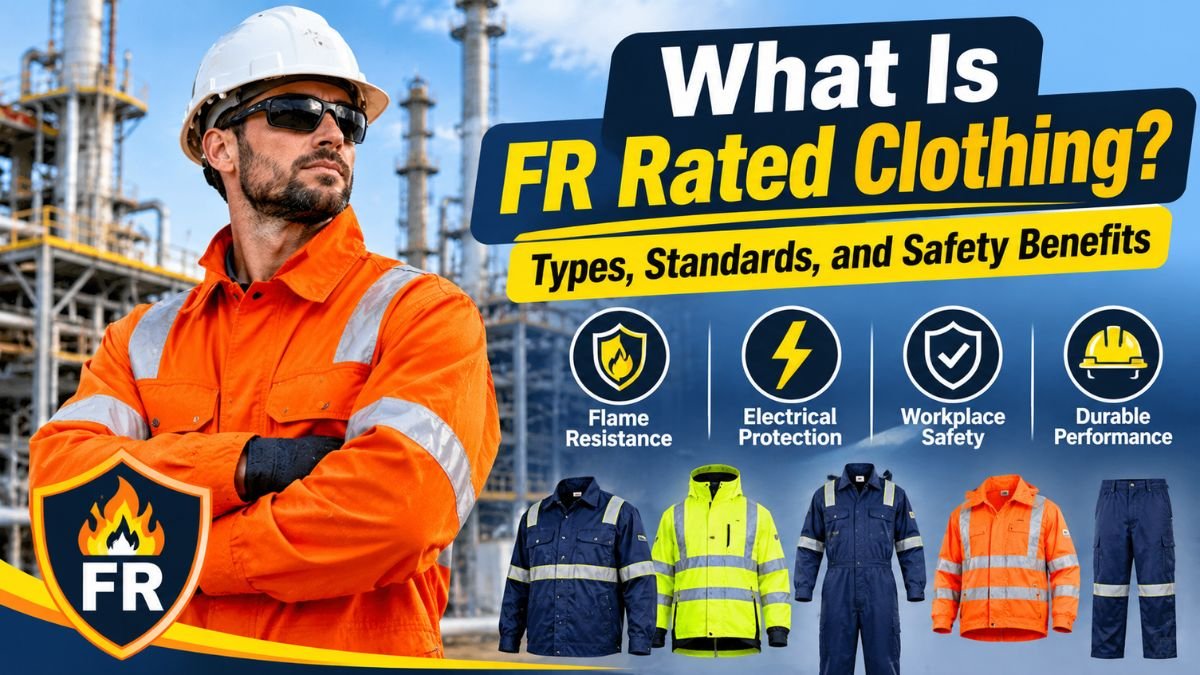
Workplace safety is important in industries where workers face heat, flames, and electrical hazards. In these environments, suitable protective clothing can help reduce serious injuries. One important type of protective equipment is flame-resistant clothing.
But what is FR rated clothing, and how does it protect workers?
FR stands for flame resistant. FR-rated clothing is made from materials designed to resist ignition and limit flame spread. It helps reduce the risk of severe burns during certain fire and heat exposures.
Workers in electrical, welding, oil and gas, manufacturing, and industrial environments may need FR clothing. These garments are available in different fabrics, designs, and protection ratings.
However, FR clothing does not make someone fireproof. It cannot prevent every burn or protect against every workplace hazard. Its performance depends on the material, garment design, certification, and working conditions.
This guide explains FR-rated clothing, its materials, types, safety standards, benefits, and care instructions. It also explains how to select suitable protective garments for different workplace environments.
Not sure what FR rating you need? Explore our protective workwear manufacturing services, see the FR collared shirt, and read what fire resistant clothing is made of.
What Is FR Rated Clothing?
FR-rated clothing is protective workwear designed to resist ignition and reduce flame spread when exposed to heat or flames.
Manufacturers produce these garments using specially selected fibers or flame-resistant treatments. These materials are designed to resist burning under specified test conditions.
FR clothing may include:
- Flame-resistant shirts.
- Protective work trousers.
- FR coveralls.
- Flame-resistant jackets.
- Welding clothing.
- Arc-rated shirts and trousers.
- Protective hoods and other accessories.
These garments are commonly used in workplaces where workers may experience flash fires, sparks, molten metal, or electrical arc hazards.
FR clothing is designed to help reduce the severity of certain burn injuries. However, it does not eliminate the need for other protective equipment.
For example, an electrical worker may need arc-rated clothing, gloves, a face shield, and other protective equipment. A welder may need specialist clothing, gloves, and eye protection.
The correct clothing depends on the hazards identified in the workplace.
What Does FR Mean in Clothing?
FR means flame resistant. It describes a fabric or garment designed to resist ignition and limit continued burning under specified conditions.
The term does not mean that the garment cannot burn. It means the material has been designed and tested to provide a defined level of flame resistance.
Some FR fabrics use fibers that naturally resist burning. Others receive chemical treatments that improve their flame-resistant properties.
FR clothing is different from ordinary workwear. Regular cotton or polyester clothing may ignite, continue burning, or behave differently when exposed to intense heat.
Certain synthetic materials may also melt and stick to the skin. This can make burn injuries more severe.
FR clothing is designed to reduce these risks when the garment is appropriate for the exposure.
How Does FR Rated Clothing Work?
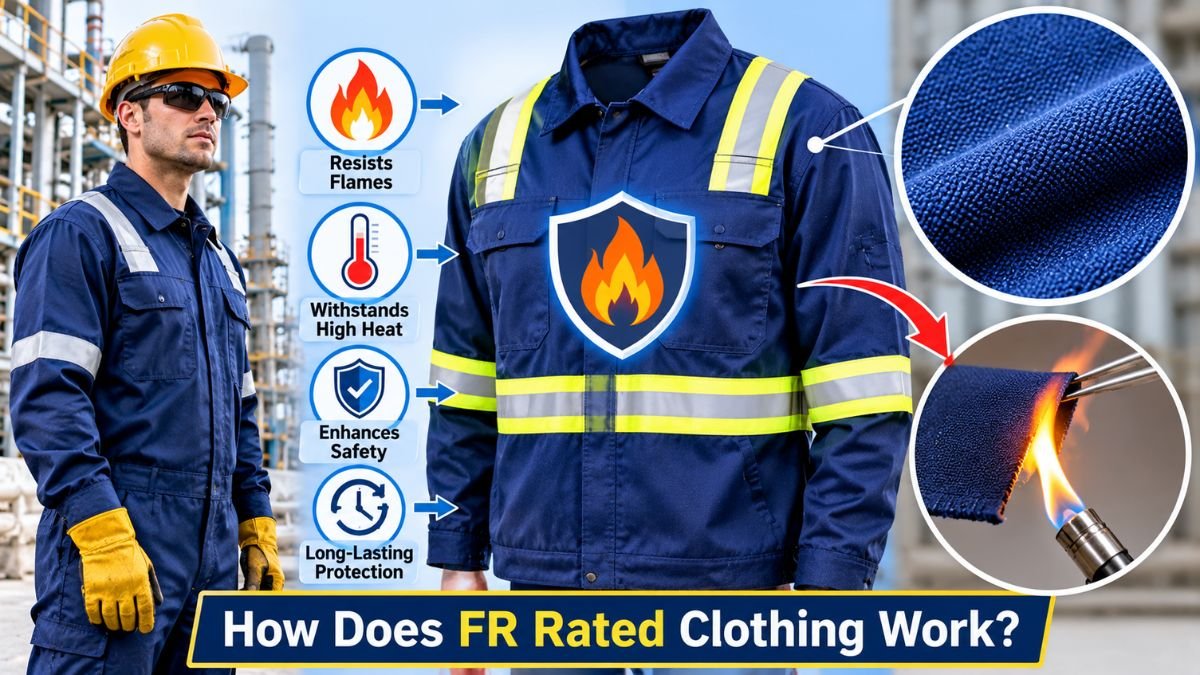
FR clothing works through the properties of its fibers, fabric construction, and protective treatments.
When exposed to heat or flames, suitable FR materials are designed to resist ignition, limit flame spread, and reduce continued burning.
The exact response depends on the material and its tested performance.
1. Resists Ignition
FR fabrics are designed to resist catching fire under specified test conditions.
Some materials require greater heat exposure before ignition. Others have chemical properties that help limit combustion.
This feature helps reduce the likelihood of clothing becoming an additional fuel source during certain workplace incidents.
2. Limits Flame Spread
A suitable FR garment is designed to limit how quickly flames spread across its surface.
This can help reduce the area of clothing involved in a fire-related incident.
However, the garment may still become damaged during severe exposure. Workers must follow the protection limits stated by the manufacturer.
3. Helps Reduce Continued Burning
Some ordinary fabrics continue burning after the original flame source disappears.
FR fabrics are designed to reduce this behavior under specified test conditions. Depending on the material, the fabric may stop burning after the ignition source is removed.
This helps limit the duration of direct flame exposure.
4. Supports Thermal Protection
Certain FR garments are designed to reduce heat transfer to the wearer.
The level of protection depends on the fabric weight, construction, layering, and tested rating.
For electrical workers, an arc rating helps indicate the garment’s tested thermal performance against an electric arc exposure.
5. Reduces the Risk of Melting Hazards
Some synthetic fabrics can melt when exposed to high temperatures. Molten material may stick to the skin and worsen burn injuries.
Appropriate FR workwear is designed to avoid this type of behavior under its intended exposure conditions.
Workers must still wear suitable underlayers. Ordinary synthetic clothing beneath protective garments may introduce additional hazards.
Standards decide which FR garments you need. Read the NFPA 70E arc flash clothing requirements and the OSHA rules on FR clothing, or browse the FR visibility pant.
What Are the Different Types of FR Clothing?

FR clothing comes in several styles. Each design supports different work activities and protection requirements.
The right choice depends on the workplace, exposure level, weather, and required safety standards.
1. FR Shirts
FR shirts are commonly used in industrial and electrical workplaces. They provide flame-resistant coverage for the upper body and arms.
These shirts are available in short-sleeve and long-sleeve designs. Long-sleeve options provide more skin coverage.
Common features include:
- Flame-resistant fabric.
- Button or snap closures.
- Chest pockets.
- Comfortable collars.
- Reinforced stitching.
- Different fabric weights.
Some FR shirts also include high-visibility features. These designs are useful when workers need both flame resistance and visibility.
2. FR Work Pants
FR work pants protect the lower body against certain heat and flame hazards.
They are commonly worn by electricians, industrial maintenance workers, and oilfield personnel.
Typical features include:
- Flame-resistant fabric.
- Reinforced seams.
- Durable waistbands.
- Secure pockets.
- Comfortable leg openings.
- Strong fastening systems.
The trousers should fit correctly and work with the other protective clothing in the outfit.
3. FR Coveralls
FR coveralls provide protective coverage across much of the body. They combine the upper and lower garment into one piece.
Workers often use them in oil and gas facilities, industrial plants, and manufacturing environments.
Common features include:
- Long sleeves.
- Full-length front closures.
- Multiple pockets.
- Flame-resistant fabric.
- Reinforced construction.
- Adjustable cuffs.
Coveralls can simplify clothing selection because they provide broad body coverage. However, the garment must still meet the required protection standard.
4. FR Jackets
FR jackets provide an additional protective layer for outdoor and cold-weather work.
They may feature insulated linings, durable outer fabrics, and flame-resistant construction.
These jackets are useful for workers who need protection during colder conditions.
Important features may include:
- Flame-resistant outer fabric.
- Insulated lining.
- Secure front fastening.
- Adjustable cuffs.
- Protective collars.
- Suitable pockets.
Not every insulated jacket is flame resistant. Check the product label and certification before using it in a hazardous environment.
5. FR Hoodies and Sweatshirts
FR hoodies and sweatshirts provide warmth while maintaining flame-resistant properties.
Workers often use them as mid-layers beneath other protective garments.
Common features include:
- Flame-resistant fabric.
- Comfortable inner construction.
- Ribbed cuffs.
- Flexible waistbands.
- Pullover or zip-up designs.
Workers should confirm that the hoodie is suitable for the relevant hazard. Ordinary hoodies are not substitutes for certified FR clothing.
6. FR Welding Clothing
Manufacturers design welding clothing for work involving sparks, hot particles, and radiant heat.
Common examples include welding jackets, trousers, sleeves, aprons, and protective accessories.
These garments may use materials such as flame-resistant cotton, treated fabrics, or specialist protective textiles.
Welding clothing should also provide suitable coverage. Open pockets, loose cuffs, and exposed fasteners can create additional risks.
7. Arc-Rated Clothing
Arc-rated clothing is tested to determine its thermal performance during electric arc exposure.
It may include shirts, trousers, coveralls, jackets, and complete protective clothing systems.
Electrical workers use arc-rated garments when workplace assessments identify an arc-flash hazard requiring this protection.
An arc-rated garment is also flame resistant. However, ordinary FR clothing is not automatically arc rated.
What Materials Are Used in FR Rated Clothing?
The materials used in FR clothing influence its durability, comfort, flame resistance, and overall performance.
Manufacturers select fibers and fabric constructions according to the garment’s intended use.
1. Inherently Flame-Resistant Fibers
Inherently flame-resistant fibers have flame-resistant properties built into their chemical structure.
A surface treatment does not simply add these properties.
Common examples include:
- Aramid fibers.
- Modacrylic fibers.
- Certain specialized industrial fibers.
Manufacturers use these fibers in different protective clothing systems.
Their performance depends on the fiber type, fabric construction, and garment design.
2. Flame-Resistant Treated Cotton
Cotton is a natural fiber valued for softness and breathability. However, untreated cotton can ignite and continue burning under certain conditions.
Manufacturers can apply specialized chemical treatments to improve its flame-resistant properties.
Treated cotton is used in shirts, trousers, coveralls, and other protective workwear.
The treatment must remain effective under the care conditions specified by the manufacturer.
3. Aramid Blends
Aramid fibers are used in protective clothing because of their heat-resistant properties and strength.
Manufacturers may blend aramid fibers with other suitable materials to achieve specific performance characteristics.
These fabrics are used in industrial protective clothing, electrical workwear, and other specialist applications.
4. Modacrylic Blends
Modacrylic is a synthetic fiber used in some flame-resistant fabric systems.
It may be blended with other fibers to provide a combination of comfort, durability, and flame-resistant performance.
These blends appear in industrial workwear and protective garments.
5. Wool Blends
Wool has natural properties that make it useful in certain protective clothing applications.
It is less likely to melt like many common synthetic fibers. However, its performance depends on the fabric and exposure conditions.
Some protective clothing systems use wool blends for particular applications.
6. Multi-Layer Protective Fabrics
Some FR garments use multiple fabric layers.
The outer layer provides the main protective surface. Inner layers may help improve comfort, insulation, or thermal performance.
Specialists often use multi-layer systems in protective clothing.
The complete garment must be suitable for the intended hazard. A fabric’s performance alone does not establish the protection level of every finished garment.
What Is the Difference Between FR and Arc-Rated Clothing?
FR and arc-rated clothing are closely related terms. However, they do not mean exactly the same thing.
FR clothing is designed to resist ignition and limit flame spread.
Arc-rated clothing is tested to measure its thermal performance during electric arc exposure.
An arc rating is expressed in calories per square centimeter (cal/cm²). It helps indicate the level of thermal energy a garment can withstand before reaching a defined burn-injury threshold during standardized testing.
| Feature | FR Clothing | Arc-Rated Clothing |
|---|---|---|
| Main purpose | Resist ignition and limit flame spread | Provide tested thermal protection from electric arcs |
| Common hazards | Flames, sparks, and certain heat exposures | Electrical arc-flash exposure |
| Rating | Depends on the applicable FR standard | Expressed as an arc rating |
| Common users | Industrial workers, welders, and other exposed workers | Electrical workers |
| Testing | Depends on the relevant flame-resistance standard | Includes electric arc performance testing |
An important point is that all arc-rated clothing is flame resistant, but not all FR clothing is arc rated.
For example, an FR shirt may be suitable for a particular flame hazard but may not provide the required protection against an electrical arc.
Workers should follow the workplace hazard assessment when selecting garments.
What Are the Main FR Clothing Safety Standards?
Safety standards help manufacturers test and label protective garments.
Different standards address different hazards. Some focus on flash fires, while others address electrical arcs or general protective clothing performance.
Employers should identify which standards apply to their workplace and location.
1. NFPA 2112
NFPA 2112 is a standard for flame-resistant clothing used to protect industrial personnel against short-duration thermal exposures from fire.
It establishes requirements for garment design, fabric performance, testing, and certification.
This standard is especially relevant to industrial environments where flash-fire hazards may exist.
Oil and gas facilities are among the workplaces where garments certified to NFPA 2112 may be required.
Workers should check the garment’s certification and label rather than relying only on a manufacturer’s general FR claim.
2. NFPA 70E
NFPA 70E addresses electrical safety in the workplace.
It provides guidance and requirements related to electrical hazards, safe work practices, and protective equipment.
Electrical workers may use NFPA 70E guidance when selecting protective clothing for arc-flash risks.
The required clothing depends on the electrical hazard assessment and the expected incident energy.
NFPA 70E is not simply a general FR fabric standard. It addresses a wider electrical safety program.
3. ASTM F1506
ASTM F1506 is a performance specification for flame-resistant and electric arc-rated protective clothing worn by workers exposed to flames and electric arcs.
It addresses fabric performance, arc rating, garment construction, durability, and labeling.
This standard is relevant to electrical workers who need suitable protective clothing for arc-flash hazards.
Check the garment documentation to confirm the applicable specification and tested rating.
4. OSHA Requirements
OSHA provides workplace safety regulations in the United States.
Its requirements depend on the industry and the hazards present.
For example, OSHA regulation 29 CFR 1910.269 includes requirements for workers exposed to flames and electric arcs in electric power generation, transmission, and distribution work.
The regulation requires employers to assess hazards and ensure that clothing does not melt onto the skin or ignite and continue burning under specified exposure conditions.
It also includes requirements for flame-resistant and arc-rated protective clothing in certain circumstances.
OSHA’s general PPE rule, 29 CFR 1910.132, requires employers to assess workplace hazards and select suitable protective equipment.
Employers should review the exact rules that apply to their industry and work activities.
5. EN ISO 11612
EN ISO 11612 is a standard for clothing that protects against heat and flame.
It covers protective clothing materials and garment performance against different forms of heat exposure.
The standard includes performance classifications for hazards such as:
- Limited flame spread.
- Convective heat.
- Radiant heat.
- Contact heat.
- Molten metal splashes.
Not every garment provides protection against every listed hazard. Check its certified performance markings.
6. EN ISO 11611
EN ISO 11611 covers protective clothing used during welding and related processes.
It addresses clothing designed to protect workers from welding sparks, molten metal splashes, and brief contact with flames.
Welding jackets, trousers, and other specialist garments may be designed to meet this standard.
The appropriate clothing depends on the welding process and the workplace risk assessment.
What Are the Benefits of FR Rated Clothing?
FR-rated clothing offers important benefits in workplaces where heat and flame exposure are possible.
Its main purpose is to reduce the risk and severity of certain burn injuries.
1. Helps Reduce Burn Injuries
FR clothing is designed to resist ignition and limit continued burning.
This can help reduce the amount of time clothing remains on fire during certain incidents.
The protection depends on the garment’s tested performance and the exposure conditions.
2. Helps Protect Against Flash Fires
Flash fires can occur when flammable gases, vapors, or other combustible materials ignite.
These incidents can expose workers to intense heat and flames.
Suitable FR clothing can help reduce burn injuries during these short-duration thermal exposures.
Workers in oil and gas operations may require clothing certified for this type of hazard.
3. Reduces Melting-Related Risks
Some ordinary synthetic fabrics can melt when exposed to high heat.
Molten material may stick to the skin and increase injury severity.
Appropriate protective clothing helps avoid this problem when selected for the exposure conditions.
4. Supports Electrical Worker Safety
Arc-rated clothing helps protect electrical workers from thermal energy produced by an electric arc.
The garment’s arc rating helps employers select clothing based on the estimated incident energy.
However, clothing alone cannot prevent electric shock or every injury associated with an arc-flash event.
Electrical safety procedures and other PPE remain essential.
5. Provides Durable Workwear Options
Many FR garments are designed for repeated industrial use.
They may include reinforced seams, durable fabrics, and secure fastenings.
These features help support regular work activities.
However, durability varies by material and product. Garments still require proper care and inspection.
6. Supports Workplace Safety Compliance
Employers may need to provide protective clothing when workplace assessments identify flame or arc hazards.
Suitable FR garments can help meet applicable workplace safety requirements.
The exact garment must match the relevant regulation, standard, and risk assessment.
7. Offers Different Clothing Options
FR workwear is available in many designs.
Workers can choose shirts, trousers, coveralls, jackets, and specialist protective clothing.
This variety makes it possible to select garments for different jobs and weather conditions.
Which Industries Use FR Rated Clothing?
FR clothing is used in industries where workers may face fire, heat, or electrical hazards.
The level of protection varies according to the work activity.
1. Oil and Gas Industry
Oil and gas workers may face flammable gases, vapors, and flash-fire risks.
FR coveralls, shirts, trousers, and jackets are commonly used in relevant work areas.
Workers may also need specialist equipment for chemical exposure and other site hazards.
2. Electrical Industry
Electrical workers may face arc-flash hazards when working near energized equipment.
Suitable arc-rated clothing can help reduce thermal injury risks.
Electrical workwear may include shirts, trousers, coveralls, and protective accessories.
3. Welding Industry
Welders work around sparks, hot metal, and radiant heat.
FR welding jackets, trousers, aprons, and sleeves help provide protective coverage.
The correct garment should match the welding process and associated hazards.
4. Manufacturing Industry
Manufacturing facilities may contain hot equipment, furnaces, combustible materials, and industrial processes.
Workers in certain areas may require FR clothing.
Employers should assess each task before selecting protective garments.
5. Chemical Processing
Chemical processing facilities may involve combustible substances and high-temperature operations.
Some workers require FR clothing as part of a wider protective clothing system.
Remember that flame resistance does not automatically mean chemical resistance. Chemical hazards require separate assessment and suitable protective materials.
6. Metalworking Industry
Metalworking operations can involve molten metal, sparks, and high temperatures.
Workers may need specialist protective clothing designed for the specific heat and splash hazards.
A general FR shirt may not provide adequate protection against molten metal.
7. Utilities and Power Generation
Utility and power generation workers may work near electrical equipment and other heat hazards.
They may require arc-rated garments and additional protective equipment.
The correct clothing depends on the equipment, work procedure, and estimated exposure.
How to Choose the Right FR Rated Clothing
Choosing suitable FR clothing requires more than checking whether a product carries an FR label.
Workers and employers should consider the hazard, certification, garment design, and comfort.
1. Identify the Workplace Hazards
Start with a workplace hazard assessment.
Identify whether workers face flash fires, electrical arcs, welding sparks, molten metal, or other thermal hazards.
Different hazards require different protective performance.
Do not assume that one FR garment can protect against every type of heat exposure.
2. Check the Required Safety Standard
Review the standards and regulations that apply to the workplace.
For example, an electrical worker may need arc-rated clothing. An industrial worker exposed to flash-fire hazards may need clothing certified to NFPA 2112.
Check the garment label and supporting documentation.
3. Understand the Arc Rating
For electrical work, check the garment’s arc rating.
The rating is expressed in cal/cm².
The selected arc rating should meet or exceed the incident energy estimated for the task, as required by the applicable safety rules.
A higher number does not automatically make a garment suitable for every job. The full PPE system and work conditions matter.
4. Select Suitable Fabric
Choose fabric according to the exposure, work activity, and comfort requirements.
Inherently FR fibers and treated cotton can serve different applications.
Check fabric performance, weight, breathability, and care requirements.
5. Choose the Correct Garment Design
Select a garment that provides suitable coverage.
For example, workers may need long-sleeve shirts and trousers. Other tasks may require coveralls or specialist jackets.
Check that closures, cuffs, pockets, and seams are suitable for the intended hazard.
6. Check the Fit
FR clothing should fit comfortably without restricting movement.
A garment that is too tight may limit movement. An oversized garment may create snagging risks.
The fit should also allow the required clothing layers without exposing skin or interfering with other PPE.
7. Consider Weather and Working Conditions
Workers may need different FR clothing for hot and cold environments.
Lightweight fabrics may improve comfort in warm conditions. Insulated designs may be more suitable for cold outdoor work.
Do not sacrifice required protection for comfort. Choose garments designed to provide both where possible.
8. Review Manufacturer Information
Check the product label, certification, user instructions, and care information.
Confirm that the garment is approved for the intended use.
Avoid products that make vague safety claims without clear performance information.
How Should You Wear FR Rated Clothing?
Correct use is important for maintaining the protective performance of FR clothing.
Even a certified garment may not provide its intended protection if workers wear it incorrectly.
Follow these practices:
- Wear the complete protective outfit required for the task.
- Fasten garments according to manufacturer instructions.
- Keep exposed skin covered where required.
- Avoid rolling up sleeves when full coverage is necessary.
- Use compatible FR underlayers.
- Keep garments in good condition.
- Follow workplace PPE procedures.
- Do not modify certified garments without approval.
Workers should also avoid wearing ordinary synthetic clothing underneath FR garments when it could create a melting hazard.
Always follow the clothing system instructions and workplace safety assessment.
How to Wash and Maintain FR Rated Clothing
Regular cleaning helps maintain FR clothing and remove workplace contamination.
However, incorrect washing can damage fabrics and affect protective performance.
Always follow the garment manufacturer’s care instructions.
1. Read the Care Label
Check the care label before washing.
It provides information about washing temperature, detergent, drying, and ironing.
Different FR materials may require different cleaning methods.
2. Remove Workplace Contamination
Oil, grease, chemicals, and other workplace substances can affect garment performance.
Clean contaminated clothing according to the manufacturer’s instructions.
Some contamination may require specialist laundering.
3. Use Suitable Detergent
Use a detergent approved for the garment.
Avoid bleach, strong chemicals, and fabric softeners unless the manufacturer specifically permits them.
Certain products can affect fabric properties or leave unwanted residues.
4. Follow the Recommended Washing Temperature
Use the temperature stated on the care label.
Excessive heat may damage some fibers, treatments, or garment components.
Do not assume that every FR garment can be washed using identical settings.
5. Dry the Clothing Properly
Follow the recommended drying instructions.
Some garments can be tumble-dried at a specified temperature. Others may require air drying.
Avoid excessive heat and unsuitable drying methods.
6. Inspect the Garment After Washing
Check for damage after every cleaning cycle.
Look for:
- Holes and tears.
- Damaged seams.
- Broken fasteners.
- Excessive fabric wear.
- Missing labels.
- Persistent contamination.
- Changes in fit or construction.
Replace garments that no longer meet the required protective condition.
When Should You Replace FR Rated Clothing?
FR clothing does not last forever.
Repeated washing, abrasion, heat exposure, and workplace contamination can affect its condition.
Replace a garment when:
- It has holes or serious tears.
- Seams are damaged.
- Fasteners no longer work.
- Fabric is excessively worn.
- It has been exposed to damaging conditions.
- Contamination cannot be removed.
- The manufacturer recommends replacement.
- It no longer meets the workplace’s protective requirements.
For chemically treated FR cotton, the treatment’s effectiveness may depend on laundering and product specifications.
Employers should establish inspection and replacement procedures. Workers should report damaged clothing immediately.
What Is the Difference Between FR Clothing and Regular Workwear?
FR clothing is designed and tested to resist ignition and limit flame spread under specified conditions.
Regular workwear is generally designed for comfort, durability, or everyday protection. It may not provide flame resistance.
| Feature | FR Clothing | Regular Workwear |
|---|---|---|
| Flame resistance | Designed for specified flame hazards | Not necessarily flame resistant |
| Fabric | Uses suitable FR fibers or treatments | Uses general clothing materials |
| Testing | May meet specific FR standards | May not have FR testing |
| Workplace use | Selected for identified thermal hazards | Used for general work activities |
| Protection | Helps reduce certain burn risks | Depends on ordinary fabric properties |
Regular workwear should never be treated as a substitute for required FR clothing.
Common Mistakes to Avoid When Using FR Clothing
Choosing the correct garment is only one part of workplace protection. Workers must also use and maintain it correctly.
1. Assuming All FR Clothing Is Arc Rated
This is a common misunderstanding.
FR clothing may resist flames without having a tested arc rating.
Electrical workers should check the garment’s arc rating and follow the workplace assessment.
2. Choosing Clothing Without Checking Certification
A product description that says flame resistant is not enough.
Check its label, test information, and applicable certification.
3. Wearing Ordinary Synthetic Underlayers
Some synthetic fabrics can melt under high heat.
Wear suitable underlayers according to the employer’s clothing policy and garment instructions.
4. Ignoring Garment Damage
Torn seams, holes, and worn fabric may reduce protection.
Inspect garments regularly and replace damaged items.
5. Washing Clothing Incorrectly
Unsuitable detergents, chemicals, or temperatures may affect garment performance.
Always follow the care instructions.
6. Selecting the Wrong Protection Level
Different jobs involve different hazards.
A garment designed for welding may not provide the required protection against an electrical arc or flash fire.
Select clothing according to the actual exposure.
7. Treating FR Clothing as Complete Protection
FR clothing is only one part of a safety system.
Workers may also need helmets, gloves, face protection, footwear, respiratory protection, and safe work procedures.
Frequently Asked Questions About FR Rated Clothing
1. What Is FR Rated Clothing Used For?
FR-rated clothing is used to protect workers from certain flame and heat hazards. It is common in electrical work, welding, oil and gas, manufacturing, and industrial environments.
2. What Does FR Stand for in Clothing?
FR stands for flame resistant. It describes clothing designed to resist ignition and limit flame spread under specified conditions.
3. Is FR Clothing Fireproof?
No. FR clothing is not fireproof. It is designed to resist flames and reduce continued burning under specific test conditions. Severe exposure can still cause injuries and damage the garment.
4. What Materials Are Used in FR Clothing?
Common materials include treated cotton, aramid fibers, modacrylic blends, and other specialist protective fibers. The correct material depends on the garment’s intended use.
5. What Is the Difference Between FR and Arc-Rated Clothing?
FR clothing is designed to resist ignition and limit flame spread. Arc-rated clothing is tested for thermal performance during electric arc exposure. Not every FR garment has an arc rating.
6. Who Needs to Wear FR Clothing?
Workers who face identified flame or heat hazards may need FR clothing. This can include electricians, welders, oil and gas workers, industrial maintenance teams, and manufacturing employees.
7. What Is NFPA 2112?
NFPA 2112 is a standard for flame-resistant clothing designed to protect industrial workers against short-duration thermal exposures from fire.
8. What Is NFPA 70E?
NFPA 70E is a workplace electrical safety standard. It addresses electrical hazards and safe work practices, including the selection of suitable protective equipment.
9. Can FR Clothing Be Washed?
Yes. Many FR garments can be washed, but the correct method depends on the material and manufacturer instructions. Follow the care label to maintain garment performance.
10. Does FR Clothing Expire?
There is no single expiration period for all FR clothing. Its usable life depends on material, washing, wear, contamination, and manufacturer guidance.
11. Can You Wear Polyester Under FR Clothing?
Ordinary polyester may melt when exposed to high heat. Workers should follow the garment system instructions and workplace safety rules when selecting underlayers.
12. Is FR Cotton Better Than Regular Cotton?
FR-treated cotton has additional flame-resistant properties compared with untreated cotton. However, the correct choice depends on the required protection level, fabric certification, and working conditions.
13. Does FR Clothing Protect Against Electric Shock?
No. FR clothing does not provide electrical insulation or prevent electric shock. Arc-rated clothing helps protect against thermal energy from an arc, but electrical hazards require separate controls and suitable equipment.
14. What Is the Best FR Clothing for Welding?
Suitable welding clothing depends on the welding process and exposure. Workers may need garments meeting EN ISO 11611 or other applicable requirements, along with appropriate gloves and face protection.
Conclusion
FR-rated clothing is an important part of workplace personal protective equipment. It helps protect workers from certain flame and heat hazards by resisting ignition and limiting flame spread.
These garments are available in many forms. Common options include FR shirts, trousers, coveralls, jackets, hoodies, and specialist welding clothing.
Choosing the correct garment requires careful attention to its materials, certification, fit, and intended use. Electrical workers should also understand the difference between flame-resistant and arc-rated clothing.
Most importantly, FR clothing should form part of a complete workplace safety program. Employers must assess hazards and provide suitable protective equipment. Workers should wear, inspect, and maintain their garments correctly.
The right FR clothing can help reduce injury risks and support safer working conditions across many industries.