
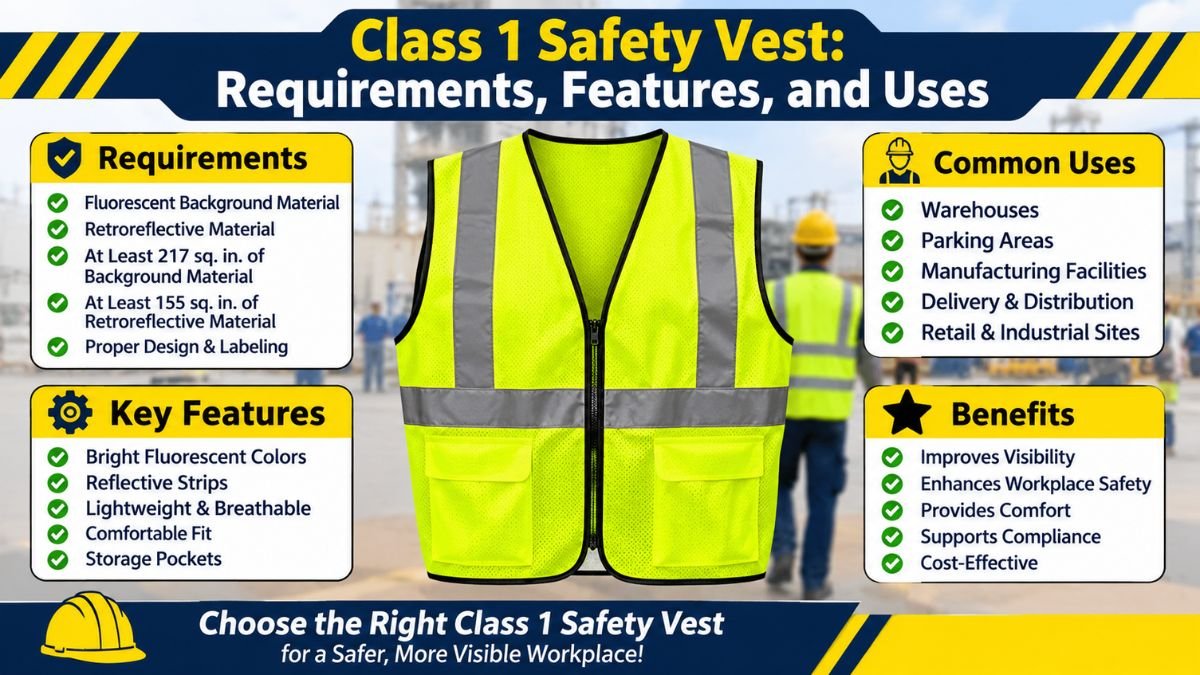
Workplace safety is a top priority in industries where employees work around moving vehicles, machinery, and other potential hazards. Wearing appropriate high-visibility clothing helps workers remain noticeable and reduces the risk of workplace accidents. One of the most common types of high-visibility workwear is the Class 1 safety vest.
A Class 1 safety vest is designed for workers in relatively low-risk environments where vehicle speeds are low and traffic exposure is limited. These vests feature bright fluorescent colors and reflective strips that help workers stand out during daylight and low-light conditions.
Understanding Class 1 safety vest requirements, features, and uses is important for employers, safety managers, and workers who want to choose suitable protective clothing. Selecting the right safety vest can improve visibility, support workplace safety programs, and help businesses meet applicable safety requirements.
In this complete guide, we will explore what a Class 1 safety vest is, its requirements, essential features, common uses, benefits, materials, and how to choose the right safety vest for your workplace.
Need vests for your site? Explore our custom hi vis workwear manufacturing, see the hi-vis surveyor’s vest, and read the ANSI standard for high visibility clothing.
What Is a Class 1 Safety Vest?
A Class 1 safety vest is a type of high-visibility garment designed to make workers more noticeable in environments with relatively low traffic speeds and limited exposure to moving vehicles.
These safety vests are commonly used in controlled workplaces, warehouses, parking facilities, and industrial environments where additional visibility is necessary but the risks are lower than those found on busy roads and highways.
Class 1 safety vests typically feature fluorescent background materials in bright colors, such as:
- Fluorescent yellow-green
- Fluorescent orange-red
- Fluorescent red
They also include retroreflective strips that reflect light toward its source, helping drivers and equipment operators recognize workers in darker conditions.
Class 1 garments are covered by the ANSI/ISEA 107 standard for high-visibility safety apparel in the United States. The appropriate garment class depends on workplace conditions, traffic exposure, and applicable safety regulations.
What Are Class 1 Safety Vest Requirements?
Class 1 safety vests must meet specific material, design, and performance requirements when they are manufactured and labeled as compliant with the applicable ANSI/ISEA 107 standard.
These requirements help ensure that workers receive suitable visibility in lower-risk environments.
1. Fluorescent Background Material
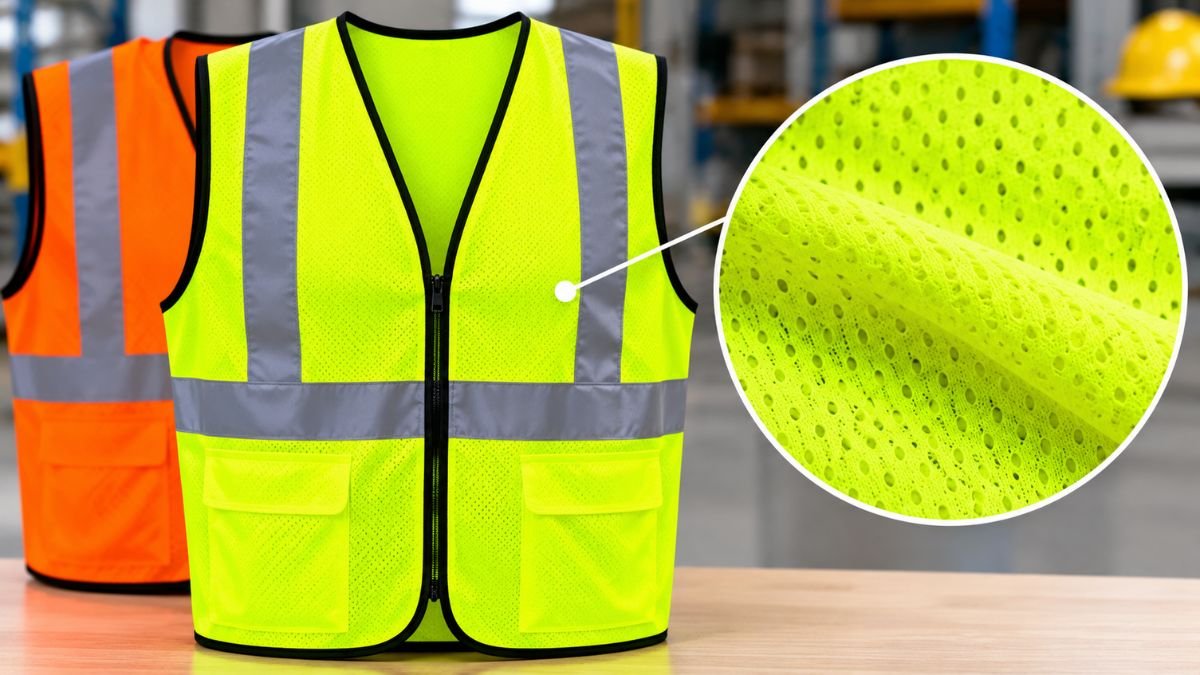
One of the most important requirements is the use of fluorescent background material.
This material helps workers stand out against their surroundings, including buildings, roads, vehicles, and industrial equipment.
Common background colors include fluorescent yellow-green and fluorescent orange-red. These colors improve daytime visibility by creating a noticeable contrast with the surrounding environment.
2. Retroreflective Material
Retroreflective material is another essential feature of a Class 1 safety vest.
It reflects light toward its original source, making workers more noticeable when illuminated by vehicle headlights or other light sources.
Reflective strips are commonly positioned around the torso and shoulders to improve visibility from different directions.
3. Minimum Material Requirements
ANSI/ISEA 107 specifies minimum amounts of background and retroreflective material for different high-visibility garment classes.
Under the ANSI/ISEA 107-2020 standard, a Type O Class 1 garment requires:
- At least 217 square inches of background material.
- At least 155 square inches of retroreflective or combined-performance material, depending on the permitted configuration.
Manufacturers should verify the applicable standard edition and garment configuration before claiming compliance.
4. Proper Garment Design
A compliant safety vest must be designed to provide adequate visibility when worn correctly.
The placement of fluorescent and reflective materials should allow workers to remain noticeable during normal workplace activities.
The vest should also fit comfortably without restricting movement or covering important reflective areas.
5. Compliance Labeling
Proper labeling is important when purchasing ANSI-compliant safety vests.
Employers should check garment labels and manufacturer documentation to confirm the applicable standard, garment type, and performance class.
Never assume that a vest is compliant simply because it has bright colors or reflective strips.
Key Features of a Class 1 High-Visibility Safety Vest
Class 1 safety vests include several features that improve worker visibility, comfort, and convenience.
1. Bright Fluorescent Colors
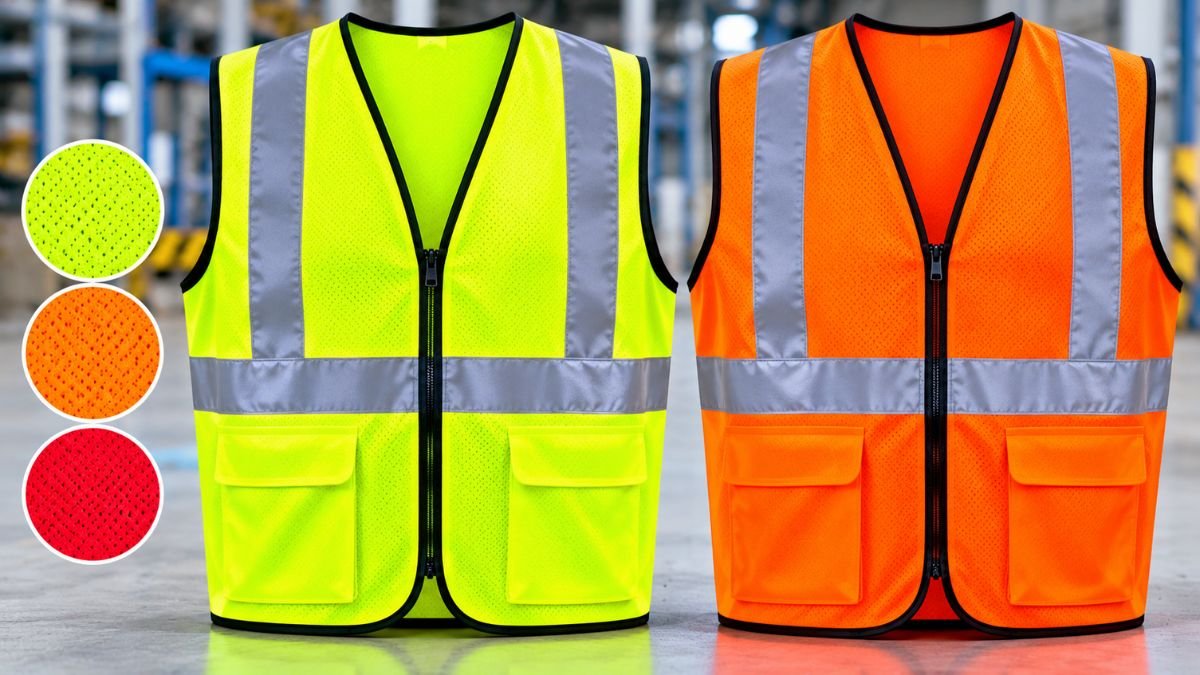
Bright fluorescent colors help workers stand out during daylight conditions.
Yellow-green and orange-red are popular choices because they provide noticeable contrast against common workplace surroundings.
These colors make it easier for drivers, forklift operators, and coworkers to identify employees in controlled work areas.
2. Reflective Strips
Reflective strips improve visibility when light reaches the garment.
They are commonly placed across the chest, waist, shoulders, and back to help workers remain noticeable from different directions.
High-quality reflective materials also help maintain visibility during nighttime or low-light activities when illuminated by an appropriate light source.
3. Lightweight Fabric
Most Class 1 safety vests are manufactured using lightweight materials such as polyester mesh or woven polyester.
These materials offer several advantages:
- Comfortable for extended working hours.
- Easy to put on and remove.
- Suitable for layering over regular work clothing.
- Lightweight for everyday workplace activities.
4. Breathable Construction
Breathability is an important feature for employees working in warm environments.
Many Class 1 safety vests feature mesh construction that allows air to circulate through the fabric.
This helps workers remain comfortable during physically demanding activities and long shifts.
5. Convenient Storage Pockets
Many safety vests include multiple pockets for carrying small workplace essentials.
Common pocket options include:
- Chest pockets for pens and identification cards.
- Front pockets for small tools.
- Zippered pockets for personal belongings.
- Radio pockets for communication devices.
These storage options make safety vests more practical for everyday work.
6. Comfortable Fit
A properly fitted safety vest allows workers to move freely while keeping the required visibility materials exposed.
Adjustable closures, suitable sizing, and lightweight construction help improve comfort throughout the workday.
If your site needs more coverage than a vest provides, compare Class 3 long sleeve safety shirts and hi vis jackets, or browse the hi-vis premium shell jacket.
Common Uses of Class 1 Safety Vests
Class 1 safety vests are suitable for specific workplaces where traffic speeds are low and employees have limited exposure to moving vehicles.
Here are some common applications.
1. Warehouse Operations
Warehouse employees regularly work around forklifts, pallet trucks, and other moving equipment.
A Class 1 safety vest can help forklift operators and coworkers identify one another more easily in controlled warehouse environments.
Bright colors and reflective strips improve worker visibility and support safer material-handling activities.
2. Parking Lot Attendants
Parking lot attendants frequently move between parked vehicles and designated walking areas.
High-visibility vests help drivers recognize attendants and improve visibility in parking facilities.
These garments are particularly useful in controlled parking environments where traffic speeds are relatively low.
3. Manufacturing Facilities
Manufacturing facilities often contain machinery, production lines, and moving equipment.
Workers may wear Class 1 safety vests to make themselves more noticeable to equipment operators and other employees.
Lightweight designs are especially useful for workers who need to wear high-visibility clothing throughout their shifts.
4. Delivery and Distribution Centers
Employees working in controlled loading and unloading areas may benefit from Class 1 high-visibility clothing.
These vests help improve visibility when workers move around delivery vehicles, loading equipment, and storage areas.
5. Shopping and Retail Facilities
Maintenance employees, stockroom workers, and facility staff may use high-visibility vests when working around service vehicles or equipment.
Lightweight vests are convenient because employees can wear them over their regular uniforms.
6. Private Industrial Worksites
Workers in restricted industrial areas may use Class 1 vests when workplace risk assessments determine that this level of visibility is appropriate.
However, employers must select a higher performance class when traffic speeds, visibility conditions, or other workplace hazards require additional protection.
Class 1 vs. Class 2 vs. Class 3 Safety Vests
Choosing the correct safety vest class is important for protecting workers in different environments.
The main difference between Class 1, Class 2, and Class 3 safety vests is the amount and arrangement of high-visibility materials and the level of visibility provided.
Class 1 Safety Vest
Class 1 safety vests are designed for workers in relatively low-risk environments with limited traffic exposure.
They provide basic high visibility through fluorescent background materials and reflective strips.
Common applications include warehouses, controlled parking facilities, and certain private industrial workplaces.
Class 2 Safety Vest
Class 2 safety vests provide increased visibility for employees who work near traffic or in environments with greater visibility risks.
They feature more background and reflective material than Class 1 garments.
Common applications include roadside work, utility operations, and certain construction activities.
Class 3 Safety Vest
Class 3 safety garments provide the highest level of visibility among the three performance classes.
They offer extensive high-visibility material coverage and are designed for workers who need to be visible from multiple directions.
Common applications include highway construction, emergency response, and high-risk roadway operations.
Main Differences Between Safety Vest Classes
| Feature | Class 1 | Class 2 | Class 3 |
|---|---|---|---|
| Visibility level | Basic | Enhanced | Highest |
| Background material | Lower amount | Greater amount | Highest amount |
| Reflective coverage | Limited | Increased | Extensive |
| Typical environment | Low-risk areas | Moderate-risk areas | High-risk areas |
| Common applications | Warehouses, parking areas | Roadside work, utilities | Highway construction, emergency response |
Class 1 is not a substitute for Class 2 or Class 3 apparel when workplace regulations or risk assessments require a higher performance class.
What Materials Are Used to Manufacture Class 1 Safety Vests?
The materials used in safety vest manufacturing influence durability, comfort, breathability, and visibility.
Here are some commonly used materials.
1. Polyester Mesh
Polyester mesh is a popular choice for lightweight safety vests.
Its open construction allows air to circulate through the fabric, making it suitable for warm working environments.
It is commonly used in warehouses, manufacturing facilities, and outdoor workplaces.
2. Woven Polyester
Woven polyester provides a more solid fabric structure than mesh.
It is commonly used in safety vests that require additional durability and resistance to everyday workplace wear.
3. Retroreflective Material
Retroreflective materials improve visibility when light reaches the garment.
These materials are generally applied in strips or specific patterns across the vest to help workers remain noticeable in low-light conditions.
4. Fluorescent Fabric
Fluorescent fabrics improve daytime conspicuity.
They are available in high-visibility colors such as yellow-green and orange-red.
These fabrics help workers stand out against different workplace backgrounds.
5. Durable Fastening Materials
Safety vests may include zippers, hook-and-loop closures, snaps, or other fastening systems.
These components make garments easier to wear and remove while providing a secure fit.
How to Choose the Right Class 1 Safety Vest
Choosing the right safety vest requires consideration of workplace conditions, employee comfort, and applicable safety requirements.
Here are some important factors to consider before purchasing.
1. Evaluate Workplace Hazards
Start by identifying the hazards workers may encounter.
Consider the following factors:
- Vehicle movement.
- Equipment operation.
- Lighting conditions.
- Traffic speed.
- Weather conditions.
- Distance between workers and moving vehicles.
If workers are exposed to higher-risk traffic conditions, Class 2 or Class 3 clothing may be necessary.
2. Check ANSI/ISEA Compliance
Always verify whether the safety vest meets the applicable ANSI/ISEA 107 requirements.
Review the garment label and manufacturer’s documentation to confirm its classification and intended use.
This helps ensure that the garment is appropriate for the workplace.
3. Select the Right Fabric
Choose breathable mesh for warm environments and more durable woven materials for workplaces where garments experience frequent wear.
The fabric should also support the required high-visibility performance.
4. Consider Comfort and Fit
Employees should be able to wear safety vests comfortably throughout their shifts.
Choose suitable sizes and designs that do not restrict movement.
A properly fitted vest also helps ensure that reflective materials remain visible.
5. Inspect Reflective Materials
Check the quality, placement, and condition of reflective strips before purchasing.
Avoid garments with peeling, damaged, or missing reflective sections.
High-quality reflective materials help maintain visibility during low-light conditions.
6. Choose a Reliable Manufacturer
Work with a manufacturer that understands high-visibility garment construction and applicable safety standards.
Ask for product specifications, fabric details, test documentation, and compliance information before placing a bulk order.
Are Class 1 Safety Vests OSHA Approved?
OSHA does not approve individual safety vest products simply because they are labeled Class 1.
Instead, employers must evaluate workplace hazards and provide appropriate protective equipment when workers are exposed to visibility-related risks.
For example, OSHA construction guidance addresses warning clothing for workers exposed to vehicle traffic and emphasizes visibility during both daytime and nighttime conditions.
Federal highway work-zone requirements generally call for Performance Class 2 or Class 3 apparel, subject to specified exceptions.
Therefore, employers should evaluate their workplace conditions and applicable regulations before selecting Class 1 safety vests.
Benefits of Wearing Class 1 Safety Vests
Class 1 safety vests offer several benefits for employees working in appropriate low-risk environments.
1. Improves Worker Visibility
Bright fluorescent colors and reflective materials make workers easier to notice.
This is particularly useful in controlled workplaces where employees work around vehicles and equipment.
2. Supports Workplace Safety
Improved visibility helps employees and equipment operators recognize one another.
This supports workplace safety programs and helps reduce visibility-related risks.
3. Provides Comfortable Protection
Lightweight and breathable materials make these vests comfortable for everyday workplace use.
Employees can wear them over their regular work clothing without adding unnecessary weight.
4. Allows Easy Movement
Their simple construction allows workers to perform regular activities without unnecessary restrictions.
This makes them practical for employees who move frequently during their shifts.
5. Cost-Effective Workwear
Class 1 safety vests are generally simple garments that can be purchased in bulk for workplaces with multiple employees.
Businesses can select different sizes, colors, and designs according to their requirements.
6. Supports Workplace Identification
Employers can add company logos, department names, or employee identification where permitted by the applicable garment standard.
This helps organizations maintain a consistent professional appearance while providing high-visibility workwear.
How to Maintain and Care for Class 1 Safety Vests
Proper care helps maintain the appearance, durability, and visibility of safety vests.
Follow these maintenance practices to extend the useful life of your garments.
1. Read Washing Instructions
Always follow the manufacturer’s washing instructions.
Different fabrics and reflective materials may have different cleaning requirements.
2. Use Appropriate Detergents
Use suitable detergents and avoid harsh chemicals or cleaning products that could damage fluorescent or reflective materials.
3. Avoid Excessive Heat
High temperatures may damage reflective materials or affect the garment’s fabric.
Follow the recommended drying and ironing instructions.
4. Inspect Reflective Strips Regularly
Check reflective strips for cracks, peeling, fading, and other signs of damage.
Replace garments when their visibility performance is no longer adequate.
5. Store Vests Properly
Store safety vests in a clean, dry location away from excessive heat, moisture, and direct sunlight.
Proper storage helps protect fabric quality and reflective materials.
6. Replace Damaged Vests
Do not continue using vests that are excessively dirty, faded, torn, or damaged.
A damaged garment may no longer provide the expected visibility.
Common Mistakes to Avoid When Buying Class 1 Safety Vests
Before purchasing safety vests, employers should avoid these common mistakes.
- Choosing the wrong class: Never select Class 1 when workplace hazards require Class 2 or Class 3.
- Ignoring compliance labels: Always verify the applicable ANSI/ISEA standard and garment classification.
- Buying poor-quality reflective materials: Low-quality materials may not provide the expected visibility.
- Selecting uncomfortable fabrics: Poor breathability can make garments uncomfortable during long shifts.
- Ignoring proper sizing: Oversized or undersized vests can affect comfort and visibility.
- Neglecting maintenance: Dirty, faded, or damaged garments should be inspected and replaced when necessary.
Frequently Asked Questions About Class 1 Safety Vests
1. What Is a Class 1 Safety Vest Used For?
A Class 1 safety vest is used in low-risk work environments where workers need additional visibility but have limited exposure to moving traffic. Common applications include warehouses, parking facilities, and controlled industrial workplaces.
2. What Are the Requirements for a Class 1 Safety Vest?
Under ANSI/ISEA 107-2020, a Type O Class 1 garment requires at least 217 square inches of background material and 155 square inches of retroreflective or combined-performance material. It must also meet applicable design, material, and labeling requirements.
3. What Color Is a Class 1 Safety Vest?
Common colors include fluorescent yellow-green and fluorescent orange-red. These colors help workers remain noticeable during daylight conditions.
4. What Is the Difference Between Class 1 and Class 2 Safety Vests?
Class 1 vests are designed for lower-risk environments, while Class 2 vests provide greater visibility for workers exposed to more significant traffic and workplace hazards.
5. Can You Wear a Class 1 Safety Vest at Night?
A compliant Class 1 garment includes retroreflective material that can improve visibility when illuminated by headlights. However, whether it provides sufficient protection for nighttime work depends on workplace hazards and applicable requirements. Class 2 or Class 3 may be necessary.
6. Are Class 1 Safety Vests Required by OSHA?
OSHA requirements depend on the workplace and its hazards. OSHA does not universally require Class 1 vests for every workplace. Employers must select suitable protective clothing based on applicable regulations and workplace risk assessments.
7. What Fabric Is Best for Class 1 Safety Vests?
Polyester mesh is a popular option because it is lightweight and breathable. Woven polyester is another option for applications requiring a more solid and durable fabric structure.
8. How Often Should a Class 1 Safety Vest Be Replaced?
There is no single replacement schedule for every safety vest. Replacement depends on the manufacturer’s instructions, washing history, frequency of use, and garment condition. Replace vests when they become excessively faded, damaged, or no longer meet visibility requirements.
9. Can Class 1 Safety Vests Be Customized?
Yes. Many manufacturers offer customization options such as company logos, employee names, department labels, and different pocket configurations. However, customization must not reduce the required high-visibility material or compromise garment compliance.
10. What Is the Difference Between Fluorescent and Reflective Materials?
Fluorescent materials improve daytime visibility by making garments stand out against their surroundings. Reflective materials return light toward its source, helping workers become more noticeable when illuminated in low-light conditions.
Conclusion
A Class 1 safety vest is an important piece of high-visibility workwear for employees working in relatively low-risk environments. Its fluorescent background material, reflective strips, lightweight construction, and comfortable design help workers remain noticeable during everyday workplace activities.
Understanding Class 1 safety vest requirements, features, and uses helps employers select suitable garments for their teams. However, choosing the correct performance class is essential because higher-risk environments may require Class 2 or Class 3 protection.
Whether you are purchasing safety vests for a warehouse, manufacturing facility, parking area, or private industrial workplace, always consider workplace hazards, garment quality, material performance, and applicable safety standards before making a decision.