

Flame-retardant fabrics play an important role in protecting workers from fire-related hazards in industries such as manufacturing, construction, electrical work, oil and gas, and welding. These specialized fabrics are designed to resist ignition, slow the spread of flames, or provide thermal protection when workers encounter heat and fire risks. However, proper maintenance is essential to help ensure that protective clothing continues to perform as intended.
Washing flame-retardant fabric correctly is essential for maintaining its protective properties, extending garment life, and ensuring workplace safety. Using the wrong detergent, washing at an unsuitable temperature, or applying unauthorized fabric treatments may damage the garment or compromise its protective performance.
In this complete guide, we will explain how to wash flame-retardant fabric, which detergents to use, how to dry protective clothing, which cleaning mistakes to avoid, and how to maintain flame-resistant garments over time.
Whether you use flame-resistant workwear in an industrial environment or manage protective clothing for a team, understanding the correct washing and care procedures can help you maintain your garments and protect workers.
Caring for FR garments starts with choosing the right ones. Explore our protective workwear manufacturing services, see the FR visibility pant, and read our care guide for washing flame resistant clothing.
What Is Flame-Retardant Fabric?
Flame-retardant fabric is a textile designed to resist ignition, reduce flame spread, or provide a degree of protection against heat and fire. It is commonly used to manufacture protective clothing for workers who may be exposed to sparks, flames, or thermal hazards.
These fabrics are used in a variety of applications, including industrial uniforms, welding garments, electrical protective clothing, firefighting equipment, and other specialized workwear.
Flame-retardant fabrics generally fall into two main categories.
1. Inherently Flame-Resistant Fabric
Inherently flame-resistant fabrics are manufactured using fibers whose flame-resistant properties are built into their chemical structure. These properties do not depend on a surface coating or an applied flame-retardant finish.
Examples include certain aramid fibers and other specialized flame-resistant materials.
With appropriate laundering, these fabrics can retain their inherent flame-resistant characteristics throughout their useful service life. However, the complete garment may still be affected by contamination, physical wear, damage, or unsuitable cleaning procedures.
2. Treated Flame-Retardant Fabric

Treated flame-retardant fabrics are made from materials that receive a chemical treatment to improve their resistance to ignition and flame spread.
Some flame-resistant cotton fabrics, for example, receive specialized treatments during manufacturing.
The durability of these treatments depends on the specific fabric, treatment technology, and washing conditions. Some treatments are designed to withstand repeated industrial laundering, while others may have more limited durability.
Important: Always check the manufacturer’s care instructions before washing flame-retardant clothing. Different fabrics and protective garments may require different cleaning methods.
Why Is Proper Washing of Flame-Retardant Fabric Important?
Washing flame-retardant fabric is not simply about removing dirt and sweat. Proper cleaning also helps preserve the condition and performance of protective workwear.
Here are some important reasons to follow the correct washing procedures.
1. Maintains Protective Performance
Flame-resistant clothing is designed to provide protection against specific workplace hazards. However, incorrect laundering, unsuitable chemical treatments, or certain types of contamination may affect its performance.
Following the manufacturer’s cleaning instructions helps reduce the risk of damage and supports the continued use of protective clothing.
2. Removes Dirt, Sweat, and Contaminants
Workers in industrial environments may expose their clothing to dust, oils, grease, sweat, and other substances.
Some contaminants can affect fabric performance or create additional hazards. Regular cleaning helps remove everyday soil and supports better garment hygiene.
However, ordinary washing may not remove every hazardous contaminant. Clothing contaminated with flammable chemicals or other dangerous substances should be handled according to workplace procedures and the manufacturer’s instructions.
3. Extends Garment Service Life
Proper washing and drying can help prevent unnecessary shrinkage, fading, fabric damage, and premature wear.
Using suitable detergents and avoiding unauthorized treatments may help protective garments remain serviceable for longer.
4. Improves Comfort and Hygiene
Flame-resistant clothing can become uncomfortable when sweat, dirt, and body oils accumulate in the fabric.
Appropriate laundering helps keep garments cleaner, fresher, and more comfortable for daily use.
5. Supports Workplace Safety Programs
Employers need to ensure that protective clothing remains suitable for its intended purpose.
A consistent garment-care program helps workers identify damaged clothing, follow cleaning requirements, and remove unsuitable garments from service.
How to Wash Flame-Retardant Fabric: Step-by-Step Guide
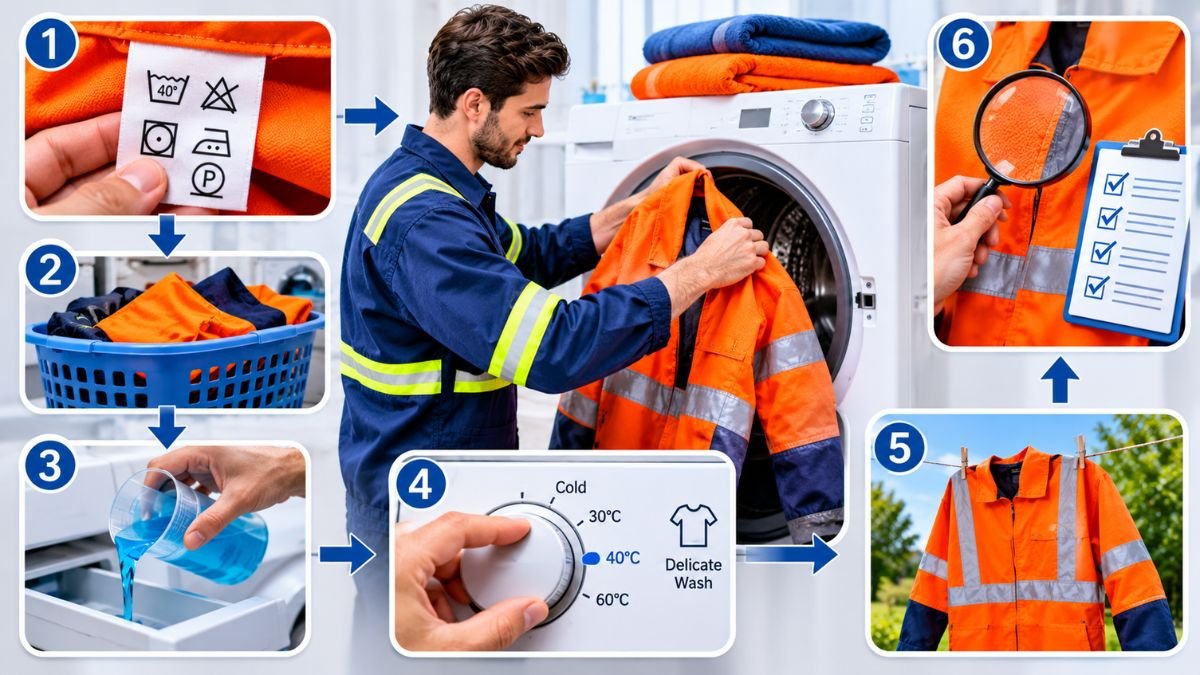
Following a consistent washing process can help maintain the quality and protective performance of flame-resistant garments.
The exact procedure depends on the garment, fabric composition, manufacturer instructions, and applicable workplace requirements.
Step 1: Read the Care Label
Before washing flame-retardant clothing, carefully read the garment’s care label and any accompanying manufacturer instructions.
The label may specify:
- Recommended washing temperature.
- Suitable detergent types.
- Whether machine washing is permitted.
- Approved drying methods.
- Restrictions on bleach or other chemicals.
- Whether industrial laundering is required.
- Special instructions for treated or inherently flame-resistant fabrics.
Never assume that every flame-resistant garment can be washed in the same way.
If the care label is missing or unclear, contact the manufacturer or supplier before selecting a cleaning method.
Step 2: Inspect the Garment Before Washing
Examine the clothing for visible damage, contamination, and signs of excessive wear.
Check the following areas:
- Seams and stitching.
- Zippers, buttons, and closures.
- Cuffs and collars.
- Knees and elbows.
- Reflective strips and other accessories.
- Areas exposed to sparks, heat, or abrasion.
Look for holes, tears, thinning fabric, broken stitching, and persistent stains.
If the garment has been exposed to molten metal, significant heat, hazardous chemicals, or other dangerous substances, follow the relevant workplace procedures before handling or laundering it.
Damaged protective clothing should not be returned to service until it has been evaluated and repaired according to the manufacturer’s requirements.
Step 3: Separate Flame-Resistant Clothing From Other Laundry
Separate flame-resistant garments from ordinary clothing whenever the manufacturer’s instructions or workplace laundering procedures require it.
This helps control cross-contamination and reduces the risk of transferring unsuitable substances or residues between garments.
Pay particular attention to clothing contaminated with oils, grease, solvents, fuel, or other flammable materials.
Ordinary household laundry may contain residues from fabric softeners, detergents, or other products that are unsuitable for some protective garments.
Use a dedicated laundering process when required by the garment manufacturer or your organization’s safety procedures.
Step 4: Choose the Correct Detergent
Selecting an appropriate detergent is one of the most important parts of washing flame-retardant fabric.
Use a detergent that is compatible with the garment and approved by its manufacturer.
In general, avoid cleaning products that may leave unsuitable residues or damage specialized finishes.
Depending on the garment’s care instructions, products to avoid may include:
- Chlorine bleach.
- Fabric softeners.
- Starch.
- Unapproved whitening agents.
- Cleaning products containing unauthorized additives.
Do not assume that every product marketed as mild or suitable for sensitive skin is appropriate for flame-resistant workwear.
The safest choice is a detergent specifically recommended or permitted by the clothing manufacturer.
Step 5: Select the Recommended Washing Temperature
Water temperature can influence cleaning effectiveness, shrinkage, and the condition of certain fabric treatments.
Always use the temperature specified by the manufacturer.
Some flame-resistant cotton garments can tolerate relatively warm washing, while other protective fabrics require different conditions.
Avoid choosing a high temperature simply because the clothing is heavily soiled. Excessive heat may damage the garment or its components.
If industrial laundering is required, follow the approved wash formula and equipment settings.
Step 6: Use an Appropriate Washing Cycle
Choose a washing cycle that meets the garment’s care requirements and removes ordinary soil effectively.
Avoid unnecessary mechanical stress that could damage seams, closures, reflective materials, or specialized fabric components.
Do not overload the washing machine. Overloading can reduce cleaning effectiveness and increase friction between garments.
For heavily soiled clothing, follow the manufacturer’s approved procedure rather than adding unapproved cleaning chemicals or extending the wash cycle without guidance.
Step 7: Rinse Thoroughly
Proper rinsing helps remove detergent and loosened contaminants from the fabric.
Excessive detergent residue may affect comfort and, depending on the product and garment, may interfere with the intended performance of protective clothing.
Follow the recommended detergent dosage and rinsing procedure.
If a garment remains oily, greasy, or contaminated after washing, do not assume that another ordinary wash will make it safe. Follow the appropriate contamination-control procedures.
Step 8: Dry the Garment Correctly
After washing, dry flame-resistant clothing according to the manufacturer’s instructions.
Approved drying methods may include line drying, air drying, or tumble drying at a specified temperature.
Avoid excessive heat, which may cause shrinkage or damage some garment components.
Check any special requirements for reflective materials, elastic components, closures, and protective finishes.
Do not use an unapproved ironing or pressing temperature. If ironing is permitted, follow the manufacturer’s temperature limits.
Step 9: Inspect the Garment After Washing
Once the clothing is completely dry, inspect it again before returning it to service.
Check for:
- New holes or tears.
- Shrinkage or distortion.
- Damaged seams.
- Persistent stains or oily patches.
- Cracked or damaged reflective materials.
- Broken closures.
- Unusual changes in fabric texture.
- Signs of heat damage.
A garment that looks clean is not automatically safe for use. Cleaning cannot restore damaged fabric or reverse every type of contamination.
Remove questionable garments from service until they have been assessed under the relevant workplace procedures.
Washing rules also differ for arc-rated garments, so read our guide to washing arc flash clothing. Not sure what your garments are made of? See what fire resistant clothing is made of.
Which Detergent Is Best for Washing Flame-Retardant Fabric?
The best detergent for flame-retardant fabric is one that effectively cleans the garment without damaging its material, treatment, or protective components.
There is no single detergent suitable for every flame-resistant fabric.
When choosing a detergent, consider the following factors.
Use Manufacturer-Approved Cleaning Products
Check whether the clothing manufacturer recommends a particular detergent or provides a list of compatible cleaning products.
This is especially important for treated flame-resistant cotton, garments with specialized finishes, and clothing used in high-risk industrial environments.
Avoid Unauthorized Fabric Softener
Fabric softeners can leave deposits on textiles. Some formulations may also affect the performance of specialized protective clothing.
For this reason, avoid fabric softeners unless the manufacturer explicitly permits their use.
Be Careful With Bleach
Bleach can damage some fibers, finishes, dyes, and garment components.
Chlorine bleach is particularly unsuitable for many flame-resistant garments unless the manufacturer explicitly authorizes its use.
Do not use bleach to remove stubborn stains without first checking the care instructions.
Avoid Unapproved Stain Removers
Some stain removers contain solvents, oxidizing agents, or other ingredients that may be incompatible with protective fabrics.
Do not use an aggressive cleaning product simply because it removes ordinary household stains.
For persistent industrial contamination, consult the garment manufacturer or your workplace’s safety team.
Can You Machine-Wash Flame-Retardant Clothing?
Yes, many flame-resistant garments can be machine-washed. However, the correct method depends on the garment’s construction, fabric, treatment, and care instructions.
Some protective clothing is designed for repeated domestic laundering, while other garments require a controlled industrial laundry process.
Before machine washing flame-resistant clothing:
- Read the care label.
- Check pockets and remove permitted loose items.
- Separate garments as required.
- Use an approved detergent.
- Select the recommended water temperature.
- Follow the specified washing cycle.
- Dry according to the manufacturer’s instructions.
- Inspect the garment before use.
Never assume that a garment is machine-washable simply because it is made from cotton or polyester.
The presence of flame-resistant treatments, reflective materials, insulation, or specialized protective layers can change the appropriate cleaning procedure.
How Often Should Flame-Resistant Clothing Be Washed?
The washing frequency for flame-resistant clothing depends on working conditions, the level of contamination, manufacturer guidance, and workplace hygiene requirements.
Garments worn during physically demanding work may need frequent laundering because of sweat, dust, oils, and other contaminants.
In general, wash flame-resistant clothing whenever necessary to maintain cleanliness and in accordance with the manufacturer’s instructions.
Consider the following factors when determining a washing schedule:
Work environment: Clothing worn in dusty, oily, or high-temperature industrial environments may require more frequent cleaning.
Level of contamination: Garments exposed to oil, grease, fuel, chemicals, or other substances may require special handling.
Worker comfort: Sweat and accumulated soil can make protective clothing uncomfortable.
Manufacturer recommendations: Some garments have specific laundering limits or procedures.
Workplace safety requirements: Employers may have additional procedures for cleaning, inspection, storage, and replacement.
Do not delay cleaning heavily soiled clothing simply to reduce laundry costs. Contaminants can create additional hazards and may affect the garment’s suitability for use.
Common Mistakes to Avoid When Washing Flame-Retardant Fabric
Even when workers wash protective clothing regularly, certain mistakes can affect garment condition and safety.
Here are some common errors to avoid.
1. Using Fabric Softener
Fabric softeners may leave residues that are unsuitable for some flame-resistant garments.
Avoid using them unless the manufacturer explicitly approves the product.
2. Washing at Excessively High Temperatures
High temperatures can cause shrinkage or damage certain fabric treatments and garment components.
Always follow the specified temperature limits.
3. Using Unapproved Bleach
Bleach can damage fabrics, dyes, finishes, and accessories.
Use only cleaning products authorized by the manufacturer.
4. Mixing Contaminated Workwear With Ordinary Laundry
Oil, grease, and other contaminants may transfer between garments during washing.
Follow the appropriate separation and contamination-control procedures.
5. Ignoring Care Labels
Different flame-resistant garments can have different washing and drying requirements.
Ignoring these instructions may lead to unnecessary damage.
6. Returning Damaged Clothing to Service
Washing does not repair holes, torn seams, heat damage, or worn fabric.
Inspect each garment after cleaning and remove damaged clothing from service when required.
7. Assuming Clean Clothing Is Always Safe
Some hazardous contaminants may remain even when a garment looks clean.
If a garment has been exposed to dangerous substances, follow the appropriate decontamination and disposal procedures rather than relying on appearance alone.
How to Maintain Flame-Resistant Clothing Between Washes
Proper care does not end when the washing cycle finishes. Storage, inspection, and handling are also important parts of maintaining protective garments.
Store Clothing in a Clean, Dry Area
Store flame-resistant clothing in a clean, dry location away from unnecessary contamination.
Avoid leaving garments in areas where they may absorb oil, grease, fuel, chemicals, or other substances that could affect their suitability for use.
Inspect Clothing Regularly
Check garments before use and during routine workplace inspections.
Look for damage caused by abrasion, repeated washing, heat exposure, or normal wear.
Pay particular attention to seams, cuffs, knees, elbows, closures, and areas exposed to workplace hazards.
Follow Approved Repair Procedures
Not every repair method is appropriate for flame-resistant clothing.
Use repairs, replacement materials, and sewing methods approved by the garment manufacturer or the relevant protective-clothing program.
Do not apply ordinary patches, adhesives, or replacement components without confirming their suitability.
Replace Worn-Out Garments
Flame-resistant clothing has a service life that depends on its design, use, exposure, maintenance, and condition.
Replace garments when they no longer meet the manufacturer’s serviceability requirements or when damage cannot be repaired through an approved procedure.
Keep Cleaning Records When Necessary
Organizations that manage large quantities of protective clothing may benefit from keeping laundering and inspection records.
Records can help track garment condition, identify recurring cleaning problems, and determine when replacement is necessary.
Follow the documentation requirements applicable to your workplace.
Washing Inherently Flame-Resistant vs. Treated Flame-Retardant Fabric
Understanding the difference between these fabric types helps explain why their washing requirements may vary.
| Feature | Inherently Flame-Resistant Fabric | Treated Flame-Retardant Fabric |
|---|---|---|
| Flame-resistant properties | Built into the fiber itself | Created or enhanced by a treatment |
| Washing requirements | Depend on the fiber and garment construction | Depend on the treatment and garment construction |
| Effect of laundering | The fiber’s inherent properties are generally durable, but the garment can still be damaged or contaminated | An approved durable treatment may withstand repeated washing; performance depends on the treatment and care procedure |
| Main care concern | Preventing physical damage, contamination, and deterioration | Preserving the treatment while preventing damage and contamination |
| Detergent selection | Follow the garment manufacturer’s instructions | Follow the garment manufacturer’s instructions |
| Drying requirements | Depend on the material and garment | Depend on the material, treatment, and garment |
Important: Neither fabric category should be considered maintenance-free. Correct laundering, routine inspection, and proper handling remain essential.
Can Washing Damage Flame-Retardant Properties?
Washing can affect some flame-resistant garments if unsuitable products or procedures are used. However, proper laundering does not automatically remove flame-resistant properties.
The effect depends on the fabric type, chemical treatment, garment construction, and cleaning method.
For example, inherently flame-resistant fibers are designed to have flame-resistant properties built into their structure. By contrast, treated fabrics rely on a particular treatment whose durability depends on its design and application.
Both types can still be damaged by excessive heat, abrasion, contamination, inappropriate chemicals, or unsuitable repairs.
To reduce the risk of damaging flame-resistant clothing:
- Follow the manufacturer’s care instructions.
- Use compatible detergents.
- Avoid unauthorized fabric softeners and bleach.
- Observe the recommended washing and drying temperatures.
- Remove hazardous contaminants through approved procedures.
- Inspect garments regularly.
- Replace garments that are no longer serviceable.
If the garment has been exposed to unusual conditions or its protective performance is uncertain, contact the manufacturer or the responsible safety professional.
Do not attempt to confirm flame resistance by setting the garment on fire or performing an improvised burn test. Such tests are dangerous and do not establish that a garment meets the required protective standard.
Special Care for Industrial Flame-Resistant Workwear
Industrial flame-resistant clothing may be exposed to demanding conditions, including welding sparks, metalworking debris, oil, grease, and chemical contamination.
These garments may require more careful handling than ordinary clothing.
Handle Oil and Grease Contamination Carefully
Oil and grease can present additional fire hazards when they accumulate on protective clothing.
Follow the manufacturer’s instructions and your workplace’s contamination-control procedures.
If contamination cannot be removed through the approved laundering process, do not return the garment to service without appropriate assessment.
Follow Requirements for Electrical Protective Clothing
Flame-resistant clothing used for electrical work may form part of a broader personal protective equipment system.
For arc-rated garments, maintaining the required protective performance is particularly important.
Follow the applicable workplace requirements, garment labeling, and manufacturer instructions. Washing alone does not establish that clothing remains suitable for electrical hazards.
Use Qualified Industrial Laundering When Required
Some organizations use specialized industrial laundry providers to clean protective garments.
A qualified provider should understand the garment’s care requirements, contamination risks, and applicable laundering procedures.
Before outsourcing laundry, confirm that the provider can meet the garment manufacturer’s requirements and your workplace’s safety procedures.
Frequently Asked Questions About Washing Flame-Retardant Fabric
1. Can flame-retardant fabric be washed in a washing machine?
Yes, many flame-resistant garments can be machine-washed. However, you must follow the garment’s care label and manufacturer’s instructions regarding detergent, temperature, cycle selection, and drying.
2. Does washing remove flame-retardant properties?
Not necessarily. Inherently flame-resistant fabrics have flame-resistant properties built into their fibers, while treated fabrics rely on specific treatments. Correct laundering helps preserve garment condition, but unsuitable cleaning methods may affect certain materials or treatments.
3. Can I use regular laundry detergent on flame-resistant clothing?
Some ordinary detergents may be suitable, but compatibility depends on the garment and detergent formulation. Use a product permitted by the manufacturer and avoid unauthorized additives.
4. Is fabric softener safe for flame-resistant clothing?
Fabric softeners should generally be avoided unless the manufacturer explicitly approves their use. They can leave residues that may be unsuitable for certain protective garments.
5. Can I use bleach on flame-resistant fabric?
Do not use bleach unless the garment manufacturer specifically permits it. Bleach may damage certain fibers, dyes, treatments, and garment components.
6. What temperature should I use to wash flame-resistant clothing?
There is no universal temperature for all flame-resistant garments. Check the care label and use the recommended temperature for the particular fabric and garment.
7. Can flame-resistant clothing be tumble-dried?
Many garments can be tumble-dried, but the permitted temperature and drying method vary. Follow the manufacturer’s instructions to prevent shrinkage or damage.
8. How often should flame-resistant workwear be washed?
Wash clothing according to its level of contamination, workplace hygiene requirements, and manufacturer guidance. Garments exposed to significant dirt, sweat, oil, or grease may need more frequent cleaning or special handling.
9. Can damaged flame-resistant clothing still be used?
Damaged clothing may no longer provide the intended protection. Remove it from service when required and follow approved repair or replacement procedures.
10. How can I tell whether flame-resistant clothing is still safe?
Inspect the garment for physical damage, contamination, and signs of deterioration. Follow the manufacturer’s serviceability criteria and applicable workplace requirements. Appearance alone cannot confirm protective performance.
Conclusion
Washing flame-retardant fabric correctly is an important part of maintaining protective workwear and supporting workplace safety. Choosing compatible detergents, following the recommended washing temperature, avoiding unauthorized fabric treatments, and using the correct drying method can help preserve the condition of flame-resistant garments.
However, proper cleaning is only one part of garment maintenance. Regular inspections, safe storage, appropriate contamination control, and timely replacement are also essential.
Remember that the best way to wash flame-retardant fabric is to follow the care instructions provided by the garment manufacturer. Different fibers, treatments, and garment designs have different requirements, so avoid applying one washing method to every type of protective clothing.
By establishing a consistent care routine, workers and employers can help extend garment service life, maintain cleanliness, and ensure that flame-resistant clothing remains suitable for its intended use.
1 thought on “Washing Flame Retardant Fabric: A Complete Care Guide”
Pingback: Washing Flame Resistant Clothing: A Complete Care Guide - negorafist.com