
High-visibility safety apparel plays an essential role in protecting workers who perform their jobs near moving vehicles, heavy machinery, construction equipment, and other workplace hazards. Reflective vests, safety jackets, high-visibility shirts, and other protective garments help workers stand out in busy or poorly lit environments.
In the United States, the American National Standard for High Visibility Safety Apparel and Headwear is a phrase commonly associated with ANSI/ISEA 107, the standard that establishes performance requirements for high-visibility safety clothing. Understanding this standard helps employers, safety managers, clothing manufacturers, and PPE buyers choose suitable garments for different working environments.
The current edition is ANSI/ISEA 107-2026, American National Standard for High-Visibility Safety Apparel. Earlier editions used titles that explicitly mentioned headwear, so buyers should check the current standard and applicable product requirements when purchasing high-visibility apparel and headwear.
This guide explains what the standard covers, how garment types and performance classes work, which materials are used, and how to select and maintain high-visibility workwear.
Buying garments to the standard? Explore our custom hi vis workwear manufacturing, see the hi-vis surveyor’s vest, and read ANSI high visibility clothing requirements.
What Is the American National Standard for High Visibility Safety Apparel and Headwear?
The American National Standard for High Visibility Safety Apparel and Headwear refers to the requirements and guidance used to evaluate high-visibility protective clothing. The ANSI/ISEA 107 standard establishes performance criteria intended to make workers more conspicuous in hazardous environments.
The standard addresses important characteristics such as:
- Fluorescent background material
- Retroreflective material
- Material colors and performance
- Minimum areas of specified materials
- Garment design and material placement
- Physical properties and durability
- Testing, labeling, and product documentation
High-visibility apparel is designed to help workers become more noticeable during daylight, low-light conditions, and nighttime situations illuminated by vehicle headlights.
However, wearing bright clothing alone does not necessarily mean a garment complies with the standard. The garment’s materials, configuration, performance, and applicable labeling requirements must also be considered.
For businesses purchasing safety clothing, it is important to select products appropriate for the actual work environment rather than relying only on color or appearance.
What Is ANSI/ISEA 107?
ANSI/ISEA 107 is an American National Standard developed through the International Safety Equipment Association (ISEA). It establishes performance requirements for high-visibility safety apparel used in occupational environments.
The standard helps manufacturers develop garments that meet defined visibility criteria and helps employers identify appropriate clothing for workers exposed to visibility-related hazards.
The current edition, ANSI/ISEA 107-2026, updates the previous 2020 edition. Its provisions address garment design, materials, testing, labeling, and documentation.
You can review the current standard through the official ISEA high-visibility standard resource.
It is important to understand that ANSI/ISEA 107 is not a complete workplace safety program. Employers must also consider applicable occupational safety regulations, job-specific hazards, and other relevant personal protective equipment requirements.
Why Is the High-Visibility Safety Apparel Standard Important?
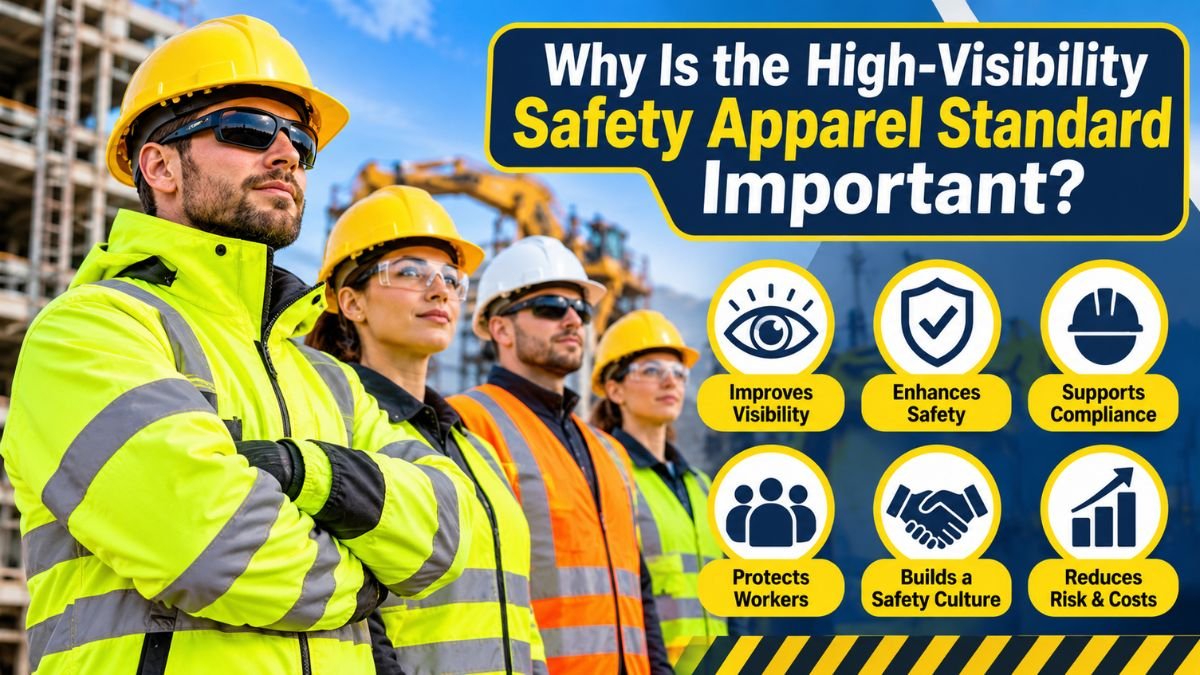
High-visibility safety apparel is particularly important when workers operate near vehicles, mobile equipment, or other potential sources of impact.
The standard provides a consistent framework for evaluating garment visibility and performance.
1. Improves Worker Visibility
Bright fluorescent materials help workers stand out against many common workplace backgrounds. This can be particularly useful on construction sites, roadways, warehouses, and industrial facilities.
2. Supports Workplace Safety
When workers are easier to see, vehicle operators and equipment operators may have a better opportunity to recognize their presence. High-visibility apparel is one part of a broader approach to preventing workplace incidents.
3. Helps Employers Select Suitable Garments
Types and performance classes help employers compare high-visibility garments based on their intended work environments and visible-material configurations.
4. Encourages Consistent Product Performance
Defined material and testing requirements help manufacturers evaluate their products against established criteria.
5. Supports Purchasing and Documentation
Appropriate labeling and product documentation help businesses identify the products they are buying and verify that the garments are suitable for their intended applications.
Important: High-visibility clothing does not eliminate workplace hazards. Employers should combine appropriate apparel with training, traffic management, equipment controls, and other safety measures.
Not sure which class you need? Compare Class 1 safety vests with Class 3 long sleeve safety shirts to see how the classes differ in practice.
Types of High-Visibility Safety Apparel
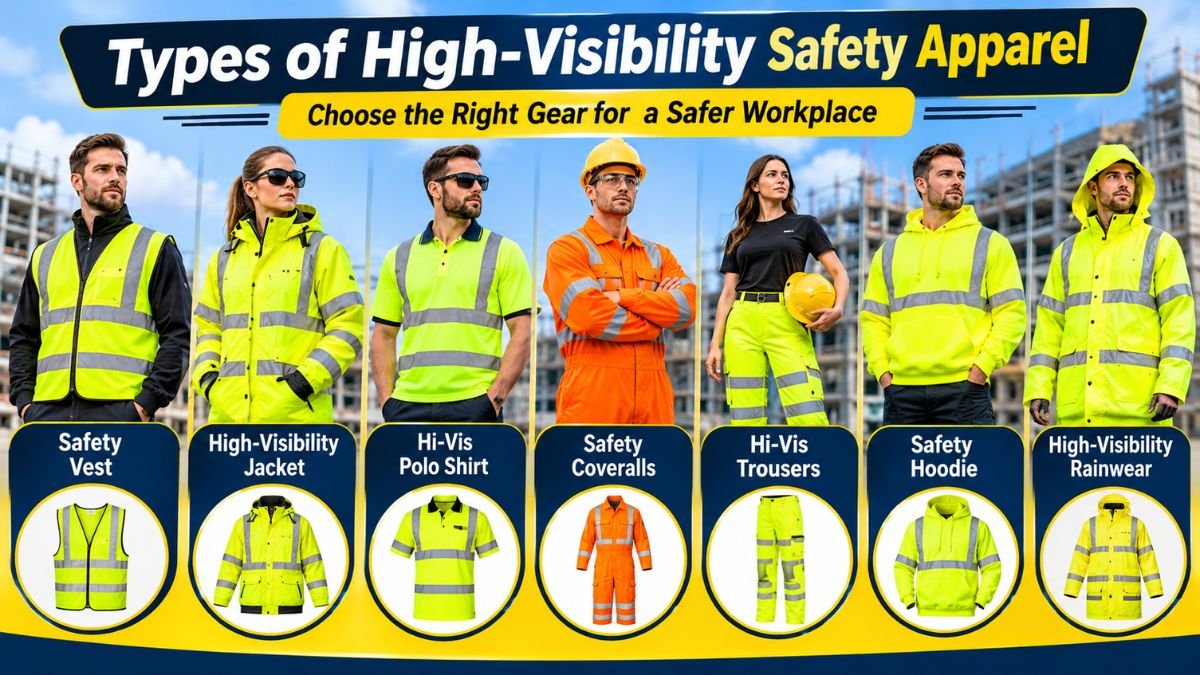
High-visibility safety apparel comes in many designs to accommodate different jobs, climates, and workplace conditions.
The correct garment depends on the hazards involved, the required performance level, the weather, and other protective equipment workers must wear.
1. High-Visibility Safety Vests
Safety vests are among the most common types of high-visibility apparel. They are lightweight, easy to put on, and often worn over uniforms or everyday work clothing.
Common applications include:
- Road construction
- Warehouse operations
- Parking management
- Traffic control
- Utility maintenance
- General construction
Depending on the design and applicable requirements, vests may incorporate fluorescent fabric and reflective bands to improve visibility.
2. High-Visibility Safety Shirts
High-visibility shirts are useful for workers who need comfortable clothing during physically demanding tasks.
They are available in short-sleeve and long-sleeve designs and may include moisture-management features, reinforced seams, or additional pockets.
Typical users include construction crews, maintenance teams, transportation workers, and outdoor service personnel.
The garment must still meet the relevant performance requirements for its intended application.
3. High-Visibility Safety Jackets
Safety jackets provide additional protection against wind, rain, and cold weather while incorporating visibility features.
Common designs include insulated jackets, softshell jackets, waterproof jackets, and lightweight windbreakers.
When selecting a jacket, consider whether its outer fabric, reflective materials, closures, and overall design are appropriate for the required visibility performance.
4. High-Visibility Coveralls
Coveralls provide broader body coverage and are useful in environments where workers need protective clothing over their regular garments.
They may be used in industrial maintenance, utilities, manufacturing, transportation, and other demanding workplaces.
Some environments also require flame-resistant or chemical-protective features. These additional properties must be assessed separately from high-visibility performance.
5. High-Visibility Trousers
High-visibility trousers can improve the visibility of a worker’s lower body, particularly when reflective material is positioned around the legs.
They are commonly used in road construction, railway work, utility maintenance, and outdoor industrial operations.
Workers may wear them with compatible high-visibility jackets or shirts to create a coordinated protective clothing system.
6. High-Visibility Rainwear
High-visibility rainwear combines visibility features with protection against wet weather.
Products may include waterproof jackets, rain trousers, and full rain suits.
When purchasing rainwear, check the garment’s documented performance and care instructions. Waterproofing, fluorescent background material, and reflective trim must all remain suitable for the intended working conditions.
7. High-Visibility Headwear
High-visibility headwear can include safety helmets, hard hats, and other headwear designed to improve a worker’s visibility.
However, it is essential to distinguish between high-visibility features and impact protection.
A bright-colored hard hat is not automatically compliant with every high-visibility apparel requirement, and a high-visibility product is not automatically an approved protective helmet.
Employers should verify the relevant requirements for both visibility and head protection. For industrial helmets, the applicable head-protection standard may also need to be considered.
Understanding High-Visibility Apparel Types
ANSI/ISEA 107 classifies high-visibility apparel by type according to the intended work environment.
The current standard uses three principal types.
Type O: Off-Road Use
Type O apparel is intended for off-road occupational environments where workers face visibility hazards but are not primarily working on public roadways.
Potential applications include certain warehouse, industrial, and equipment-operation settings.
Employers should assess the actual hazards before choosing Type O apparel. It may not be suitable for work that requires a higher level of visibility protection.
Type R: Roadway Use
Type R apparel is intended for roadway environments.
It is commonly associated with workers exposed to traffic or working near roadways, such as:
- Road construction crews
- Highway maintenance workers
- Utility workers near traffic
- Certain transportation personnel
- Workers involved in temporary traffic control
The required performance class depends on the working conditions and applicable safety requirements.
Type P: Public Safety Use
Type P apparel is intended for public safety activities.
Potential users include emergency responders, law enforcement personnel, and other public safety workers whose tasks require high visibility.
The appropriate garment depends on the worker’s role, the hazards present, and any additional protective equipment requirements.
Remember: The type describes the intended work environment, while the performance class describes the garment’s visibility-related material configuration and design requirements.
Understanding ANSI/ISEA 107 Performance Classes
Performance classes help distinguish garments according to their required visible-material areas and design characteristics.
The three commonly referenced performance classes are Class 1, Class 2, and Class 3.
Class 1 High-Visibility Apparel
Class 1 apparel is intended for situations where the visibility hazards are relatively limited and workers can generally maintain separation from traffic or other hazards.
It is associated with Type O applications.
Potential examples include certain off-road activities and some controlled industrial environments, depending on the specific hazard assessment.
Class 1 should not be selected simply because it is less bulky or more comfortable. Employers must verify that it is appropriate for the actual task.
Class 2 High-Visibility Apparel
Class 2 apparel provides a higher level of visible-material coverage than Class 1.
It is commonly used in situations where workers need greater conspicuity, including certain roadway and public safety applications.
Potential users include:
- Road maintenance workers
- Utility personnel
- Parking and transportation workers
- Construction crews
- Workers in areas with moving vehicles
The required class depends on the applicable regulations, work conditions, and employer’s hazard assessment.
Class 3 High-Visibility Apparel
Class 3 apparel is designed for situations requiring the greatest level of visibility among these three classes.
It generally provides more extensive coverage of the torso and limbs through an appropriate garment configuration.
Potential applications include certain high-risk roadway operations, emergency response tasks, and work in environments where workers need to be conspicuous from multiple directions.
Class 3 apparel may use coordinated garments, such as a high-visibility jacket and trousers, when the complete configuration satisfies the applicable requirements.
A Class 3 label should not be assumed to mean that every individual item in a clothing set independently meets Class 3 requirements. Verify the certification or conformity documentation for the actual garment configuration.
Materials Used in High-Visibility Safety Apparel
The materials used in safety garments affect visibility, comfort, durability, and suitability for different work environments.
1. Fluorescent Background Material
Fluorescent material helps a worker stand out in daylight and certain low-light conditions.
Common high-visibility colors include fluorescent yellow-green, fluorescent orange-red, and fluorescent red, where permitted by the applicable standard.
Fluorescent fabrics absorb ultraviolet or other suitable radiation and re-emit some of that energy as visible light. This helps them appear especially bright under appropriate lighting conditions.
However, fluorescent material does not replace retroreflective material when nighttime visibility under vehicle headlights is required.
2. Retroreflective Material
Retroreflective material returns light toward its source.
When vehicle headlights illuminate reflective trim, some of the light is directed back toward the driver, helping make the worker more noticeable at night.
Retroreflective material is commonly applied in bands around the torso, shoulders, arms, and legs, depending on the garment design and applicable requirements.
The material’s performance and placement matter. Simply adding reflective tape does not automatically make a garment compliant.
3. Combined-Performance Material
Combined-performance material provides both background visibility characteristics and retroreflective performance.
It can be used in certain garment designs where the material meets the applicable requirements.
Manufacturers must verify that the materials and finished garment configuration meet the relevant standard rather than assuming that a particular fabric or trim is suitable.
4. Polyester and Other Garment Fabrics
Polyester is commonly used in high-visibility clothing because it can provide durability, relatively low weight, and useful moisture-management characteristics.
Other fabric constructions and blends may be appropriate depending on the product’s intended use.
For example, waterproof outerwear may require specialized coatings or membranes, while flame-resistant workwear requires materials and construction suitable for the relevant thermal hazards.
Fabric selection should consider visibility performance, comfort, durability, weather resistance, and any additional protective requirements.
Key Requirements of the ANSI/ISEA 107 Standard
ANSI/ISEA 107 establishes several important areas of product performance.
Color Requirements
The standard specifies requirements for high-visibility background materials, including applicable color and performance criteria.
A garment should not be considered compliant solely because it uses a bright color. The material must satisfy the relevant requirements.
Retroreflective Performance
Reflective material must meet applicable performance criteria.
The location, configuration, and amount of reflective material contribute to how well the garment makes a worker visible under relevant lighting conditions.
Minimum Material Areas
The standard establishes minimum areas for specified background, retroreflective, or combined-performance materials, depending on the applicable type and class.
The garment’s size and design can affect how these requirements are met.
Garment Design
Material placement is an important part of high-visibility performance.
Designers must consider how the garment appears from different directions and how its construction affects visibility.
Pockets, seams, closures, panels, and other design features must be considered during product development.
Physical Performance and Durability
High-visibility garments must be evaluated against the applicable physical-property and material-performance requirements.
Depending on the product, these may include characteristics such as dimensional stability, colorfastness, tear resistance, and the durability of visibility materials.
Testing and Product Documentation
Manufacturers must follow the applicable evaluation and conformity procedures for the products they offer.
Buyers should request appropriate documentation and confirm that it applies to the exact style, model, and configuration being purchased.
The detailed requirements should always be checked in the current edition of the standard.
ANSI/ISEA 107-2026: What Has Changed?
The 2026 edition revises ANSI/ISEA 107-2020 and updates aspects of the standard’s technical requirements and guidance.
Key areas addressed in the 2026 edition include:
- Updated references to laboratory test methods
- Revised guidance covering garment sizing and material requirements
- Additional considerations for split-trim and non-continuous reflective designs
- Updated documentation provisions, including declarations of conformity
- Requirements intended to help product markings remain legible
- Additional guidance concerning hoods that may obscure required visibility materials
- An optional approach to evaluating overall nighttime visibility
These changes matter to clothing manufacturers, safety apparel suppliers, and businesses purchasing high-visibility workwear.
Manufacturers should review the actual 2026 standard rather than relying exclusively on older product specifications or summaries of the 2020 edition.
Employers and purchasing teams should also determine which edition is required by their contracts, workplace rules, or applicable regulations.
For the latest information, consult the official ISEA high-visibility standard page.
Is ANSI/ISEA 107 Mandatory?
ANSI/ISEA 107 is a voluntary consensus standard, but its requirements can become relevant to workplace compliance through regulations, contracts, specifications, and employer safety policies.
For example, the U.S. Occupational Safety and Health Administration (OSHA) has requirements addressing high-visibility garments in particular work situations.
OSHA construction rules include requirements for workers exposed to public vehicular traffic in specified circumstances. Roadway work and other specialized activities may also be subject to additional requirements.
The appropriate garment therefore depends on the specific workplace, the task, and the applicable federal, state, local, or industry requirements.
Employers should not assume that every worker must wear the same performance class in every environment. A documented hazard assessment and review of applicable rules are important steps in selecting suitable PPE.
For regulatory information, consult the official OSHA website.
How to Choose the Right High-Visibility Safety Apparel
Selecting the correct safety apparel requires more than comparing prices or choosing the brightest garment.
Use the following steps to guide your purchasing decision.
1. Identify Workplace Hazards
Begin by assessing the hazards workers may encounter.
Consider:
- Moving vehicles and mobile machinery
- Traffic speed and distance
- Daylight, low-light, and nighttime work
- Weather and environmental conditions
- Background clutter and visual distractions
- The distance from which workers must be recognized
This assessment helps determine the type and performance class that may be appropriate.
2. Select the Correct Type
Determine whether workers need Type O, Type R, or Type P apparel.
The intended work environment should guide the decision. A garment suitable for an indoor industrial facility may not be appropriate for roadway operations.
3. Choose the Required Performance Class
Select the class based on the actual hazards and applicable requirements.
Class 1, Class 2, and Class 3 are not interchangeable options for every task. Confirm the required class before placing an order.
4. Check the Garment’s Materials
Review the background fabric, reflective materials, construction, and overall design.
Ask the supplier for documentation showing that the garment meets the relevant requirements.
5. Consider Weather Conditions
Outdoor workers may need waterproof, insulated, breathable, or lightweight clothing.
Ensure that weather protection does not interfere with the garment’s required visibility features.
6. Confirm Compatibility With Other PPE
High-visibility garments may be worn with hard hats, helmets, harnesses, respiratory equipment, or other protective equipment.
Check that the complete arrangement fits correctly and does not cover or obstruct required visibility materials.
7. Review Sizing and Comfort
Clothing that is too large, too small, or uncomfortable may interfere with movement and safe work practices.
Provide suitable sizes and consider the layers workers need to wear underneath the garment.
8. Verify Product Documentation
Before purchasing, request information about the garment’s type, class, intended use, and applicable standard edition.
Confirm that the documentation applies to the exact model and design being supplied.
High-Visibility Apparel vs. Ordinary Workwear
High-visibility apparel and ordinary workwear serve different purposes.
Ordinary workwear is generally designed for comfort, durability, identification, or protection against common workplace conditions.
High-visibility apparel incorporates specific materials and design features intended to improve worker conspicuity.
For example, a standard navy-blue work shirt may be suitable for a workshop uniform but may not provide the visibility required for work near moving vehicles.
A compliant high-visibility shirt or jacket must meet the relevant performance requirements for its intended application.
Some garments combine high-visibility features with additional protective properties. However, high visibility alone does not establish resistance to flames, electrical hazards, chemicals, or impact.
Employers should select each protective feature according to the hazards workers face.
High-Visibility Apparel for Different Industries
High-visibility clothing is used across a wide range of industries.
Construction
Construction workers may operate near cranes, excavators, trucks, and other heavy equipment.
High-visibility vests, shirts, jackets, and trousers can help workers remain conspicuous around moving machinery.
Road Construction and Traffic Management
Roadway workers may face fast-moving vehicles, changing traffic patterns, and limited visibility.
The required apparel type and class should be determined by the task and applicable requirements.
Transportation and Logistics
Warehouse, distribution, and logistics workers may move through areas shared with forklifts, trucks, and other vehicles.
Appropriate high-visibility clothing can help improve conspicuity in these environments.
Utilities and Maintenance
Utility workers may perform repairs near roads, electrical infrastructure, or industrial equipment.
Their clothing requirements depend on the task, location, and any additional hazards.
Emergency Services
Emergency personnel may need high-visibility garments to help others recognize them at incident scenes.
Their apparel must also meet any specialized requirements associated with the particular service or operation.
Manufacturing and Industrial Operations
Some manufacturing facilities use high-visibility clothing in areas where workers and mobile equipment operate near one another.
Employers should assess each work area to determine whether high-visibility apparel is necessary and which garments are suitable.
How to Maintain High-Visibility Safety Apparel
Proper care helps preserve a garment’s visibility features and serviceability.
Even a well-designed garment can become less effective when its fluorescent material fades, its reflective trim becomes damaged, or dirt obscures its surface.
Follow the Manufacturer’s Washing Instructions
Always check the garment’s care label.
Use the specified washing temperature, detergent, drying method, and other care instructions. Avoid cleaning practices that may damage the fabric or reflective materials.
Inspect Reflective Material Regularly
Look for peeling, cracking, missing sections, excessive abrasion, or other damage to reflective bands.
Replace garments when damage affects their suitability for the intended work.
Check for Fading and Contamination
Fluorescent fabric may lose performance through use, exposure, or unsuitable laundering.
Heavy dirt, grease, paint, and other contaminants may also reduce visibility.
Clean the garment according to the manufacturer’s instructions and assess whether it remains fit for use.
Avoid Unauthorized Modifications
Do not add, remove, or reposition material in ways that could affect the garment’s performance.
Alterations, embroidery, logos, and accessories should be reviewed to ensure they do not compromise required visibility areas or other protective features.
Replace Worn-Out Garments
High-visibility apparel should be replaced when its materials, construction, or condition no longer provide the required performance.
Follow workplace inspection procedures and manufacturer guidance to establish appropriate replacement practices.
Common Mistakes to Avoid When Buying High-Visibility Apparel
Choosing the wrong safety clothing can create gaps in a workplace protection program.
Avoid these common mistakes:
1. Choosing garments based only on color: Bright fabric alone does not establish compliance with ANSI/ISEA 107.
2. Ignoring the work environment: Roadway operations may require different apparel from controlled off-road work.
3. Confusing types and classes: Type identifies the intended environment, while class addresses visibility-related material configuration and design.
4. Assuming every reflective garment is compliant: Reflective trim must meet applicable performance requirements, and the finished garment must also be evaluated.
5. Overlooking product documentation: Buyers should verify that documentation matches the exact product and applicable standard edition.
6. Ignoring additional hazards: High-visibility apparel does not automatically provide flame resistance, chemical protection, or certified head protection.
7. Neglecting garment maintenance: Faded fabric, damaged reflective material, and heavy contamination can affect visibility.
8. Modifying garments without review: Alterations can interfere with material placement, required coverage, or other performance characteristics.
Avoiding these mistakes helps businesses make more informed purchasing decisions and maintain a consistent safety apparel program.
What Should Buyers Ask a High-Visibility Clothing Manufacturer?
Businesses purchasing custom high-visibility clothing should evaluate both the supplier and the finished product.
Useful questions include:
- Which edition of ANSI/ISEA 107 does the garment meet?
- What type and performance class is the product intended to satisfy?
- Are the background and retroreflective materials documented as meeting the applicable requirements?
- Is product testing or conformity documentation available?
- Does the documentation apply to the exact garment style and configuration?
- Are custom colors, logos, or design changes permitted without affecting performance?
- What washing and maintenance instructions should workers follow?
- Can the manufacturer supply the required sizes and quantities consistently?
- Are additional properties, such as flame resistance or waterproofing, needed for the intended application?
- What inspection and replacement guidance is available?
A reliable manufacturer should be able to explain the product’s intended use, provide relevant documentation, and identify any limitations.
For custom orders, approve the garment specifications and sample before proceeding with full production.
Frequently Asked Questions About the American National Standard for High Visibility Safety Apparel and Headwear
1. What is the American National Standard for High Visibility Safety Apparel and Headwear?
It is a phrase associated with ANSI/ISEA 107, the American National Standard that establishes performance requirements for high-visibility safety apparel. The current 2026 edition is titled American National Standard for High-Visibility Safety Apparel.
2. What is the latest edition of ANSI/ISEA 107?
The latest edition is ANSI/ISEA 107-2026, which revises ANSI/ISEA 107-2020.
3. What does ANSI/ISEA 107 cover?
The standard covers performance requirements related to high-visibility apparel, including material characteristics, visibility-related design, minimum material areas, testing, and product marking and documentation.
4. What are the three types of high-visibility apparel?
The three principal types are Type O for off-road use, Type R for roadway use, and Type P for public safety activities.
5. What are the three performance classes?
The commonly referenced performance classes are Class 1, Class 2, and Class 3. The appropriate class depends on the garment design, working conditions, and applicable requirements.
6. What is the difference between fluorescent and retroreflective material?
Fluorescent material helps a worker stand out in daylight and certain low-light conditions. Retroreflective material returns light toward its source, helping improve visibility when illuminated by vehicle headlights at night.
7. Are high-visibility safety vests required by OSHA?
OSHA requirements depend on the work activity and circumstances. Certain construction and roadway situations have specific high-visibility clothing requirements. Employers should consult the applicable OSHA regulations and conduct a workplace hazard assessment.
8. Does a bright-colored hard hat meet ANSI/ISEA 107?
Not automatically. A bright-colored hard hat may improve conspicuity, but color alone does not demonstrate compliance with high-visibility apparel requirements. Head protection and visibility performance should be assessed separately.
9. Can high-visibility clothing also be flame-resistant?
Yes. Some garments are designed to provide both high visibility and flame-resistant properties. Buyers should verify that the product meets the relevant requirements for both characteristics.
10. How often should high-visibility apparel be replaced?
Replacement frequency depends on the garment’s condition, use, contamination, care history, and manufacturer guidance. Replace garments when fading, damage, or deterioration compromises their required performance.
11. Can logos be added to high-visibility safety clothing?
Logos may be possible, but their placement and size must not compromise required visible-material areas or other performance requirements. Custom designs should be reviewed before production.
12. Is ANSI/ISEA 107 the same as a complete workplace safety regulation?
No. ANSI/ISEA 107 is a technical standard for high-visibility safety apparel. Employers must also follow applicable regulations and assess the hazards associated with their specific work activities.
Conclusion
The American National Standard for High Visibility Safety Apparel and Headwear is an important topic for employers, safety professionals, PPE buyers, and clothing manufacturers who need to understand high-visibility clothing requirements.
ANSI/ISEA 107 provides a framework for evaluating the materials, design, performance, and documentation of high-visibility safety apparel. Understanding garment types, performance classes, fluorescent materials, and retroreflective trim can help businesses select products that suit their workplace hazards.
The current edition is ANSI/ISEA 107-2026, so buyers and manufacturers should consult the latest requirements instead of relying solely on older product specifications.
Before purchasing high-visibility garments, assess workplace hazards, select the appropriate type and class, verify product documentation, and establish regular inspection and maintenance procedures.
The right high-visibility apparel, combined with suitable training and other safety controls, can help workers remain more conspicuous and support a safer working environment.