
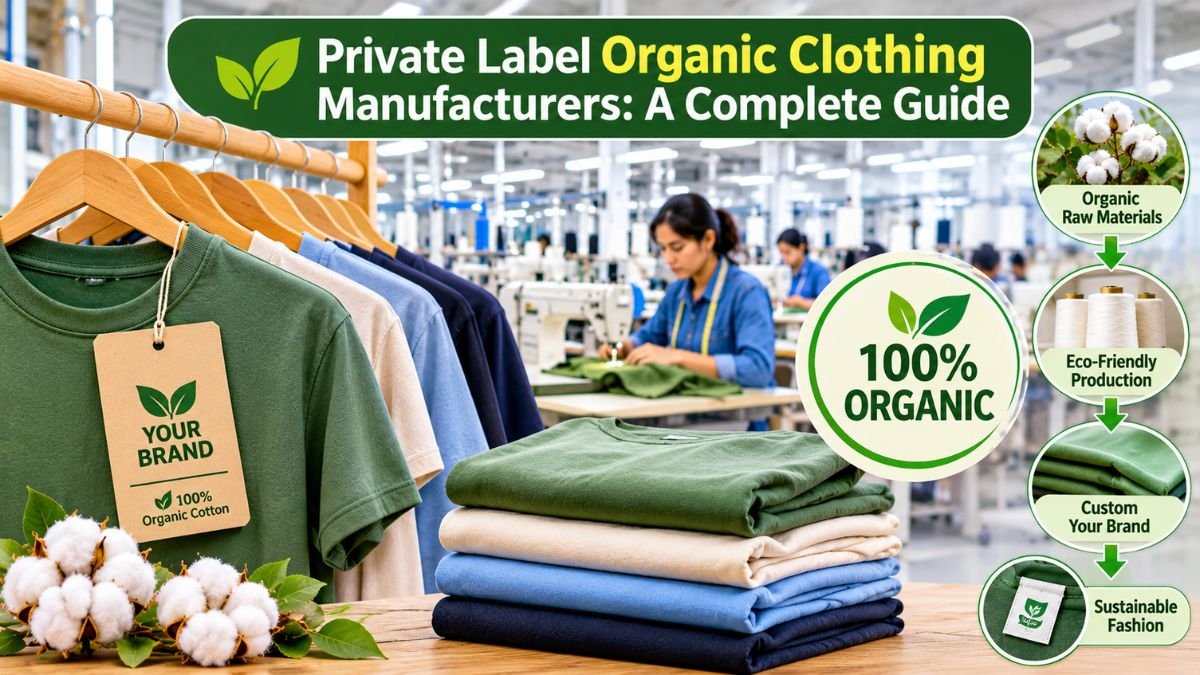
Starting an eco-friendly clothing brand requires more than attractive designs. You also need reliable suppliers, quality fabrics, and responsible production methods. Choosing the right manufacturing partner is an important first step.
Private label organic clothing manufacturers help businesses create apparel under their own brand names. They can produce clothing using organic cotton and other preferred materials. They may also offer custom labels, packaging, sizing, colors, and garment designs.
This manufacturing model allows businesses to build unique clothing collections. It also helps brands serve customers who value responsible material choices.
However, finding the right supplier requires careful research. Not every manufacturer offers certified organic materials. Some suppliers use the word organic without providing proper documentation.
This guide explains how private label organic clothing production works. You will learn about materials, certifications, manufacturing services, costs, and supplier selection.
Whether you are launching a new brand or expanding an existing business, this guide can help you make informed decisions.
Planning a private label line? Meet the Negora Fist workwear manufacturer, see the short sleeve polo shirt, and read best private label clothing manufacturers.
What Are Private Label Organic Clothing Manufacturers?
Private label organic clothing manufacturers produce garments for businesses that sell products under their own brand names.
These manufacturers handle different stages of apparel production. Their services may include fabric sourcing, garment development, cutting, sewing, finishing, labeling, and packaging.
The term private label means that the finished clothing carries your brand identity. The manufacturer produces the garments, while your business sells them.
Organic clothing refers to apparel made with certified organic fibers. Organic cotton is one of the most common examples.
Depending on the supplier, organic clothing collections may include:
- Organic cotton T-shirts
- Sweatshirts and hoodies
- Leggings and activewear
- Casual shirts and trousers
- Baby clothing
- Dresses and skirts
- Underwear and loungewear
- Organic cotton uniforms
Private label production offers flexibility for growing fashion businesses. You can select designs, fabrics, colors, and garment details.
However, the available options depend on the manufacturer’s equipment and production capabilities.
How Does Private Label Organic Clothing Manufacturing Work?
Private label organic clothing manufacturing follows several production stages. Each stage helps turn your clothing idea into a finished product.
Understanding this process helps you communicate with suppliers. It also helps you estimate production time and costs.
1. Develop Your Clothing Brand Concept
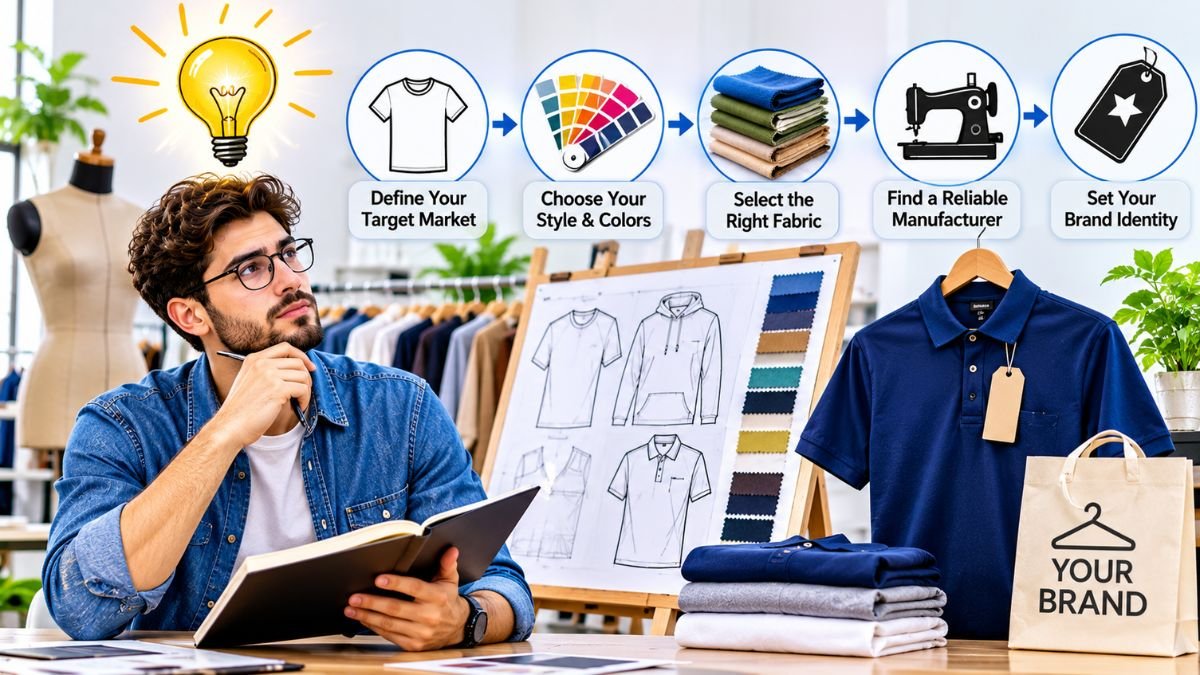
Start by deciding what type of clothing your brand will sell.
Your product range should match your target customers. For example, a sustainable basics brand may focus on organic cotton T-shirts and sweatshirts.
An activewear brand may need stretch fabrics and performance features. A baby clothing brand may prioritize softness and comfortable construction.
Consider these questions before contacting manufacturers:
- Who will buy your clothing?
- Which products will you launch first?
- What price range will you target?
- Which fabric qualities matter most?
- What makes your brand different?
- Will you sell online or through retailers?
A clear brand concept makes supplier communication easier. It also helps manufacturers understand your production requirements.
2. Choose Certified Organic Fabrics
Fabric selection affects comfort, appearance, durability, and production costs.
Organic cotton is a popular choice for sustainable apparel. It works well for everyday garments and many basic clothing products.
You should also decide on fabric weight and construction. Lightweight jersey suits many T-shirts, while heavier fleece works well for sweatshirts.
Ask suppliers for fabric specifications before approving materials.
3. Create Your Clothing Designs
Prepare designs for each garment in your collection.
You can provide sketches, reference images, or technical drawings. A professional tech pack gives manufacturers more accurate instructions.
A tech pack may include:
- Garment measurements
- Fabric composition
- Fabric weight
- Stitching details
- Color references
- Logo placement
- Label specifications
- Size grading
- Packaging instructions
Clear instructions reduce misunderstandings during development.
4. Request Samples
Sampling allows you to inspect a garment before bulk production.
Manufacturers may create a prototype or pre-production sample. These samples help you evaluate fit, fabric, construction, and finishing.
Check the garment carefully before approving it.
Pay attention to stitching, measurements, fabric feel, shrinkage, and color consistency. Test the garment after washing when appropriate.
Request corrections if the sample does not match your specifications.
5. Approve Bulk Production
After approving the sample, confirm the final production details.
Discuss the order quantity, price, delivery schedule, and payment terms. Confirm which materials and labels the manufacturer will use.
Ask for written confirmation of the approved sample and specifications.
This step helps prevent unwanted changes during manufacturing.
6. Complete Quality Control and Shipping
The manufacturer should inspect garments before shipment.
Quality checks may cover measurements, stitching, fabric defects, labels, and packaging.
Agree on inspection procedures before production begins. You should also decide how defective products will be handled.
Once the order passes inspection, the manufacturer can arrange shipping.
Benefits of Working With Private Label Organic Clothing Manufacturers
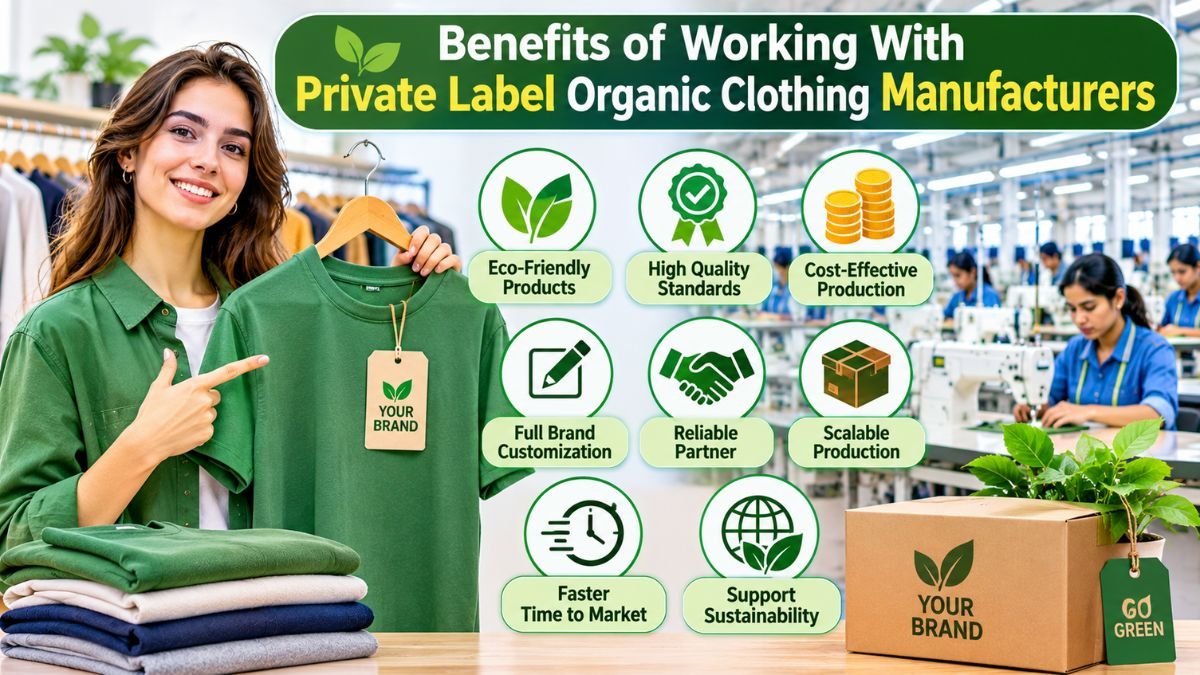
Private label production offers several benefits for clothing businesses. It combines brand customization with access to specialized manufacturing services.
Build Your Own Clothing Brand
Private labeling allows you to sell products under your own business name.
You can create custom labels, packaging, and garment designs. This helps customers recognize your products.
It also gives your business more control over its brand identity.
Offer Organic Fabric Options
Working with organic clothing suppliers gives you access to certified organic materials.
Organic cotton is especially useful for everyday apparel. It can be used for shirts, dresses, babywear, and casual clothing.
You can develop a collection around specific fabric preferences. However, verify every material claim through appropriate documentation.
Customize Clothing Designs
Many private label manufacturers offer different customization options.
You may select fabric colors, garment shapes, stitching, and branding details. Some suppliers also support custom patterns and product development.
The available options depend on order quantity and factory capabilities.
Create Consistent Product Collections
A reliable manufacturer can help maintain consistent production standards.
This matters when you plan to release multiple clothing collections. Consistent sizing, fabric quality, and finishing help build customer confidence.
Use approved samples and written specifications for repeat orders.
Support Business Growth
Private label manufacturing can help businesses expand their product ranges.
You may begin with a small collection of basic garments. Later, you can introduce additional styles and colors.
The right supplier can support this growth through repeat production and product development services.
Focus on Marketing and Sales
Outsourcing production allows your business to focus on other activities.
These may include branding, online marketing, customer service, and distribution.
You still need to manage quality and supplier relationships. However, you do not need to operate your own garment factory.
New to sourcing? Start with how to manufacture your own clothing line and how to find someone to manufacture clothing.
Common Organic Fabrics Used in Private Label Clothing
Choosing the right fabric is important for product performance. Different organic materials have different properties and uses.
Organic Cotton
Organic cotton is one of the most widely used materials in sustainable clothing.
It is commonly selected for its soft feel and versatility. Manufacturers use it in many casual and everyday garments.
Common applications include:
- T-shirts
- Sweatshirts
- Hoodies
- Dresses
- Baby clothing
- Underwear
- Casual trousers
Organic cotton can be available in different weights and fabric constructions.
Ask about the cotton percentage and certification. Do not assume that every cotton garment is organic.
Organic Cotton Jersey
Organic cotton jersey is a knitted fabric. It is commonly used for T-shirts and lightweight clothing.
The fabric usually offers a soft feel and comfortable stretch. Its weight and construction affect how it drapes and wears.
It is suitable for everyday basics and casual collections.
Organic Cotton Fleece
Organic cotton fleece is often used for warmer garments.
Its brushed surface can provide a soft interior feel. Manufacturers commonly use it for hoodies, sweatshirts, and jogging sets.
Ask whether the fabric is brushed on one side or both sides. This detail affects its texture and appearance.
Organic Cotton Rib Fabric
Rib fabric has raised vertical lines. It offers stretch and helps garments maintain a close fit.
It is commonly used for:
- Tank tops
- Fitted T-shirts
- Cuffs
- Neckbands
- Baby clothing
- Comfortable underwear
Products that need flexibility benefit from organic cotton rib.
Organic Linen
Organic linen is made from flax fibers grown under organic agricultural standards.
It is valued for its natural texture and breathable feel. It is commonly used for warm-weather clothing.
Possible applications include shirts, trousers, dresses, and lightweight jackets.
Check the exact fiber composition before making product claims.
Organic Wool
Organic wool may be used in selected clothing collections. It can provide warmth and natural insulation.
Manufacturers may use it for sweaters, knitwear, and cold-weather accessories.
Ask for appropriate certification and animal welfare documentation. Organic status and animal welfare claims should be verified separately when necessary.
Important Certifications for Organic Clothing
Certification is an important part of responsible apparel sourcing.
It helps businesses verify material claims and understand manufacturing requirements. However, different certifications cover different parts of the supply chain.
You should never assume that one certificate proves every sustainability claim.
Global Organic Textile Standard (GOTS)
The Global Organic Textile Standard, commonly called GOTS, is an important textile certification.
It covers organic fiber processing and textile manufacturing. It also includes environmental and social criteria.
GOTS Version 8.0, published in 2026, covers textiles containing at least 70% certified organic natural fibers. Specific labeling requirements depend on the applicable product category and standard criteria.
The standard addresses different stages of textile production. These can include processing, manufacturing, packaging, labeling, and distribution.
Ask manufacturers for a valid GOTS Scope Certificate. Check whether the certificate covers the relevant product and processing categories.
You should also request transaction documentation for the specific certified goods.
Organic Content Standard (OCS)
The Organic Content Standard verifies the presence and amount of organically grown material in products.
It uses third-party certification and chain-of-custody procedures.
OCS helps businesses verify organic fiber content. However, it does not assess chemical use or broader environmental and social performance throughout processing.
This distinction matters when comparing certifications.
Ask suppliers which OCS version and product claim apply. Request relevant certificates and transaction records.
USDA Organic Requirements
The United States Department of Agriculture manages organic labeling rules in the United States.
Textile products have specific labeling considerations. A textile containing organic fibers does not automatically qualify for the USDA Organic seal.
USDA guidance explains when fiber claims may be made. It also distinguishes between certified organic finished products and products that contain specific organic fibers.
If you sell in the United States, review the applicable labeling rules. Ask a qualified certification professional when your product claims are unclear.
Other Certifications and Verification Systems
You may encounter additional certifications when sourcing organic apparel.
These can cover different areas of textile production, chemicals, worker conditions, or product safety.
Examples include:
- OEKO-TEX STANDARD 100 for testing harmful substances in textiles
- Fair Trade certifications for certain social and trading practices
- ISO quality management certifications for business processes
- Relevant chemical management or restricted substance programs
These certifications do not all prove organic fiber content.
Always understand what a certification covers before using it in marketing.
What Services Do Private Label Organic Clothing Manufacturers Offer?
Manufacturers offer different service packages. Some provide complete product development, while others focus on garment production.
Understanding these services helps you choose the right supplier.
Custom Clothing Manufacturing
Custom manufacturing allows you to develop garments based on your specifications.
You may provide your own designs, measurements, and fabric requirements. The factory then develops samples and produces the approved garments.
This option suits brands with a clear product concept.
Private Label Branding
Private label branding adds your business identity to manufactured clothing.
Services may include:
- Woven neck labels
- Printed care labels
- Hang tags
- Custom packaging
- Branded stickers
- Logo embroidery
- Screen printing
- Heat-transfer printing
Confirm which branding services are included in the quoted price.
Fabric Sourcing
Some manufacturers source organic fabrics on behalf of their customers.
They may have relationships with mills and fabric suppliers. This can save time during product development.
However, you should still approve the fabric before bulk production.
Request composition details, weight, color information, and certification documents.
Pattern Making and Sampling
Pattern making converts garment designs into production patterns.
The manufacturer uses these patterns to cut and assemble garments. Sampling allows you to test the pattern before placing a large order.
Ask whether pattern development and sample costs are included.
Bulk Garment Production
Bulk production involves manufacturing the approved order quantity.
The factory cuts fabric, sews garments, applies finishing details, and performs inspections.
Production capacity varies between suppliers. Ask how many units they can produce within your required schedule.
Packaging and Shipping
Some suppliers offer packaging and export services.
They may fold garments, attach tags, pack cartons, and arrange transportation.
Confirm packaging specifications before production. Also discuss shipping terms, customs responsibilities, and delivery arrangements.
How to Choose the Best Private Label Organic Clothing Manufacturers
Choosing a reliable supplier requires more than comparing prices.
You should evaluate certifications, production quality, communication, and business experience.
The following steps can help you make a better decision.
1. Check Organic Certification Documents
Start by asking whether the manufacturer offers certified organic materials.
Request copies of relevant certificates. Check the company name, certification body, scope, and validity dates.
Make sure the certificate covers the activities and products involved in your order.
A factory may hold a certificate without every product being certified. Ask for transaction documentation for the actual goods.
2. Review Manufacturing Experience
Look for manufacturers with experience producing your type of clothing.
A supplier that specializes in T-shirts may not be ideal for technical activewear.
Ask about previous products and production capabilities.
Review samples or verified product photographs where available.
3. Evaluate Fabric Quality
Fabric quality affects the comfort and durability of finished garments.
Ask for fabric swatches before approving an order.
Check the following details:
- Fiber composition
- Fabric weight
- Knit or weave construction
- Color consistency
- Surface texture
- Stretch and recovery
- Shrinkage performance
- Pilling resistance
You should also test fabrics under normal care conditions.
4. Ask About Minimum Order Quantity
Minimum order quantity, or MOQ, is the smallest order a manufacturer accepts.
Some factories accept small orders. Others require larger quantities.
MOQ may differ by fabric, color, garment style, and customization level.
Ask whether the minimum applies to each style or total order.
Do not choose a supplier based only on a low MOQ. Check quality and total production costs too.
5. Request Samples Before Bulk Production
Samples help you understand the manufacturer’s actual capabilities.
Inspect the fabric, fit, stitching, and finishing. Compare the sample against your technical specifications.
Test washing performance when relevant.
Approve the sample in writing before bulk manufacturing starts.
6. Compare Pricing and Payment Terms
Request detailed quotations from multiple suppliers.
The quotation should explain what the price includes.
Check whether it covers:
- Fabric
- Cutting and sewing
- Labels and branding
- Printing or embroidery
- Sampling
- Packaging
- Quality inspection
- Shipping
Also ask about payment schedules and additional charges.
A low initial quote may exclude important services.
7. Check Communication and Reliability
Clear communication helps prevent production mistakes.
A reliable manufacturer should answer questions clearly. They should also explain problems and provide realistic delivery estimates.
Pay attention to response times and technical knowledge.
Ask who will manage your order after confirmation.
8. Understand Production Lead Times
Production lead times vary by factory and order complexity.
Fabric availability, sample approvals, order quantity, and customization can affect schedules.
Ask for separate estimates for sampling and bulk production.
Build extra time into your launch plan. Avoid promising customers a delivery date before confirming the production schedule.
9. Review Quality Control Procedures
Ask how the manufacturer checks finished garments.
Quality control may include fabric inspection, measurement checks, stitching reviews, and final garment inspection.
Agree on acceptable quality standards before production.
Also establish how defects, shortages, and rejected products will be handled.
10. Verify Business Details
Before paying a deposit, check the supplier’s business information.
Confirm the legal company name and factory address. Request references or evidence of previous work when possible.
If practical, arrange a factory visit or independent inspection.
Use written agreements to document product specifications, payment terms, and delivery responsibilities.
Private Label Manufacturers for Clothing: What Should You Compare?
When comparing private label manufacturers for clothing, use consistent criteria.
This makes supplier evaluation easier and reduces the risk of choosing based on price alone.
| Comparison factor | What to check |
|---|---|
| Organic materials | Certified fiber content and documentation |
| Certifications | Valid scope and transaction certificates |
| Product range | Experience with your garment categories |
| Customization | Labels, colors, printing, and embroidery |
| MOQ | Minimum units per style and color |
| Sampling | Sample costs and revision options |
| Pricing | Complete quotation and extra charges |
| Quality control | Inspection process and defect policy |
| Lead time | Sampling and bulk production schedule |
| Communication | Response quality and project management |
| Shipping | Delivery methods and trade terms |
Create a shortlist of suppliers that meet your most important requirements.
Then request samples and quotations from those companies.
Questions to Ask Private Label Organic Clothing Manufacturers
Asking the right questions can reveal important details before production.
Prepare a list before contacting suppliers.
Organic Materials and Certifications
- Which organic fabrics do you currently offer?
- Can you provide detailed fabric composition information?
- Do you hold GOTS or OCS certification?
- Can you share your current scope certificates?
- Are transaction certificates available for certified orders?
- Which mills or fabric suppliers do you work with?
Customization and Sampling
- Can you manufacture garments using my tech pack?
- Do you offer custom patterns and sampling?
- What packaging options can you provide?
- Are woven or printed labels available?
- Which embroidery and printing services do you provide?
- • How do you develop custom colors?
Production and Quality Control
- What is your MOQ per style and color?
- Also, how long does the sampling process take?
- Moreover, which timeline applies to bulk production?
- In addition, can you handle repeat orders?
- Additionally, what happens if products fail inspection?
- Finally, do you manage quality inspections?
Costs, Payment, and Shipping
- What costs are included in your unit price?
- Are sample costs refundable after placing an order?
- Which payment terms do you offer?
- What shipping methods are available?
- Are there additional packaging or inspection fees?
- Who handles customs documentation?
Asking these questions helps you compare private label organic clothing manufacturers more effectively. Their answers also reveal important details about quality, pricing, production, and certification. This information makes it easier to choose a supplier that meets your business requirements.
What Is the Cost of Private Label Organic Clothing Manufacturing?
The cost depends on several production factors.
There is no single price for every organic clothing order. A basic T-shirt and a custom technical jacket require different materials and processes.
You should request a quotation based on your exact specifications.
Fabric Type and Quality
Fabric is one of the main production cost factors.
Organic cotton jersey, fleece, rib, and woven fabrics have different prices.
Fabric weight and composition also affect costs. Premium fabrics may require higher material investment.
Order Quantity
Larger orders may reduce the unit cost.
Manufacturers can spread certain setup expenses across more garments. However, larger orders also require more total investment.
Ask for pricing at different order quantities.
Design Complexity
Simple garments usually require fewer production steps.
Complex designs may need special patterns, extra panels, or detailed stitching.
These requirements can increase labor and development costs.
Custom Branding
Custom labels, embroidery, printing, and packaging add expenses.
The final cost depends on the design and production method.
Ask for separate pricing for each branding option.
Sampling and Development
Some manufacturers charge separately for patterns and samples.
Multiple sample revisions can increase development costs.
Agree on sample fees before starting the project.
Shipping and Import Costs
Shipping costs depend on order size, destination, transport method, and delivery terms.
International orders may also involve customs duties, taxes, and clearance charges.
Calculate the landed cost before setting your retail price.
Common Challenges When Working With Organic Clothing Manufacturers
Organic apparel production offers opportunities, but it also creates challenges.
Understanding these issues can help you prepare.
Limited Fabric Availability
Some organic fabrics may have fewer color or weight options.
Suppliers may also face seasonal shortages.
Ask about stock availability before finalizing designs.
For repeat orders, confirm whether the same fabric can be sourced again.
Higher Material Costs
Certified organic fabrics may cost more than some conventional alternatives.
Certification, sourcing, and processing can affect the price.
Compare quality and documentation rather than choosing the cheapest option.
Certification Confusion
Different standards cover different parts of the supply chain.
A supplier may have an organic content certificate but lack certification for broader processing requirements.
Ask what each certificate actually verifies.
Never use a certification logo without permission.
Production Delays
Fabric shortages, sampling revisions, and factory capacity can delay orders.
Set realistic deadlines and approve samples quickly.
Keep regular communication with the supplier.
Inconsistent Product Quality
Quality can vary when specifications are unclear.
Different fabric batches may also show changes in color or texture.
Use approved samples and written production standards.
Inspect every shipment according to an agreed process.
Tips for Starting an Organic Private Label Clothing Brand
Starting a clothing brand requires careful planning.
You do not need to launch a large collection immediately. A focused product range can help you test the market.
Start With a Small Product Range
Choose a few products that match your brand concept.
For example, you could begin with T-shirts, sweatshirts, and basic tops.
A smaller collection makes product development easier.
It also helps you understand customer preferences before expanding.
Research Your Target Market
Study the customers you want to reach.
Consider their preferred styles, prices, sizes, and fabric choices.
Review competing clothing brands to understand the market.
Look for product gaps that your brand can address.
Create a Realistic Budget
Your budget should include more than manufacturing costs.
Plan for sampling, labels, packaging, shipping, marketing, and website expenses.
Keep a reserve for unexpected costs.
This can help prevent cash flow problems during production.
Develop a Clear Brand Identity
Your brand identity should communicate your product values.
Choose a suitable name, logo, colors, and packaging style.
Explain your material choices accurately.
Avoid broad environmental claims that you cannot support.
Test Products Before Launch
Wear-test samples and request feedback from potential customers.
Check fit, comfort, durability, and washing performance.
Make necessary improvements before ordering in bulk.
Build a Long-Term Supplier Relationship
A dependable supplier can support future collections.
Maintain clear communication and document every approved specification.
Pay invoices according to the agreed terms.
Treat the manufacturer as a long-term business partner.
Private Label Organic Clothing vs. Regular Private Label Clothing
Both manufacturing models allow brands to sell garments under their own names.
The main difference is the sourcing and verification of materials.
| Feature | Organic private label clothing | Regular private label clothing |
|---|---|---|
| Material focus | Certified organic fibers where verified | Conventional or other available fibers |
| Certification | May require organic textile documentation | Depends on selected materials |
| Product positioning | Can target organic material preferences | Offers broader material choices |
| Fabric selection | Depends on organic supply availability | Often has wider sourcing options |
| Cost | May involve higher material costs | Varies by fabric and supplier |
| Customization | Depends on factory capabilities | Depends on factory capabilities |
Neither model automatically guarantees better garment quality.
Quality depends on fabric selection, construction, production control, and supplier performance.
Choose the model that supports your product goals and customer expectations.
How to Avoid Greenwashing in Organic Clothing
Greenwashing happens when a business makes environmental claims that are misleading or unsupported.
Organic clothing brands should communicate material information carefully.
Verify Every Material Claim
Ask for certificates and supporting documents.
Check the exact fiber percentage and product coverage.
Do not describe an entire garment as organic if only part of its fiber content qualifies.
Understand Certification Differences
GOTS and OCS do not verify exactly the same things.
GOTS includes requirements for textile processing and other production criteria. OCS focuses on verifying organic material content and chain of custody.
Choose wording that matches the applicable certification.
Avoid Unsupported Environmental Promises
Do not describe a garment as completely sustainable without evidence.
Organic fiber content does not automatically prove low water use, low emissions, or fair working conditions.
Explain the specific qualities you can verify.
Keep Supplier Records
Save certificates, invoices, transaction documents, and product specifications.
These records help support your claims.
They also make future supplier checks easier.
Frequently Asked Questions
1. What Are Private Label Organic Clothing Manufacturers?
Private label organic clothing manufacturers produce garments for brands using their own labels and designs.
They may offer certified organic fabrics, custom sizing, branding, and packaging.
2. Is Organic Cotton Better for Clothing?
Organic cotton can be a suitable choice for many clothing products.
It is produced under organic agricultural standards. Its softness, durability, and comfort depend on fabric quality and garment construction.
3. What Is the Best Certification for Organic Clothing?
GOTS and OCS are two important standards.
GOTS covers organic textile processing and additional production requirements. OCS verifies organic material content and chain of custody.
The best option depends on your product and claims.
4. Do Private Label Organic Clothing Manufacturers Offer Custom Designs?
Many private label manufacturers offer custom designs.
Services may include pattern development, fabric selection, sizing, printing, embroidery, and labels.
Confirm the available options with each supplier.
5. What Is the MOQ for Organic Clothing Manufacturing?
MOQ means minimum order quantity.
The required quantity varies between manufacturers. It may also depend on fabric availability, colors, garment styles, and customization.
Request the MOQ for each product before placing an order.
6. Can Small Businesses Work With Organic Clothing Manufacturers?
Yes, some manufacturers work with startups and small businesses.
However, not every factory accepts small orders.
Look for suppliers that offer suitable MOQs and sample development services.
7. How Do I Verify an Organic Clothing Manufacturer?
Request valid certification documents from the supplier.
Check the certification body, company name, scope, and validity. Ask for transaction certificates when applicable.
You should also verify the factory’s production capabilities.
8. Can I Add My Own Logo to Organic Clothing?
Many private label manufacturers offer custom branding.
You may add woven labels, printed logos, hang tags, and branded packaging.
Confirm that the selected printing and labeling methods meet your product requirements.
9. Is GOTS Certification the Same as OCS Certification?
No, these standards have different scopes.
OCS focuses on verifying organic material content and chain of custody. GOTS includes additional textile processing requirements and environmental and social criteria.
Review the relevant standard before making product claims.
10. Does Organic Clothing Cost More to Manufacture?
It can cost more, but the difference depends on several factors.
Fabric type, order quantity, certification, design complexity, and finishing affect the final price.
Request detailed quotations to compare suppliers.
11. Can Organic Clothing Manufacturers Produce Hoodies and Sweatshirts?
Yes, many suppliers can produce organic cotton hoodies and sweatshirts.
They may use organic cotton fleece, French terry, or other suitable fabrics.
Confirm the fabric composition and available weights.
12. What Should I Include in a Clothing Manufacturer Inquiry?
Include your product type, estimated quantity, fabric requirements, and design details.
Mention any required certifications and branding options.
Also ask about MOQ, sample costs, production time, and pricing.
13. Can I Sell Organic Clothing Internationally?
You can sell organic clothing in international markets, but labeling rules vary.
Check the requirements in each destination country. Ensure your product claims and certification documents meet applicable rules.
14. How Long Does Private Label Organic Clothing Production Take?
Production time depends on the factory and order details.
Sampling, fabric sourcing, approvals, and bulk manufacturing all affect the schedule.
Ask the manufacturer for a written production timeline.
Conclusion
Choosing reliable private label organic clothing manufacturers can help you build a distinctive apparel brand.
The right supplier should offer suitable fabrics, clear documentation, consistent quality, and dependable communication.
Start by defining your product range and material requirements. Then compare manufacturers based on certification, samples, MOQ, pricing, and production capabilities.
Do not rely on organic marketing claims alone. Verify the documents behind every material statement.
With careful planning, you can develop clothing collections that match your brand identity and customer expectations.