
Arc flash incidents are among the most dangerous electrical hazards faced by electricians, electrical engineers, maintenance technicians, and industrial workers. These incidents can release intense heat, light, pressure, and molten metal within a fraction of a second. Wearing the right protective clothing is essential for reducing the risk of serious burn injuries.
Choosing the correct arc flash clothing material is an important part of workplace electrical safety. Different fabrics offer different levels of thermal protection, durability, comfort, and resistance to flames. However, not every flame-resistant fabric provides sufficient protection against an electrical arc.
In this guide, we will explore the different types of arc flash protective materials, their benefits, important safety standards, and the factors to consider when choosing arc-rated clothing for electrical work.
Whether you are an electrical contractor, industrial safety professional, clothing manufacturer, or procurement manager, understanding these materials can help you make informed decisions about protective workwear.
Comparing arc-rated fabrics? Explore our protective workwear manufacturing services, see the FR visibility pant, and read the NFPA 70E arc flash clothing requirements.
What Is Arc Flash Clothing Material?
Arc flash clothing material refers to the specialized fabric used to manufacture protective garments designed for workers who may be exposed to electrical arc flash hazards.
An electrical arc flash occurs when electrical current travels through the air between conductors or from a conductor to the ground. The resulting event can produce extreme temperatures, intense radiant heat, pressure waves, and flying particles.
Arc-rated clothing is designed to reduce the severity of thermal injuries by providing a protective barrier between the worker and the heat generated by an electrical arc.
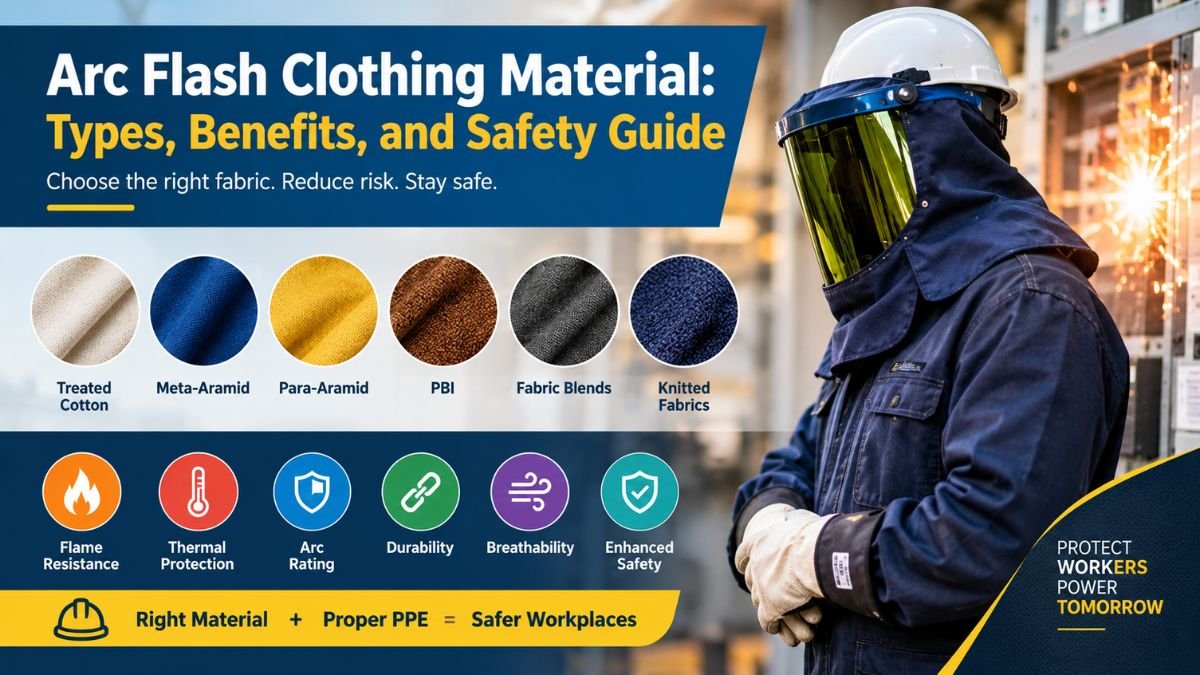
Common materials used in arc-rated clothing include:
- Flame-resistant treated cotton
- Meta-aramid fibers
- Para-aramid fibers
- Polybenzimidazole (PBI) fibers
- Specialized blends of inherently flame-resistant fibers
The appropriate material depends on the expected incident energy, the required arc rating, working conditions, and the garment’s tested performance.
It is important to understand that flame-resistant clothing and arc-rated clothing are not the same thing. Flame resistance describes a fabric’s response to flame exposure, while an arc rating indicates performance under specified electrical arc testing conditions.
Workers should use garments with an appropriate arc rating for the hazards identified in their workplace assessment.
Why Is Arc Flash Clothing Material Important?
Selecting the right protective fabric is essential because ordinary workwear may ignite, continue burning, or melt when exposed to intense heat.
Arc flash clothing is designed to help reduce thermal injury risk, but it cannot eliminate every hazard associated with an electrical incident.
Here are the main reasons arc-rated clothing materials are important.
1. Protection Against Thermal Energy
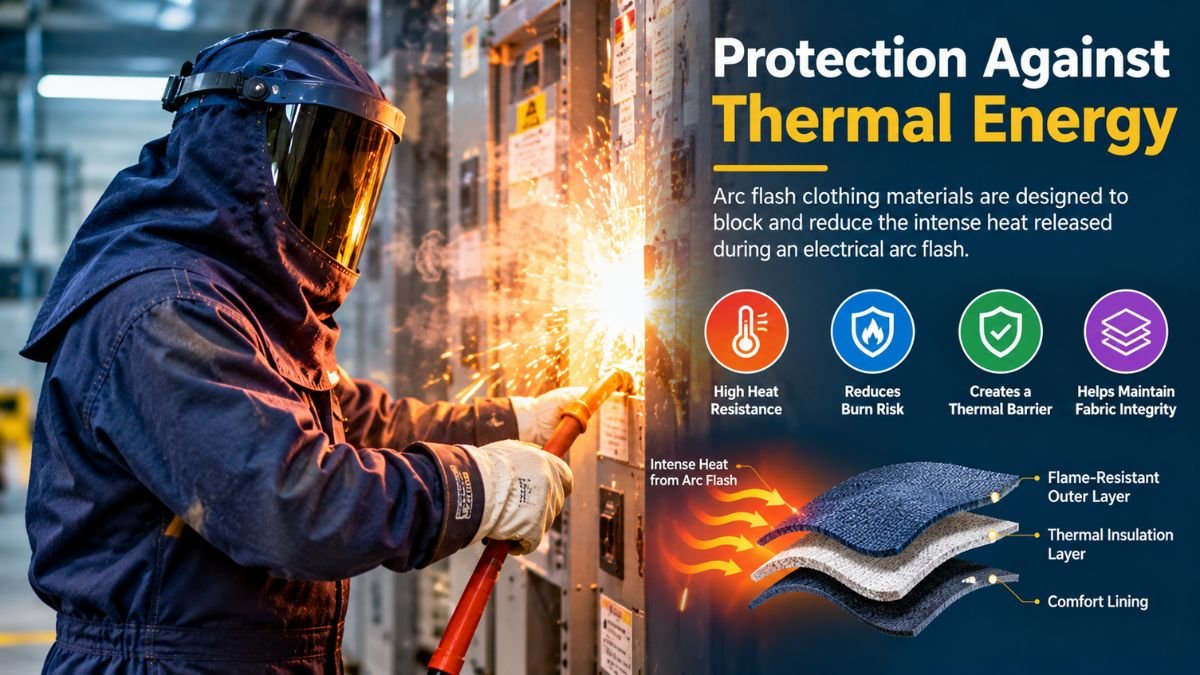
An electrical arc can release a tremendous amount of thermal energy in a very short time. Arc-rated fabrics are tested to evaluate their protective performance under specified arc exposure conditions.
Appropriately selected clothing helps reduce the amount of thermal energy transferred to the wearer’s body.
2. Reduced Risk of Clothing-Related Burns
Ordinary clothing can ignite and continue burning after the initial event. Some synthetic materials can also melt and adhere to the skin, potentially making injuries more severe.
Manufacturers design suitable arc-rated materials to reduce these risks, but you must use them within their tested performance limits.
3. Improved Workplace Safety
Electrical workers often perform maintenance, inspection, troubleshooting, and repair tasks around electrical equipment.
Therefore, when workers cannot remove electrical hazards and need protective clothing, they must choose suitable arc-rated workwear as a key part of their safety program.
4. Durability for Industrial Environments
High-quality protective fabrics handle tough industrial work. The construction of the fabric decides its resistance to abrasion, repeated washing, and daily wear. Each material has different durability, so always check the garment specifications and care instructions before use.
Types of Arc Flash Clothing Material
Manufacturers use different fabrics for arc flash protective clothing. For example, each material has its own features, benefits, and limits.
1. Flame-Resistant Treated Cotton
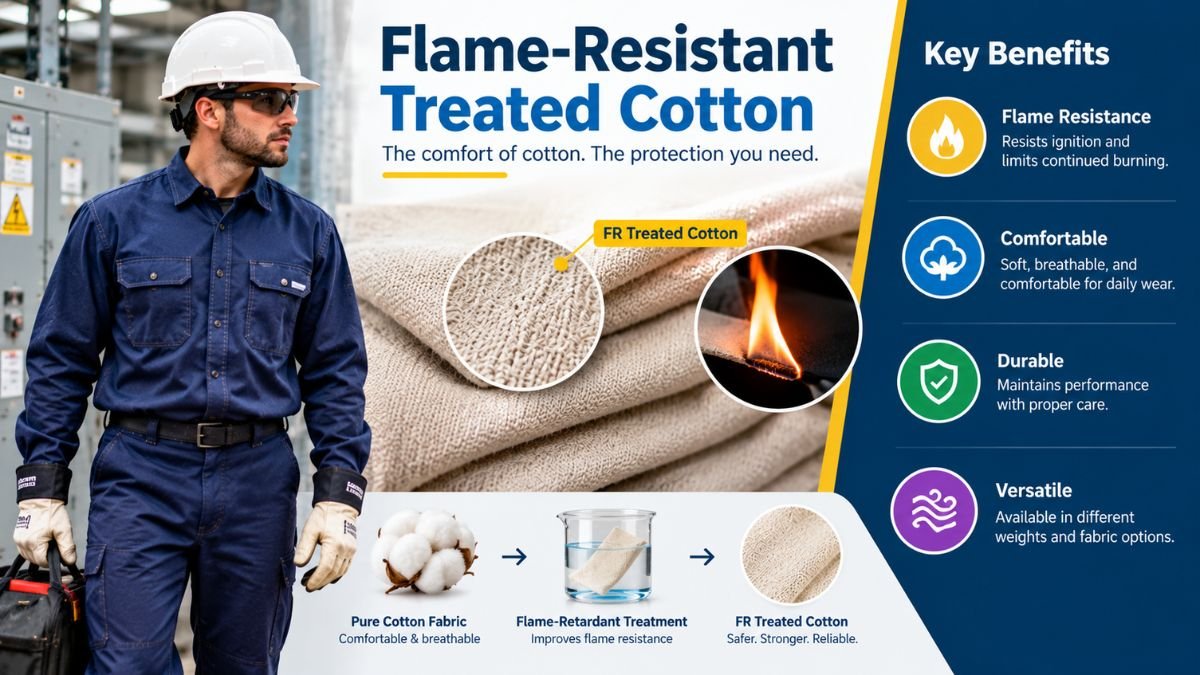
Flame-resistant treated cotton is a common material used in protective workwear.
Cotton is naturally breathable and comfortable, making it suitable for workers who need to wear protective clothing throughout long shifts. Special chemical treatments can improve its flame-resistant properties.
Unlike ordinary untreated cotton, properly treated flame-resistant cotton is designed to resist ignition and stop burning after the flame source is removed under the conditions specified by its testing.
Benefits of flame-resistant treated cotton:
- Comfortable for everyday industrial work
- Good breathability in suitable fabric constructions
- Available in different fabric weights
- Suitable for a variety of workwear designs
- Can provide arc protection when the finished fabric and garment are appropriately tested and rated
Limitations:
The protective performance of treated cotton depends on the treatment, fabric construction, garment design, and maintenance. Some treatments may be affected by improper laundering or chemical contamination.
Not every flame-resistant cotton garment is arc-rated.
Common applications:
Flame-resistant treated cotton may be used for arc-rated shirts, trousers, coveralls, and other industrial protective garments when the finished products meet the relevant requirements.
2. Meta-Aramid Fabric
Meta-aramid is a high-performance synthetic fiber widely used in protective clothing.
It is valued for its inherent flame resistance and thermal stability. Unlike conventional synthetic fibers that may melt under intense heat, meta-aramid fibers are designed to withstand high temperatures without melting in the same manner.
Meta-aramid fabrics are often used in protective garments for electrical utilities, industrial maintenance, and other hazardous work environments.
Benefits of meta-aramid fabric:
- Inherent flame-resistant properties
- Good thermal stability
- Suitable for specialized protective clothing
- Available in lightweight fabric constructions
- Can be engineered into fabrics with appropriate arc ratings
Limitations:
The cost of meta-aramid clothing may be higher than that of some conventional workwear. Its comfort, durability, and moisture management depend on the fabric construction and any fibers blended with it.
Common applications:
Meta-aramid is used in arc-rated shirts, trousers, coveralls, jackets, and multilayer protective systems.
The finished garment must be evaluated to confirm that it provides the required protection.
3. Para-Aramid Fabric
Para-aramid fibers are known for their high strength and resistance to mechanical damage.
These fibers are commonly associated with high-performance protective applications. When incorporated into suitable fabric systems, para-aramid can contribute strength and durability to protective clothing.
However, fiber strength alone does not establish an appropriate arc rating. Arc protection must be confirmed through applicable testing.
Benefits of para-aramid fabric:
- High tensile strength
- Good resistance to mechanical wear in suitable constructions
- Useful reinforcement properties
- Potential for use in specialized thermal protective systems
Limitations:
Para-aramid fabrics may have different comfort and flexibility characteristics from conventional cotton workwear. Their performance depends on the complete fabric construction, including any blended fibers and finishing processes.
Common applications:
Para-aramid fibers may be used in specialized protective fabrics and multilayer garments designed for demanding industrial environments.
4. Polybenzimidazole (PBI) Fabric
Polybenzimidazole, commonly known as PBI, is a high-performance fiber used in specialized protective clothing.
It is valued for its thermal stability and flame-resistant properties. PBI is often combined with other high-performance fibers to create protective fabric systems.
The exact level of protection depends on the material blend, fabric construction, and testing results.
Benefits of PBI fabric:
- Excellent thermal stability
- Inherent flame-resistant properties
- Useful in specialized high-temperature protective applications
- Can be combined with other protective fibers
- Suitable for certain advanced protective clothing systems
Limitations:
PBI-based garments can be more expensive than conventional protective workwear. Availability, comfort, and performance vary by product.
Common applications:
PBI is used in certain advanced thermal protective garments and specialized protective clothing systems. Its suitability for electrical arc hazards must be confirmed by the product’s arc-rating documentation.
5. Blended Arc-Rated Fabrics
Some manufacturers combine two or more fibers to achieve a balance of protection, comfort, durability, and cost.
For example, a fabric may combine different high-performance fibers to improve its overall performance for a particular application.
However, a blend should never be assumed to provide arc protection simply because one of its fibers is flame resistant.
The complete fabric and garment must satisfy the relevant performance requirements.
Benefits of blended fabrics:
- Potential balance of strength and comfort
- Flexibility in fabric weight and construction
- Different options for industrial workwear
- Opportunities to optimize durability and wearability
Limitations:
The performance of a blended fabric depends on its exact composition, construction, and testing.Certain fibers that melt under heat may be unsuitable unless you test the specific blend and it meets applicable requirements.
Common applications:
Manufacturers may use appropriately tested blends for arc-rated shirts, trousers, coveralls, jackets, and other protective garments.
Want to see a fiber in practice? Read about Nomex fire retardant fabric and what fire resistant clothing is made of.
Comparison of Common Arc Flash Clothing Materials
The following table provides a general comparison of common material types.
| Material | Main Characteristics | Potential Advantages | Important Considerations |
|---|---|---|---|
| Flame-resistant treated cotton | Cotton with a flame-resistant treatment | Comfort and breathability | Treatment durability and garment arc rating |
| Meta-aramid | Inherently flame-resistant high-performance fiber | Thermal stability and protective applications | Cost, fabric construction, and comfort |
| Para-aramid | High-strength aramid fiber | Mechanical strength and reinforcement potential | Complete fabric performance must be evaluated |
| PBI | High-performance, thermally stable fiber | Specialized thermal protection applications | Cost and product-specific performance |
| Arc-rated fiber blends | Combinations of selected fibers | Potential balance of comfort, durability, and protection | Exact composition and test results |
Important: This table is a general material comparison, not a ranking of protective performance. Always choose clothing according to its documented arc rating and the hazards present in the workplace.
Key Benefits of Arc Flash Protective Clothing
Arc-rated clothing offers several important benefits when properly selected, worn, and maintained.
1. Helps Reduce Burn Injuries
One of the primary benefits of arc-rated clothing is its ability to reduce the risk of thermal injury.
Appropriate garments create a protective barrier against the heat from an electrical arc.
The degree of protection depends on the garment’s arc rating and the actual exposure.
2. Flame-Resistant Performance
Manufacturers make arc-rated garments from materials that meet applicable requirements for flame resistance.
This helps reduce the likelihood that clothing will continue burning after exposure to an ignition source.
However, damage, contamination, or improper maintenance can compromise this protection.
3. Better Durability for Repeated Use
Industrial workers need clothing that can withstand regular movement, repeated wear, and laundering.
Depending on the fabric, protective workwear may offer good resistance to abrasion, tearing, and everyday wear.
Employers should follow manufacturer guidance for inspection, repairs, laundering, and replacement.
4. Improved Comfort During Long Shifts
Comfort is important because electrical workers may wear protective garments for extended periods.
Fabric weight, breathability, moisture management, flexibility, and garment fit all influence comfort.
Choosing comfortable clothing can help workers perform their tasks more effectively while maintaining the required level of protection.
Comfort, however, must never take priority over the necessary arc rating.
5. Support for Workplace Safety Programs
Properly selected arc-rated clothing supports electrical safety procedures and personal protective equipment programs.
When combined with appropriate training, hazard assessment, safe work practices, and other required PPE, protective clothing helps reduce the risks associated with electrical work.
What Is an Arc Rating?
An arc rating is a measure of a material or garment’s performance during specified electric arc testing.
Manufacturers commonly express it in calories per square centimeter (cal/cm²).
The rating helps safety professionals select protective clothing appropriate for the estimated incident energy associated with a particular electrical hazard.
For example, a garment with an arc rating of 12 cal/cm² has a documented rating of 12 calories per square centimeter under the applicable test method.Do not automatically consider it suitable for every task involving an electrical arc.The estimated incident energy, required protection, applicable safety rules, and complete PPE system must all be considered.
Arc ratings are not guarantees that a wearer will avoid injury. Actual outcomes depend on the exposure, garment condition, coverage, fit, and other factors.
Understanding Arc Flash PPE Categories
Electrical safety programs may use different methods to determine the required protective equipment.
Under NFPA 70E, the selection of PPE depends on the electrical hazard assessment and the applicable method used to determine the required protection.
Where teams permit and use the PPE category method, categories 1 through 4 represent increasing levels of required arc-rated protection.
Do not confuse these categories with a universal ranking of fabric quality.
For correct selection, you must follow the applicable assessment method and standard. Therefore, do not combine incident-energy analysis and the PPE category method indiscriminately.
When selecting arc-rated clothing, check the required rating, applicable standard, garment label, and manufacturer documentation.
Important Safety Standards for Arc Flash Clothing
Safety standards help establish requirements for evaluating and selecting protective clothing.
Employers and procurement teams should confirm which standards apply to their location, industry, equipment, and work activities.
1. NFPA 70E
NFPA 70E serves as a widely used standard for electrical safety in the workplace.
It addresses electrical safety-related work practices, risk assessment, and the selection of personal protective equipment for electrical hazards.
It can help employers establish procedures for selecting arc-rated clothing based on the identified hazard.
2. ASTM F1506
ASTM F1506 is a performance specification for flame-resistant and electric arc-rated protective clothing worn by workers exposed to flames and electric arcs.
It addresses relevant performance and garment requirements.
When evaluating protective workwear, check the applicable edition and verify that the product’s documentation supports the intended use.
3. ASTM F1959/F1959M
ASTM F1959/F1959M determines the arc rating of materials for protective clothing.
Arc-rating test results help manufacturers and safety professionals evaluate a material’s performance under specified arc exposure conditions.
A fabric’s marketing description alone is not a substitute for documented test results.
4. OSHA Electrical Safety Requirements
In the United States, the Occupational Safety and Health Administration (OSHA) establishes workplace safety requirements that address electrical hazards and protective equipment.
Applicable requirements depend on the industry, work activities, and relevant regulations.
Employers should assess electrical hazards and ensure that required protective clothing is appropriate for the anticipated exposure.
Businesses operating outside the United States should also review their local occupational safety laws and applicable standards.
How to Choose the Right Arc Flash Clothing Material
Choosing the correct material involves more than comparing fabric names or prices.
The following steps can help employers, safety managers, and purchasing teams make an informed decision.
Step 1: Assess the Electrical Hazard
Start by identifying the electrical hazards workers may encounter.
Consider the equipment, work tasks, estimated incident energy, and applicable electrical safety requirements.
A qualified person should determine the necessary protective measures and arc rating.
Step 2: Check the Required Arc Rating
After assessing the hazard, select clothing with an appropriate documented arc rating.
The rating must meet the requirements for the expected exposure and the applicable safety method.
Never assume that all flame-resistant garments provide the same protection.
Step 3: Evaluate Fabric Performance
Compare the available fabrics according to their documented performance.
Consider flame resistance, thermal protection, durability, weight, flexibility, and suitability for the working environment.
Request relevant test reports and technical documentation from the manufacturer or supplier.
Step 4: Consider Comfort and Breathability
Workers may need to wear arc-rated clothing throughout an entire shift.
Consider the temperature, humidity, physical demands of the job, and the need for layering.
A garment that fits properly and manages moisture effectively may be more comfortable for everyday use.
Nevertheless, comfort features must not compromise the required protective performance.
Step 5: Check Garment Construction
The fabric is only one part of the protective garment.
Stitching, seams, closures, pockets, cuffs, and other components can affect the garment’s performance.
Choose products designed and tested for the intended protective application. Follow the manufacturer’s instructions concerning compatible accessories and layering.
Step 6: Review Maintenance Requirements
Different fabrics may require different laundering methods.
Before purchasing, check the manufacturer’s cleaning instructions, inspection requirements, repair procedures, and expected service life.
Avoid clothing with damage or contamination that could compromise its protective performance.
Step 7: Compare Total Cost
Price is important, but the lowest-priced product may not offer the best long-term value.
Compare garment durability, comfort, maintenance requirements, product documentation, and suitability for the hazard.
The goal is to select compliant protective clothing that meets the workplace’s needs without compromising safety.
Materials to Avoid in Arc Flash Environments
Ordinary clothing may not provide adequate protection during an electrical arc.
Some synthetic fabrics can melt and adhere to the skin, potentially worsening burn injuries. Other materials may ignite and continue burning.
Depending on the applicable requirements and exposure, materials of concern can include certain garments made from:
- Ordinary polyester
- Nylon
- Acrylic
- Acetate
- Polypropylene
- Spandex-containing blends that have not been appropriately tested and rated
The suitability of a particular fabric depends on its composition, construction, testing, and intended use.
Do not assume that ordinary cotton clothing is sufficient for every electrical hazard. Although cotton does not melt like many thermoplastic fibers, untreated cotton can ignite and continue burning under suitable conditions.
Likewise, do not consider a garment safe simply because its label says “flame resistant.”
For electrical work requiring arc protection, select appropriately arc-rated clothing and follow the applicable workplace safety requirements.
How to Care for Arc Flash Protective Clothing
Proper care and maintenance help preserve the performance and serviceability of protective workwear.
Follow these recommendations.
1. Follow the Manufacturer’s Washing Instructions
Use the specified washing methods, detergents, water temperatures, and drying procedures.
Incorrect laundering may damage the fabric or affect its protective properties.
2. Inspect Clothing Before Use
Look for tears, holes, damaged seams, broken closures, and other signs of deterioration.
Remove garments from service when their condition no longer meets the manufacturer’s requirements.
3. Avoid Harmful Contamination
Oil, grease, solvents, and other flammable contaminants can compromise the safety of protective clothing.
Do not use contaminated garments until you have properly cleaned and assessed them according to the manufacturer’s instructions.
Replace garments when you cannot safely remove the contamination.
4. Repair Garments Correctly
Do not use ordinary thread, patches, or replacement components unless the manufacturer permits the repair method.
Improper repairs can affect protective performance.
5. Replace Damaged Clothing
Replace protective clothing when damage, wear, contamination, or other conditions compromise its intended function.
Follow the manufacturer’s inspection and replacement guidance rather than relying on appearance alone.
Common Applications of Arc Flash Clothing Material
Industries use arc-rated clothing where workers may face electrical arc hazards.
Electrical Utilities
Utility workers may use arc-rated clothing when maintaining electrical distribution systems, substations, and other equipment.
The appropriate clothing depends on the task and the assessed hazard.
Manufacturing Facilities
Industrial manufacturing plants often use electrical equipment, control panels, motors, and distribution systems.
Workers who perform relevant electrical tasks may require arc-rated PPE.
Construction and Electrical Contracting
Qualified electricians and electrical contractors may need protective clothing when carrying out certain electrical installation, inspection, troubleshooting, and maintenance activities.
The required protection should be based on the actual hazard assessment.
Oil, Gas, and Industrial Processing
Facilities in the oil, gas, and processing industries may have electrical hazards alongside other workplace risks.
Teams should select protective clothing for the specific hazards present. Arc-rated clothing does not automatically provide chemical, gas, or other specialized protection.
Data Centers and Commercial Buildings
Electrical maintenance in data centers, commercial buildings, and large facilities can involve switchgear, distribution panels, and other electrical equipment.
Workers should follow the site’s electrical safety procedures and wear the PPE required for the task.
Common Mistakes to Avoid When Buying Arc Flash Clothing
Selecting the wrong protective clothing can leave workers exposed to unnecessary risks.
Avoid these common mistakes.
Choosing clothing based only on price: Lower cost does not necessarily mean better value. Confirm that the garment meets the required protective specifications.
Assuming all flame-resistant clothing is arc-rated: Flame resistance alone does not establish an adequate arc rating.
Ignoring the garment label: Check the arc rating, relevant standards, manufacturer details, and care instructions.
Overlooking garment construction: Closures, seams, accessories, and overall design can affect protective performance.
Using unsuitable undergarments: Clothing worn beneath protective outerwear can affect safety. Follow the applicable requirements for underlayers and avoid garments that could melt or ignite under the anticipated exposure.
Ignoring maintenance: Damaged, improperly repaired, or contaminated garments may not provide the expected protection.
Treating clothing as the only safety measure: Protective clothing does not prevent an arc flash. Risk assessment, de-energization where feasible, appropriate work practices, and other safety measures remain essential.
Frequently Asked Questions About Arc Flash Clothing Material
1. What is the best material for arc flash clothing?
There is no single best material for every application Manufacturers may use flame-resistant treated cotton, meta-aramid, para-aramid, PBI, and tested fiber blends in protective clothing.
The right choice depends on the required arc rating, working conditions, comfort requirements, and product testing.
2. Is 100% cotton suitable for arc flash protection?
Ordinary cotton can ignite and continue burning under certain conditions. You should not automatically consider ordinary cotton suitable for arc flash protection.
Use appropriately rated protective clothing when the electrical hazard assessment requires it.
3. Is polyester safe for arc flash clothing?
Ordinary polyester can melt under intense heat and may contribute to severe burn injuries.
Certain fiber blends containing meltable fibers may be acceptable when the specific fabric and garment meet applicable requirements and pass appropriate testing. Do not assume ordinary polyester workwear is suitable for arc flash hazards.
4. What does an arc rating mean?
An arc rating expresses the performance of protective material under specified electric arc testing conditions.Manufacturers commonly state the arc rating in cal/cm².
The rating helps determine whether clothing is appropriate for a particular electrical hazard, but it does not guarantee that an injury will not occur.
5. What is the difference between FR and AR clothing?
FR stands for flame resistant, while AR stands for arc rated.
Flame-resistant clothing resists ignition and limits continued burning under specified conditions.Laboratories have evaluated arc-rated clothing for performance against electrical arc exposure.
6. Can arc flash clothing be washed?
Yes, when the garment’s manufacturer permits laundering and you follow the specified care instructions.
Inspect clothing after washing and before use. Replace garments when damage, contamination, or deterioration compromises their protective performance.
7. Does thicker fabric always provide better arc protection?
No. Fabric thickness alone does not determine arc protection.
The fiber composition, fabric construction, garment design, and test results all contribute to protective performance. Always check the documented arc rating.
8. How do I choose an arc flash clothing supplier?
Look for a reputable supplier that provides clear product specifications, relevant test documentation, appropriate garment labels, and care instructions.
Confirm that the products meet the requirements of your workplace and applicable safety standards. Avoid relying solely on marketing claims.
Conclusion
Choosing the right arc flash clothing material is essential for protecting electrical workers from the thermal hazards associated with electrical arc incidents.
Materials such as flame-resistant treated cotton, meta-aramid, para-aramid, PBI, and appropriately tested fiber blends offer different combinations of protection, comfort, durability, and cost.
However, the fiber name alone does not determine whether a garment is suitable for electrical work. The required protection depends on the workplace hazard assessment, the garment’s documented arc rating, its construction, and compliance with applicable requirements.
Employers and purchasing teams should evaluate protective performance, comfort, maintenance, and product documentation before making a decision.
By selecting properly rated clothing, maintaining it correctly, and combining it with effective electrical safety practices, organizations can take an important step toward reducing the risk of serious workplace injuries.