

Have you ever wondered how a simple piece of fabric becomes a T-shirt, pair of jeans, jacket, or work uniform? Behind every finished garment is a manufacturing process that combines design, fabric selection, cutting, sewing, finishing, and quality control.
Understanding how clothes are made in factories helps consumers, clothing brands, and business buyers understand what goes into producing garments on a larger scale. It also explains why fabric quality, accurate measurements, skilled workmanship, and careful inspection matter.
Clothing factories follow an organized process to turn designs into finished garments. Although the exact steps vary depending on the clothing type, most production processes begin with product development and end with inspection, packaging, and shipment.
In this guide, we explain each stage of clothing manufacturing, the materials and machines involved, and the factors that influence the quality of finished clothes.
What Is the Clothing Manufacturing Process?
The clothing manufacturing process is the series of steps used to transform fabric and other materials into finished garments. It typically includes designing, pattern making, sample development, fabric preparation, cutting, sewing, finishing, quality inspection, and packaging.
Factories organize these steps to produce garments that match the required design, measurements, appearance, and functional needs. Depending on the product, additional processes such as printing, embroidery, washing, or specialized finishing may also be required.
For example, manufacturing a basic cotton T-shirt usually involves fewer construction steps than producing a lined work jacket with multiple pockets, reinforced seams, and specialized closures.
The primary stages of clothing manufacturing are:
- Designing the garment.
- Selecting suitable fabrics and accessories.
- Creating patterns and samples.
- Preparing materials for production.
- Cutting the fabric into garment components.
- Sewing and assembling the pieces.
- Adding prints, embroidery, or other details.
- Finishing and pressing the garment.
- Inspecting the finished product.
- Labeling, packing, and preparing garments for shipment.
Each stage contributes to the final product. Problems with measurements, material selection, or construction can affect the quality of the finished garment.
Step 1: Designing the Clothes
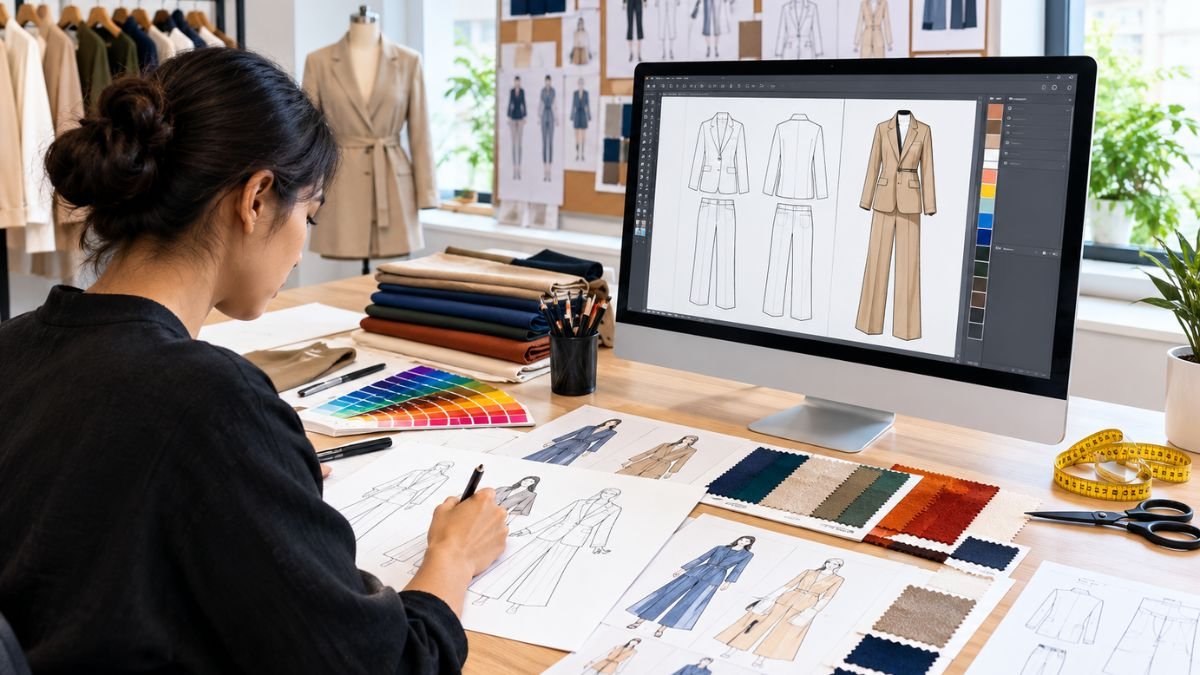
Every clothing manufacturing project begins with a design. The design defines how the garment should look, fit, and function.
Designers may develop their ideas from fashion trends, customer requirements, workplace needs, existing products, or a brand’s identity.
During this stage, they determine important details such as:
- Garment style and overall appearance.
- Intended fit and size range.
- Fabric type and color.
- Sleeve length, neckline, and other design features.
- Pocket placement and closure types.
- Decorative elements, logos, and branding.
- Intended use and performance requirements.
For example, a company ordering work uniforms may need garments that provide comfortable movement during long shifts. A construction company may also require high-visibility clothing appropriate for its working environment.
These requirements influence the design before production begins.
Why Is Garment Design Important?
A clear design gives the factory a practical starting point. It helps the production team understand which materials, patterns, construction methods, and finishing details are needed.
Unclear design instructions can lead to incorrect measurements, misplaced pockets, unsuitable fabrics, and other problems that become more difficult to correct during bulk production.
For this reason, the design should be translated into clear technical specifications before manufacturing proceeds.
Step 2: Selecting Fabrics and Accessories
Fabric selection is one of the most important stages in the clothing manufacturing process. The fabric affects a garment’s appearance, comfort, durability, fit, care requirements, and overall cost.
Factories select materials according to the garment’s purpose and the buyer’s specifications.
Common fabrics used in clothing production include:
Cotton: A natural fiber commonly used for T-shirts, shirts, casual clothing, and various uniforms. Its performance depends on the fabric construction, weight, and finishing.
Polyester: A synthetic fiber used in many garments because of its useful strength, dimensional stability, and drying characteristics.
Cotton-polyester blends: Fabrics that combine cotton and polyester to achieve a balance of properties suited to the intended garment.
Denim: A durable cotton-based fabric commonly used for jeans, jackets, and other casual garments.
Knit fabrics: Materials with interconnected loops that provide flexibility and are frequently used for T-shirts, sweatshirts, and sportswear.
Woven fabrics: Materials made by interlacing yarns, commonly used for shirts, trousers, jackets, and many types of workwear.
The most suitable material depends on the garment’s design and intended use. No single fabric is ideal for every clothing application.
Choosing the Right Fabric for Workwear
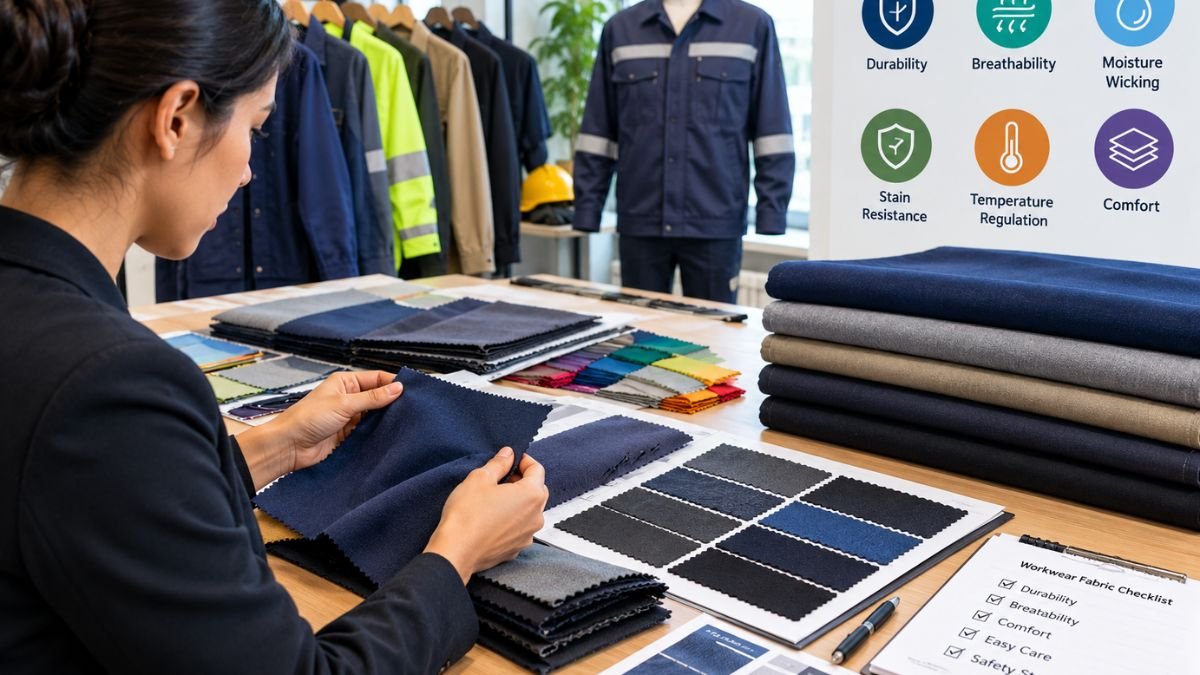
Workwear requires particular attention to the conditions in which the garment will be worn.
Buyers and manufacturers should consider:
- Fabric weight and thickness.
- Breathability and comfort.
- Resistance to abrasion and repeated wear.
- Flexibility and freedom of movement.
- Shrinkage and dimensional stability.
- Washing and maintenance requirements.
- Color consistency and appearance.
- Any verified protective-performance requirements.
For example, lightweight fabric may suit indoor work in warm conditions, while a heavier fabric may be appropriate for certain demanding tasks.
However, heavier fabric does not automatically mean better quality. The right choice depends on the garment’s intended function, construction, and required performance.
Factories also source accessories, often called trims, such as sewing thread, buttons, zippers, elastic, labels, and hook-and-loop fasteners. These components must match the garment’s design and functional requirements.
Step 3: Creating Patterns and Garment Samples
Once the design and materials are defined, the factory develops garment patterns.
A pattern is a template that shows the shape and dimensions of each fabric component needed to construct a garment. Depending on the design, a shirt might require separate patterns for the front, back, sleeves, collar, and cuffs.
Pattern makers use measurements and construction requirements to create these templates. They may work with traditional pattern-making methods or computer-aided design software.
Pattern Grading
Pattern grading is the process of adjusting a base pattern to create additional garment sizes.
For example, a manufacturer producing a shirt in small, medium, large, and extra-large sizes must establish the appropriate measurements for each size.
Accurate grading helps maintain the intended fit and proportions across the size range.
Sample Development
Before full production, manufacturers commonly create a sample garment to evaluate the design and construction.
The sample allows the buyer or product team to check:
- Overall appearance.
- Fit and measurements.
- Fabric selection.
- Stitching and seam construction.
- Pocket placement and functionality.
- Buttons, zippers, and other accessories.
- Printing, embroidery, and branding.
- Finishing details.
If the sample does not meet the requirements, the design or specifications can be revised before bulk manufacturing begins.
Why does sample approval matter?
A sample provides a physical reference for the intended garment. Approving it before bulk production helps clarify expectations and reduces the risk of repeating the same design or construction mistake across a large order.
For business buyers, the approved sample and written specifications should align before production proceeds.
Step 4: Preparing the Fabric for Production
After the design and sample are approved, the factory prepares the materials for manufacturing.
Fabric preparation involves more than simply placing material on a cutting table. The production team must check that the fabric is suitable for the order and ready to be cut accurately.
Typical preparation activities include:
- Receiving the required fabric and accessories.
- Checking fabric color and visible defects.
- Confirming quantities against production needs.
- Reviewing fabric width and relevant specifications.
- Allowing fabric to relax when required.
- Organizing materials for the cutting process.
Fabric relaxation is particularly relevant to materials that may change dimensions after being unrolled or handled. The appropriate method depends on the fabric and the manufacturer’s process.
Fabric Inspection
Fabric inspection helps identify issues before the material becomes part of a finished garment.
Depending on the requirements, checks may look for holes, stains, weaving defects, color variations, or other visible problems.
Identifying these issues early helps the factory decide whether the material can be used, requires special handling, or should be rejected.
Fabric preparation is important because defects discovered after cutting and sewing may require additional work or cause material waste.
Step 5: Making Markers and Cutting the Fabric
Once the fabric is ready, the factory prepares the cutting layout.
A marker is a layout showing how garment pattern pieces should be positioned on the fabric. Efficient marker planning helps use the available fabric effectively while respecting the direction, pattern, and construction requirements.
The factory then spreads the fabric across a cutting table in one or more layers.
For bulk orders, several layers may be stacked to cut multiple garment components together. The number of layers depends on the material, cutting equipment, and production requirements.
How Does Fabric Cutting Work?
The cutting team follows the approved pattern and marker layout to cut the fabric into individual garment pieces.
Factories may use different cutting methods, including:
- Hand-operated cutting tools for suitable jobs.
- Straight-knife cutting machines.
- Band-knife cutting machines for particular cutting tasks.
- Computer-controlled cutting systems for suitable production requirements.
The choice depends on the fabric, design complexity, production volume, available equipment, and required accuracy.
After cutting, the pieces are sorted and organized into bundles or other controlled groups.
These groups are prepared for the sewing department so the correct components can be assembled into the intended garments.
Why Is Accurate Cutting Important?
Accurate cutting helps ensure that garment components fit together as intended.
If a sleeve is cut incorrectly or a front panel differs from the required dimensions, the sewing team may struggle to assemble the garment properly.
Cutting errors can lead to poor fit, uneven seams, wasted fabric, and production delays.
Careful marker planning, fabric handling, and cutting checks help reduce these risks.
Step 6: Sewing and Assembling the Garments
Sewing is the stage where separate fabric pieces become a recognizable garment.
After cutting, the components move to the sewing department. Depending on the factory’s production system, workers may assemble complete garments individually or perform specialized operations along a production line.
Different machines and stitch types are used for different construction requirements.
For example:
- Lockstitch machines are commonly used for many standard seams.
- Overlock machines help join fabric edges and prevent fraying on suitable materials.
- Coverstitch machines are commonly used for hems on knit garments.
- Specialized machines may handle buttonholes, buttons, or other specific operations.
The required equipment depends on the garment design, fabric, seam type, and production method.
How Are Garment Pieces Assembled?
Consider a basic T-shirt. Its construction may involve the following operations:
- Joining the shoulder seams.
- Attaching the sleeves.
- Closing the side seams.
- Constructing and attaching the neckline.
- Finishing the sleeve hems.
- Completing the bottom hem.
- Adding labels and other required details.
The precise sequence may differ according to the design and production method.
A work jacket can require additional operations, such as attaching a collar, installing a zipper, constructing pockets, adding cuffs, and reinforcing selected areas.
What Happens on a Factory Sewing Line?
In a production line, work is divided into operations that move the garment toward completion.
One operator may join shoulder seams, while another attaches sleeves and another completes hems or other details.
This arrangement can help organize repetitive work and improve production flow.
However, production efficiency depends on several factors, including operator skill, machine suitability, line balancing, material availability, and the complexity of the garment.
Sewing quality matters just as much as speed. Incorrect seam allowances, skipped stitches, loose threads, and poorly aligned components can affect the garment’s appearance and durability.
For this reason, suitable checks during sewing help identify problems before the garment moves to the next stage.
Step 7: Printing, Embroidery, and Other Customization
Many garments require additional details that communicate a brand identity or meet the buyer’s design requirements.
Customization can take place before, during, or after garment assembly, depending on the technique and product.
Common methods include screen printing, heat-applied graphics, embroidery, and the attachment of woven labels or other branded components.
Screen Printing
Screen printing transfers a design onto fabric through a prepared screen. It is commonly used for suitable graphics, logos, and text.
The design, ink, fabric, and production requirements influence the printing method and final result.
Embroidery
Embroidery creates a design by stitching thread into the fabric.
It is often used for logos, names, and decorative details on uniforms, polo shirts, jackets, and other garments.
The fabric and design must be suitable for the chosen embroidery method to help achieve a clean result.
Heat-Applied Graphics
Heat-applied graphics use heat and pressure to transfer a design onto a garment.
The appropriate materials, temperature, pressure, and application time depend on the transfer system and fabric.
Why Is Customization Planning Important?
Logos and other details should be specified before production begins. Buyers should confirm artwork, colors, placement, dimensions, and the intended application method.
For workwear orders, they should also consider how branding will look on the finished garment and whether the decoration is appropriate for its intended use.
Clear instructions help reduce placement errors and differences between garments in the same order.
Step 8: Finishing and Pressing the Garments
After sewing and any required customization, garments move through the finishing stage.
Finishing prepares the clothing for final inspection and presentation. The exact operations vary depending on the product, fabric, and buyer’s requirements.
Typical finishing activities include:
- Removing loose threads.
- Checking and correcting minor construction issues.
- Pressing or ironing garments.
- Shaping collars, cuffs, and other components.
- Completing required closures and attachments.
- Applying labels, tags, or other finishing details.
- Folding garments into the required presentation.
Some products also require washing, garment dyeing, special surface treatments, or other processes.
These additional treatments are not necessary for every garment. They are selected according to the desired appearance, fabric characteristics, and product specifications.
Why Is Pressing Important?
Pressing helps improve a garment’s appearance by reducing wrinkles and shaping selected areas.
It can also help seams, collars, cuffs, and hems look more consistent.
However, the temperature and method must suit the material. Excessive heat or incorrect pressing techniques can damage fabric, leave unwanted marks, or affect decorative components.
Finishing therefore requires suitable equipment and attention to material-specific care requirements.
Step 9: Quality Control and Final Inspection
Quality control is an essential part of clothing manufacturing.
The purpose is to check whether materials, construction, measurements, appearance, and other required characteristics meet the agreed specifications.
Quality checks can take place at several stages rather than only when production is complete.
For example, fabric can be checked before cutting, cut components can be reviewed before sewing, and seams can be examined during garment assembly.
Final inspection then evaluates the completed product against the relevant requirements.
What Do Factories Check During Garment Inspection?
The inspection criteria depend on the product and order. They may include:
Measurements and fit: Are the garment’s dimensions within the specified tolerances?
Stitching: Are seams secure, even, and consistent with the construction requirements?
Appearance: Are there visible stains, holes, fabric defects, or other unwanted marks?
Construction: Are collars, sleeves, pockets, cuffs, and other components correctly attached?
Closures: Do zippers, buttons, and other fastening components function as intended?
Color consistency: Are garments consistent with the approved color references?
Customization: Are logos, prints, labels, and embroidery correctly positioned and finished?
Packaging requirements: Are the correct sizes, labels, and quantities prepared for packing?
Not every order requires the same inspection checklist. Buyers should define the acceptance criteria according to the garment’s purpose and specifications.
Why Is Quality Control Important?
Quality control helps identify defects before garments are delivered to customers.
It can also reveal recurring problems that require changes to materials, machine settings, work methods, or production instructions.
For bulk orders, consistent measurements and construction are especially important. A garment that looks good in a sample may still present problems if the same standards are not maintained across the production run.
Quality control should therefore be planned throughout manufacturing, not treated as a final step alone.
Important: Ordinary clothing is not automatically protective equipment. If a garment is intended to protect workers against specific hazards, its suitability must be supported by the applicable requirements and appropriate product-specific evidence.
Step 10: Labeling, Folding, and Packaging
After the garments pass the required checks, they are prepared for packing.
The packaging process depends on the product, buyer instructions, retail requirements, and shipping arrangements.
Common activities include:
- Attaching the required labels and tags.
- Folding garments according to the specified method.
- Placing garments in individual bags or other packaging when required.
- Grouping garments by size, style, color, or order.
- Packing garments into cartons.
- Checking carton contents and labeling.
- Preparing the shipment documentation as required.
For example, a bulk uniform order may need garments separated by department, size, or employee group. A retail clothing order may require individual product labels and packaging.
Clear packing instructions help buyers receive the correct products in an organized format.
Step 11: Preparing the Garments for Shipment
The final stage is preparing the finished garments for delivery.
Before dispatch, the manufacturer or responsible shipping team checks that the packed order matches the agreed requirements.
Depending on the arrangement, this may include confirming carton quantities, product descriptions, size breakdowns, labels, and relevant shipping documents.
The garments are then stored temporarily or transferred to the appropriate transport provider.
Shipping arrangements, documentation, and delivery times depend on the buyer’s agreement, destination, and logistics requirements.
This completes the typical journey from a garment design to finished clothing ready for distribution.
How to Make Clothes in Factory Production: What Buyers Should Know
If you want to understand how to make clothes in factory production, it is helpful to look beyond sewing. Successful manufacturing depends on planning the entire process before bulk production begins.
Whether you are developing T-shirts, uniforms, jackets, trousers, or other garments, clear specifications help the factory understand what to produce.
Here are the main considerations for a clothing manufacturing project.
1. Define Your Product Requirements
Start by identifying the garment type, intended use, design, fabric, colors, size range, and quantity.
For workwear, include practical details such as pocket placement, reinforcement, closures, fit, and any required protective features.
The more clearly the product is defined, the easier it is to evaluate samples and communicate expectations.
2. Prepare a Technical Specification
A technical specification, often documented in a tech pack, records the details required to develop and manufacture a garment.
Depending on the product, it may include:
- Design drawings or reference images.
- Fabric composition and weight.
- Garment measurements and size grading.
- Construction details and seam requirements.
- Color references.
- Buttons, zippers, and other accessories.
- Logo artwork and placement.
- Labels and packaging instructions.
- Applicable performance or compliance requirements.
A complete specification helps align the buyer, designer, and manufacturing team.
3. Review and Approve the Sample
Request a sample when the production arrangement allows for it.
Evaluate the sample against the intended design and written specifications. Check measurements, fit, materials, construction, branding, and finishing.
Record any changes and confirm the final requirements before approving bulk production.
4. Confirm Materials and Production Details
Before production begins, confirm the fabric, accessories, colors, quantities, and other essential inputs.
For repeat orders, it is particularly important to establish clear references for the approved materials and garment specifications.
Changes to fabric, sizing, or construction can affect the finished product, so they should be reviewed before being introduced.
5. Agree on Quality Requirements
Discuss how the finished garments will be evaluated.
Confirm the required measurements, acceptable tolerances, construction details, visual standards, labeling, and packaging expectations.
If special performance or safety requirements apply, make sure the necessary evidence and product requirements are established before placing the order.
6. Review the Finished Products
Before accepting a bulk order, use the agreed inspection criteria to evaluate the garments.
The inspection approach may depend on the order size, product type, contract, and risk level.
The objective is to establish whether the delivered garments meet the approved requirements, rather than relying on appearance alone.
What Machines Are Used to Make Clothes in Factories?
Clothing factories use different machines and tools depending on the garment and production method.
Some factories use mostly manual equipment, while others combine specialized machinery with computerized systems.
Common equipment includes:
| Machine or Equipment | Main Purpose |
|---|---|
| Fabric inspection equipment | Helps identify visible fabric defects and material issues. |
| Fabric spreading machine | Spreads fabric across the cutting table. |
| Fabric cutting machine | Cuts fabric into garment components. |
| Computer-aided design software | Supports pattern development, grading, and marker planning. |
| Lockstitch sewing machine | Produces common types of garment seams. |
| Overlock sewing machine | Joins and finishes suitable fabric edges. |
| Coverstitch machine | Produces hems and other stitches commonly used on knit garments. |
| Buttonhole machine | Creates buttonholes where required. |
| Button-attaching machine | Attaches buttons to garments. |
| Embroidery machine | Produces decorative stitching and logos. |
| Heat press | Applies suitable heat-transfer graphics. |
| Steam iron or pressing equipment | Helps finish and shape garments. |
Not every factory needs every machine. Equipment selection depends on the products being manufactured, production volume, material requirements, and available resources.
How Long Does It Take to Manufacture Clothes?
There is no single production timeline that applies to every garment.
The time required depends on the design, order quantity, material availability, sample approvals, construction complexity, production schedule, and finishing requirements.
A simple T-shirt may require fewer manufacturing operations than a lined jacket with multiple pockets, specialized closures, and decorative details.
It is also important to distinguish sewing time from the total order timeline. The full process may include design development, sourcing materials, sampling, approval, bulk production, inspection, packing, and shipping.
Buyers planning a clothing order should discuss the schedule with the manufacturer and confirm the expected milestones before production begins.
What Factors Affect the Cost of Making Clothes in Factories?
The cost of clothing production depends on several connected factors. The lowest initial quotation does not necessarily represent the best value if the garment does not meet the intended quality or service-life requirements.
Important cost factors include:
Fabric and Material Selection
Fabric type, composition, weight, quality, and consumption influence material costs.
The garment design also affects how efficiently pattern pieces fit within the available fabric.
Design Complexity
Garments with simple construction may require fewer operations than products with multiple panels, pockets, linings, or specialized closures.
More complex designs can require additional labor, equipment, and production time.
Order Quantity
The quantity ordered can affect material purchasing, production planning, setup requirements, and the cost per garment.
However, the effect varies by manufacturer and product.
Customization
Printing, embroidery, custom labels, and special packaging can add costs depending on the design and method used.
Quality Requirements
Tighter measurement tolerances, additional inspections, specialized testing, and specific material requirements may affect the total cost.
Finishing and Packaging
Washing, special finishing, pressing, labeling, and individual packaging can influence the final price.
When comparing quotations, buyers should check that each supplier is pricing the same garment specifications, materials, quantities, customization, and quality requirements.
Common Mistakes to Avoid When Manufacturing Clothes
A well-organized production process starts with clear decisions. The following mistakes can create unnecessary delays, extra costs, or inconsistent results.
Providing Incomplete Specifications
Missing measurements, unclear artwork, or incomplete construction instructions can cause misunderstandings.
How to avoid it: Prepare a clear technical specification and confirm important details before bulk production.
Choosing Fabric Based Only on Price
Low-cost fabric may not suit the intended garment or working environment.
How to avoid it: Evaluate fabric properties, care requirements, comfort, durability, and intended use alongside the price.
Skipping Sample Approval
Starting bulk production without confirming the sample can increase the risk of repeating design or construction problems.
How to avoid it: Review and approve the sample and written specifications before production begins, where applicable.
Overlooking Size Consistency
A design may work well in one size but fit poorly in another if the grading is inaccurate.
How to avoid it: Confirm the size chart, grading requirements, and measurement tolerances.
Ignoring Quality Control During Production
Waiting until the final inspection to identify every problem can lead to additional rework and delays.
How to avoid it: Establish appropriate checks during material preparation, cutting, sewing, and finishing.
Failing to Confirm Packaging Details
Incorrect labels, size grouping, or carton quantities can create problems after manufacturing is complete.
How to avoid it: Agree on packaging and shipment requirements before the order is packed.
Why Workwear Manufacturing Requires Careful Planning
Workwear manufacturing involves many of the same basic stages as other clothing production, but the garment’s intended job can introduce additional requirements.
A uniform worn in an office may prioritize appearance and comfort. Clothing used in a workshop or construction environment may need different fabrics, construction details, or verified protective properties.
The manufacturer’s task is to understand the garment’s purpose and translate that purpose into clear product specifications.
Important considerations include:
- Fit and movement: Workers need garments suited to their tasks and working positions.
- Fabric performance: Material selection should reflect the expected conditions and care requirements.
- Construction: Seams, pockets, closures, and reinforcement should match the garment’s intended use.
- Consistency: Repeat orders should follow agreed measurements, colors, materials, and construction details.
- Quality requirements: Inspection criteria should reflect the garment’s design and purpose.
- Safety requirements: Any claimed protective performance must be supported by appropriate product-specific evidence.
These considerations are especially relevant when purchasing uniforms or workwear in bulk, because inconsistencies can affect multiple garments across an order.
How Negora Fist Approaches Workwear Knowledge
Negora Fist is a workwear manufacturing company with 10 years of workwear manufacturing experience.
Understanding how garments move from design to finished products helps workwear buyers ask better questions and define their requirements more clearly.
Before placing a workwear order, buyers should consider the intended working environment, garment measurements, fabric requirements, construction details, customization, and quality expectations.
They should also confirm the approved sample and written specifications where applicable, particularly when ordering large quantities or planning repeat production.
These steps provide a clearer basis for discussing a workwear project with a manufacturing partner.
Frequently Asked Questions About How Clothes Are Made in Factories
1. How are clothes made in factories?
Clothes are generally made through a series of steps that include design, fabric selection, pattern making, sample development, fabric preparation, cutting, sewing, finishing, quality inspection, and packaging. The exact process varies depending on the garment, materials, and production requirements.
2. What is the first step in clothing manufacturing?
The first step is usually product design and development. The garment’s intended use, appearance, measurements, fabric requirements, and construction details are defined before patterns and samples are developed.
3. How do factories cut fabric for clothes?
Factories use garment patterns and marker layouts to position the required pieces on fabric. The fabric is spread across a cutting table and cut using suitable manual, mechanical, or computerized equipment. The cut pieces are then sorted for sewing.
4. What happens after clothes are sewn?
After sewing, garments may undergo customization, trimming, pressing, washing, or other finishing processes as required. They are then inspected, labeled, folded, and packed according to the product specifications.
5. What materials are used to make clothes?
Common materials include cotton, polyester, cotton-polyester blends, denim, and various woven and knitted fabrics. The choice depends on the garment’s intended use, appearance, comfort, durability, and care requirements.
6. Which machines are used in clothing factories?
Common equipment includes fabric spreading and cutting machines, lockstitch sewing machines, overlock machines, coverstitch machines, buttonhole machines, embroidery machines, and pressing equipment. The exact machinery depends on the product and production method.
7. How do factories maintain clothing quality?
Factories can maintain quality through material checks, accurate cutting, suitable sewing methods, in-process inspections, measurement checks, and final inspection. Clear specifications and defined acceptance criteria help keep production aligned with the buyer’s requirements.
8. Can factories manufacture custom clothing?
Yes. Clothing manufacturers can produce garments to specified designs, measurements, materials, colors, and branding requirements when those services are within their capabilities. Buyers should confirm available customization methods and production requirements with the manufacturer.
9. What is the difference between garment manufacturing and garment finishing?
Garment manufacturing covers the wider process of converting materials into finished clothing, including design preparation, cutting, sewing, and other operations. Garment finishing refers to the final processes used to improve appearance, complete details, and prepare the product for inspection and packing.
10. What should buyers check before placing a bulk clothing order?
Buyers should confirm the garment design, fabric specifications, measurements, size range, construction details, customization, order quantity, quality criteria, packaging requirements, and production schedule. Reviewing an approved sample and written specifications can help clarify expectations before bulk production begins.
Conclusion
Understanding how clothes are made in factories reveals how many coordinated steps are involved in turning fabric into finished garments.
The process typically begins with design and material selection, continues through pattern making, cutting, sewing, and finishing, and ends with quality inspection and packaging.
Every stage matters. Suitable materials, accurate patterns, careful construction, and clear quality requirements all contribute to the final result.
For clothing brands and business buyers, understanding these stages makes it easier to define product requirements, evaluate manufacturing partners, and plan bulk orders.
For workwear in particular, the garment must be designed around its intended use, with appropriate attention to fit, comfort, construction, durability, and any verified protective requirements.
Planning a workwear project? Negora Fist brings 10 years of workwear manufacturing experience. Define your garment requirements carefully and discuss your project with a manufacturing partner that understands the importance of practical, job-specific workwear solutions.