
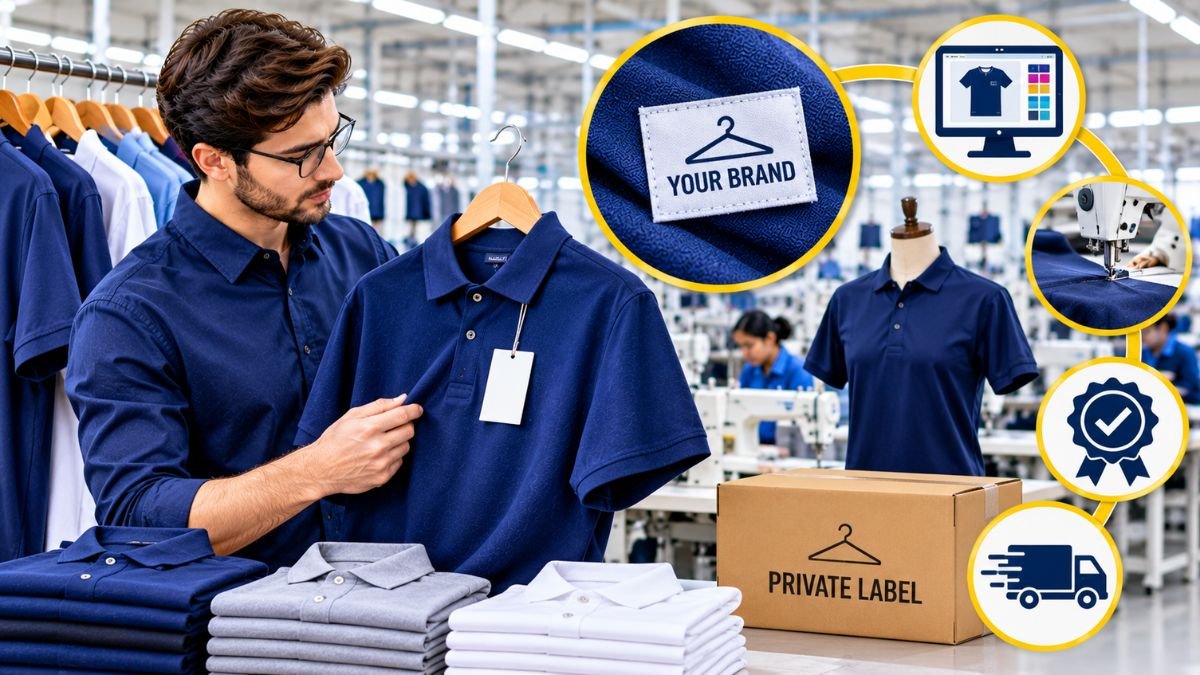
Choosing the right clothing manufacturer is one of the most important steps when building a fashion brand. Your manufacturer affects product quality, pricing, delivery times, and customer satisfaction.
Private label manufacturing allows businesses to sell clothing under their own brand names. You do not need to own a factory or manage production equipment. Instead, you work with an experienced manufacturing partner.
However, finding a reliable supplier requires careful research. Some manufacturers specialize in basic garments, while others focus on custom fashion, sportswear, or premium apparel.
You must understand their services, production capabilities, minimum order quantities, and quality standards before making a decision.
This guide explains how private label clothing manufacturing works. It also explores different manufacturer types and important factors to consider. Whether you are launching a new fashion label or expanding an existing business, these tips can help you choose the right partner.
Comparing private label partners? Meet the Negora Fist workwear manufacturer, see the short sleeve polo shirt, and read private label organic clothing manufacturers.
What Are Private Label Clothing Manufacturers?
Private label clothing manufacturers produce garments that businesses sell under their own brand names. They manufacture clothing according to the buyer’s requirements and branding preferences.
These manufacturers can handle different production tasks. Their services may include fabric sourcing, garment development, cutting, stitching, printing, embroidery, and packaging.
The exact services depend on the factory.
For example, a clothing brand may want custom cotton T-shirts with its own logo. The manufacturer can produce the shirts, attach branded labels, and prepare them for retail sale.
Some suppliers offer ready-made garments with custom branding. Others develop completely new products from sketches, measurements, and technical specifications.
Private label manufacturing helps businesses build their identities. It also allows them to focus on marketing, sales, and customer relationships.
How Does Private Label Clothing Manufacturing Work?
The private label manufacturing process usually follows several stages. Each stage helps turn a clothing idea into a finished product.
Understanding these steps makes communication with manufacturers easier.
1. Develop Your Clothing Product Idea
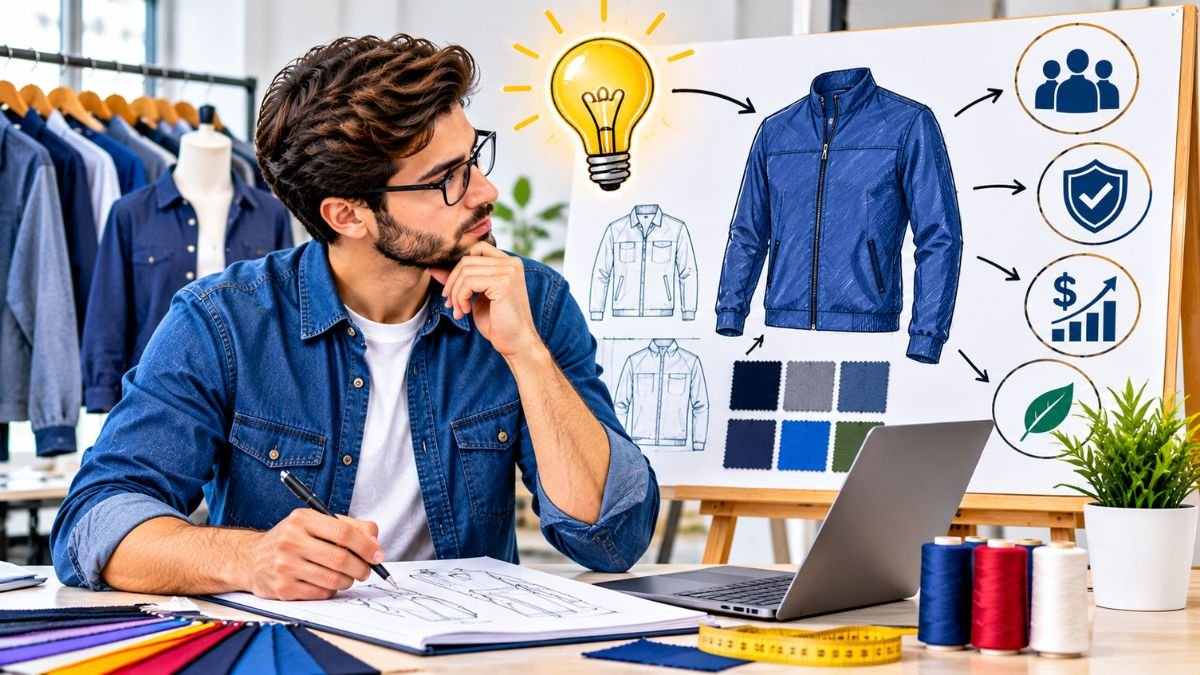
Start by deciding what type of clothing you want to sell. Your product category will influence the manufacturer you need.
You might want to produce:
- T-shirts and polo shirts
- Hoodies and sweatshirts
- Dresses and women’s tops
- Leggings and sports bras
- Joggers and tracksuits
- Jackets and outerwear
- Denim jeans and shirts
- Workwear and uniforms
Research your target customers before choosing products. Consider their preferred styles, sizes, fabrics, and price ranges.
A clear product idea helps manufacturers understand your expectations.
2. Prepare Your Clothing Designs
Once you select your products, prepare their designs. You can use sketches, reference garments, or digital design files.
A technical package, commonly called a tech pack, can make this process easier. It gives the manufacturer clear instructions for producing your garments.
A detailed tech pack may include:
- Technical drawings
- Fabric composition
- Fabric weight or GSM
- Size measurements
- Stitching details
- Color specifications
- Printing and embroidery artwork
- Label placement
- Packaging requirements
Clear specifications reduce confusion during development.
3. Select Fabrics and Materials
Fabric selection affects comfort, appearance, durability, and production costs.
Choose materials according to the clothing category and intended use.
Cotton works well for many everyday garments. Polyester is common in sportswear because it dries quickly. Cotton-polyester blends combine characteristics of both fibers.
Activewear may require stretch fabrics with elastane. Premium dresses may need viscose, satin, or other specialty materials.
Ask manufacturers about available fabric options. Request material samples before approving production.
4. Request a Clothing Sample
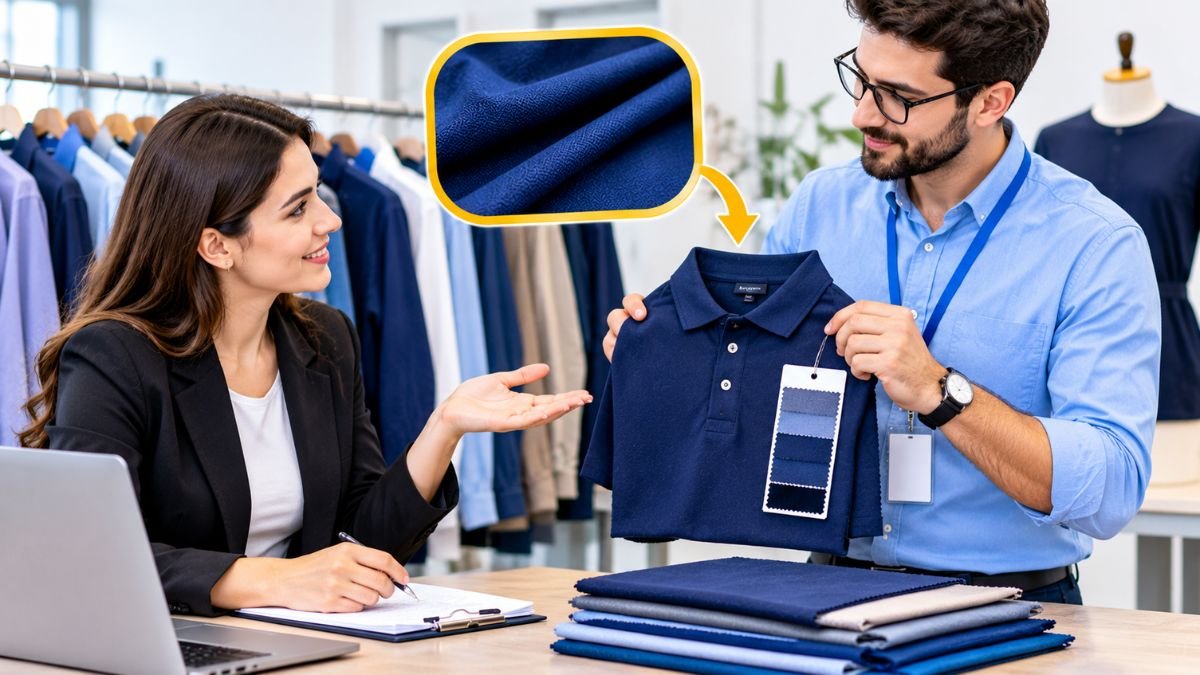
A sample allows you to inspect the garment before ordering in bulk.
Check its measurements, fabric quality, stitching, fit, and overall appearance. Also inspect logos, labels, and other branding details.
Ask the manufacturer to correct any problems before approving the final sample.
Do not begin bulk production until you approve the specifications. A written sample approval can help prevent misunderstandings later.
5. Approve Bulk Production
After sample approval, confirm your order details. These should include quantities, sizes, colors, prices, and delivery expectations.
The manufacturer then schedules production.
Depending on the factory, production may involve fabric inspection, cutting, sewing, printing, finishing, and packing.
Maintain communication throughout this stage. Ask for updates when important production milestones are completed.
6. Complete Quality Inspection and Shipping
Before shipment, inspect the finished garments. Check measurements, stitching, color consistency, branding, and packaging.
You can arrange an independent inspection when appropriate. Agree on inspection standards before production begins.
Once the order passes inspection, the manufacturer prepares it for shipment.
Confirm shipping documents, delivery terms, and import requirements for your destination market.
Types of Private Label Clothing Manufacturers
Not every manufacturer produces every type of clothing. Some specialize in particular garments, while others offer broader production services.
Understanding these categories helps you shortlist suitable suppliers.
1. Custom Cut-and-Sew Manufacturers
Cut-and-sew manufacturers create garments from fabric according to your specifications.
They can develop custom patterns, measurements, designs, and construction details.
This option works well for brands that want unique products. It also provides greater control over fit and garment construction.
Common products include:
- Custom T-shirts
- Hoodies and sweatshirts
- Dresses and skirts
- Shirts and trousers
- Jackets and outerwear
Custom production usually requires more development work than relabeling existing garments.
2. Wholesale Private Label Clothing Manufacturers
Wholesale private label clothing manufacturers produce garments in larger quantities for retailers and clothing brands.
They may offer existing garment styles with customization options. Some also support completely custom production.
Wholesale manufacturing can help businesses reduce their per-unit costs. Larger orders may allow manufacturers to purchase materials and organize production more efficiently.
However, minimum order quantities can vary considerably.
Ask whether the MOQ applies to each style, color, or complete order. This distinction matters when planning a collection with multiple designs.
3. Private Label Women’s Clothing Manufacturers
Private label women’s clothing manufacturers specialize in garments designed for women’s fashion markets.
Their product ranges may include casual clothing, formalwear, activewear, and seasonal collections.
Common products include:
- Women’s T-shirts and tops
- Dresses and skirts
- Leggings and trousers
- Blouses and shirts
- Jackets and coats
- Matching clothing sets
- Loungewear and sleepwear
Women’s clothing often requires careful attention to fit and sizing. Different designs may also need specific fabrics and finishing techniques.
Ask manufacturers about their experience with your target product category. Request samples that demonstrate their construction and fit quality.
4. Private Label Fitness Clothing Manufacturers
Private label fitness clothing manufacturers produce activewear and sportswear for fitness brands.
These garments often require stretch, moisture management, comfort, and durability.
Popular fitness products include:
- Leggings
- Sports bras
- Gym shorts
- Workout tops
- Compression shirts
- Tracksuits
- Yoga clothing
- Training jackets
Fabric selection is particularly important for fitness products.
Polyester, nylon, and elastane blends are common choices. Their performance depends on fabric construction, fiber quality, and finishing.
Ask for testing or performance information when making technical claims. For example, do not assume every polyester fabric provides the same moisture management.
5. White Label Clothing Manufacturers
White label manufacturers provide existing garment designs that businesses can sell under their own branding.
This approach generally requires less product development. You select available garments and request approved branding options.
It can suit new businesses that want to test demand before investing in custom designs.
However, other brands may sell similar products. Your ability to create a unique product can also be limited.
6. Sustainable Clothing Manufacturers
Sustainable clothing manufacturers offer garments made with materials and production practices intended to reduce environmental impact.
Their services may include organic cotton, recycled fibers, responsible sourcing, and waste-reduction practices.
However, sustainability claims should be verified.
Ask for relevant certifications and documentation. Check whether certificates apply to the factory, fabric, processing stage, or finished garment.
Do not rely only on marketing statements when evaluating environmental claims.
Before you shortlist suppliers, read how to find someone to manufacture clothing and how to find a factory to make your clothes.
What Makes the Best Private Label Clothing Manufacturers?
The best manufacturer is not necessarily the cheapest supplier. A good partner should meet your product requirements and support reliable production.
Consider these important qualities when comparing manufacturers.
1. Strong Manufacturing Experience
Experience helps manufacturers understand garment construction and production challenges.
Look for factories that regularly produce your clothing category. A supplier with experience in basic T-shirts may not have the technical skills needed for compression leggings.
Ask how long they have produced similar garments. Request product samples and examples of previous work where available.
2. Consistent Product Quality
Quality should remain consistent across samples and bulk orders.
Inspect the fabric, stitching, measurements, trims, and finishing. Check whether the manufacturer has a documented quality control process.
Ask how the factory handles defective products. Also clarify who pays for repairs or replacements when production does not meet approved specifications.
3. Flexible Minimum Order Quantities
Minimum order quantity, or MOQ, refers to the smallest order a manufacturer accepts.
Some factories accept small orders. Others focus on larger production runs.
A flexible MOQ can help startups test products without purchasing excessive inventory.
However, a lower MOQ does not always mean a lower total cost. Small orders can have higher unit prices.
Always request a quotation based on your actual quantities.
4. Custom Branding Services
Your branding helps customers recognize your products.
Check whether the manufacturer provides:
- Custom neck labels
- Woven brand labels
- Printed care labels
- Hangtags
- Custom packaging
- Embroidery
- Screen printing
- Heat-transfer logos
Confirm the placement, material, color, and size of every branding element.
5. Clear Communication
Good communication makes production easier.
Your manufacturer should answer questions clearly and provide realistic updates.
They should explain costs, timelines, material options, and production limitations.
Avoid suppliers who make promises but refuse to provide written details.
6. Reliable Production Capacity
A manufacturer should have enough capacity to complete your order within the agreed schedule.
Ask about production equipment, workforce, monthly capacity, and current workload.
Do not assume that a large factory is always the best option. A smaller specialist factory may provide better support for your particular product.
7. Quality and Compliance Documentation
Some clothing categories and markets have specific safety, chemical, or product requirements.
Ask manufacturers which relevant standards they can support. Verify certificates with the issuing organizations when possible.
For example, a fabric certificate does not automatically prove that every finished garment meets all applicable requirements.
Your brand remains responsible for understanding the rules in its target market.
How to Find the Best Private Label Clothing Manufacturers
Finding a suitable manufacturer requires more than searching online. You should compare multiple suppliers and verify their capabilities.
Use the following methods to build a reliable shortlist.
1. Search Online Manufacturing Directories
Online B2B directories can help you discover clothing suppliers from different countries.
You can search by product category, location, and manufacturing service.
Examples include Alibaba, Global Sources, and Made-in-China.
These platforms can provide supplier profiles and product information. However, a directory listing does not guarantee manufacturing quality.
Verify each supplier independently before placing an order.
2. Explore Clothing Manufacturing Countries
Different countries have different manufacturing strengths.
Your ideal location depends on product type, budget, order size, logistics, and communication needs.
Common sourcing destinations include:
China: China offers a broad apparel supply chain. Many manufacturers produce casual clothing, fashion garments, sportswear, and technical products.
Bangladesh: Bangladesh has a large garment export industry. It is an important sourcing destination for many types of apparel, particularly volume production.
Pakistan: Pakistan has established textile and apparel production capabilities. Buyers may find manufacturers for knitwear, T-shirts, hoodies, sportswear, denim, and other garments.
India: India offers a wide range of textile and apparel products. Its manufacturing base includes cotton garments, fashion apparel, and specialty textiles.
Turkey: Turkey is known for apparel production and access to European markets. It can be worth considering for fashion products and shorter regional supply chains.
Do not choose a country based on reputation alone. Compare individual factories and their capabilities.
3. Attend Trade Shows and Fashion Exhibitions
Trade shows can help you meet manufacturers and inspect their products.
You can discuss materials, production methods, and customization options directly.
Prepare questions before attending. Ask about MOQs, sample costs, production capacity, and delivery schedules.
Collect supplier information and compare your options after the event.
4. Ask for Industry Recommendations
Other clothing business owners may have experience with reliable manufacturers.
Join fashion business communities and professional sourcing groups. Ask about suppliers that produce your specific garment category.
Look for detailed feedback rather than general recommendations.
A positive review does not replace your own supplier checks.
5. Contact Manufacturers Directly
Once you identify potential suppliers, contact them with a clear production brief.
Explain your product, quantity, fabric requirements, and branding needs.
A professional inquiry helps manufacturers prepare useful quotations.
Compare their responses based on technical understanding, communication, pricing, and production experience.
How to Compare Private Label Clothing Manufacturers
Comparing suppliers helps you avoid choosing a manufacturer based only on price.
Create a simple evaluation table for each potential partner.
| Evaluation factor | What to check |
|---|---|
| Product experience | Experience with your garment type |
| MOQ | Minimum quantity per style and color |
| Sampling | Sample cost and development time |
| Fabric options | Available materials and specifications |
| Branding | Labels, printing, embroidery, and packaging |
| Quality control | Inspection process and defect handling |
| Pricing | Itemized quotation and extra charges |
| Lead time | Sampling and bulk production schedules |
| Communication | Response quality and clarity |
| Compliance | Relevant documents and certifications |
Score each supplier using the same criteria.
Request written evidence where possible. This makes comparisons more reliable and helps you identify missing information.
What Is the Minimum Order Quantity for Private Label Clothing?
Minimum order quantity varies between manufacturers and product categories.
Some suppliers offer smaller orders for existing styles. Custom cut-and-sew products may require larger quantities.
The MOQ can depend on several factors:
- Garment design complexity
- Fabric availability
- Custom dyeing requirements
- Printing and embroidery
- Number of colors
- Size distribution
- Production capacity
For example, a factory may accept a smaller order for standard cotton T-shirts. A custom fabric or complicated activewear design may require a higher minimum.
Always ask whether the MOQ applies per style, color, or fabric.
You should also ask whether the manufacturer can combine sizes within one production run.
How Much Does Private Label Clothing Manufacturing Cost?
Private label manufacturing costs depend on your product specifications and order size.
There is no single price that applies to every garment.
A basic T-shirt and a technical sports bra require different materials and production processes.
Several factors influence the final price.
Fabric and Material Costs
Fabric is one of the main components of garment cost.
Premium cotton, specialty knits, recycled materials, and performance fabrics may cost more than standard options.
Fabric weight also matters. Heavier materials generally require more fabric per garment.
Garment Design and Construction
Simple garments are usually easier to manufacture than complicated designs.
Additional seams, pockets, zippers, panels, and special finishes can increase production costs.
Custom patterns and grading may also require extra development work.
Printing and Embroidery
Branding methods affect the total cost.
Screen printing, embroidery, heat transfers, and other decoration techniques have different setup and production requirements.
The size and number of logos can also affect pricing.
Order Quantity
Larger orders may reduce the cost per garment.
Manufacturers can spread some setup and production expenses across more units.
However, ordering more clothing also increases your inventory investment. Choose quantities based on realistic sales expectations.
Packaging and Shipping
Custom packaging, hangtags, labels, and individual garment bags may add costs.
International shipping, insurance, customs duties, and taxes can increase your final landed cost.
Request an itemized quotation. This helps you understand what the manufacturer includes and what you must pay separately.
Questions to Ask Before Choosing a Manufacturer
Before placing an order, ask each potential supplier important questions.
These questions can reveal problems before they affect your business.
- What clothing categories do you specialize in?
- Do you manufacture garments in your own facility?
- What is your minimum order quantity?
- Can you produce custom designs?
- Do you provide fabric sourcing?
- Can you create samples before bulk production?
- How much do samples cost?
- Can you provide custom labels and packaging?
- What is your normal production timeline?
- How do you inspect finished garments?
- Can you provide relevant compliance documents?
- What are your payment terms?
- Who handles defective products?
- Can you provide references from previous customers?
- Do you support repeat orders?
Ask for clear answers in writing. Keep important agreements in your purchase order or manufacturing contract.
Common Mistakes to Avoid When Choosing a Manufacturer
A poor manufacturing decision can create unnecessary expenses and damage your brand.
Avoid these common mistakes.
Choosing Only Based on the Lowest Price
A low quotation may look attractive. However, it may not include all production costs.
The supplier may use different materials or exclude important services.
Compare complete quotations rather than unit prices alone.
Skipping the Sample Stage
Never assume that a factory sample will match your expectations without checking it.
Inspect the sample carefully. Approve the fabric, fit, measurements, stitching, and branding.
Keep an approved reference sample for future production comparisons.
Ignoring Minimum Order Requirements
Some manufacturers have separate MOQs for different styles and colors.
Ignoring these requirements can cause unexpected costs.
Confirm all minimum quantities before finalizing your product range.
Failing to Confirm Fabric Specifications
A fabric description such as cotton or polyester is not detailed enough.
Confirm the fiber composition, weight, construction, and other important specifications.
For stretch garments, also discuss stretch and recovery requirements.
Not Checking the Manufacturer’s Background
A professional website does not prove that a supplier operates a reliable factory.
Verify its business information, manufacturing capabilities, and references.
Request a video call or factory visit when practical.
Paying Without Written Agreements
Always document important production details.
Your agreement should cover product specifications, prices, payment terms, delivery dates, inspection requirements, and responsibility for defects.
Also clarify ownership of patterns, artwork, and designs.
How to Build a Long-Term Relationship With Your Manufacturer
Finding a suitable supplier is only the beginning. A strong manufacturing relationship can support your brand as it grows.
Start by communicating clearly. Share accurate product specifications and realistic deadlines.
Approve samples carefully and provide organized feedback. Avoid changing important details after bulk production begins.
Pay invoices according to agreed terms. Maintain professional communication when problems occur.
Track production performance over time. Record quality issues, delivery delays, and changes in material consistency.
When you find a reliable manufacturer, discuss future production plans. Better forecasting can help both sides organize materials and production capacity.
A long-term relationship can improve consistency and make repeat orders easier.
Private Label Clothing Manufacturer Checklist
Use this checklist before approving a supplier.
- The manufacturer has experience with your product category.
- Its business information has been checked.
- You understand its MOQ requirements.
- Fabric specifications are confirmed.
- Sample costs and timelines are clear.
- You have approved a production sample.
- Branding and packaging details are documented.
- The quotation includes all expected costs.
- Quality inspection requirements are agreed.
- Payment and shipping terms are documented.
- Design and pattern ownership are clarified.
- Production and delivery schedules are realistic.
Completing these checks can reduce avoidable sourcing risks.
Frequently Asked Questions
1. What Are Private Label Clothing Manufacturers?
Private label clothing manufacturers produce garments that businesses sell under their own brand names. They may provide fabric sourcing, custom designs, garment production, labels, and packaging.
2. How Do I Find the Best Private Label Clothing Manufacturers?
Start by identifying your product category and production requirements. Search manufacturing directories, attend trade shows, and contact potential suppliers.
Compare their experience, samples, pricing, MOQs, and quality control processes. Verify their capabilities before placing an order.
3. Are Private Label Clothing Manufacturers Suitable for Startups?
Yes. Private label manufacturing can help startups launch clothing products without owning production facilities.
Some suppliers accept smaller orders. However, minimum quantities and development costs vary.
Start with a manageable collection and test customer demand before expanding.
4. What Do Private Label Women’s Clothing Manufacturers Produce?
They may produce dresses, tops, skirts, trousers, leggings, jackets, and loungewear.
Some specialize in casual clothing, while others focus on formalwear or activewear. Check their product experience before selecting a supplier.
5. What Are Wholesale Private Label Clothing Manufacturers?
Wholesale private label clothing manufacturers produce garments in quantities for retailers and clothing brands.
They may offer ready-made styles with custom branding or fully customized garments. Their MOQs depend on the product and production requirements.
6. Can I Start a Clothing Brand Without a Factory?
Yes. You can work with a third-party manufacturer to produce your garments.
You manage your designs, branding, product requirements, and sales. The manufacturer handles the agreed production activities.
7. What Do Private Label Fitness Clothing Manufacturers Make?
They produce products such as leggings, sports bras, gym shorts, workout tops, and tracksuits.
These garments often require stretch fabrics and suitable construction. Ask about fabric performance and testing before approving technical claims.
8. What Is the Difference Between Private Label and White Label Clothing?
Private label production generally allows more control over design, materials, fit, and branding.
White label usually involves selecting an existing garment and adding your brand identity.
Private label offers more customization, while white label can provide a faster route to market.
9. How Much Does It Cost to Manufacture Private Label Clothing?
Costs depend on fabric, design complexity, order quantity, decoration, packaging, and shipping.
Request itemized quotations from several manufacturers. Compare the complete cost rather than focusing only on the garment price.
10. Should I Order Samples Before Bulk Production?
Yes. Samples help you check product quality and confirm that the garment matches your specifications.
Review the fit, fabric, stitching, measurements, and branding. Approve the final sample before authorizing bulk production.
Conclusion
Choosing the best private label clothing manufacturers requires research and careful comparison.
The right partner should understand your products, meet your quality expectations, and support your production goals.
Start by defining your clothing category and preparing clear specifications. Then compare manufacturers based on experience, MOQ, pricing, samples, and quality control.
Whether you need women’s fashion, wholesale apparel, or private label fitness clothing, choose a supplier with relevant manufacturing experience.
Do not make your decision based on price alone. Check samples, verify capabilities, and document important agreements.
A reliable manufacturing partner can help your clothing brand maintain product consistency and grow with confidence.