
Flame-resistant clothing plays an important role in workplace safety. It helps protect workers from flash fires, electrical arcs, and other thermal hazards. Industries such as oil and gas, electrical utilities, manufacturing, and construction may require this protective clothing.
Understanding OSHA rules on FR clothing helps employers choose suitable garments and protect their employees. It also helps workers understand what to wear, how to use protective clothing, and when replacement is necessary.
The Occupational Safety and Health Administration (OSHA) does not require every worker to wear flame-resistant clothing. Requirements depend on workplace hazards, job duties, and the applicable safety standard. Employers must assess risks and provide suitable personal protective equipment when required.
This guide explains OSHA FR clothing requirements, garment selection, arc-rated protection, maintenance, and common compliance mistakes.
What Are OSHA Rules on FR Clothing?
OSHA rules on FR clothing refer to workplace safety requirements for flame-resistant garments and other protective equipment. These requirements aim to reduce injuries from flames, electric arcs, and heat-related hazards.
OSHA’s general personal protective equipment standard, 29 CFR 1910.132, requires employers to assess workplace hazards and provide appropriate protection when necessary. Specific standards establish additional requirements for certain industries and activities.
For example, electric power workers may fall under 29 CFR 1910.269. Construction workers performing covered electrical power work may fall under 29 CFR 1926.960. These standards address clothing that could melt, ignite, or continue burning during hazardous exposure.
The correct clothing depends on the type and severity of the hazard. A garment suitable for one workplace may not provide adequate protection in another.
Employers should identify the applicable OSHA standard before purchasing or issuing FR clothing. They should also review the garment’s protective rating, intended use, and manufacturer’s instructions.
What Does FR Clothing Mean?
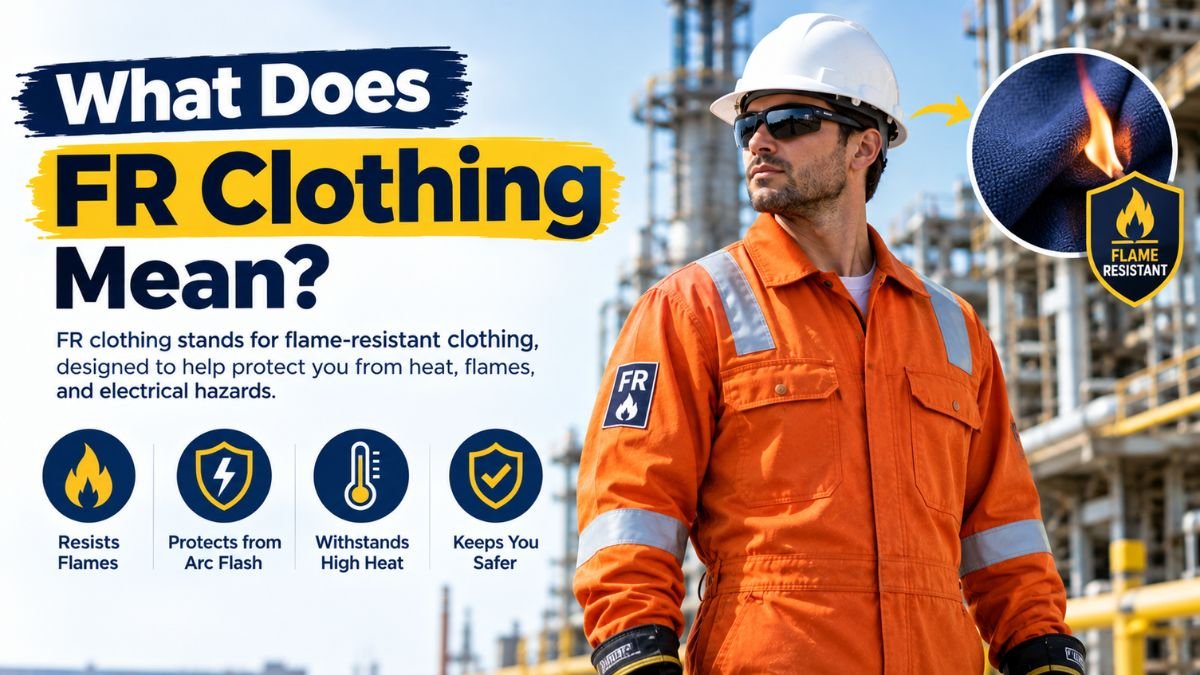
FR stands for flame-resistant. FR clothing is designed to resist ignition, limit flame spread, and help reduce burn injuries under specified test conditions.
Some FR garments use fibers that are inherently flame-resistant. Others use fabrics treated with flame-retardant chemicals. Both approaches can provide protection when the finished garment meets the appropriate performance requirements.
FR clothing does not make a worker fireproof. It cannot prevent every burn or protect against unlimited heat exposure. Its effectiveness depends on garment design, exposure conditions, correct use, and other protective equipment.
Common FR clothing items include:
- Flame-resistant shirts and trousers
- Protective coveralls
- FR jackets and workwear
- Arc-rated shirts and trousers
- Protective hoods and related garments
- Specialized protective clothing for flash-fire hazards
Each item serves a particular purpose. Employers must select garments that match the hazards identified in their workplace assessment.
Does OSHA Require FR Clothing?
OSHA does not impose one universal FR clothing requirement on every workplace. Instead, employers must follow the standards that apply to their operations and identified hazards.
Under 29 CFR 1910.132, employers must assess workplaces for hazards that require personal protective equipment. When protective clothing is necessary, employers must ensure it is suitable for the work and maintained in a sanitary and reliable condition.
Certain industry-specific standards establish more detailed clothing requirements. For example, OSHA’s electric power standard addresses flame and electric-arc hazards. It requires appropriate protective clothing under specified conditions.
Workers may need FR clothing when they face hazards such as:
- Flash fires involving flammable gases or liquids
- Electric arcs and related thermal exposure
- Flames from industrial processes
- Molten metal or other hazardous hot materials
- Other identified workplace conditions requiring specialized protection
The exact requirement depends on the applicable regulation and risk assessment. Employers should not assume that every worker needs the same garment or protection level.
OSHA FR Clothing Requirements for Employers
Employers have several responsibilities when FR clothing is necessary. They must identify hazards, select appropriate garments, train employees, and maintain an effective PPE program.
1. Conduct a Workplace Hazard Assessment
A hazard assessment is the starting point for OSHA FR clothing compliance. Employers should identify tasks and work areas where employees may encounter flames, electrical arcs, or other thermal hazards.
The assessment should consider the equipment used, materials handled, potential exposure energy, and likelihood of an incident. It should also consider whether workers need additional protection for their faces, hands, heads, or other body areas.
For electrical work covered by 29 CFR 1910.269, employers must assess flame and electric-arc hazards. They must also estimate available heat energy when the standard requires it.
The findings help determine whether FR clothing is necessary and which protection level is appropriate.
2. Select Suitable FR Garments
Employers must select clothing that protects against the hazards identified during the assessment. A general-purpose work shirt may not provide sufficient protection from a flash fire or electric arc.
When selecting FR garments, employers should review the fabric properties, garment construction, protective ratings, and intended applications.
Important considerations include:
- The type of hazard and potential exposure
- The garment’s flame-resistant performance
- The arc rating, when electrical hazards require it
- The coverage provided by the garment
- Compatibility with other required PPE
- Fit, comfort, and freedom of movement
Employers should use manufacturer documentation to verify suitability. They should not rely on marketing claims alone.
3. Prevent the Use of Hazardous Clothing
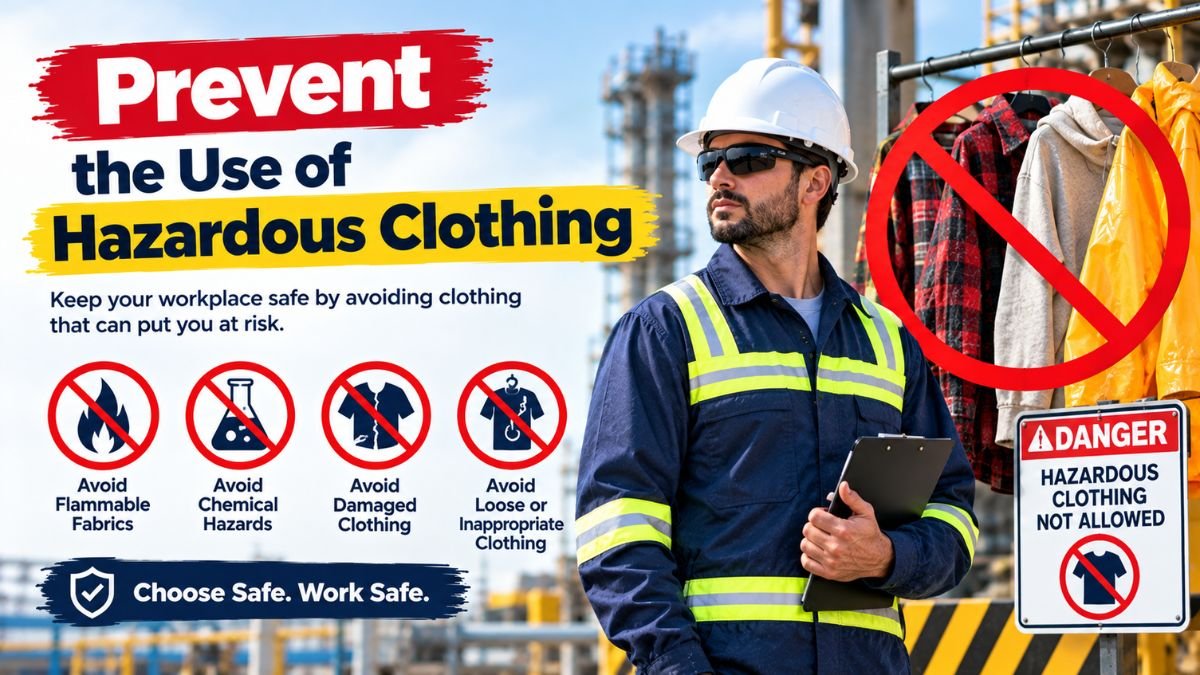
Some fabrics can melt onto the skin or ignite and continue burning during hazardous exposure. These behaviors can increase the severity of burn injuries.
OSHA’s electric power and construction power-work standards address clothing that may melt or continue burning under specified conditions. Their provisions identify materials such as acetate, nylon, polyester, rayon, and polypropylene, including certain blends, unless an applicable exception is demonstrated.
These provisions are specific to the relevant standards and exposure conditions. They should not be interpreted as a blanket ban on every synthetic fabric in every workplace.
Employers should review the applicable regulation and garment documentation before approving clothing for hazardous tasks. They must also consider clothing worn underneath protective layers.
4. Provide Required Protective Equipment
When PPE is necessary to comply with applicable OSHA requirements, employers generally must provide it at no cost to employees, subject to the exceptions in 29 CFR 1910.132(h) and any more specific standard.
This responsibility may include suitable protective garments and other required equipment. Employers must also ensure that the equipment is properly maintained and used.
Workers should report missing, damaged, contaminated, or poorly fitting protective clothing. Employers should replace garments when their protective performance can no longer be relied upon.
5. Train Employees on Proper Use
Training helps workers understand why protective clothing is required and how to use it correctly.
Employees should learn when FR clothing is necessary, which garments are approved, and how to inspect them before use. They should also understand the limitations of the clothing and how to wear it with other PPE.
Training should cover proper care, laundering, storage, and reporting procedures. Workers must understand that ordinary clothing underneath an FR garment can create additional risks if it becomes exposed or ignites.
Employers should keep training appropriate to the hazards and the equipment used at the workplace.
OSHA Rules on FR Clothing for Electrical Workers
Electrical work can expose employees to electric arcs, intense heat, and flames. An electric arc can release substantial thermal energy in a very short time.
For covered electric power work, OSHA standard 29 CFR 1910.269 contains requirements for assessing these hazards and selecting suitable protection. Construction work covered by 29 CFR 1926.960 has related requirements.
Employers must evaluate the work and determine the required protection. In specified circumstances, they must ensure that outer clothing is flame-resistant and that protective clothing and equipment have adequate arc ratings.
Understanding Arc Flash Hazards
An arc flash occurs when electrical current travels through the air between conductors or to the ground. The resulting event can release intense heat and produce dangerous pressure, light, and molten material.
Workers may suffer severe burns even when the exposure lasts only a fraction of a second. Ordinary clothing can increase injury severity if it ignites or melts.
Therefore, employers should select protective clothing according to the actual electrical hazard.
What Is an Arc Rating?
An arc rating indicates the amount of incident energy a protective material can withstand before reaching a defined level of thermal performance under the applicable test method. It is commonly expressed in calories per square centimeter (cal/cm²).
For covered electrical work, OSHA may require protective clothing and equipment with an arc rating equal to or greater than the estimated incident energy, subject to the standard’s specific provisions and exceptions.
For example, if a hazard assessment estimates an exposure of 8 cal/cm², the selected protection generally needs an adequate arc rating for that exposure under the applicable requirements.
This example is illustrative, not a universal selection rule. The employer must follow the relevant standard, assessment method, and PPE requirements.
FR Clothing Versus Arc-Rated Clothing
FR clothing and arc-rated clothing are related, but they are not interchangeable terms.
For instance FR clothing is designed to resist ignition and limit flame spread. Arc-rated clothing has been tested for performance against the thermal hazards of an electric arc.
A garment may be both flame-resistant and arc-rated. However, an FR label alone does not establish that the garment has a sufficient arc rating for a particular electrical task.
Electrical workers should check the garment label and documentation. Employers should confirm that the rating matches the assessed hazard and that all required components work together as a protective system.
OSHA Rules on FR Clothing for Oil and Gas Workers
Oil and gas workplaces can contain flammable gases, vapors, liquids, and other combustible materials. Workers may face flash-fire hazards during production, processing, maintenance, and equipment servicing.
Whether FR clothing is required depends on the job, workplace conditions, and applicable OSHA standards. Employers must assess the hazards and provide suitable protection when required.
FR clothing can help reduce burn injuries by resisting ignition and limiting flame spread. However, it cannot eliminate the risk of a flash fire or protect workers from every thermal exposure.
Employers should consider the following when selecting FR workwear:
- Potential flash-fire hazards
- Tasks involving flammable materials
- The garment’s intended protective application
- Fit, coverage, and compatibility with other PPE
- Manufacturer care and replacement instructions
Where appropriate, employers may use recognized industry standards and garment certifications to help evaluate protective performance. They should verify that the selected garments meet the requirements relevant to their workplace.
OSHA Rules on FR Clothing in Construction
Construction workers may encounter electrical hazards, welding operations, cutting activities, and other work involving heat or flames. The necessary protective clothing depends on the task and the hazards present.
Employers must comply with the OSHA construction standards that apply to their operations. For construction work involving covered electric power transmission and distribution activities, 29 CFR 1926.960 includes specific flame-resistant clothing and arc-rating provisions.
Other construction activities may be governed by different requirements. Employers should not assume that every construction worker must wear FR clothing at all times.
For welding and related operations, employers should assess the risks and provide suitable protective clothing and other PPE. The selected garments must be appropriate for the heat, sparks, and other hazards involved.
Workers should follow site-specific safety procedures and use only approved protective equipment.
What Should You Wear Under FR Clothing?
Clothing worn under FR garments can affect overall protection. An outer FR layer cannot always prevent an underlying garment from igniting, especially if the outer layer opens, shifts, or suffers damage.
Workers should follow the employer’s PPE policy and the clothing manufacturer’s instructions. Where electrical or flash-fire hazards exist, underlayers should be selected to avoid creating an additional ignition or melting hazard.
For covered electric power work, OSHA specifically addresses clothing that could melt or continue burning under the expected exposure conditions. The required protection depends on the standard and the task.
Suitable underlayers may include garments designed for use with the selected FR system. Untreated synthetic clothing should not be assumed safe merely because an FR shirt or jacket covers it.
Workers should also ensure that their clothing provides appropriate coverage. Loose or exposed underlayers can increase risk during hazardous work.
How to Choose the Right FR Clothing
Choosing the correct FR clothing requires more than selecting a garment with an FR label. Employers must match the clothing to the workplace hazard and confirm its performance.
Identify the Specific Hazard
Start by determining whether workers face flash-fire, electric-arc, welding, or another thermal hazard. Different hazards require different protective properties.
A garment designed for industrial flash fires may not have the correct arc rating for electrical work. The hazard assessment should guide the decision.
Check the Garment Label
Review the label for the manufacturer’s information, intended use, applicable performance standards, and any arc rating. Confirm that the garment’s documented properties match the required protection.
If the label is missing or unreadable, consult the manufacturer before using the garment for a hazardous task.
Consider Fabric and Construction
FR garments may use inherently flame-resistant fibers or treated fabrics. Their performance depends on the material, construction, and tested properties of the finished garment.
Check seams, closures, pockets, and other design features. These details can affect coverage and usability.
Ensure Proper Fit
Protective clothing should cover the required body areas without creating avoidable hazards. Clothing that is too tight may restrict movement, while excessive looseness can interfere with work or equipment.
Workers should be able to move safely while keeping the garment properly positioned. Employers should provide suitable sizes and approved designs.
Confirm Compatibility With Other PPE
FR clothing is often used with gloves, face protection, helmets, safety footwear, and other equipment. These items should provide the required combined protection without leaving dangerous gaps.
For electrical work, the complete PPE selection should reflect the hazard assessment and applicable requirements. A suitable shirt alone does not make an entire protective ensemble adequate.
How to Inspect FR Clothing Before Use
Inspection helps workers identify problems that could affect protective performance. Employers should establish procedures for checking garments before use and removing damaged items from service.
Workers should examine clothing for:
- Holes, tears, or damaged seams
- Burn marks or signs of heat exposure
- Heavy wear or thinning fabric
- Damaged closures, cuffs, or fasteners
- Contamination by oil, grease, chemicals, or other substances
- Missing or unreadable identification labels
Not every stain or minor defect automatically means a garment has failed. However, damage and contamination should be evaluated according to the manufacturer’s guidance and workplace procedures.
Workers should never continue using clothing that may no longer provide the required protection. If the garment’s condition is uncertain, it should be removed from service until it can be assessed.
How to Wash and Maintain FR Clothing
Proper care helps maintain garment performance and extend its useful life. Incorrect laundering can damage fabric, affect treatments, or introduce contamination.
Always follow the garment manufacturer’s care instructions. Washing methods can differ between fabrics and garment designs.
Follow the Care Label
Check the recommended washing temperature, detergent, drying method, and other instructions. Do not assume that all FR garments can be washed in the same way.
Some garments have specific restrictions on bleach, fabric softeners, or other laundry products. Follow the exact instructions provided for the garment.
Remove Contamination
Oil, grease, and flammable residues can create additional hazards. Clothing contaminated with hazardous substances should be handled according to workplace procedures.
Ordinary laundering may not be sufficient for every type of contamination. Follow the manufacturer’s instructions and applicable safety requirements when deciding whether a garment can be cleaned or must be replaced.
Avoid Unauthorized Modifications
Do not alter protective garments without confirming that the changes are permitted. Cutting, repairing, or adding non-approved materials can affect coverage or protective performance.
Patches, logos, embroidery, and replacement components should be compatible with the garment and approved for the intended use.
Store Garments Correctly
Keep clean FR clothing in a dry, suitable storage area away from contaminants and unnecessary heat exposure. Store it where it will not become damaged, crushed, or mixed with heavily contaminated workwear.
Before the next use, inspect the garment again. Proper storage does not replace the need for inspection.
Common OSHA FR Clothing Compliance Mistakes
Employers can reduce risk by avoiding common mistakes in protective clothing programs.
Assuming All FR Clothing Has the Same Protection
FR garments are designed for different hazards. A garment suitable for flash-fire exposure may not meet the arc-rating requirements for electrical work.
Employers should verify the specific protection needed before purchasing clothing.
Ignoring the Hazard Assessment
Choosing clothing without evaluating workplace risks can leave workers underprotected. A proper assessment should identify the hazard, expected exposure, and appropriate PPE.
Review the assessment whenever work processes, equipment, or exposure conditions change.
Overlooking Underlayers
An outer FR garment may not fully protect a worker if an underlying layer ignites or melts when exposed. Clothing worn underneath should be considered as part of the overall protective system.
Neglecting Garment Maintenance
Damaged, contaminated, or improperly maintained clothing may not provide the intended protection. Employers should create clear inspection, cleaning, and replacement procedures.
Treating FR Clothing as Complete Protection
FR clothing is one part of a broader safety program. It does not eliminate the need for hazard controls, safe work practices, training, and other PPE.
Employers should use appropriate engineering and administrative controls alongside protective clothing whenever required.
OSHA FR Clothing Compliance Checklist
Employers can use this checklist to review their protective clothing program.
- Identify the OSHA standards that apply to each job.
- Complete and document the required workplace hazard assessment.
- Determine whether FR clothing or arc-rated protection is necessary.
- Select garments with suitable performance ratings and coverage.
- Check underlayers and compatibility with other PPE.
- Provide required PPE in accordance with applicable payment rules.
- Train workers on correct use, inspection, and care.
- Establish cleaning, storage, and replacement procedures.
- Remove garments that are damaged or unsuitable for use.
- Review the program when hazards or work processes change.
This checklist is a practical starting point, not a substitute for reviewing the complete OSHA standards applicable to the workplace.
Conclusion
OSHA rules on FR clothing help employers protect workers from hazards involving flames, electrical arcs, and dangerous heat. The requirements depend on the workplace, the task, and the applicable OSHA standard.
Employers should begin with a hazard assessment and choose garments that provide suitable protection. They must also address proper use, employee training, inspection, maintenance, and replacement.
Understanding OSHA FR clothing requirements helps businesses build a stronger PPE program and helps workers make safer clothing choices. For the best results, consult the current OSHA regulations, review garment documentation, and seek qualified safety guidance when exposure risks are complex.
Frequently Asked Questions About OSHA FR Clothing
1. Does OSHA require FR clothing?
OSHA requires protective clothing when applicable standards and workplace hazards make it necessary. Some specific standards require flame-resistant clothing under defined conditions. There is no single rule requiring every worker in every industry to wear FR clothing.
2. What OSHA standard covers FR clothing?
The relevant standard depends on the work. General PPE requirements appear in 29 CFR 1910.132. Electric power work is addressed by 29 CFR 1910.269, while covered construction electric power work is addressed by 29 CFR 1926.960.
3. Is FR clothing mandatory for electrical workers?
FR clothing may be required when electrical workers face hazards covered by OSHA’s electrical safety provisions. The required garment and protection level depend on the task, exposure assessment, and applicable standard.
4. What is the difference between FR and arc-rated clothing?
FR clothing resists ignition and limits flame spread. Arc-rated clothing has been tested for thermal performance during an electric arc exposure. Some garments have both properties, but an FR label alone does not confirm an adequate arc rating.
5. Can workers wear polyester under FR clothing?
Workers should not assume that polyester or other synthetic underlayers are safe for hazardous work. Certain OSHA standards restrict clothing that may melt or continue burning under specified exposure conditions. Employers must evaluate the complete clothing system and follow the applicable requirements.
6. Does OSHA require employers to pay for FR clothing?
Under the general PPE payment rule, employers generally must pay for PPE required to comply with OSHA standards, subject to specific exceptions and any controlling requirements in another standard. Employers should review 29 CFR 1910.132(h) and the applicable industry rules.
7. How often should FR clothing be replaced?
There is no single replacement interval for every FR garment. Replacement depends on its condition, contamination, wear, manufacturer instructions, and workplace policy. Garments that may no longer provide adequate protection should be removed from service.
8. Can FR clothing lose its protective properties after washing?
Proper laundering according to the manufacturer’s instructions helps maintain garment performance. Incorrect washing, prohibited chemicals, unauthorized alterations, and contamination may affect suitability. Always follow the garment’s specific care instructions.
9. Is 100% cotton considered FR clothing?
Untreated cotton is not automatically flame-resistant protective clothing. Cotton may be acceptable under certain conditions, but it can ignite and continue burning. Some OSHA provisions allow untreated cotton for limited exposures or when other specified conditions are met.
10. Where can employers find official OSHA FR clothing requirements?
Employers should consult the official OSHA regulations and guidance for the relevant industry. Key references include 29 CFR 1910.132, 29 CFR 1910.269, and 29 CFR 1926.960, where applicable. The complete regulatory text should be reviewed before making compliance decisions.