
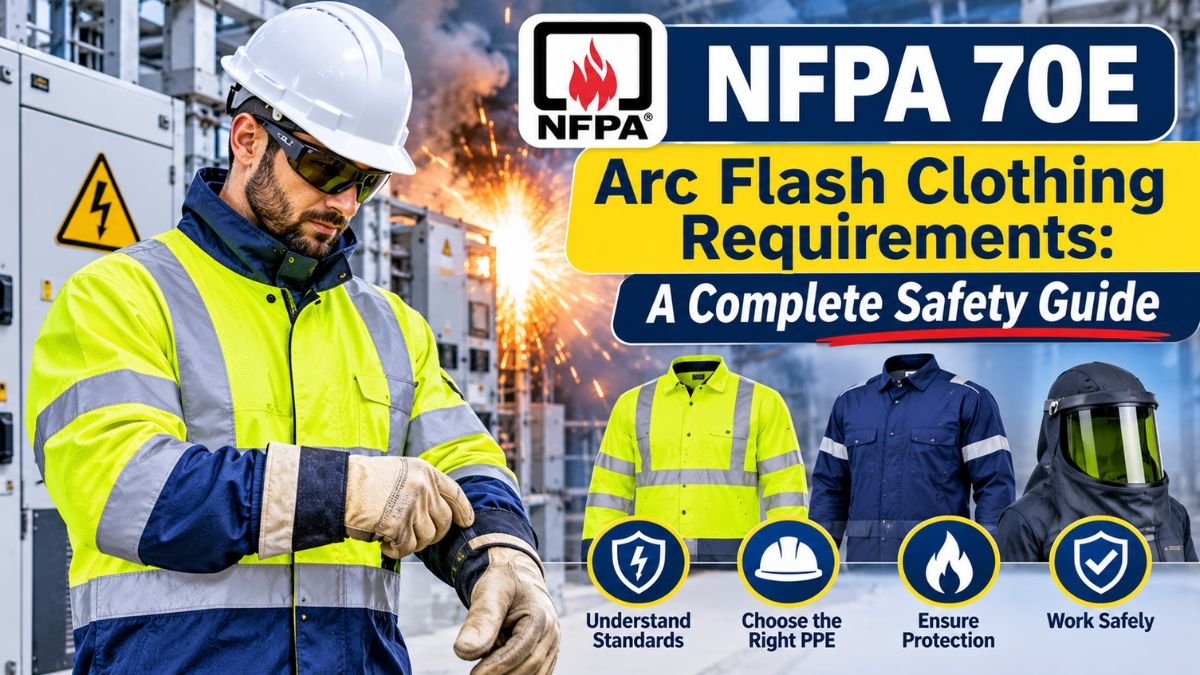
Electrical safety is essential in workplaces where employees install, inspect, maintain, or repair electrical equipment. Electricians, electrical engineers, maintenance technicians, and industrial workers may face dangerous electrical hazards, including arc flashes and arc blasts.
An arc flash can release intense heat, bright light, hot gases, and molten metal particles in a fraction of a second. Wearing unsuitable clothing can increase the severity of burn injuries if the clothing ignites, continues to burn, or melts against the skin. The U.S. Occupational Safety and Health Administration (OSHA) explains why appropriate flame-resistant and arc-rated clothing is an important part of electrical safety.
The NFPA 70E arc flash clothing requirements help employers and qualified electrical workers understand how to assess electrical hazards and select suitable personal protective equipment (PPE).
This complete guide explains NFPA 70E, arc-rated clothing, arc ratings, PPE categories, fabric requirements, clothing selection, inspection procedures, and the benefits of using appropriate arc flash protective apparel.
Outfitting an electrical team? Explore our protective workwear manufacturing services, see the FR collared shirt, and compare the NFPA 70E FR clothing requirements.
What Is NFPA 70E?
NFPA 70E is the Standard for Electrical Safety in the Workplace, published by the National Fire Protection Association (NFPA).
It provides guidance and requirements for electrical safety-related work practices, risk assessments, and the selection and use of protective equipment.
The standard addresses hazards such as electric shock, electrocution, arc flash, and arc blast. It helps employers establish safer procedures for employees who work on or near electrical equipment.
NFPA lists the 2027 edition as the current edition of NFPA 70E. Employers should verify the edition applicable to their workplace, contracts, and compliance program.
You can find the official standard information on the NFPA 70E website.
Why Is NFPA 70E Important?
NFPA 70E is important because electrical hazards can cause severe injuries, permanent disabilities, and fatalities.
Appropriate electrical safety procedures help organizations:
- Identify electrical hazards before work begins.
- Assess the risks associated with electrical tasks.
- Determine suitable protective clothing and equipment.
- Establish safe work practices.
- Improve employee awareness and training.
- Reduce the likelihood and severity of electrical injuries.
- Support compliance with applicable workplace safety regulations.
Protective clothing is only one part of an electrical safety program. Employers must also consider whether equipment can be de-energized, establish appropriate energy-control procedures, and implement other required safeguards.
What Are NFPA 70E Arc Flash Clothing Requirements?
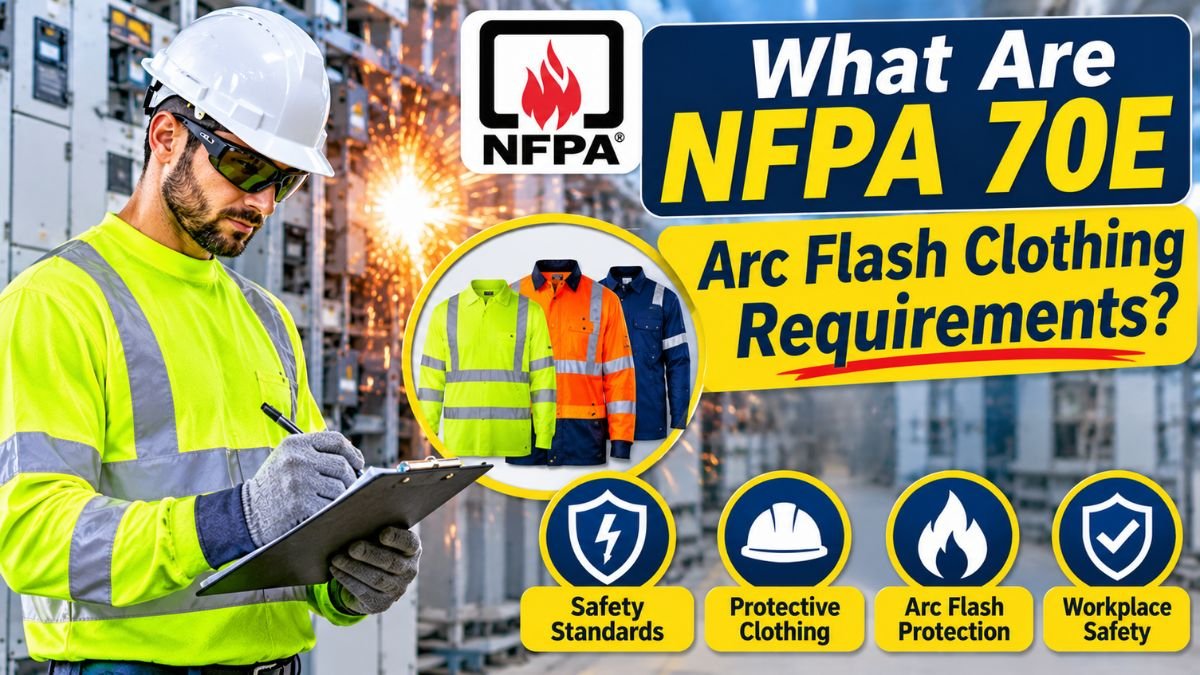
NFPA 70E arc flash clothing requirements concern the selection and use of clothing designed to protect workers from the thermal hazards associated with an electric arc.
The required protection depends on the electrical hazard assessment, the expected incident energy or applicable PPE category method, the work being performed, and the conditions at the worksite.
Arc-rated clothing is designed and tested to provide a specified level of thermal protection against an electric arc.
Common types of arc-rated clothing include:
- Arc-rated long-sleeve shirts
- Arc-rated trousers
- Flame-resistant workwear
- Arc-rated coveralls
- Arc-rated jackets
- Arc flash suits
- Arc-rated hoods and balaclavas
- Arc-rated rainwear and outerwear, where required
Not every worker needs the same level of protection. A qualified assessment must determine the clothing and equipment appropriate for the task.
The required PPE may also include protective gloves, eye and face protection, hearing protection, head protection, and suitable footwear.
Important: NFPA 70E does not mean that every electrical worker must wear the same arc-rated clothing. You must select PPE according to the applicable risk assessment and the method you use to determine protection requirements.
What Is an Arc Flash?
An electrical arc through air or another medium causes an arc flash, which is a dangerous release of energy.
It can occur when an electrical fault creates an unintended conductive path between energized components or between an energized component and ground.
An arc flash may produce:
- Extremely high temperatures
- Intense thermal radiation
- Hot gases
- Molten metal particles
- Pressure waves
- Loud noise
- Severe burns
- Damage to equipment and surrounding structures
An arc flash can be dangerous even in relatively low-voltage equipment. OSHA emphasizes that voltage alone does not determine the severity of an arc flash; factors such as available current, protective-device clearing time, and the worker’s distance affect the incident energy exposure.
What Is the Difference Between an Arc Flash and an Arc Blast?
An arc flash primarily refers to the intense thermal energy and radiation associated with an electrical arc.
An arc blast refers to the pressure wave and mechanical effects that may accompany an electrical fault, potentially throwing objects and molten material.
Both can cause serious injuries. Arc-rated clothing helps address the thermal hazard, but clothing alone cannot protect workers against every mechanical, electrical, or pressure-related hazard.
Garment selection starts with fabric. Our guide to arc flash clothing materials compares the main options, and washing arc flash clothing explains how to keep garments in service.
Understanding Arc-Rated Clothing
Manufacturers test arc-rated clothing to determine its ability to protect against thermal energy from an electric arc.
It expresses its protective performance through an arc rating, generally measured in calories per square centimeter (cal/cm²).
The arc rating helps users determine whether clothing is appropriate for the expected incident energy exposure.
For example, an arc-rated shirt may show a label with an arc rating of 8 cal/cm². This indicates a tested thermal-performance value; it does not mean that the shirt is suitable for every electrical task.This indicates a tested thermal-performance value; it does not mean that the shirt is suitable for every electrical task.
You must select the required rating using the applicable assessment and NFPA 70E method.
What Does Arc Rating Mean?
Arc rating describes the thermal protection performance of a material or garment under a specified arc-testing method.
Two commonly referenced values are:
- ATPV (Arc Thermal Performance Value): The incident energy associated with a 50% probability of the onset of a second-degree burn under the test method’s conditions.
- EBT (Energy Breakopen Threshold): The incident energy associated with a 50% probability of fabric breakopen under the test method’s conditions.
Applicable testing determines a product’s arc rating, and you may express the rating using ATPV or EBT, as appropriate.
The arc rating is not a guarantee that a wearer will avoid injury. Actual outcomes depend on exposure conditions, garment coverage, fit, layering, and other factors.
Why Is Arc Rating Important?
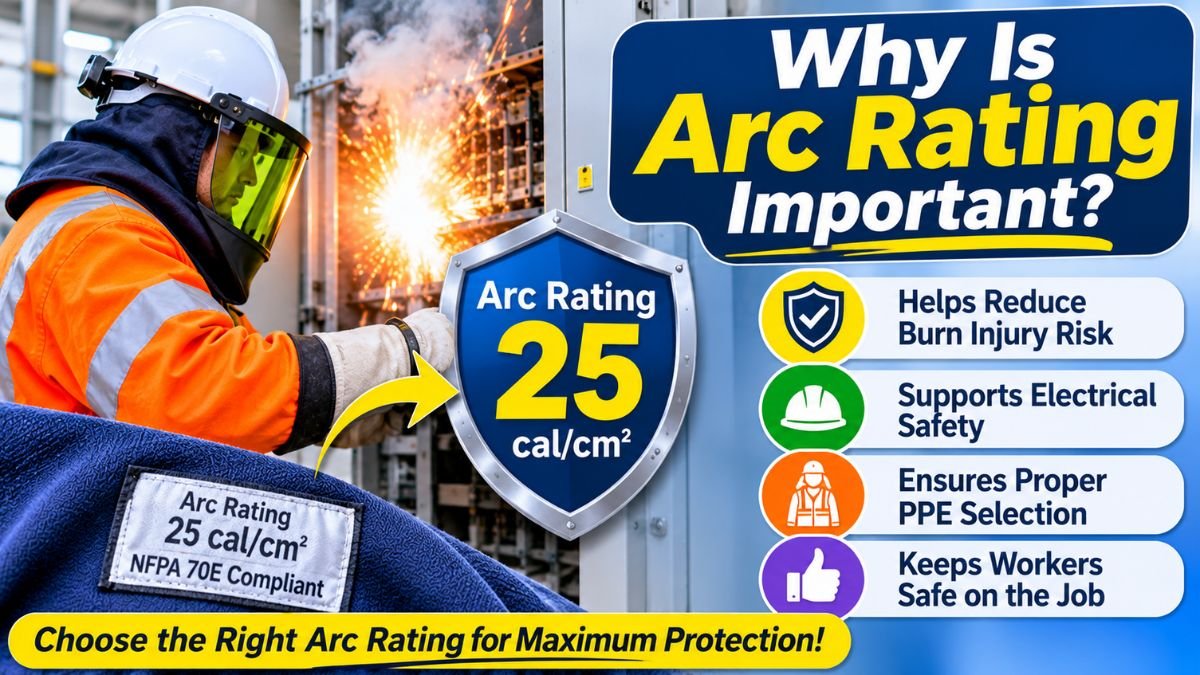
Arc rating helps employers compare the protective performance of garments with the expected thermal hazard.
Selecting a garment with insufficient arc rating may expose workers to a greater risk of injury.
Conversely, choosing clothing without considering the actual work conditions may create unnecessary expense or interfere with worker comfort and task performance.
Employers should use documented hazard assessments and appropriate PPE selection procedures rather than choosing clothing based only on price, fabric thickness, or appearance.
Understanding NFPA 70E Arc Flash PPE Categories
NFPA 70E includes a PPE category method for specified tasks and equipment conditions.
The commonly referenced arc-flash PPE categories are Category 1, Category 2, Category 3, and Category 4. Each category has associated requirements for protective clothing and equipment.
The category method must be applied using the conditions, limitations, and tables specified in the applicable edition of NFPA 70E.
| Arc Flash PPE Category | Minimum Arc Rating Commonly Associated With the Category Method |
|---|---|
| Category 1 | 4 cal/cm² |
| Category 2 | 8 cal/cm² |
| Category 3 | 25 cal/cm² |
| Category 4 | 40 cal/cm² |
Important: These values are not a universal clothing-selection chart. The category method applies only when the equipment and work conditions meet the standard’s specified criteria.Other circumstances may require the incident-energy analysis method, or it may prove more appropriate. Verify all requirements against the applicable NFPA 70E edition.
Category 1 Arc Flash Clothing
Under the category method, Category 1 PPE has a minimum arc rating of 4 cal/cm².
Depending on the task and applicable requirements, clothing may include an arc-rated long-sleeve shirt and trousers or an appropriate arc-rated coverall.
The task may require additional protective equipment, such as eye protection, head protection, hearing protection, and gloves.
You must determine the exact combination from the applicable requirements rather than from the category number alone.
Category 2 Arc Flash Clothing
Under the category method, Category 2 PPE has a minimum arc rating of 8 cal/cm².
Suitable clothing may include arc-rated shirts and trousers, or a compliant coverall system, along with the other PPE required for the task.
You must select face protection, head protection, gloves, and other equipment according to the applicable requirements.
Category 3 Arc Flash Clothing
Under the category method, Category 3 PPE has a minimum arc rating of 25 cal/cm².
This level may require a more extensive protective clothing system, depending on the task and the standard’s applicable requirements.
Arc-rated garments may include shirts, trousers, coveralls, and specialized arc flash suit components.
Workers must use the complete PPE system required for the exposure rather than assuming that a single high-rated shirt provides sufficient protection.
Category 4 Arc Flash Clothing
Under the category method, Category 4 PPE has a minimum arc rating of 40 cal/cm².
This category requires a protective clothing and equipment configuration appropriate to the specified task and hazard.
Depending on the assessment, specialized arc flash suit components and additional protective equipment may be necessary.
A higher category does not automatically make a garment suitable for every task. Employers must verify the applicability of the category method and ensure that the complete protective system is suitable for the expected exposure.
Incident Energy Analysis vs. PPE Category Method
NFPA 70E provides different approaches for selecting arc flash PPE.
The two commonly discussed approaches are the incident-energy analysis method and the arc-flash PPE category method.
Incident-Energy Analysis Method
An incident-energy analysis estimates the thermal energy that could reach a worker at a specified working distance during an arc flash.
The resulting incident-energy estimate helps determine the necessary arc rating of clothing and equipment.
For example, if an assessment estimates an exposure of 6 cal/cm² at the relevant working distance, the selected clothing system must have suitable protection for that exposure and comply with the other applicable requirements.
The final selection must account for the full task and PPE system, not just the shirt’s rating.
Arc-Flash PPE Category Method
The PPE category method uses tables in NFPA 70E to identify protective equipment for specified tasks and equipment conditions.
You may use it only when you satisfy the applicable table conditions.
The category method is not interchangeable with an incident-energy analysis in every situation.
Employers should not combine the two methods arbitrarily or select a category solely from equipment voltage.
Which Method Should Employers Use?
The appropriate method depends on the equipment, task, available electrical-system information, and applicable NFPA 70E requirements.
A qualified electrical safety professional should determine which method applies and document the selection.
Materials Used in NFPA 70E Arc Flash Clothing
The fabric used in arc-rated clothing is important because it affects thermal performance, durability, comfort, and suitability for workplace conditions.
Common materials include flame-resistant-treated cotton, inherently flame-resistant fibers, and specialized protective fabric blends.
1. Flame-Resistant Cotton
Manufacturers treat or construct flame-resistant cotton to provide specified flame-resistant performance.
Depending on the fabric and garment, it may offer a balance of comfort, breathability, and thermal protection.
However, not all cotton clothing is flame-resistant or arc-rated.You must not assume that a cotton garment meets arc flash requirements simply because cotton does not melt like some synthetic fibers.
2. Meta-Aramid and Para-Aramid Fibers
Various protective clothing applications use aramid fibers.
Depending on the fiber, fabric construction, and garment design, they can provide useful thermal and flame-resistant performance.
You may find these materials in arc-rated shirts, coveralls, and specialized protective garments.
3. Other Specialized Flame-Resistant Fibers
Some arc-rated garments use other fibers or blends developed for thermal protection and durability.
The relevant performance depends on the finished material and garment testing, not simply on the name of the fiber.
Buyers should review the manufacturer’s technical documentation to confirm that the product meets the requirements for the intended application.
4. Fabric Blends
Fabric blends can combine different characteristics, including comfort, durability, moisture management, and thermal performance.
However, ordinary fabric blends containing meltable synthetic fibers must not be assumed safe for arc flash exposure.
The finished fabric and garment must meet the applicable requirements for the intended hazard.
OSHA explains that clothing that ignites and continues to burn or melts against the skin can increase injury severity. It also notes that whether a garment is acceptable depends on the actual exposure conditions and applicable rules.
Key Features of NFPA 70E Arc Flash Clothing
Arc-rated garments provide thermal protection while allowing workers to complete their tasks.
1. Arc-Rated Fabric
The garment uses fabric with documented arc-rated performance suitable for its intended application.
The manufacturer should clearly identify the arc rating in the product information or labeling.
2. Flame-Resistant Performance
Arc-rated clothing limits the consequences of thermal exposure under the applicable test conditions.
Flame-resistant clothing resists ignition or limits continued burning, but the terms “flame-resistant” and “arc-rated” are not interchangeable in every context.
A garment may have flame-resistant properties without having the arc rating required for a particular task.
3. Appropriate Coverage
Arc-rated clothing should cover the body areas that the hazard may expose.
You must use sleeves, closures, and other garment features as intended.
For example, rolling up sleeves or leaving clothing open can expose skin and undermine the intended protective coverage.
4. Suitable Fit
Protective clothing should fit properly and allow the worker to complete the task without unnecessary restriction.
Garments that are too tight may limit movement, while excessively loose clothing can interfere with work or create other hazards.
5. Layering Compatibility
Some protective systems use multiple clothing layers.
You must select and wear the combined system according to the manufacturer’s instructions and applicable requirements.
Do not assume that adding any ordinary garment increases protection. Meltable or flammable layers can create additional risks.
6. Durable Construction
Arc-rated clothing must suit the conditions in which you will use it.
You should maintain seams, closures, fabric integrity, and other construction features according to the manufacturer’s instructions.
Damaged garments may no longer provide the intended protection.
How to Choose the Right Arc Flash Clothing
Selecting the right clothing requires an assessment of the electrical hazards and the work you perform.
Step 1: Identify the Electrical Hazards
Determine whether the task involves an arc flash hazard and identify the potential exposure.
Review the equipment, task, work practices, and relevant electrical-system information.
Step 2: Complete the Required Risk Assessment
Use the applicable NFPA 70E process to assess the hazard and determine the required protective measures.
The assessment should be completed by appropriately qualified personnel.
Step 3: Determine the Required Arc Rating or PPE Category
Use the applicable incident-energy analysis or category method.
Do not estimate the required rating based solely on voltage, job title, or assumptions about the equipment.
Step 4: Select Suitable Garments
Choose clothing with an appropriate documented arc rating and design.
Depending on the exposure, the clothing system may include an arc-rated shirt, trousers, coverall, jacket, or arc flash suit.
Step 5: Check Additional PPE Requirements
Determine whether the task also requires:
- Arc-rated face protection
- An arc-rated hood or balaclava
- Head protection
- Suitable gloves
- Hearing protection
- Appropriate footwear
- Other task-specific protective equipment
The exact requirements depend on the hazard assessment and applicable standard provisions.
Step 6: Review Garment Fit and Coverage
Ensure the garments fit properly and cover the areas that may be exposed.
Check that sleeves, collars, closures, and layers are used as intended.
Step 7: Verify Documentation
Request the manufacturer’s product specifications and arc-rating documentation.
Confirm that the documentation applies to the exact garment, fabric, and configuration being purchased.
Step 8: Establish Inspection and Replacement Procedures
Set clear procedures for inspecting garments before use, cleaning them correctly, storing them appropriately, and replacing damaged or contaminated items.
What Clothing Should Be Avoided During Arc Flash Work?
Clothing selection is critical because some materials can ignite, continue burning, or melt when exposed to intense heat.
Avoid assuming that ordinary everyday clothing is suitable for electrical work.
Ordinary Synthetic Clothing
Certain synthetic fabrics, including nylon and polyester, can melt under high heat.
Their suitability depends on the applicable requirements, garment construction, and whether the materials have been tested and rated for the intended exposure.
Do not use ordinary synthetic clothing as a substitute for required arc-rated apparel.
Damaged Arc-Rated Clothing
Torn, heavily worn, contaminated, or otherwise damaged clothing may not provide the intended protection.
Remove unsuitable garments from service and follow the manufacturer’s guidance for repair or replacement.
Contaminated Garments
Oil, grease, solvents, and other flammable contaminants can compromise clothing safety.
OSHA recommends that contaminated or damaged flame-resistant clothing be cleaned appropriately or replaced before it is used again in a hazardous environment.
Clothing Worn Incorrectly
Even suitable arc-rated clothing can be less effective if it is not worn properly.
Avoid leaving required closures open, rolling up sleeves, or leaving body areas exposed that should be protected.
Follow the garment manufacturer’s instructions and the workplace PPE procedures.
How to Inspect and Maintain Arc Flash Clothing
Regular inspection and proper care help preserve the condition of arc-rated garments.
Inspect Before Each Use
Check for:
- Tears and holes
- Damaged seams
- Broken closures
- Excessive wear
- Contamination
- Evidence of unauthorized alterations
- Missing or illegible product labels
Do not use clothing that has been damaged or contaminated to the extent that its protective qualities may be impaired.
Follow Washing Instructions
Use the cleaning procedures specified by the garment manufacturer.
Incorrect washing practices may affect fabric performance, garment construction, or protective features.
Store Clothing Correctly
Store arc-rated clothing in a clean, dry location away from moisture, dust, chemicals, and flammable contaminants.
Avoid storage conditions that could damage the fabric or other garment components.
Repair Only as Approved
Do not make informal repairs using ordinary thread, patches, or materials that may compromise the garment’s protective performance.
Follow the manufacturer’s approved repair procedures or replace the garment when necessary.
Replace Worn or Damaged Garments
Replace clothing when it no longer meets the manufacturer’s serviceability criteria or workplace requirements.
A garment should not remain in service simply because its damage appears minor.
Benefits of Wearing Appropriate Arc Flash Clothing
Using suitable arc-rated clothing offers several important workplace benefits.
1. Helps Reduce Burn Injury Severity
Arc-rated clothing is designed to provide thermal protection during an arc exposure within its tested performance limits.
Appropriate clothing can help reduce the severity of thermal injuries, although it cannot eliminate every injury risk.
2. Supports Electrical Safety Procedures
Protective clothing forms part of a broader electrical safety program that includes hazard assessment, training, work practices, and other protective measures.
3. Helps Organizations Select Appropriate PPE
Documented arc ratings help employers match clothing to the expected exposure.
This supports a more consistent and evidence-based PPE selection process.
4. Improves Worker Preparedness
Workers who understand the limitations and correct use of arc-rated clothing are better equipped to follow workplace PPE procedures.
Training should explain how to inspect, wear, clean, and replace protective garments.
5. Supports Compliance Efforts
Using suitable protective equipment can help employers implement their electrical safety procedures and address applicable workplace requirements.
Actual compliance depends on the full safety program, including the correct application of relevant regulations and standards.
Common Mistakes to Avoid When Selecting Arc Flash Clothing
Employers and buyers should avoid these common errors:
- Choosing clothing based only on voltage: Arc flash risk depends on multiple electrical-system and work factors.
- Confusing flame-resistant clothing with arc-rated clothing: Flame resistance alone does not establish a suitable arc rating.
- Selecting an arbitrary arc rating: Use the applicable hazard assessment and PPE selection method.
- Ignoring other PPE: Clothing may need to be used with face, head, hand, hearing, and foot protection.
- Wearing ordinary synthetic garments without evaluating suitability: Some materials may melt or contribute to injury.
- Ignoring fit and coverage: Garments must be worn correctly and cover the required body areas.
- Using damaged or contaminated clothing: Inspect garments and remove unsuitable items from service.
- Making unauthorized alterations: Changes can affect garment performance.
- Ignoring manufacturer instructions: Follow the specified procedures for cleaning, repair, storage, and replacement.
- Treating PPE as the only safety measure: De-energization, energy-control procedures, training, and other safeguards remain important.
Frequently Asked Questions About NFPA 70E Arc Flash Clothing Requirements
1. What are NFPA 70E arc flash clothing requirements?
They are requirements and guidance associated with selecting and using protective clothing for electrical work. The appropriate clothing depends on the hazard assessment, the applicable PPE selection method, the expected exposure, and the relevant edition of NFPA 70E.
2. What is the difference between arc-rated and flame-resistant clothing?
Flame-resistant clothing is designed to resist ignition or limit continued burning under specified conditions. Arc-rated clothing has a documented arc rating based on applicable testing. A flame-resistant garment should not automatically be considered suitable for every arc flash exposure.
3. What does an arc rating of 8 cal/cm² mean?
It indicates a tested thermal-performance rating expressed in calories per square centimeter. The garment may be suitable for exposures within its applicable protection limits, but the required PPE must be determined by the workplace hazard assessment.
4. What are the NFPA 70E PPE categories?
The commonly referenced arc-flash PPE categories are Category 1, Category 2, Category 3, and Category 4. Each category has associated requirements for protective clothing and equipment. The category method can be used only when the standard’s specified conditions are met.
5. Is 100% cotton suitable for arc flash work?
Not automatically. Cotton does not melt like some synthetic fibers, but it can ignite and continue burning. Its suitability depends on the fabric, garment, expected exposure, and applicable requirements. Use clothing selected through the appropriate hazard assessment.
6. Can ordinary polyester clothing be worn under arc-rated clothing?
Do not assume that ordinary polyester or other meltable synthetic garments are suitable. The applicable workplace rules, clothing system, and manufacturer instructions must be followed. Certain fiber blends may be acceptable when they meet the relevant requirements, but this must be verified rather than assumed.
7. Does NFPA 70E require an arc flash suit for every electrical worker?
No. The required PPE depends on the task, hazard assessment, applicable method, and exposure conditions. Some tasks may require arc-rated shirts and trousers, while others may require a more extensive protective system.
8. How often should arc-rated clothing be inspected?
Arc-rated clothing should be inspected before each use, following the applicable requirements and manufacturer guidance. Garments that are damaged or contaminated to the extent that their protective properties may be impaired should not be used.
9. Can arc-rated clothing be washed?
Yes, when it is cleaned according to the manufacturer’s instructions. Appropriate laundering and storage help maintain garment condition. Follow the specific care instructions for the product.
10. Does arc-rated clothing protect against electric shock?
No. Arc-rated clothing is intended primarily to address thermal hazards from an electric arc. Shock protection requires separate controls and suitable equipment, such as properly selected and tested electrical insulating gloves when required.
11. What is the latest edition of NFPA 70E?
NFPA currently lists the 2027 edition as the current edition. Employers should confirm which edition applies to their workplace and review the official standard for the detailed requirements.
12. Can high-visibility clothing also be arc-rated?
Yes, products may combine high-visibility features with arc-rated performance. Buyers must verify that the specific garment meets the requirements for both visibility and arc flash protection. A reflective or brightly colored garment is not automatically arc-rated.
Conclusion
Understanding NFPA 70E arc flash clothing requirements is essential for organizations whose employees work on or near electrical equipment.
Appropriate arc-rated clothing is selected according to the electrical hazard assessment, the expected incident energy or applicable PPE category method, and the requirements of the relevant standard. Arc-rated shirts, trousers, coveralls, jackets, and specialized suits can form part of the protective system, but no single garment automatically protects against every electrical hazard.
Employers should verify product documentation, ensure proper fit and coverage, train workers in correct PPE use, and establish inspection, cleaning, and replacement procedures.
Most importantly, arc-rated clothing must be combined with suitable electrical safety practices, including de-energization and energy-control procedures where required.
By choosing the correct protective clothing and implementing a comprehensive electrical safety program, organizations can help reduce risks and improve protection for electrical workers.